





Linen Upholstered Footstool
These linen upholstered footstool pieces bring practical comfort and understated texture into a room, drawn from nineteenth and early twentieth century traditions.
Linen Upholstered Footstool
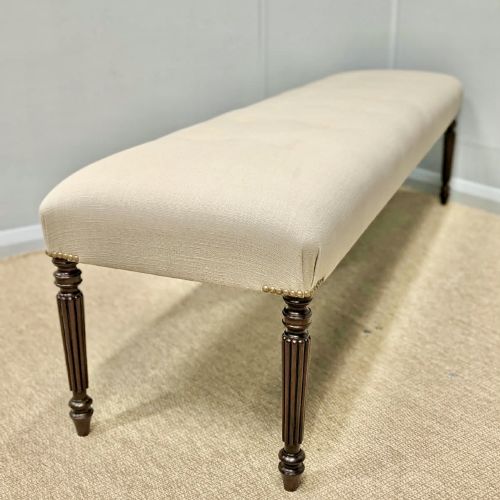
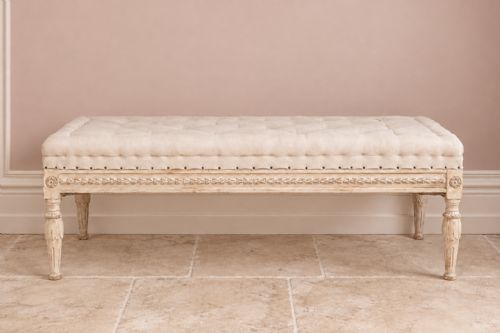
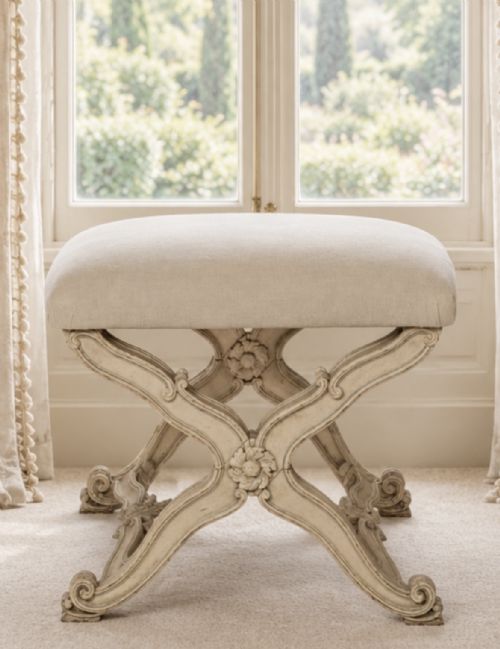
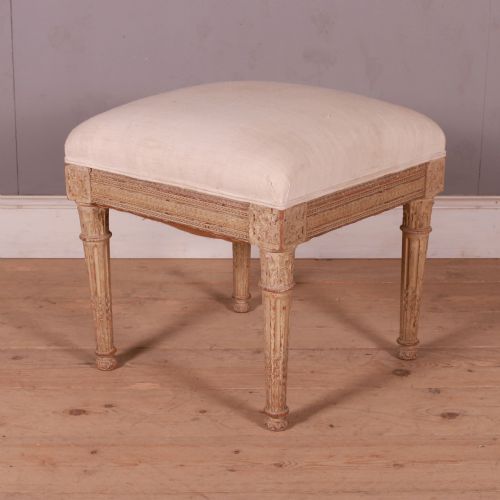
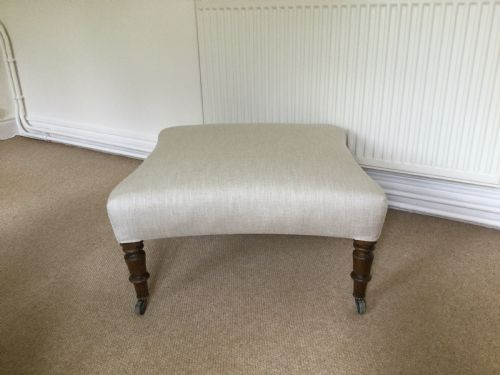
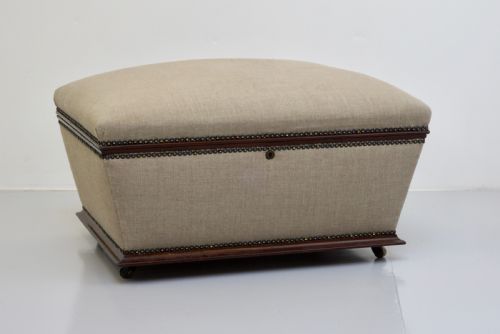
A linen upholstered footstool is a low seating piece or rest designed to support the feet or provide casual perching, taking forms such as dressing table stools, box ottomans, and larger benches.
The versions most commonly met on this page span the nineteenth century and the early twentieth century, reflecting English country house, Gustavian, and French aesthetic traditions.
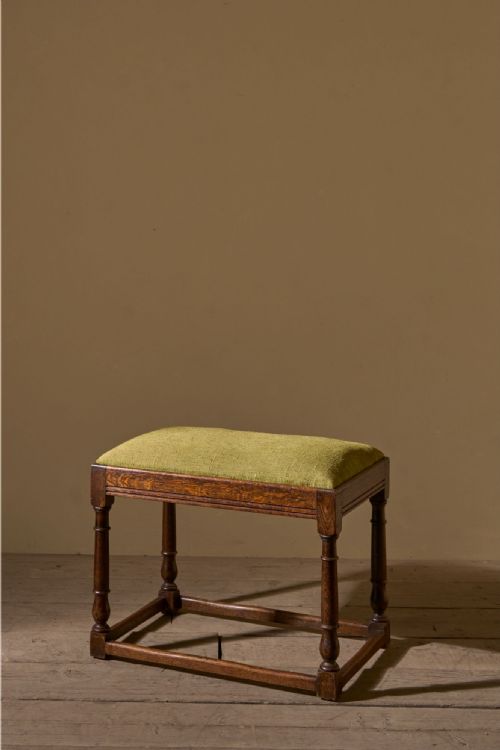
Makers shaped these items from oak, carved wood, and painted wood, finishing the frames with plain linen, heavy green linen, or tweed linen upholstery.
How they were made
Carpenters constructed the foundational frames using solid oak or carved wood, sometimes applying paint or gilding to the wooden surfaces for decorative effect.
Upholsterers then secured durable textile coverings, utilising sturdy linen, heavy green linen, or textured tweed linen over the internal padding.
Linen Upholstered Footstool Retail Price Guide 2026
Typical asking prices for linen upholstered footstool among the pieces listed under this phrase on Sellingantiques today, from the lower quarter to the upper quarter. They describe what is for sale here now, not the wider market.
The listings feature pieces dated across the nineteenth century, 1900, 1930, 1850, 1890, and 1880, utilising oak, painted wood, and brass.
What varies in quality
Quality rests upon the execution of the woodwork, distinguishing hand-carved or meticulously turned frames from simpler structural builds.
The choice and durability of the textile covering also set pieces apart, separating standard fabric applications from substantial heavy green linen or tweed linen upholstery.
The Linen Upholstered Footstool Glossary
- Gustavian
- A Swedish neoclassical design style characterised by restrained carved wooden details and pale painted finishes. It emerged during the late eighteenth century and influenced Scandinavian seating design well into the nineteenth century.
- Box Ottoman
- A low padded seat featuring an internal compartment accessed by lifting the top. This form combines foot support with concealed storage space.
- Tweed Linen
- A textile woven with mixed-colour yarns that produce a flecked appearance. It offers a dense, durable surface suitable for frequent use on seating furniture.
- Jacobean Revival
- A nineteenth-century historicist style reviving seventeenth-century English motifs. Furniture in this manner typically employs sturdy oak and traditional joinery techniques.
Linen Upholstered Footstool: Frequently Asked Questions
Where do I put a linen upholstered footstool?
These pieces fit naturally beside armchairs in a sitting room or adjacent to a dressing table in a bedroom, where their low profile provides convenient access.
They also serve well in hallways or corners where a compact seat or foot support is useful without crowding the floor area.
How do I clean linen upholstery?
Gently vacuum the fabric surface using a soft brush attachment to remove loose dust and debris before it settles into the weave.
Treat spots carefully with a mild textile cleaner tested on an inconspicuous area first, avoiding excessive moisture on the underlying wood frame.
Are these footstools sturdy enough to sit on?
The wooden frames, constructed primarily from solid oak and carved timber during the nineteenth and early twentieth centuries, are built for physical support.
While dressing table stools and larger benches function readily as spare seats, box ottomans distribute weight across their internal storage structures.
What is the difference between an ottoman and a footstool?
Footstools primarily provide a low platform for resting feet, whereas box ottomans incorporate a hollow interior space beneath the upholstered lid.
Both formats utilise similar textile coverings like heavy green linen or tweed linen across the top surface.