
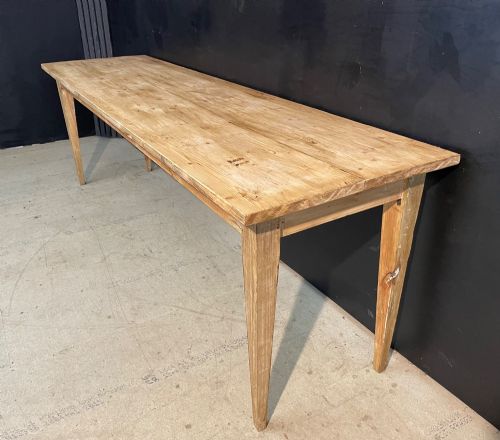
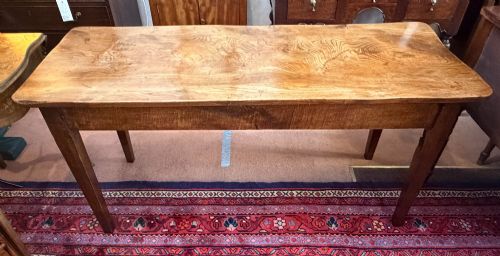
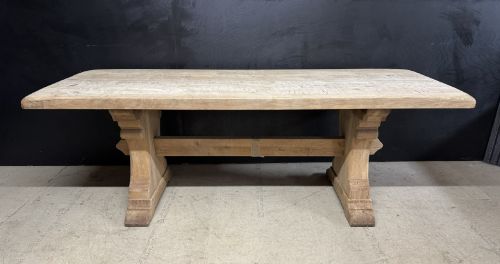
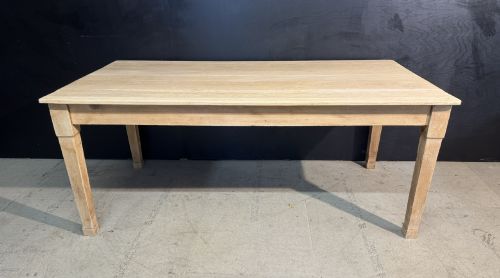
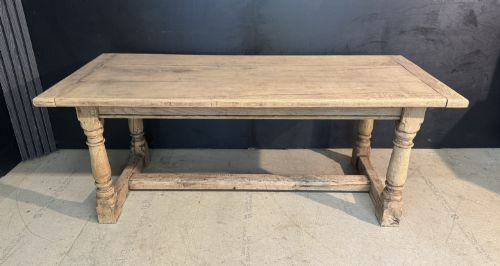
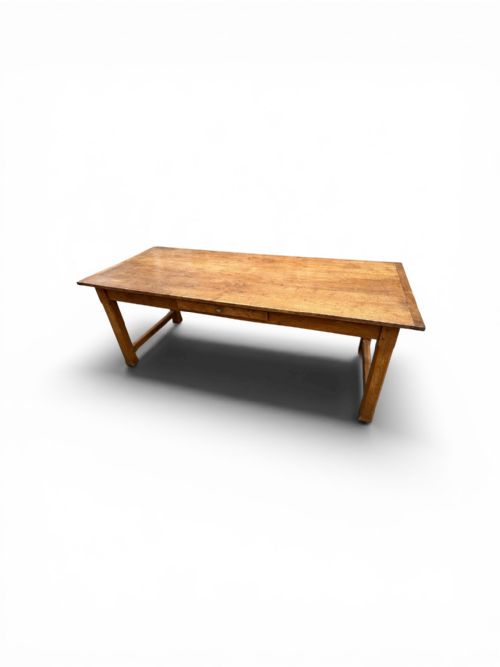


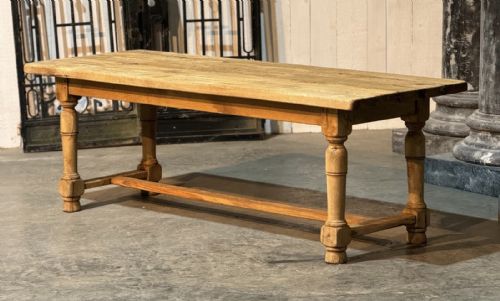


Light Wood Refectory Table
A light wood refectory table brings long, anchoring timber and everyday utility to a room, offering ample surface for family gatherings.
Light Wood Refectory Table
A light wood refectory table provides a substantial surface for dining and communal use, drawing on historical forms designed for large halls. When exploring the light wood refectory table category, buyers encounter elongated dining surfaces rooted in nineteenth-century and early twentieth-century domestic traditions.
The pieces appearing here span regional country styles including French provincial, Italian, and Dutch interpretations alongside simpler rustic farmhouse forms. Oak, bleached oak, and pine dominate the selection, often presenting a washed or lighter tone through age or treatment.
How they were made
Construction relies primarily on solid oak, pine, ash, and elm, utilising heavy timber planks joined to sturdy underframes. Carpenters employed traditional stretcher systems, such as end stretchers and trestle supports, to brace the long spans against lateral movement.
Surfaces often show the grain of the wood directly, whether through the natural pale tone of ash and pine or the deliberate lightening of oak seen in nineteenth-century and Edwardian examples.
Listings span the nineteenth century through the Edwardian era, featuring materials such as solid oak, bleached oak, pine, ash, and elm.
What varies in quality
Quality rests in the integrity of the timber selection and the honesty of the construction, where solid boards meet substantial supporting legs and stretchers without unnecessary artifice. The treatment of the wood also defines character, distinguishing naturally pale timbers from intentional surface bleaching that softens the tone of darker oak.
Proportion and structural balance separate simpler utility tables from more refined provincial examples, with the best pieces maintaining a harmonious relationship between top thickness and base stability.
The Light Wood Refectory Table Glossary
- Refectory table
- A long dining table traditionally used in communal dining halls. These pieces feature elongated tops supported by strong legs connected with stretchers.
- Bleached oak
- Oak timber that has undergone a process to lighten its natural dark colour. This treatment creates a pale, washed aesthetic popular in provincial interiors.
- Stretcher
- A horizontal support beam connecting the legs of a table to increase stability. End stretchers run across the width near the floor.
- Trestle table
- A table featuring a board top supported by two or more vertical frame structures. This design maximises legroom along the length of the surface.
Light Wood Refectory Table: Frequently Asked Questions
How do I style a light wood refectory table?
Pair the table with mismatched wooden chairs or benches to echo its informal, rustic origins. Keeping the pale timber surface largely unadorned allows the natural grain to anchor the room.
Soften the substantial proportions by placing a linen runner or ceramic vessels down the centre. The neutral tone of the wood accommodates both modern minimalist and traditional interiors.
What is the history of the refectory table?
Refectory tables originated in monasteries and great halls where large communities gathered for meals. Their long, narrow proportions were designed to fit down the length of communal dining rooms.
Over centuries, the form transitioned into domestic farmhouses and country houses. By the nineteenth and early twentieth centuries, regional makers adapted the practical design for everyday household dining.
How do I care for a bleached oak table?
Wipe the surface regularly with a dry or barely damp cloth to remove dust and debris. Avoid harsh chemical cleaners that can strip the treated finish from the light timber.
Use coasters and placemats to protect the wood from moisture rings and heat marks. Applying a suitable natural wax periodically helps nourish the grain without darkening the pale tone.