
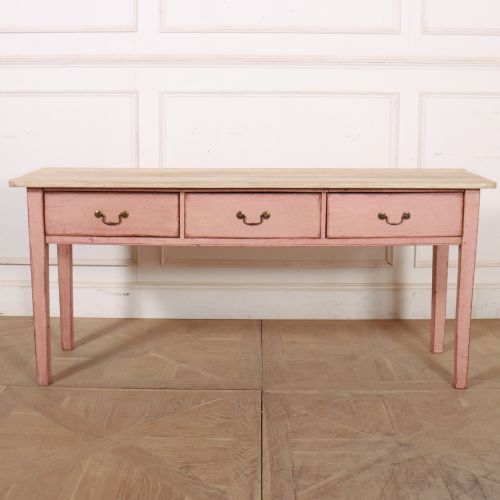


Antique Pine Serving Table
An antique pine serving table brings honest utility and warmth to a room, offering generous proportions and enduring character built for daily service.
Antique Pine Serving Table
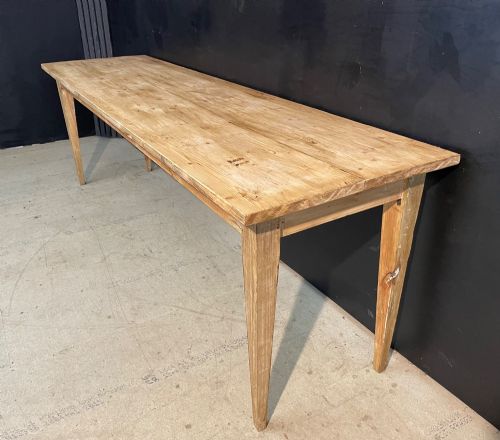
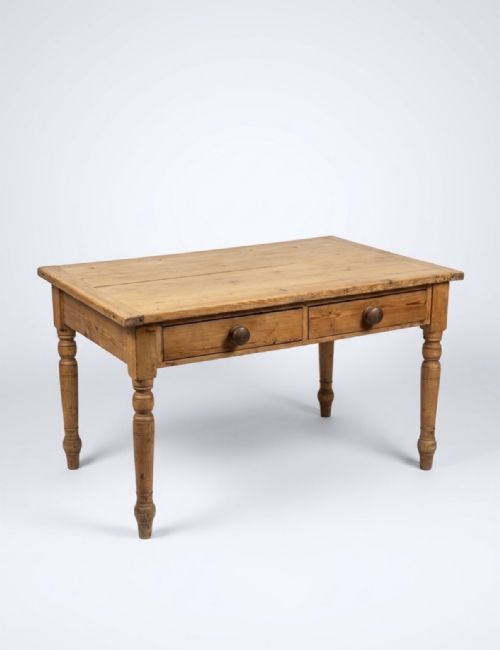
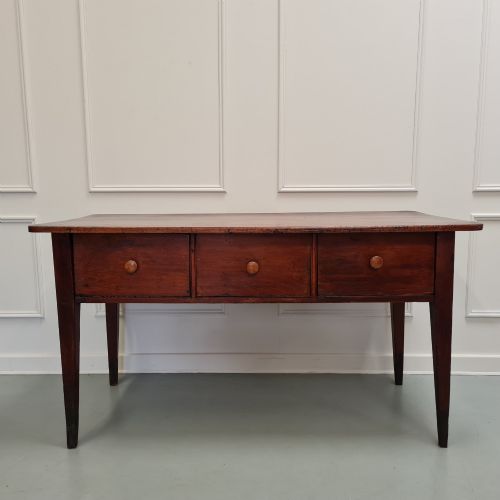
An antique pine serving table serves as a sturdy utilitarian surface designed for domestic preparation, display, and dining across various regional traditions. When searching for an antique pine serving table, buyers encounter formats spanning English country workshops, French provincial kitchens, and Welsh homesteads.
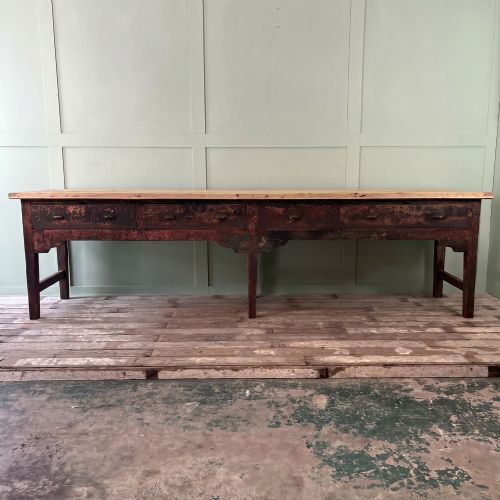
The pieces appearing here predominantly date from the nineteenth century, including Victorian interpretations and earlier Georgian survivals. These tables range from simple sideboards and drapers' counters to ecclesiastical designs featuring Gothic or Pugin-inspired architectural details.
Forms vary from narrow console layouts to deep preparation tables intended for heavy kitchen or scullery work. Common regional types incorporate original painted finishes or dense pitch pine timbers shaped for functional longevity.
Materials and construction
Construction relies heavily on solid pine and resinous pitch pine, selected for structural stability and availability in domestic workshops. Many examples utilise secondary hardwoods such as ash or fruitwood for framing or internal components, whilst marble surfaces appear on specific continental formats.
Surface treatments frequently involve original layers of paint, ranging from muted historical tones to weathered washes applied over timber. Iron and brass hardware, including handles and brackets, provide functional reinforcement to drawers and structural joints.
Listings demonstrate a strong presence of nineteenth-century pieces, spanning Victorian country formats alongside earlier Georgian survivals.
What separates the finest examples
Quality rests primarily in the integrity of the timber and the preservation of original surfaces rather than decorative excess. Tables retaining untouched historical paint layers command greater interest than stripped or modernly refinished equivalents.
Joinery execution distinguishes provincial vernacular work from refined cabinetmaking, with hand-cut joints and substantial timber thickness dictating structural endurance. Proportions and the absence of unsympathetic alterations further separate utilitarian items of high merit from heavily restored pieces.
The Antique Pine Serving Table Glossary
- Pitch pine
- A dense, resinous softwood sourced from specific pine species, noted for prominent grain patterns and exceptional durability. This timber often appears in Victorian institutional and larger domestic furniture.
- Drapers table
- A long, wide work table originally utilised in textile shops for measuring and folding cloth. These pieces translate well into modern dining or serving roles due to their expansive surface area.
- Scullery table
- A heavy-duty utility table designed for washrooms and food preparation areas in large houses. They typically feature robust construction built to withstand damp environments and heavy daily use.
- Ecclesiastical
- A style drawing on church architecture, frequently characterised by Gothic Revival motifs, pointed arches, and sturdy framing. Pugin-influenced pieces often share these architectural characteristics.
- Dresser base
- The lower section of a kitchen dresser, featuring cupboards or drawers beneath a flat top suitable for serving. These items function independently as sideboards or serving tables.
Antique Pine Serving Table: Frequently Asked Questions
How do I style an antique pine serving table?
Place the table against a dining room or hallway wall to hold serving platters, lamps, or decorative ceramics.
Pair the natural timber or painted finish with contrasting textures like woven textiles or stoneware to complement the rustic aesthetic.
Were these tables used in kitchens?
Many examples originated in domestic kitchens, sculleries, and dairies where sturdy preparation surfaces were essential.
Their robust timber construction allowed them to handle heavy culinary tasks before transitioning into domestic living spaces.
How do I clean and care for pine?
Dust the surface regularly with a soft, dry cloth and avoid using harsh chemical sprays that might strip historical finishes.
Apply a traditional wax periodically to nourish dry timber and protect painted or bare wood surfaces from moisture.
What is the difference between pine and pitch pine?
Standard pine offers a lighter, softer timber with a subtle grain commonly found in regional country furniture.
Pitch pine contains a higher resin content, resulting in a heavier, denser material with a distinctively dramatic, striated grain pattern.
Are painted finishes usually original?
Some pieces retain their first layer of historical paint, showing natural wear and weathering accumulated over decades of use.
Later overpainting or stripping occurs frequently, so examining the pigment layers under magnification helps determine age and authenticity.