

Light Oak Farmhouse Table
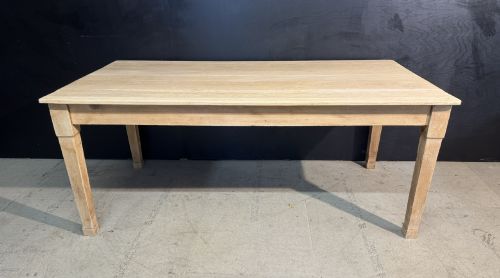
A light oak farmhouse table brings immediate warmth to a kitchen or dining room, offering a sturdy surface shaped by decades of family life.
Light Oak Farmhouse Table
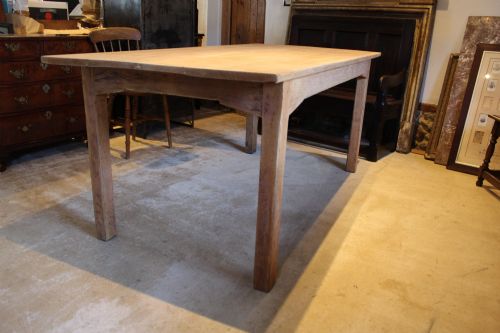
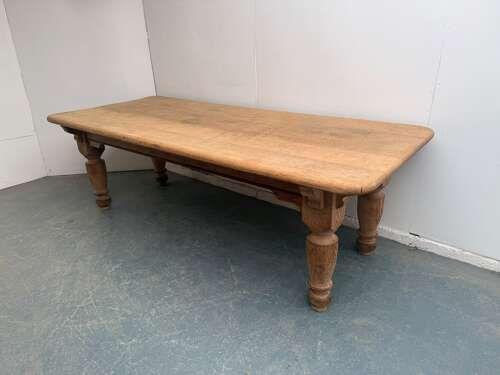
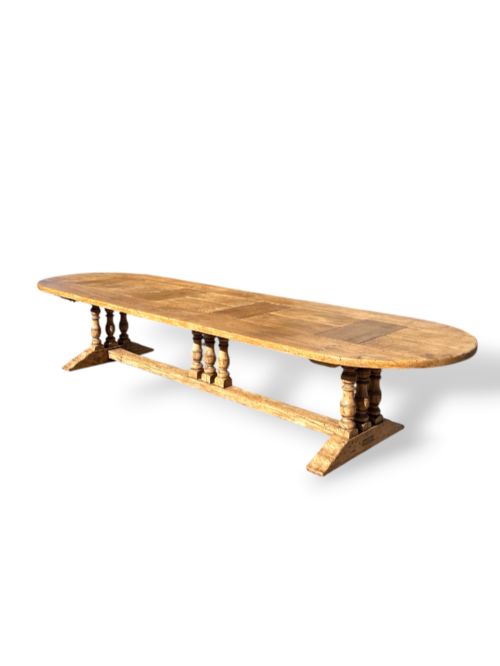
A light oak farmhouse table serves as the practical centrepiece of a kitchen or dining space, designed to seat large groups for daily meals. When exploring this selection, buyers frequently encounter French country pieces alongside Edwardian and late Victorian examples.
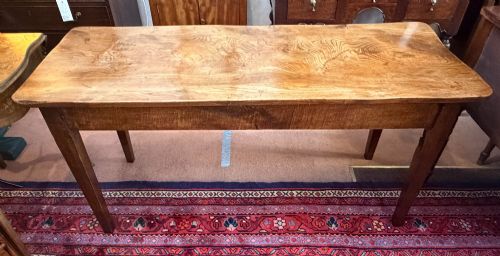
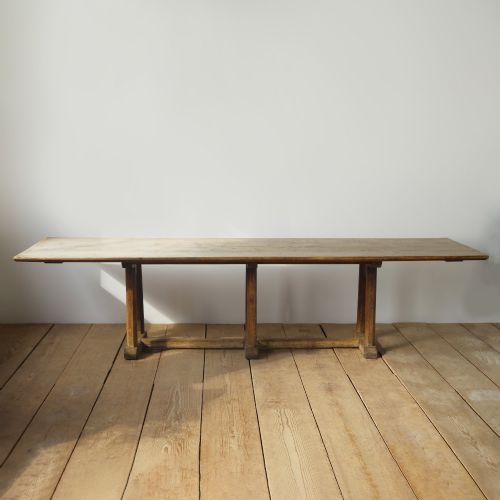
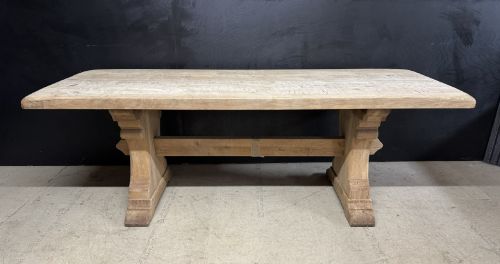
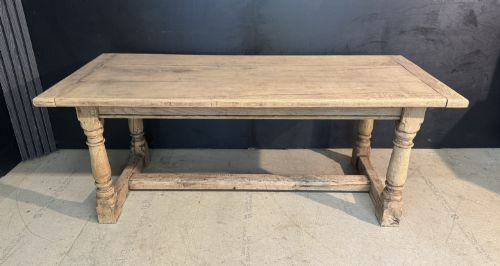
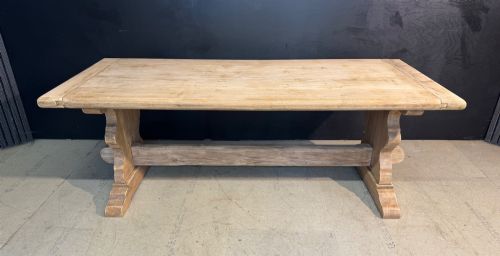
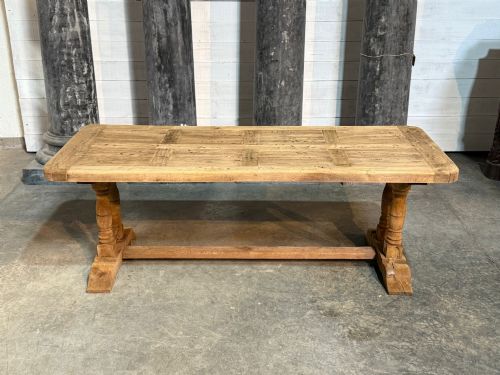
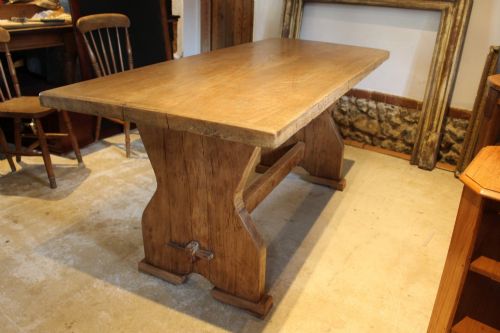
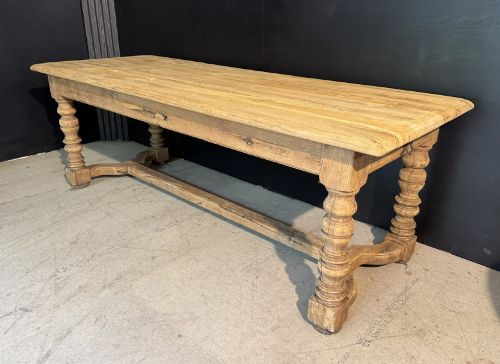
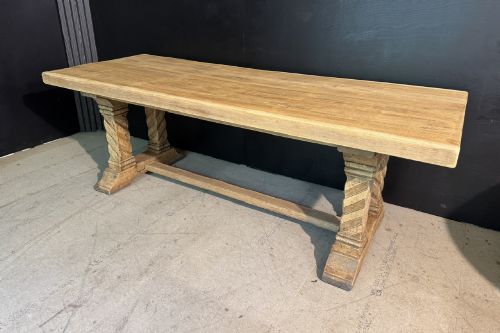
The inventory spans several distinct forms, including traditional refectory styles, trestle bases, and occasional tables featuring drawers. Most pieces showcase the natural pale grain of the timber rather than heavy dark varnishes.
Origins vary between British workshops and French provincial makers, with many items dating from the nineteenth and early twentieth centuries. These tables range from compact versions suited to smaller rooms to grand proportions exceeding three or four metres.
How they were made
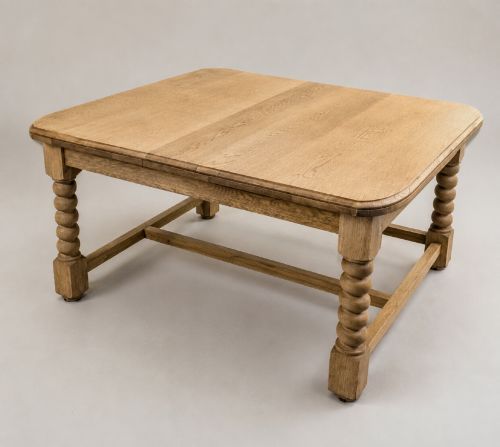
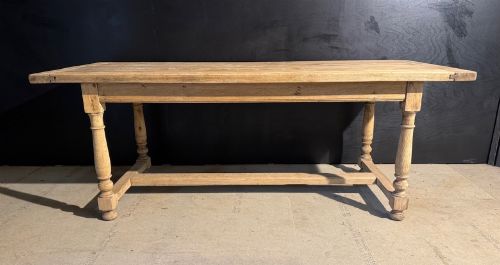
Makers relied on solid oak and French oak timbers, often selecting elm for specific structural components or secondary framing. Joinery was built to withstand heavy daily use, employing sturdy stretcher bases and robust legs.
Many surfaces exhibit a scrubbed or bleached finish that lightens the natural tone of the wood while retaining its visible grain. Iron fittings and traditional fixings occasionally appear in structural joints and drawer construction.
The listings here feature oak, solid oak, bleached oak, French oak, timber, elm, scrubbed oak, and iron across dining, refectory, console, and coffee table forms.
What varies in quality
The calibre of a light oak farmhouse table depends largely on the selection of the timber and the integrity of the original construction. Superior examples maintain a balanced proportion and stable joints across large spans without excessive sagging.
Finish application also sets pieces apart, particularly where bleaching or scrubbing has been carried out carefully to preserve the character of the wood without masking its natural texture. Tables retaining original drawer mechanisms and authentic period hardware command particular appreciation.
The Light Oak Farmhouse Table Glossary
- Refectory table
- A long, narrow dining table traditionally built for monastic dining halls and later adapted for domestic use. These pieces often feature sturdy end supports connected by a low central stretcher.
- Bleached oak
- Timber treated to lighten its natural dark hue, resulting in a pale, contemporary appearance while preserving the underlying grain. This finish is especially common on French provincial examples.
- Trestle table
- A table supported by two or more upright frames connected by a horizontal beam rather than four corner legs. This construction allows for flexible seating arrangements along the entire length.
- Scrubbed oak
- Wood that has been thoroughly washed and scrubbed to remove old finishes and dirt, exposing the raw, pale grain. It gives tables a clean, tactile surface associated with country kitchens.
- French provincial
- Furniture styles originating from regional French makers outside Paris, known for practical utility and modest ornamentation. These pieces emphasise functional charm and robust timber construction.
Light Oak Farmhouse Table: Frequently Asked Questions
How do I clean a light oak farmhouse table?
Wipe the surface regularly with a damp cloth and mild soap, avoiding harsh chemical cleaners that can strip the pale finish. Dry the wood thoroughly immediately after cleaning to prevent water marks.
Periodically apply a suitable wax or nourishing oil if the timber appears dry, following the direction of the grain to maintain its protective layer.
Can I seat guests along the sides of a refectory table?
Most refectory designs feature recessed legs or central trestles specifically arranged to maximise legroom along the entire length. This construction allows chairs to slide underneath easily without hitting corner posts.
Length remains the primary factor determining capacity, with longer examples comfortably accommodating ten to twelve diners.
How do I tell an Edwardian table from a Victorian one?
Edwardian pieces generally exhibit lighter proportions and simpler lines, reflecting a turn-of-the-century shift away from heavier Victorian ornamentation. They frequently display the bright, pale oak finishes popular during the early twentieth century.
Victorian tables often incorporate deeper mouldings, darker wax treatments, or more robust structural mass depending on whether they date from the mid or late nineteenth century.
Are bleached oak tables original antiques?
Many period tables receive a bleached or scrubbed treatment to achieve a lighter aesthetic suited to modern interiors. This process respects the antique timber while updating the overall colour for contemporary homes.
Checking the underlying construction, joint wear, and wood patina helps confirm the true age of the piece regardless of the surface finish.
How do I protect the wood from daily use?
Use placemats and coasters to guard against heat and moisture rings, which can penetrate porous oak surfaces. Promptly mop up any liquid spills rather than letting them pool on the bare timber.
Allowing the wood to develop a natural patina over time is part of living with a farmhouse table, provided basic preventative care is maintained.