


Light Oak Cupboard
A light oak cupboard brings pale timber and practical storage into a room, spanning periods from the eighteenth century to the mid-twentieth century.
Light Oak Cupboard
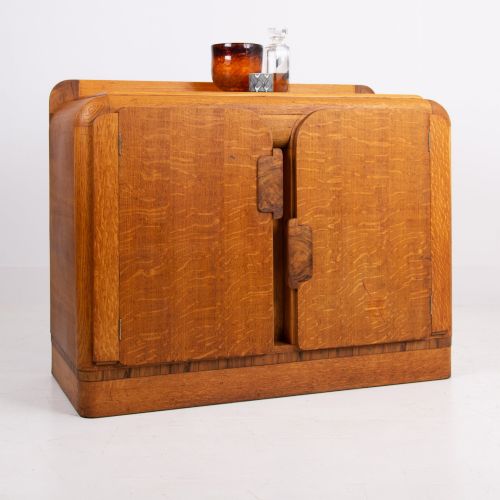
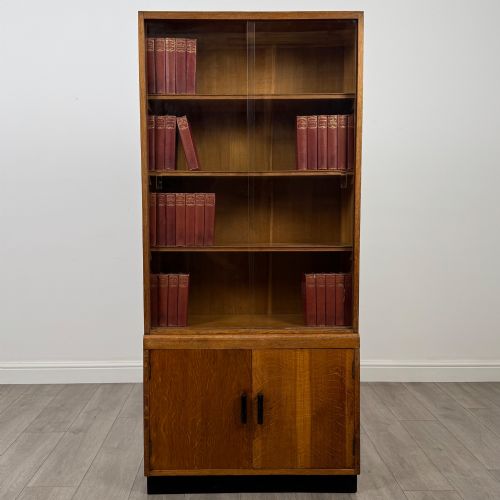
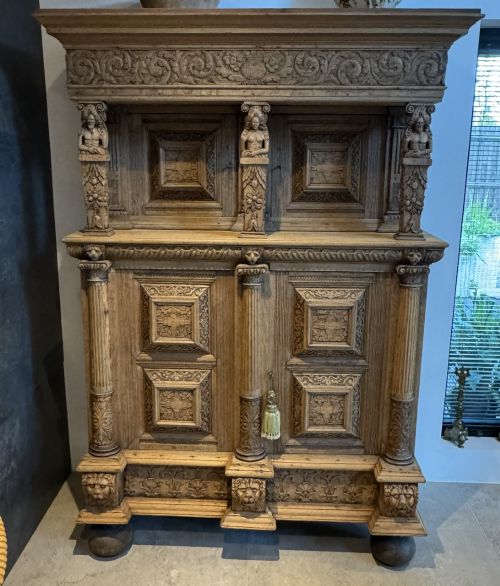
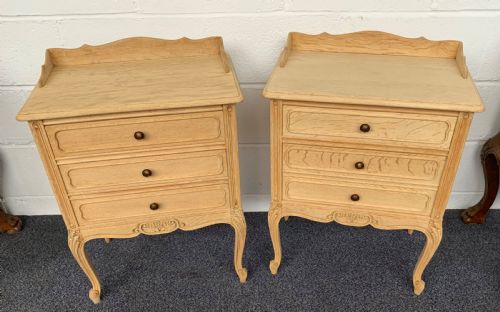
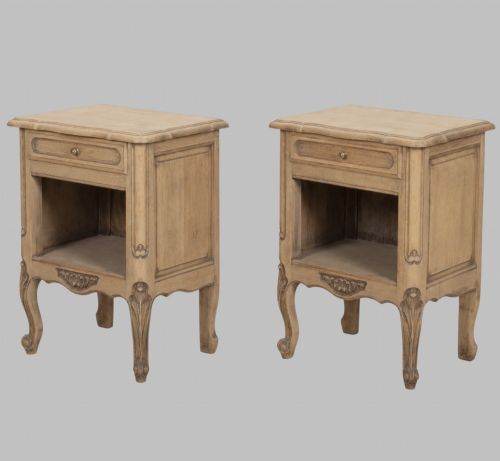
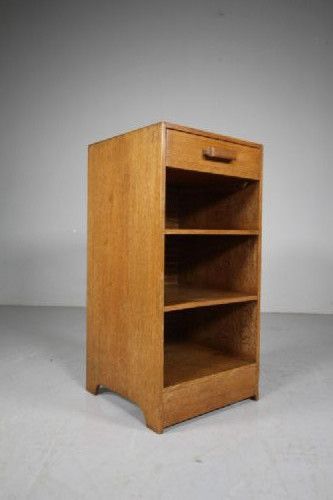
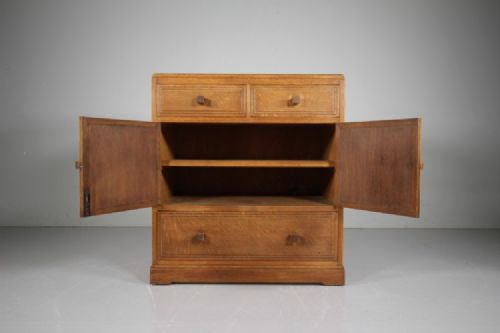
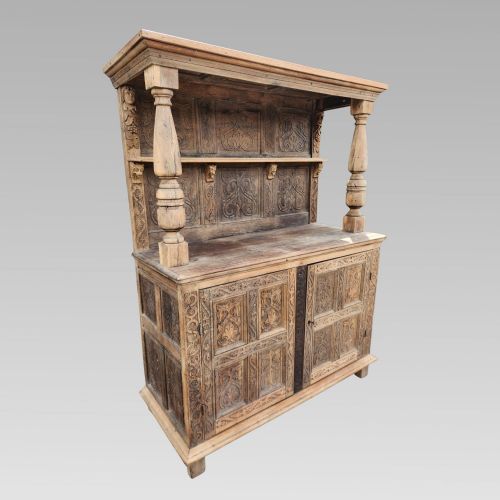
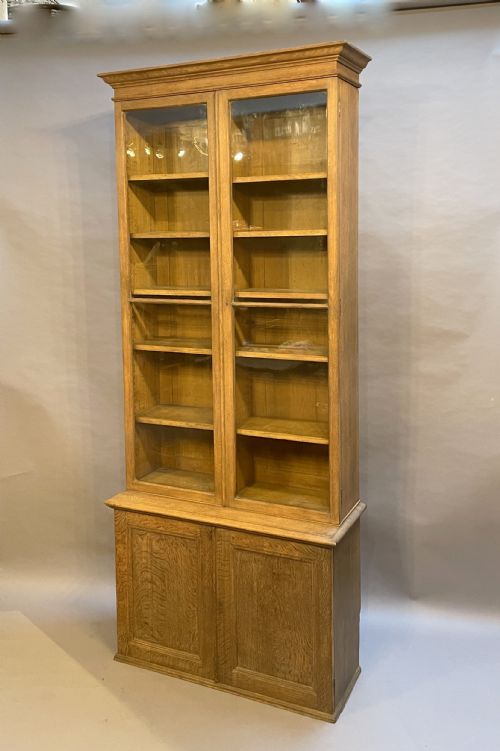
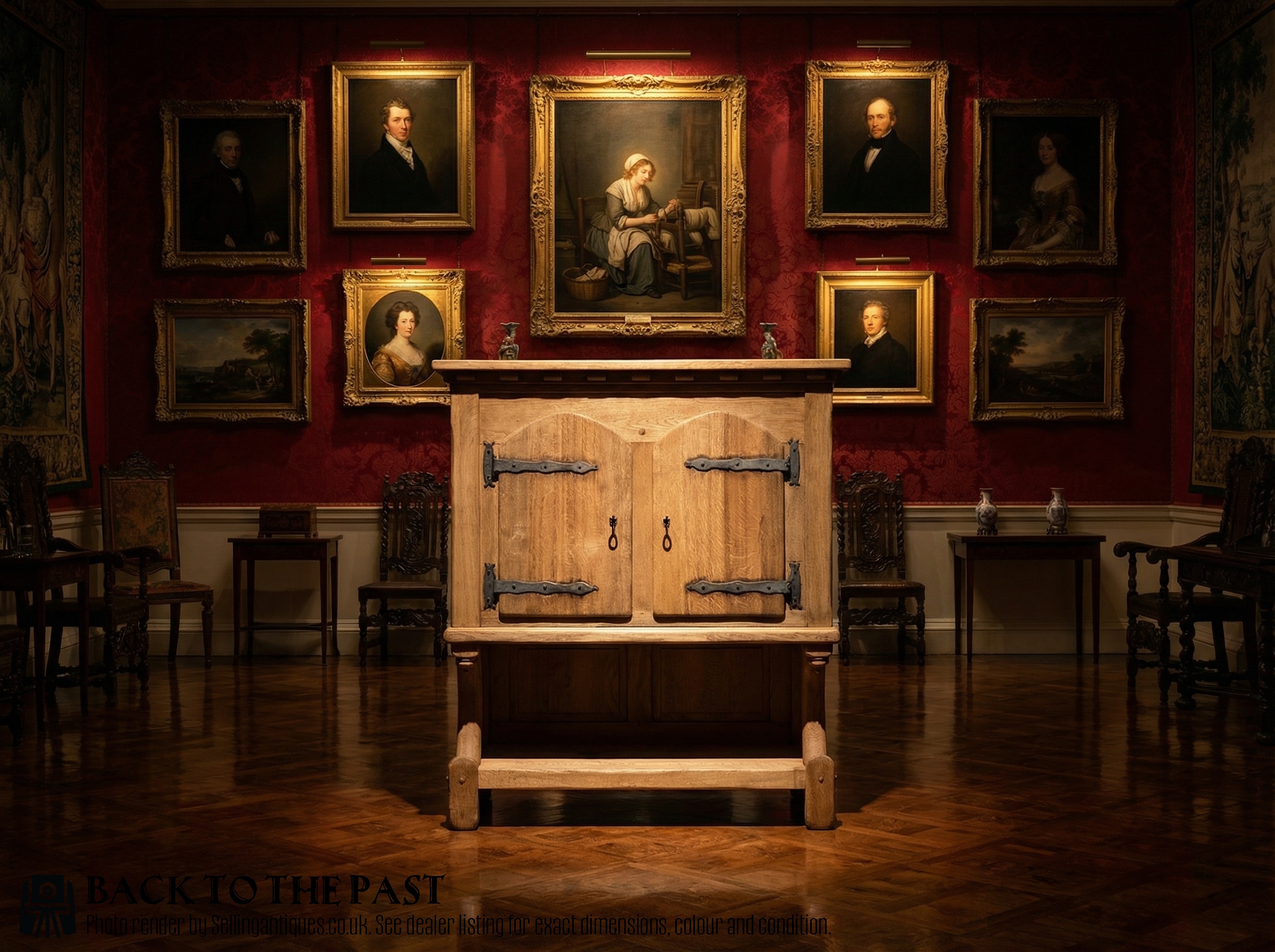
A light oak cupboard serves primarily for storage, appearing in forms such as bedside cabinets, housekeeping cupboards, corner cupboards, and larger sideboards or bookcases. When searching for a light oak cupboard, buyers encounter pieces ranging from simple domestic furniture to carved continental armoires and pieces produced by prominent twentieth-century makers.
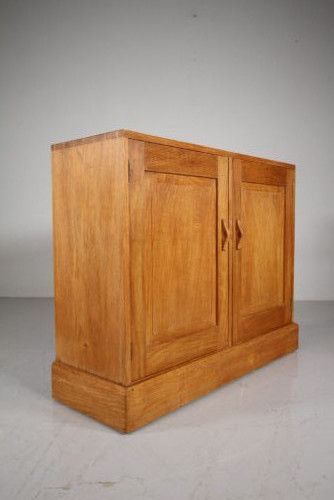
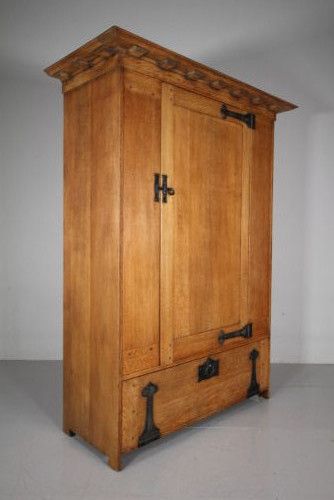
The selection includes regional English examples, such as Cotswold School and Welsh pieces, alongside French provincial armoires, dressers, and bedside tables. Many examples date from the nineteen-twenties and nineteen-thirties, often utilising limed, bleached, or golden oak finishes that lighten the natural tone of the timber.
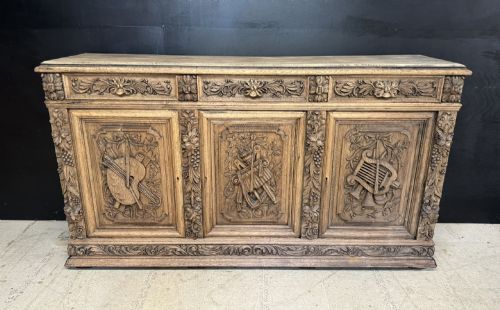
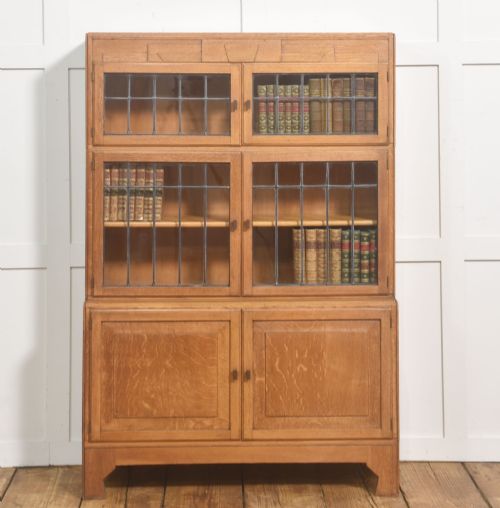
Earlier periods are represented by eighteenth-century court cupboards and Georgian hanging corner cupboards, while Victorian and Edwardian iterations bring heavier carved details or stacking barrister formats. The variety spans utilitarian storage units, display cabinets with leaded glass, and compact bedside furniture.
Materials and construction
Construction relies heavily on solid oak, frequently paired with secondary timbers like chestnut, while decorative elements incorporate brass hardware, iron hinges, and leaded glass panels. Makers utilised traditional joinery techniques suited to the density of the wood, resulting in durable frames for wardrobes, bookcases, and sideboards.
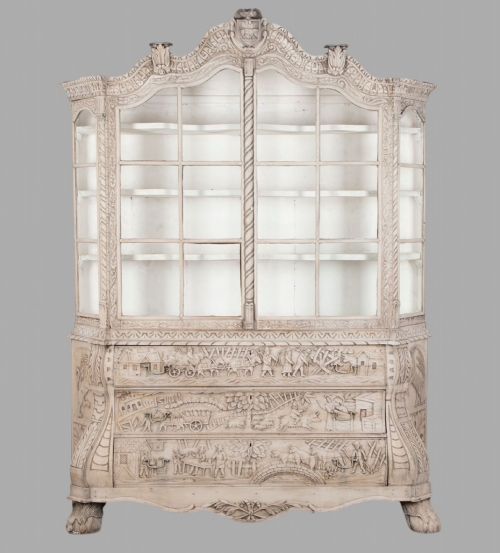
Surface treatments define many twentieth-century pieces, involving bleaching, liming, or applying light golden finishes to achieve a pale aesthetic that contrasts with darker traditional polish. Carving appears on continental and revival pieces, while structural components range from sturdy corner brackets to panelled doors and fitted interior shelving.
Listings feature oak combined with brass, iron, lead, and glass across 1920, 1930, and Edwardian periods.
Assessing quality in light oak pieces
Quality rests in the precision of the joinery, the selection of the timber grain, and the integrity of original hardware like brass handles and iron hinges. Superior pieces exhibit refined proportions and careful timber matching, whereas standard examples lean toward utilitarian domestic utility.
Makers' signatures, stamps, or paper labels from workshops such as Heals, Gomme, or Betty Joel elevate a piece through documented provenance. The depth of hand-carving on panels and the retention of original surface finishes, such as early liming or bleaching, further distinguish standard production items from workshop outputs.
Heals of London·Gomme·Howard and Sons·Betty Joel·Bryn Mawr
The Light Oak Cupboard Glossary
- Bleached oak
- Oak timber treated chemically or physically to lighten its natural colour, a finish frequently seen on pieces from the early twentieth century.
- Court cupboard
- A traditional short open or enclosed cupboard used for storing food and utensils, often dating to the seventeenth or eighteenth centuries.
- Leaded glass
- Glass panes held together by narrow strips of lead, commonly found in the doors of bookcases and display cabinets from the Arts and Crafts and Art Deco periods.
- Limed oak
- Timber treated with a white compound rubbed into the grain to create a pale, textured surface finish popular in modern and Cotswold School furniture.
- Housekeeper's cupboard
- A large storage piece with internal shelving and sometimes drawers, traditionally used in large domestic kitchens for linen and dry stores.
Light Oak Cupboard: Frequently Asked Questions
What periods do these cupboards cover?
The available selection spans from the eighteenth century through the Victorian and Edwardian eras into the nineteen-twenties and nineteen-thirties.
Twentieth-century pieces often reflect Arts and Crafts, Art Deco, or early modern movements alongside earlier Georgian and provincial designs.
Where were these cupboards made?
Origin locations include workshops across England, Wales, and various regions of France such as Brittany and provincial districts.
English examples often showcase regional styles like the Cotswold School, while French pieces include carved armoires and kitchen dressers.
Are signed pieces common?
Stamps, labels, or maker's marks do appear on certain pieces, identifying origins from notable London workshops and cabinet makers.
Such documentation helps verify the exact workshop and period of production for mid-century and earlier items.