
Light Oak Cabinet
When you search for a light oak cabinet, you encounter versatile storage pieces spanning the late nineteenth and early twentieth centuries, designed to bring bright, durable utility to domestic spaces.
Light Oak Cabinet
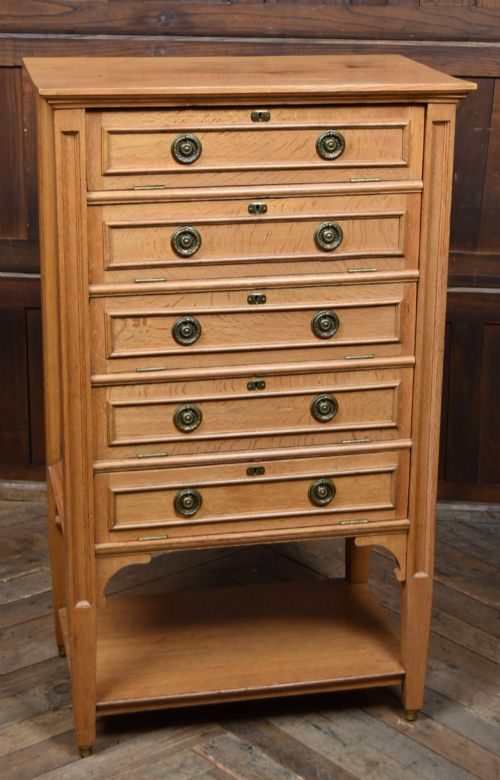
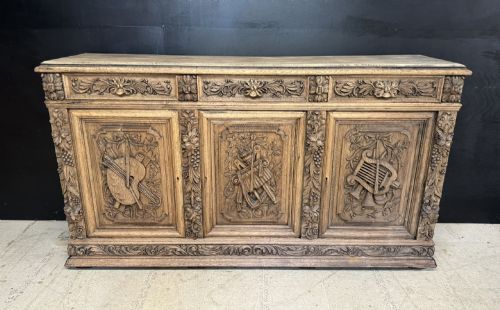
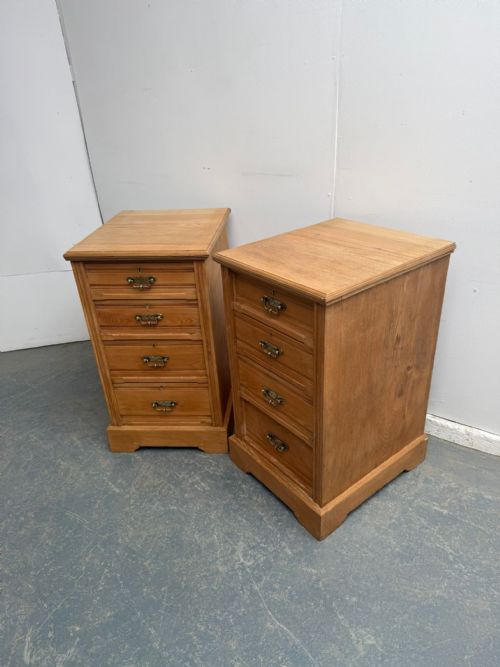
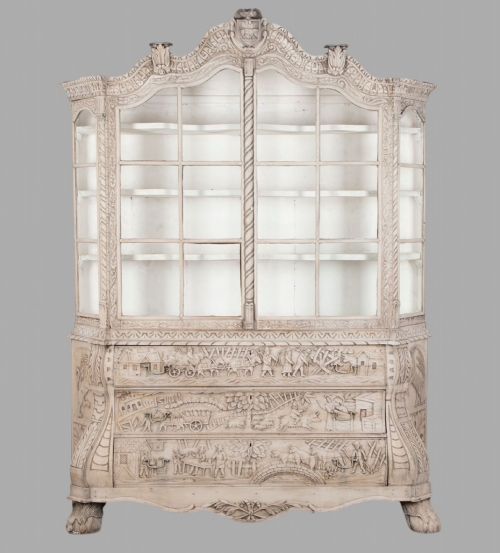
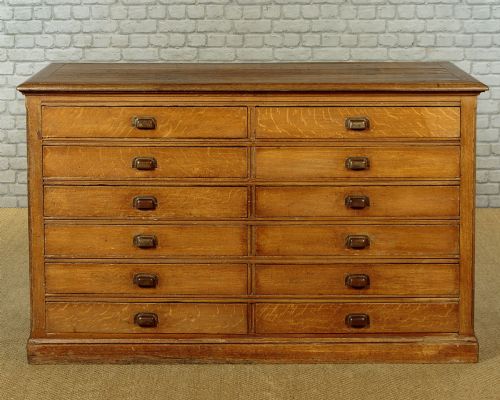
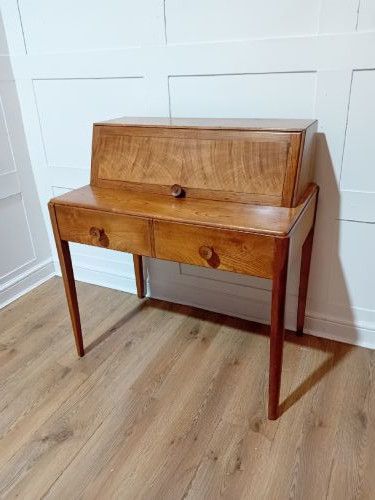
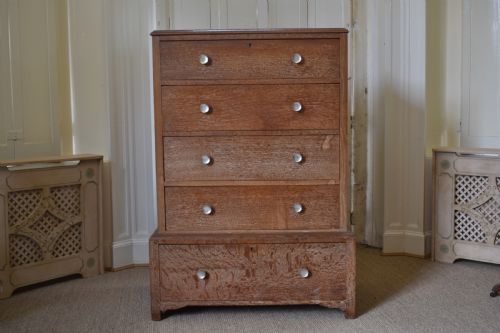
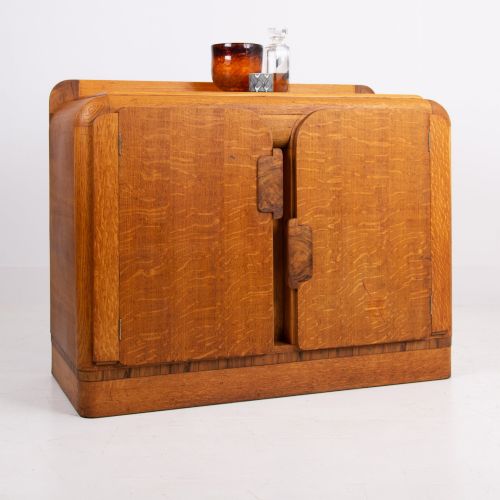
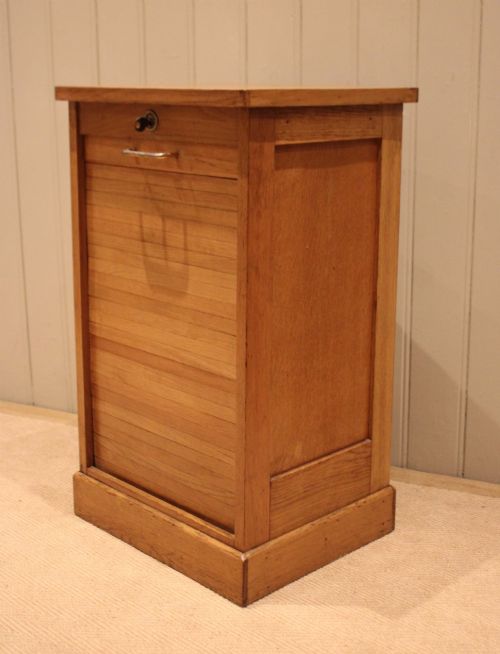
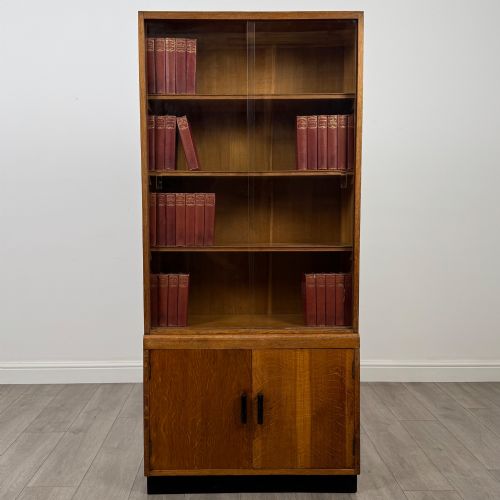
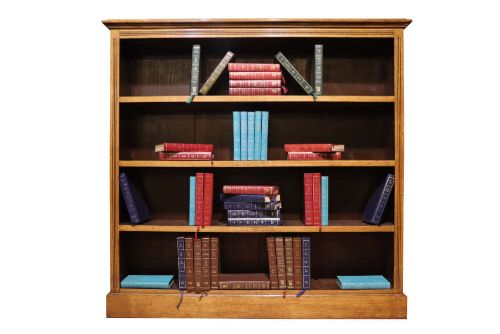
A light oak cabinet encompasses a diverse group of practical furniture forms, including compact bedside tables, tall bookcases, sectional lawyer units, and expansive sideboards. These utilitarian items served everyday storage needs in various domestic and institutional settings across Britain and continental Europe.
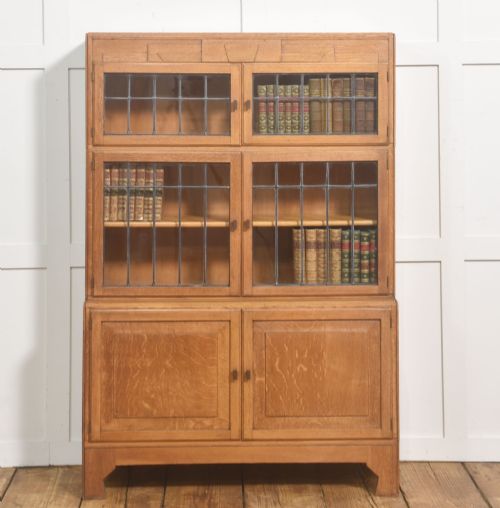
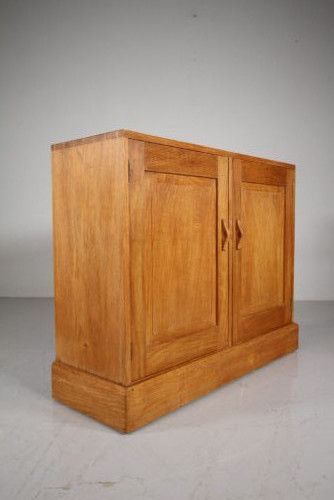
The material palette shifts from the rich golden tones of early twentieth-century creations to the pale, bleached, and limed finishes popular during the interwar decades. Pieces range from unpretentious Cotswold School cupboards to modular sectional stacks by makers such as Globe Wernicke.
Edwardian and Arts and Crafts examples dominate the available selection, often presenting straightforward lines alongside functional drawer arrangements and glazed display sections. Buyers frequently select these items for their compact proportions and capacity to blend seamlessly into contemporary interiors.
How they were made
Construction relies heavily upon solid oak timbers, occasionally paired with secondary woods like ash or combined with brass hardware, iron fittings, and leaded glass panels. Workshops employed traditional joinery techniques, including dovetailed drawers and pegged mortise and tenon joints, to ensure structural endurance.
Surface treatments vary widely from traditional wax polishing that highlights the natural grain to intentional bleaching, liming, and staining. Master cabinetmakers utilised quarter-sawn oak to reveal striking medullary rays, enhancing the visual texture of the timber across both provincial and commercial output.
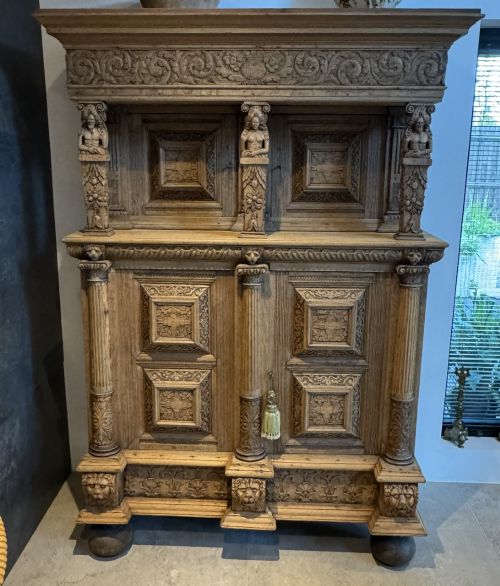
Several pieces owe their existence to repurposed French bed fronts and reclaimed chateau woodwork.
What varies in quality
Quality reveals itself through the integrity of the timber selection and the precision of the underlying joinery rather than mere surface ornamentation. Superior examples feature carefully matched grain patterns, solid backboards, and well-fitted doors that maintain their alignment over decades of use.
Maker attribution and design ambition also set individual pieces apart, separating mass-produced utility furniture from bespoke Arts and Crafts or Cotswold School commissions. The finesse of hand-carved details, the operational smoothness of sliding or stacking mechanisms, and the condition of original hardware determine the standing of each item within the broader range.
F Sage And Co·Gomme·Howard And Sons·Minty·Waring And Gillows·Arthur Basil Reynolds
The Light Oak Cabinet Glossary
- Limed oak
- A finishing technique where a white pigment is rubbed into the open pores of the oak grain to create a pale, weathered appearance. This treatment gained significant popularity during the 1920s and 1930s.
- Sectional bookcase
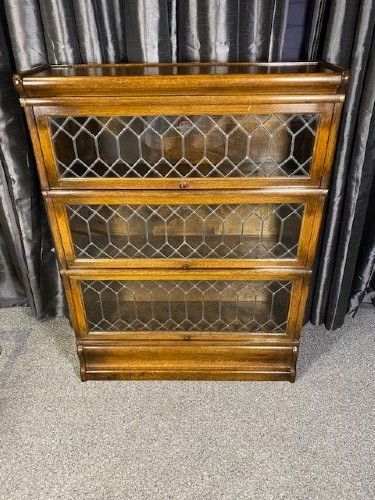
- A modular storage unit comprising stackable glass-fronted shelves that can be rearranged or expanded vertically. These units were patented by firms like Globe Wernicke for office and library use.
- Quarter-sawn
- A method of timber cutting where logs are quartered radially, producing boards with enhanced dimensional stability and a distinctive striped grain pattern known as ray fleck.
- Arts and Crafts
- A design movement spanning the late nineteenth and early twentieth centuries that emphasised handcraftsmanship, simple forms, and the natural qualities of materials over industrial mass production.
- Waxed finish
- A traditional protective coating applied to timber using natural beeswax, producing a soft sheen that deepens with age and regular handling while allowing the natural texture of the wood to remain tactile.
Light Oak Cabinet: Frequently Asked Questions
How do I identify an Arts and Crafts cabinet?
Arts and Crafts pieces typically display visible construction details such as exposed pegs, hand-beaten brass or copper hardware, and a focus on the natural grain of the light oak timber.
These items reject excessive machine-carved ornamentation in favour of honest, sturdy proportions and functional utility.
Are sectional bookcases difficult to assemble?
Sectional or stacking bookcases operate on an interlocking modular system where individual glazed tiers rest upon a base and beneath a top cornice without permanent fixings.
This clever design allows the entire unit to be dismantled easily for transport and reassembled in minutes without tools.
What is the difference between limed and bleached oak?
Liming involves working a white paste or pigment into the open pores of the oak to accentuate the grain pattern with a chalky contrast. Bleaching uses chemical treatments to strip the natural amber tones from the wood entirely, resulting in a uniform pale Scandinavian aesthetic.
Both finishes were favoured during the interwar period to lighten heavy Victorian interiors.
How should I care for a waxed oak surface?
Maintenance requires occasional applications of a quality beeswax followed by gentle buffing with a soft, clean cloth to preserve the moisture and natural lustre of the timber. Avoid placing these items near direct heat sources or in strong sunlight to prevent the wood from drying out or splitting.
Regular dusting with a dry cloth keeps the surface free from microscopic abrasive particles.