

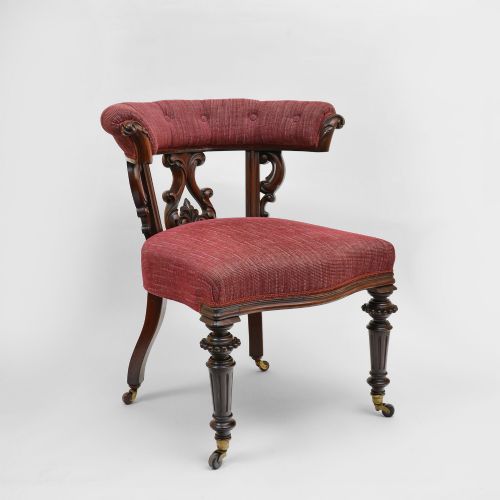
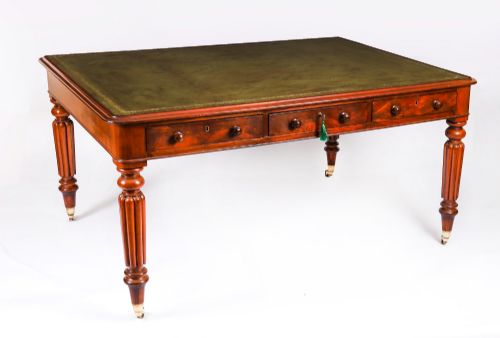
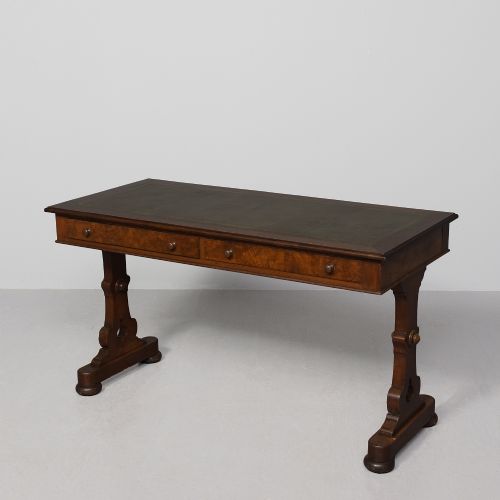
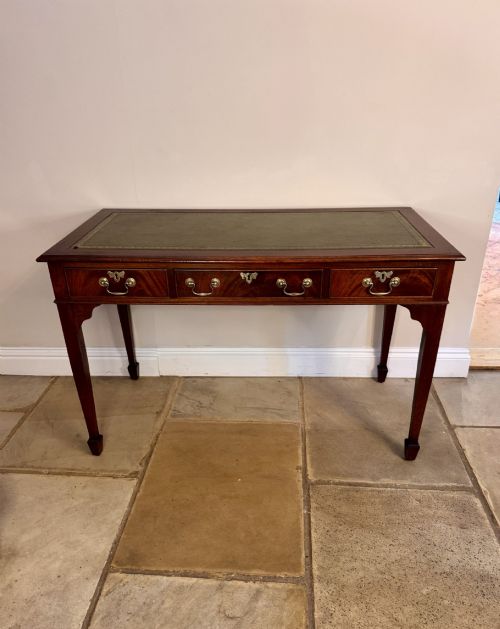
Library Desk Mahogany
Library desk mahogany pieces anchor a room with rich timber and practical writing surfaces designed for serious study.
Library Desk Mahogany
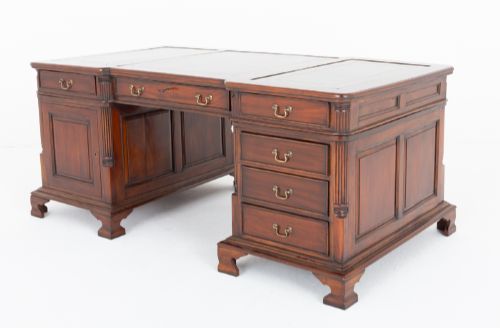
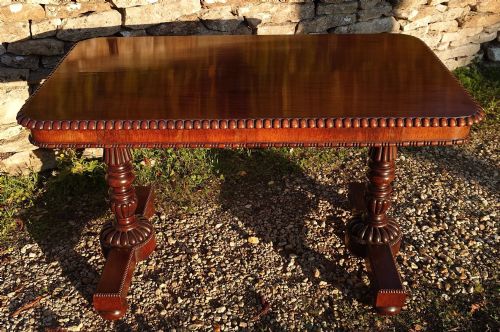
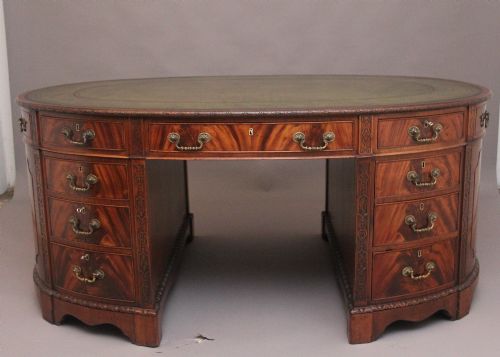
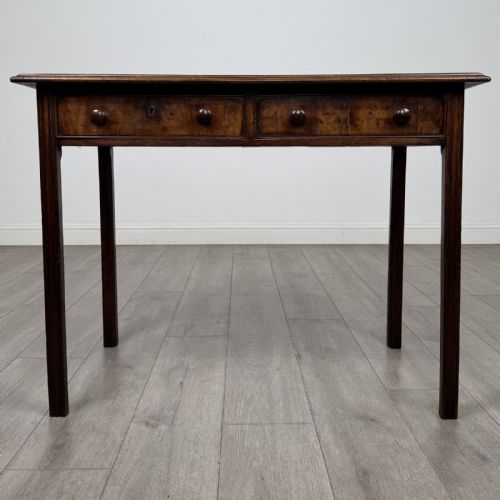
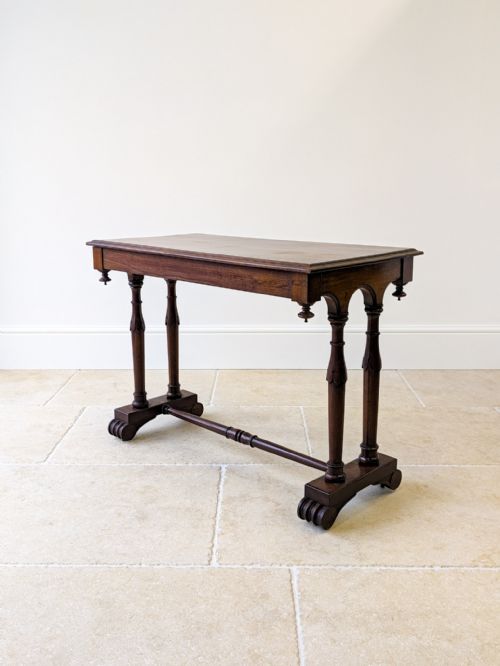
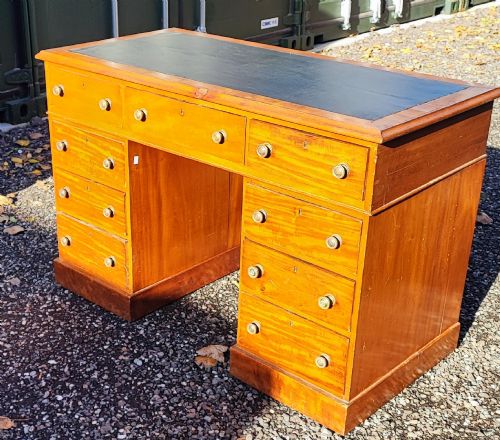
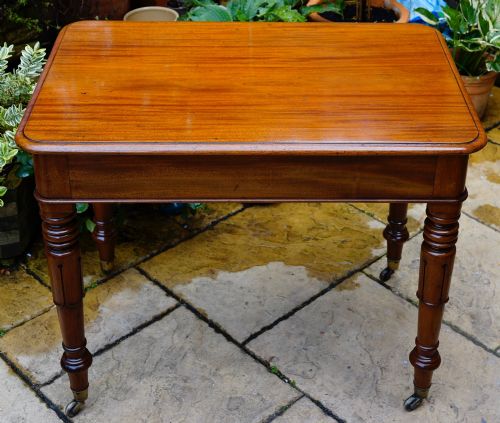
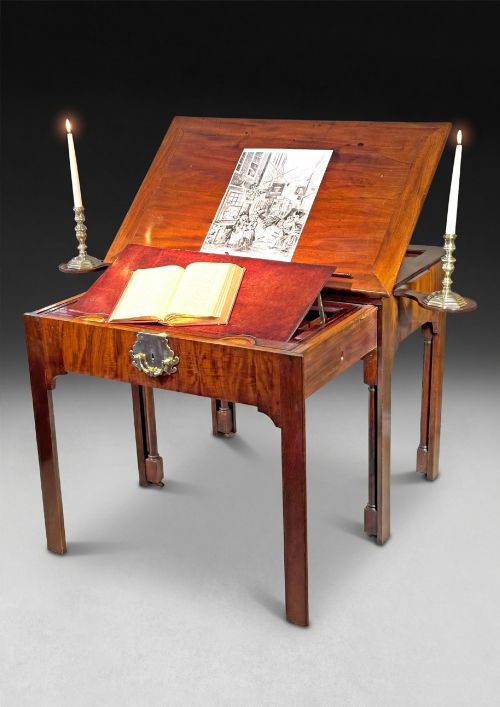
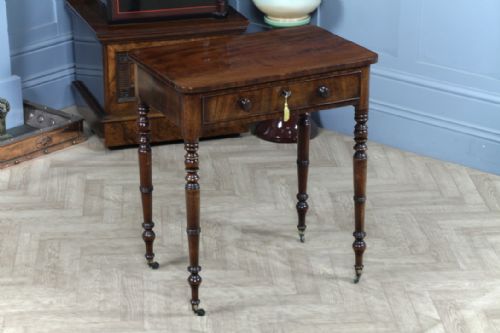
A library desk mahogany piece serves as a substantial workspace, often encountered in forms such as partners tables, writing tables, and pedestal desks from the eighteenth and nineteenth centuries. These furniture items emerge from periods including the Georgian, Regency, William IV, and Victorian eras.
How they were made
Cabinet makers utilised solid mahogany and flame mahogany veneers over secondary timbers, constructing robust carcases designed for longevity. Brass details, such as casters, handles, and inlay, frequently accent the structural timber.
Writing surfaces are typically inset with tooled leather or sometimes velvet and fabric inserts, bordered by timber framing. Tables and desks rely on sturdy leg supports, pedestals, or end frames to bear the weight of heavy books and ledgers.
Library Desk Mahogany Retail Price Guide 2026
Typical asking prices for library desk mahogany among the pieces listed under this phrase on Sellingantiques today, from the lower quarter to the upper quarter. They describe what is for sale here now, not the wider market.
The listings feature mahogany alongside brass, leather, flame mahogany, cane, glass, and velvet across multiple centuries.
What varies in quality
The sophistication of the timber figure and the crispness of secondary details dictate the standing of a piece. Flame mahogany veneers show superior grain selection, while finely cast brass hardware and neat leather tooling indicate attentive workshop execution.
Proportion and scale separate standard commercial pieces from bespoke commissions or works associated with notable makers. Construction integrity within the drawers and the condition of the original timber finish further define the tier of craftsmanship.
Gillows of Lancaster and London·George Smith
The Library Desk Mahogany Glossary
- Partners desk
- A large double-sided desk designed for two people to work opposite one another, featuring drawers and cupboards on both faces.
- Drum table
- A circular library table with a revolving or stationary top surrounded by frieze drawers, often raised on a central pillar and tripod base.
- Flame mahogany
- A veneer cut from the fork of the mahogany tree, producing a distinctive leaping flame pattern across the surface.
- Kneehole desk
- A compact desk featuring a central recess for the legs, flanked by pedestals of smaller drawers.
- Pedestal desk
- A heavy freestanding desk comprising two independent drawer pedestals supporting a wide writing top.
Library Desk Mahogany: Frequently Asked Questions
What is a partners desk?
A partners desk provides workspace on both sides, featuring matching sets of drawers facing opposite directions. These large tables allowed two individuals to work simultaneously in a shared library.
Originating in the eighteenth and nineteenth centuries, they served administrative roles in grand houses and professional offices. Their substantial presence requires a dedicated central room placement.
How do I identify Regency mahogany desks?
Regency mahogany desks often display classical architectural restraint, incorporating brass inlay, reeded legs, and substantial flame mahogany veneers. These pieces reflect design influences from the early nineteenth century.
Hardware tends to be crisply cast, and proportions are bold yet balanced. Many examples utilise brass paw casters and secure locks on the primary drawers.
What is a drum table?
A drum table is a circular library table with a deep top containing alternating true and false drawers. It typically rests on a central pillar supported by splayed legs.
These tables were designed to sit in the middle of a room rather than against a wall. The rotating top versions allowed easy access to reference books and writing materials from any seating position.
How do I care for leather writing surfaces?
Leather writing surfaces require gentle dusting and occasional conditioning to prevent the hide from drying and cracking. Avoiding direct sunlight helps preserve the tooled gold leaf borders.
Most antique surfaces feature tooled leather that benefits from minimal moisture and careful handling during daily writing tasks. Protective blotters are traditionally used to prevent ink stains.
What distinguishes Georgian revival furniture?
Georgian revival pieces replicate the forms and timber choices of eighteenth-century originals during later periods like the early twentieth century. They utilise mahogany and traditional construction methods.
While sharing the aesthetic of earlier centuries, these pieces offer a sturdier structure for modern home offices. They bridge historical design preferences with practical utility.