


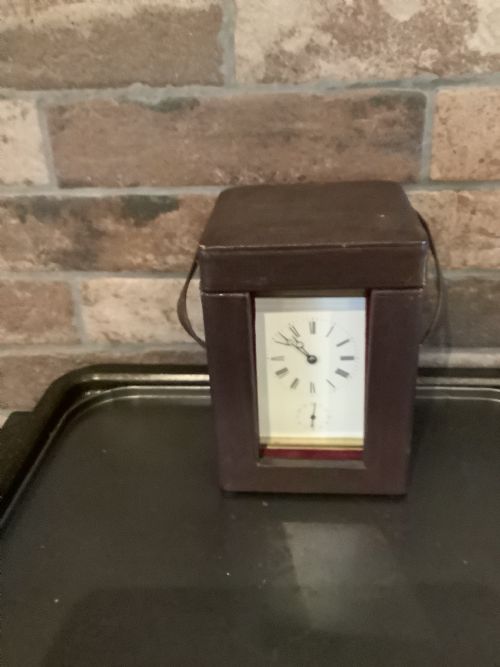


Leather Travel Clock
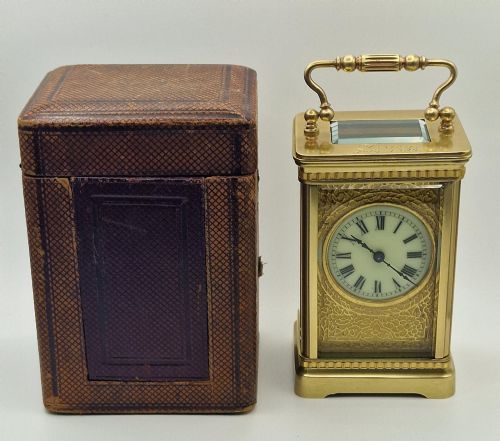
A leather travel clock is a portable timepiece designed for the road, combining mechanical precision with a protective outer shell for the journey.
Leather Travel Clock
When you search for a leather travel clock, you enter a category of portable timekeepers that bridge domestic elegance and mobility. These pieces range from substantial nineteenth-century French carriage clocks housed in leather outer cases to streamlined twentieth-century folding alarms.
The versions most commonly met on this page are nineteenth-century French carriage clocks with their original leather cases, alongside later twentieth-century Art Deco iterations. They appear in forms such as miniature boudoir timepieces and robust brass carriage clocks designed to endure transit.
Materials and construction
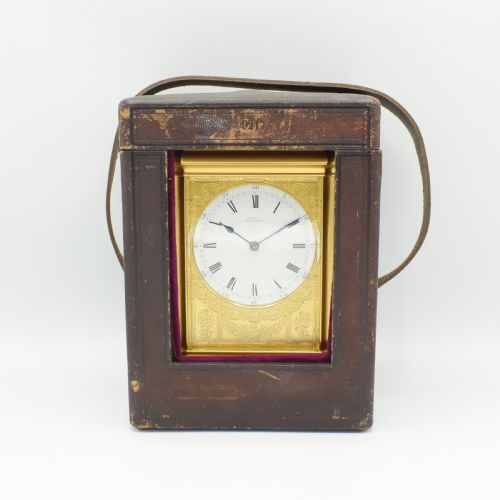
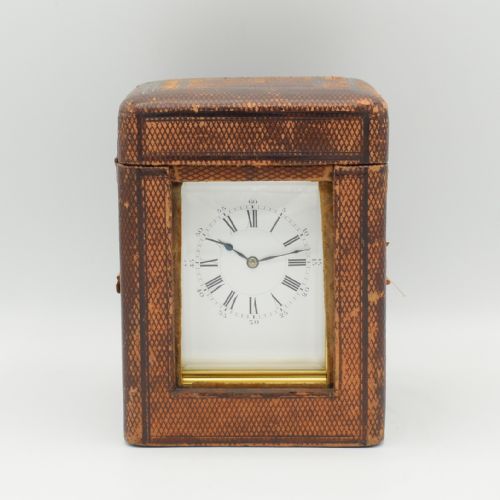
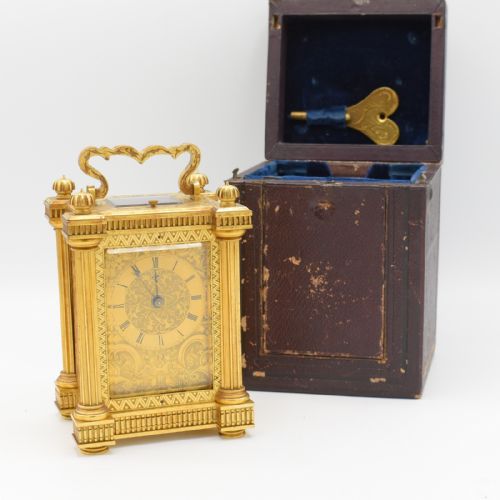
Makers housed these timepieces in heavy brass, gilt brass, and gilt bronze frameworks fitted with glass panels to display the movement. Outer protection relied on fitted leather cases, frequently lined with velvet or silk.
Dials and cases often received decorative treatment through enamel work, silver elements, and fully engraved brass surfaces. Movements utilised eight-day mechanisms, striking trains, alarms, and repeaters developed by precision workshops.
Travellers once relied on these heavy brass boxes to chime the dark hours in unfamiliar coaching inns, ensuring no carriage was missed.
Factors of distinction
The caliber of a piece rests upon the complexity of its movement, such as grand sonnerie striking capabilities, repeating functions, and alarm complications. Maker attribution heavily influences standing, with signed works from recognised makers commanding particular attention.
Preservation of the original leather outer case alongside the clock itself elevates a piece significantly. The crispness of hand-engraving on the gilt brass mask and case further distinguishes finer examples from standard production.
Henri Jacot·Howell & James London·Harrods of London·Hunt & Roskell·Alfred Hollinge·Smiths·Aspreys·Jaeger LeCoultre
The Leather Travel Clock Glossary
- Carriage clock
- A portable spring-driven timepiece originally designed for officers and travellers during the nineteenth century. These clocks typically feature a rectangular brass case with glass panels and a swing handle.
- Repeater
- A mechanism that strikes the hours and quarters on demand when a lever or button is pressed. This complication allowed travellers to check the time in the dark without striking a light.
- Gorge case
- A specific eighteenth and nineteenth-century carriage clock case style characterised by stepped mouldings and a flat top plate. It represents a classic French design frequently paired with a leather travel case.
- Grand Sonnerie
- A complex striking train that chimes the hours and each quarter-hour automatically as time passes. Such movements demonstrate the highest tier of horological skill.
- Boudoir timepiece
- A smaller clock intended for private domestic spaces rather than grand public rooms. They often feature delicate enamel decoration or miniature proportions.
Leather Travel Clock: Frequently Asked Questions
What is the difference between a carriage clock and a travel clock?
A carriage clock is a heavy brass and glass timepiece with a handle, originally built for travel in horse-drawn carriages. A leather travel clock specifically refers to one of these clocks, or a later folding alarm, enclosed in a protective leather case.
While all carriage clocks are technically travel clocks, twentieth-century pieces often favor chrome-plated metal and leather folding folios over heavy brass frames.
How should I care for the leather case?
The leather outer cases require minimal intervention, avoiding excessive moisture and direct sunlight to prevent drying and cracking. Gentle dusting with a dry cloth keeps the surface clean.
Conditioning balms suitable for antique leather may be applied sparingly if the material shows signs of dryness, protecting the original housing.
Are these clocks suitable for daily use?
Antique and vintage mechanical clocks can keep reliable time when properly maintained and serviced by a professional horologist. However, their vintage components require gentle handling compared to modern quartz timepieces.
Regular setting and winding should be performed with care to preserve the delicate gear trains and escapements within.