





Leather Top Slant Desk
These leather top slant desk pieces span the Georgian, Regency, and Victorian periods, offering compact writing surfaces tailored for period studies.
Leather Top Slant Desk
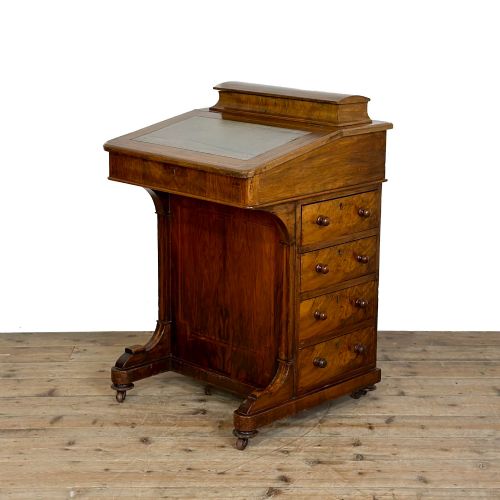
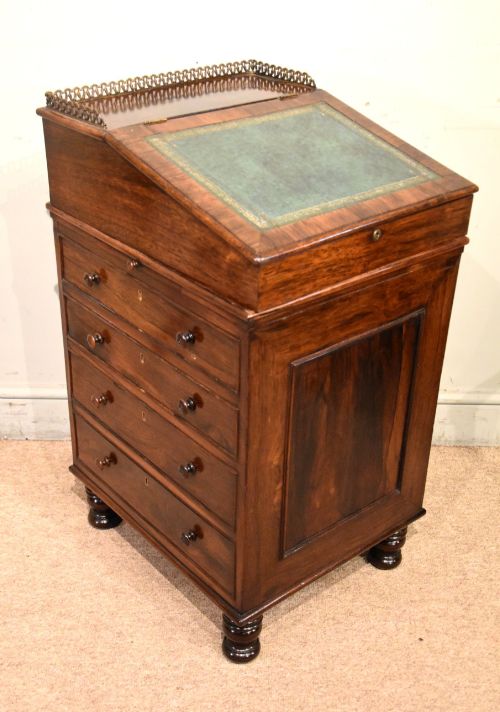
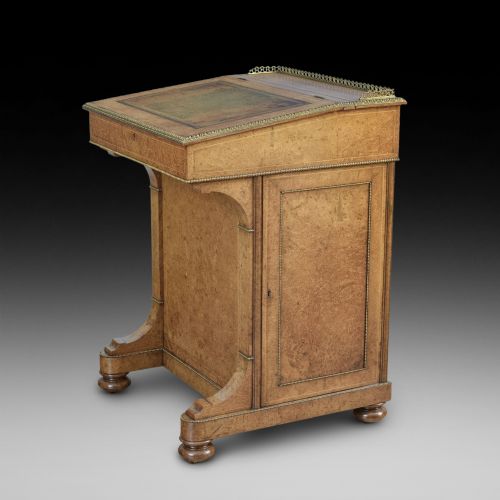
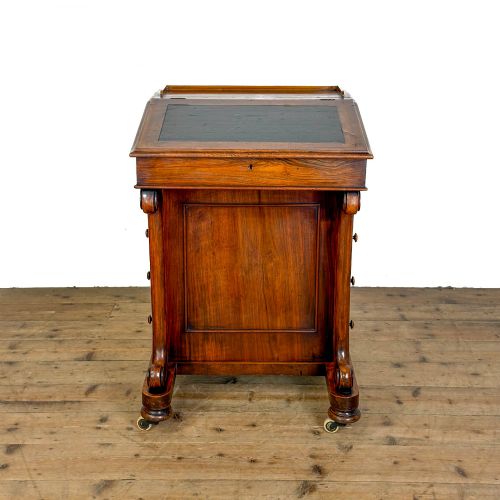
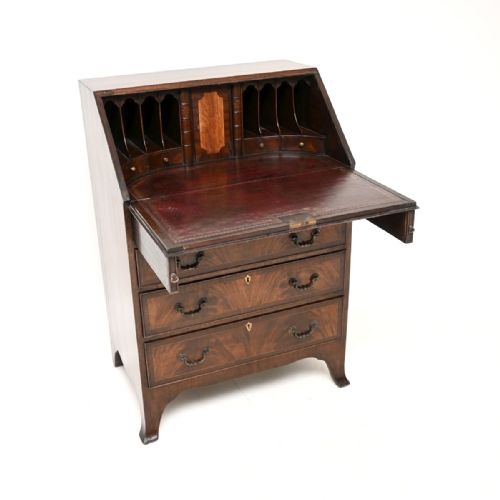
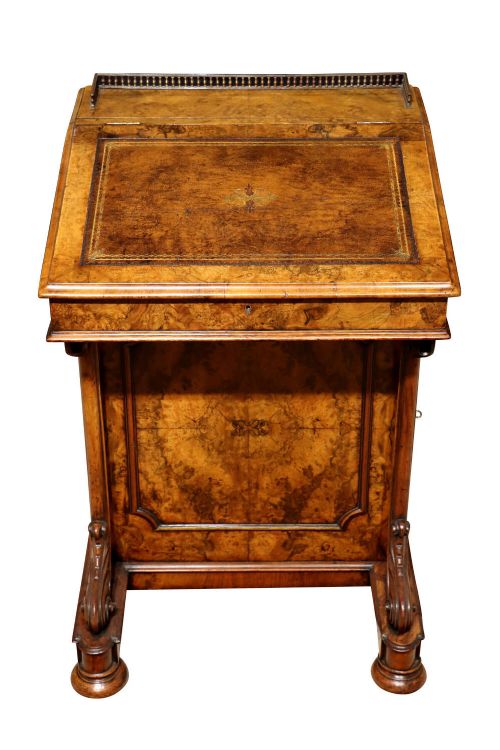
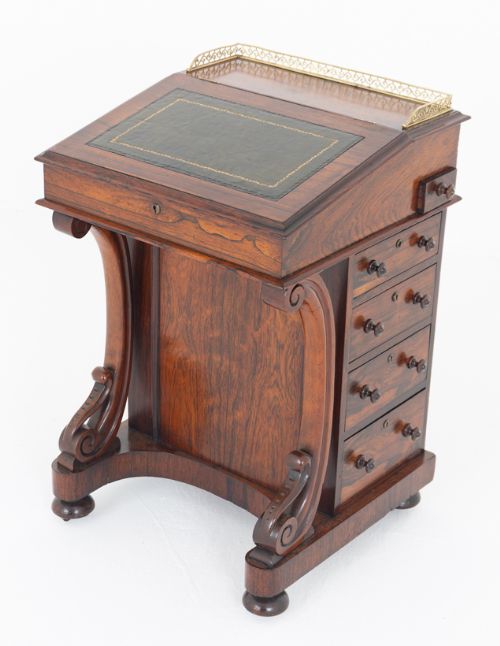
A leather top slant desk primarily takes the form of a Davenport desk, featuring a sloping writing surface inset with leather. These compact writing boxes sit upon pedestal drawer bases, originating during the Georgian and Regency eras and continuing through the Victorian period.
Buyers will most frequently encounter compact walnut, mahogany, and rosewood Davenport desks alongside larger Dickens desks and bureau cabinets. The selection includes architectural forms in oak and specialist examples with sliding tops.
The objects serve as functional writing furniture, combining enclosed storage compartments for stationery with a slanted working plane. Their origins stretch from the late eighteenth century through the late nineteenth century.
How they were made
Cabinet makers built these desks using solid and veneered timbers including mahogany, walnut, rosewood, amboyna, and pollard oak. Surfaces often feature decorative crossbanding and marquetry inlay alongside brass mounts.
Writing slopes incorporate fitted leather inserts, sometimes paired with sliding mechanisms, turn tops, or internal satinwood compartment arrangements. Drawers are integrated into the pedestals, occasionally operating from both sides or accompanied by fitted keys.
Listings feature woods including mahogany, walnut, rosewood, amboyna, satinwood, and pollard oak across Victorian and Regency periods.
What varies in quality
The refinement of secondary timbers and the precision of cabinet joinery distinguish standard pieces from superior examples. Selection of highly figured veneers such as burr walnut, amboyna, or pollard oak elevates the visual weight of the desk.
Execution of carved details, such as green man motifs on oak or intricate marquetry inlay, sets apart workshop output. The integration of complex mechanisms like sliding tops and fitted satinwood interiors also marks higher tiers of craftsmanship.
Gillows·Simpsons of Kendall
The Leather Top Slant Desk Glossary
- Davenport desk
- A compact Victorian or Regency writing desk with a sloping top and drawers to the side. It typically incorporates a stationery box on the upper section.
- Dickens desk
- A large pedestal desk featuring a raised back with pigeonholes and small drawers above the writing surface. This form allows for extensive sorting of correspondence.
- Crossbanding
- A border technique where veneer is laid perpendicular to the surrounding grain. It frames panels of burr walnut or mahogany on the desk body.
- Marquetry
- The art of forming decorative patterns using fitted pieces of coloured wood veneer. Floral and geometric designs appear inlaid across Victorian walnut surfaces.
- Pollard oak
- Timber taken from oak trees that have been pollarded, producing a gnarled grain pattern. This highly decorative wood was utilised on select nineteenth century pieces.
Leather Top Slant Desk: Frequently Asked Questions
What is a Davenport desk?
A Davenport desk is a compact form of writing furniture featuring a sloping leather-lined top over a pedestal base with drawers. They became popular during the Regency and Victorian periods for domestic studies and boudoirs.
The upper section often contains a compartment for inkwells and stationery, while drawers pull out from the side rather than the front.
How do I use a slant desk?
The sloping writing top provides an ergonomic angle for handwriting and correspondence. The angle supports reading and writing without requiring a massive flat table surface.
Internal compartments and side drawers keep writing materials organised and enclosed when not in use.
Where were these desks placed?
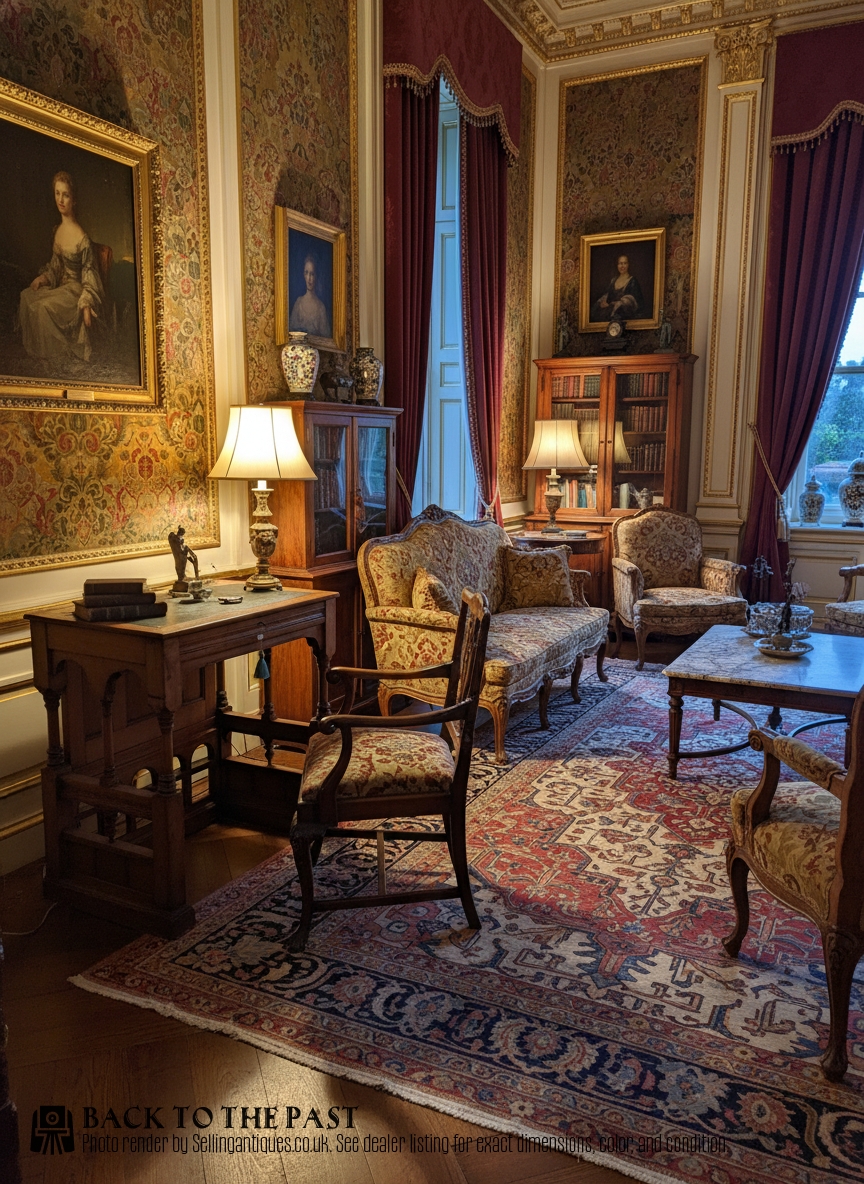
These pieces were designed for smaller reception rooms, drawing rooms, or private offices where a large partner desk would occupy too much space. Their finished backs often allowed them to stand away from the wall.
In larger estates, they served private correspondence needs in personal chambers rather than grand libraries.
How do I date a desk?
Dating relies on timber choices, construction methods, and stylistic markers associated with Georgian, Regency, and Victorian eras. Earlier pieces utilise solid mahogany or pollard oak, while mid-Victorian examples favour burr walnut and amboyna.
Inlaid marquetry and ebonised details typically point towards the later nineteenth century.