

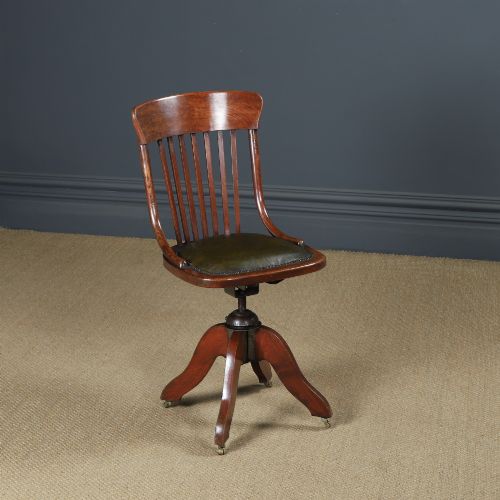


Leather Swivel Desk Chair
When you need a leather swivel desk chair, you are looking at nineteenth and early twentieth-century working seats designed for rotation and support.
Leather Swivel Desk Chair
A leather swivel desk chair combines a rotating mechanism with a supportive seat designed for office and study use during the Victorian, Edwardian, and early twentieth-century periods.
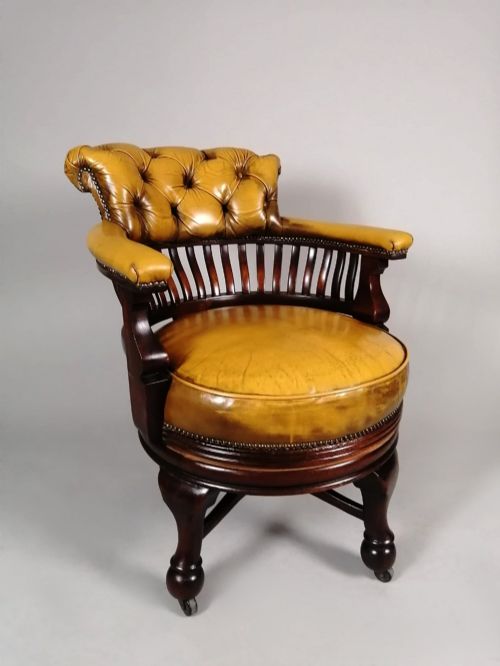
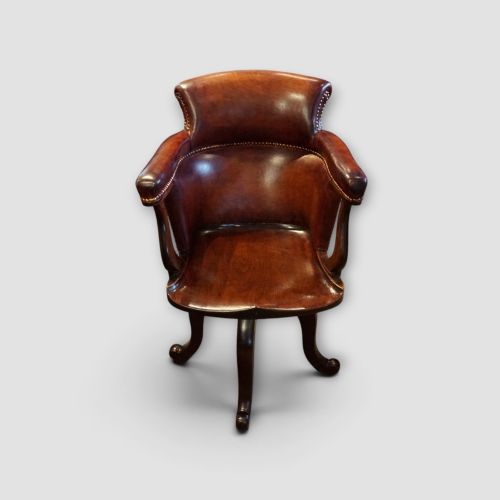
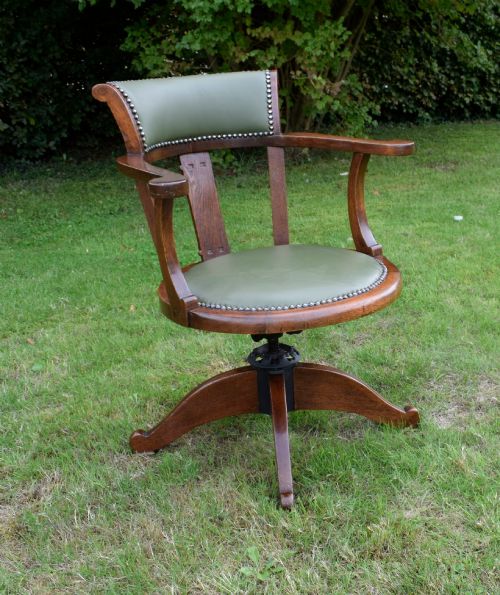
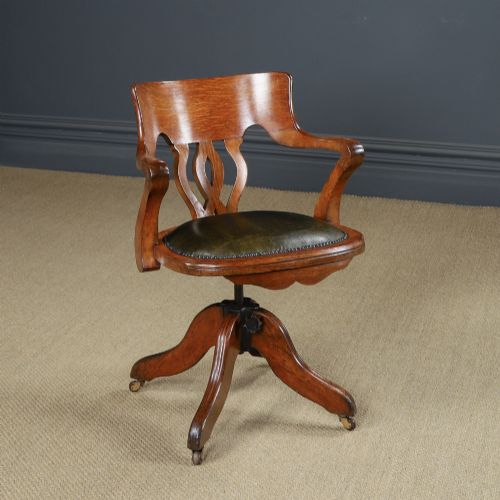
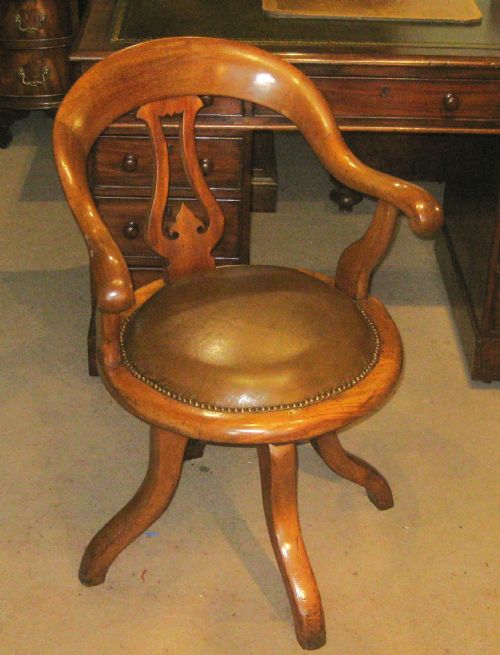
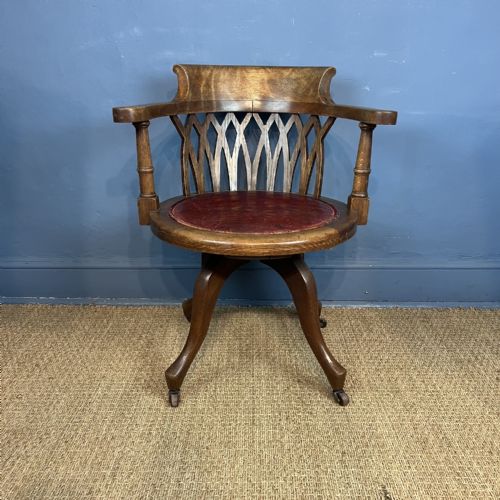
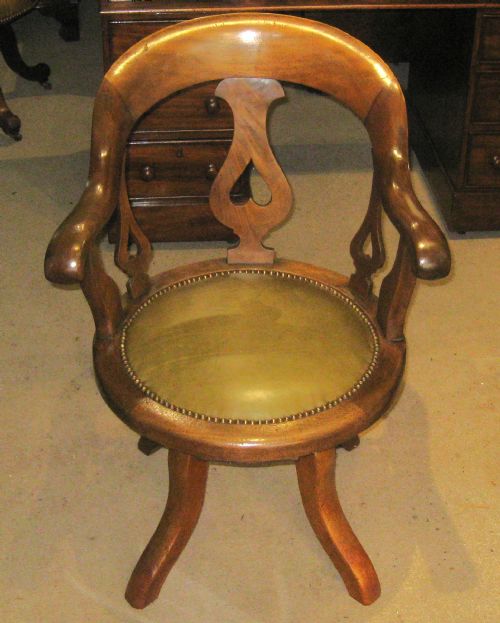
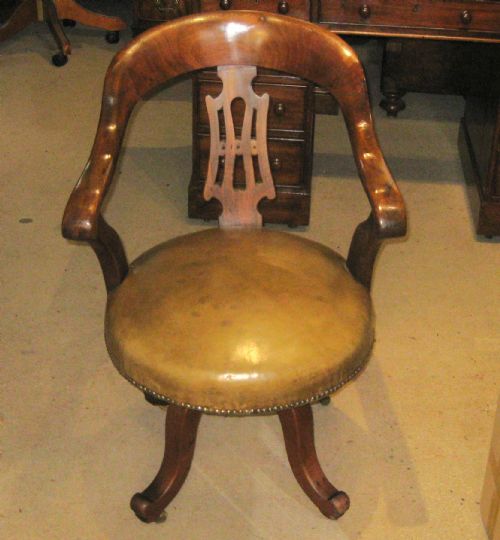
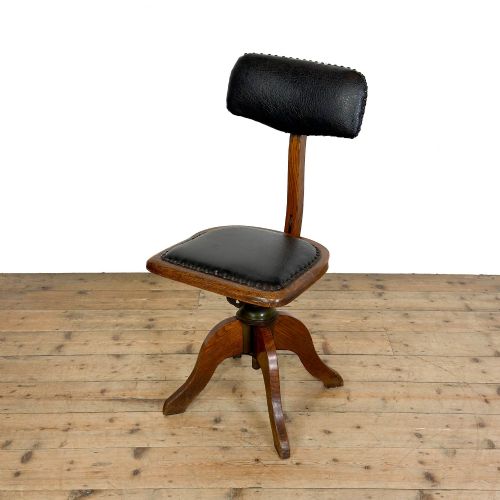
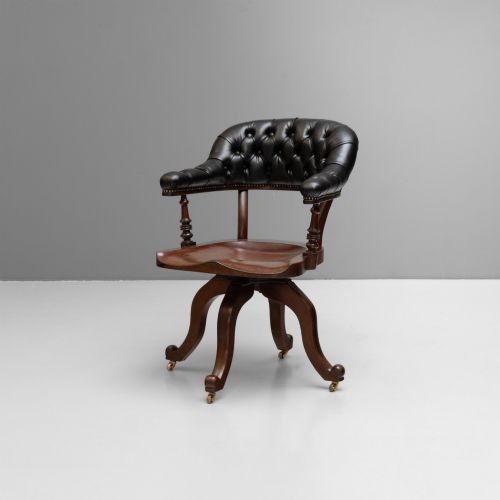
The most common examples on this page are revolving armchairs built from oak, mahogany, or walnut, fitted with upholstered leather pads or buttoned seats.
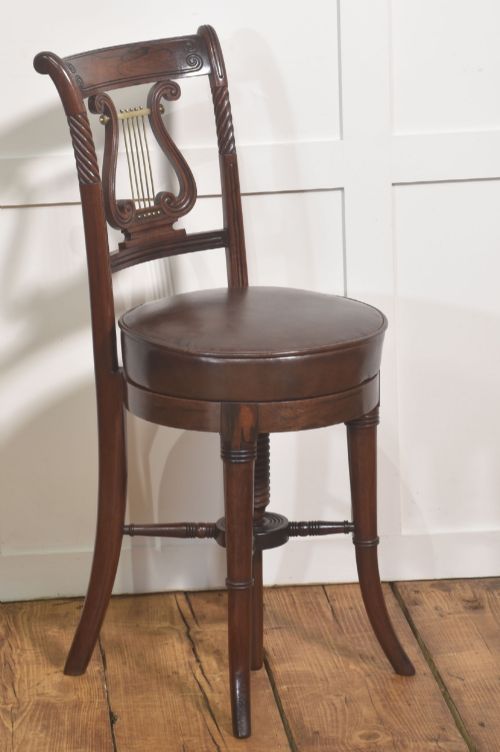
Makers produced these pieces in various regional forms, ranging from standard office seating to specialised ship's chairs and adjustable desk models.
How They Were Made
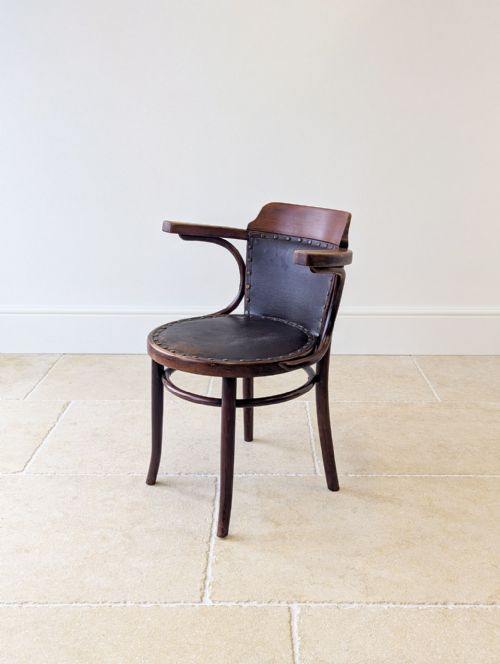
Workshops constructed frames primarily from timbers like oak, mahogany, walnut, and beech, frequently integrating bentwood or heavily carved components for structural rigidity.
Mechanisms relied on iron and brass swivel assemblies, often permitting height adjustment or a tilting action beneath the seat.
Upholsterers secured leather hides over stuffing, sometimes utilising deep buttoning to secure the padding.
Periods represented span from the nineteenth century through the Edwardian era and into the early twentieth century.
What Varies in Quality
The sophistication of the revolving mechanism dictates how smoothly the chair rotates and whether it accommodates height and tilt adjustments reliably.
Frame construction and timber selection separate standard utility seating from finer executive models featuring detailed carving or inlaid satinwood.
The grade of the leather upholstery and the execution of buttoning reflect the original workshop's standard of production.
S&H Jewell·Kendrick & Jefferson·WM Heywood Chair Co
The Leather Swivel Desk Chair Glossary
- Revolving
- Able to turn full circle on a central spindle or pivot beneath the seat. This mechanism allows the user to rotate between different areas of a workspace without moving the base.
- Bentwood
- Wood that has been heated and bent into curved structural shapes. This technique provides flowing lines and strong joints without relying heavily on traditional corner blocks.
- Buttoned
- An upholstery technique where indentations are formed by pulling twine or cord through the padding to secure buttons. It keeps the filling evenly distributed across the backrest or seat.
- Captain's Chair
- A sturdy revolving armchair with a rounded wooden back rail supported by spindles. These pieces offer compact dimensions and stable seating for office environments.
- Swivel and tilt
- A mechanical function allowing the seat to rotate and lean backward simultaneously. This design provides ergonomic adjustment for daily office tasks.
Leather Swivel Desk Chair: Frequently Asked Questions
What is a leather swivel desk chair?
A leather swivel desk chair is a rotating office or library seat featuring a wooden frame and an upholstered leather pad. These pieces date primarily from the Victorian and Edwardian eras.
They were designed for administrative tasks, allowing users to turn easily between desks and filing cabinets while seated.
How do I use one in a modern office?
These chairs fit well at contemporary wooden desks, bringing historical character to a workspace. Their mechanical rotation matches the function of modern office seating.
Ensure the seat height matches your desk surface before daily use, as nineteenth-century working heights can vary.
How do I date a revolving desk chair?
Dating relies on timber choices, leg designs, and the engineering of the swivel mechanism beneath the seat. Mahogany and heavy carving often point toward Victorian production.
Lighter oak frames and specific bentwood designs frequently indicate Edwardian or early twentieth-century manufacture.
What woods were used for these chairs?
Cabinetmakers utilised sturdy hardwoods capable of withstanding the stress of a rotating mechanism. Oak and mahogany appear most frequently across these listings.
Walnut, beech, and satinwood accents also occur in specific styles from the nineteenth and early twentieth centuries.