
Leather Seated Dining Chairs
Leather seated dining chairs bring warmth and tactile comfort to a room, offering enduring timber frames paired with supple hides.
Leather Seated Dining Chairs
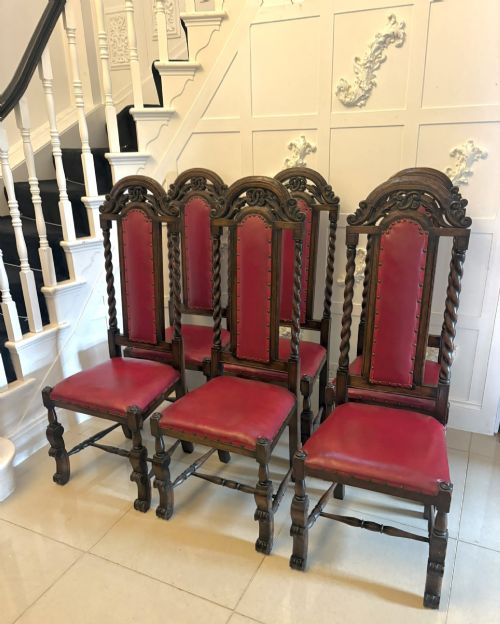
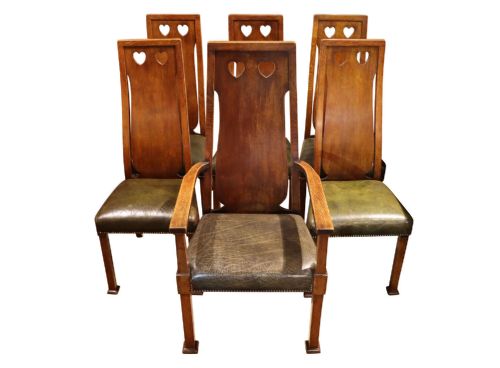
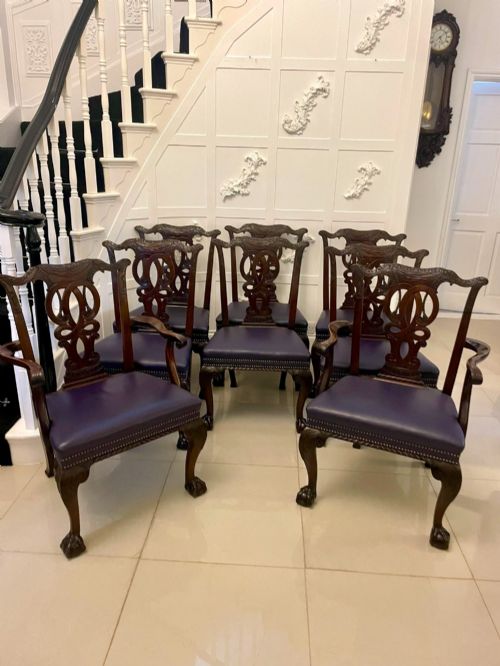
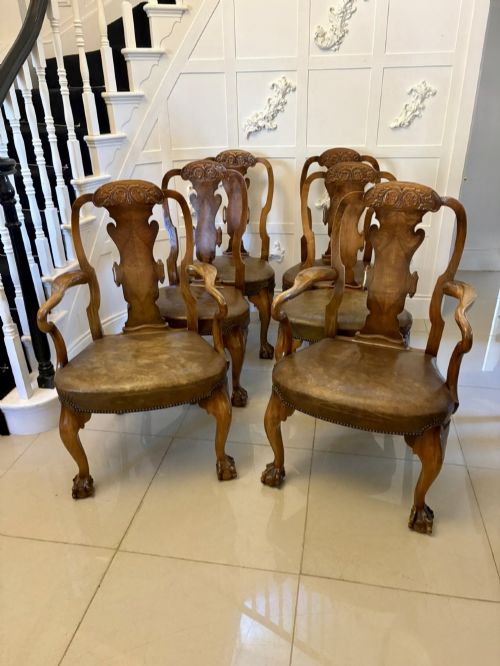
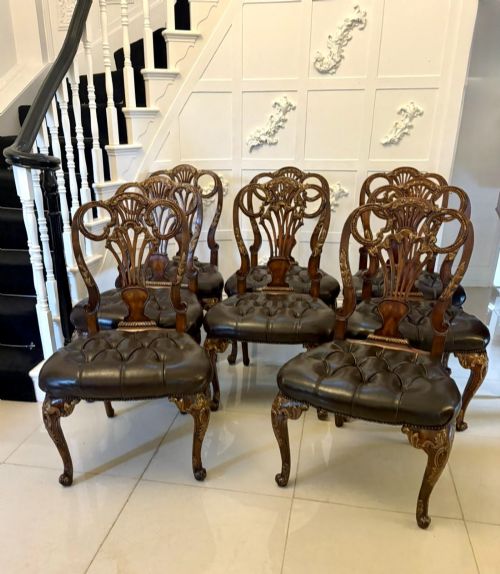
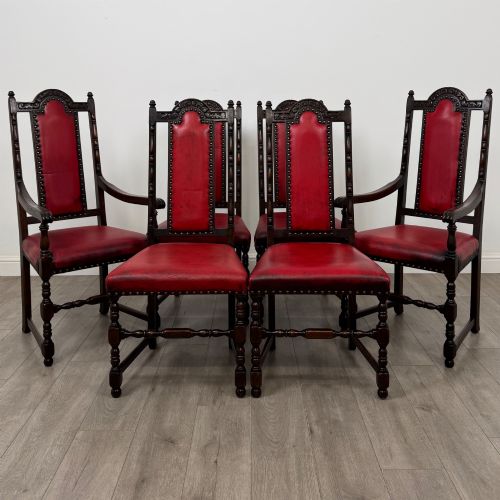
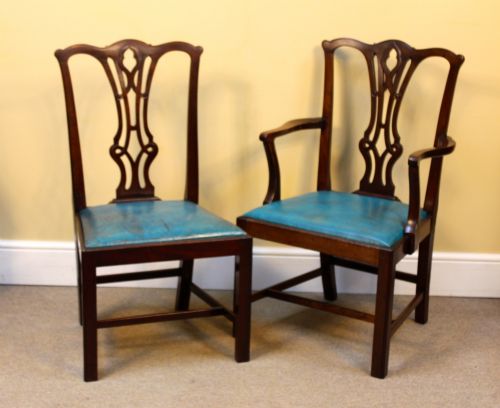
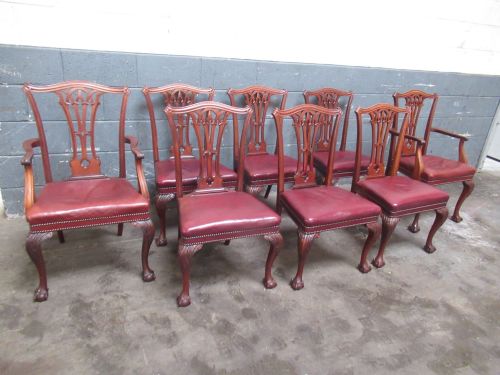
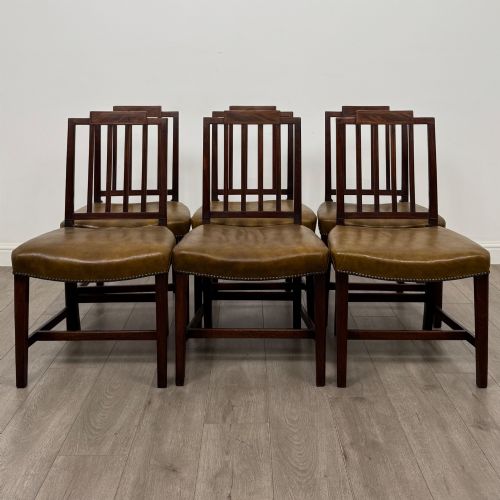
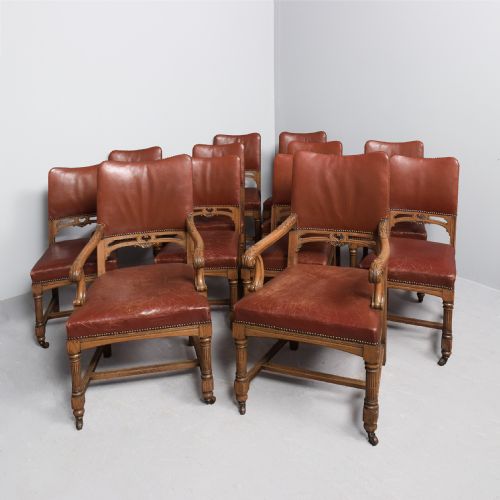
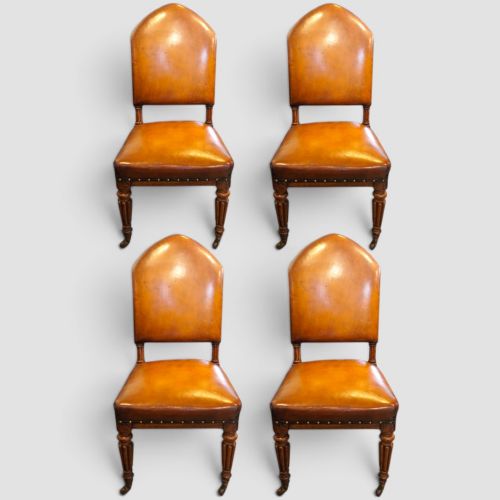
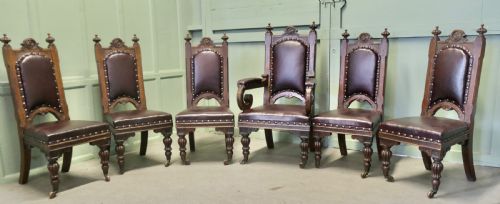
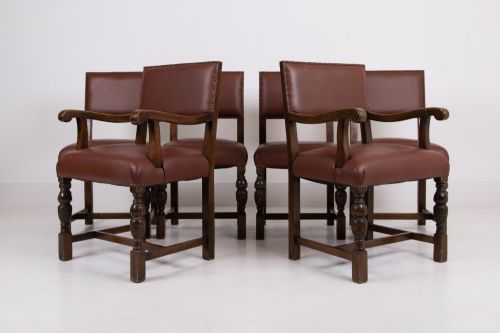
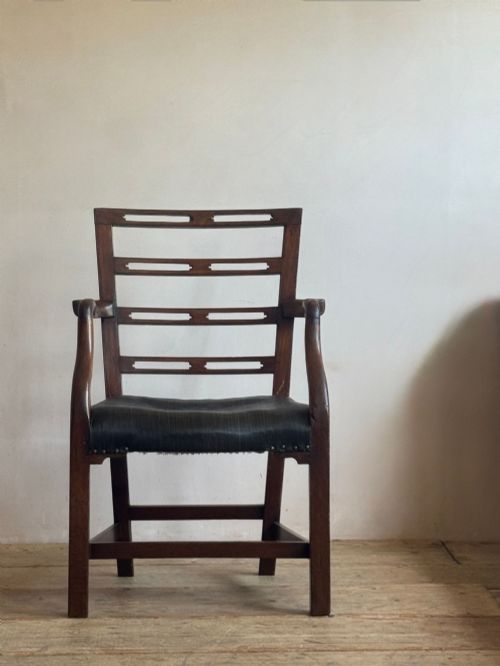
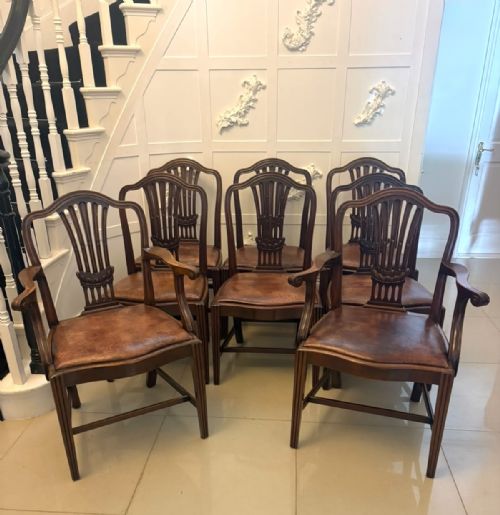
Buyers encounter everything from intimate pairs of side chairs and carvers to substantial sets numbering up to twelve pieces. Forms include high back, balloon back, shield back, and ladder back designs, often accompanied by brass stud detailing along the seat edges.
Materials and construction
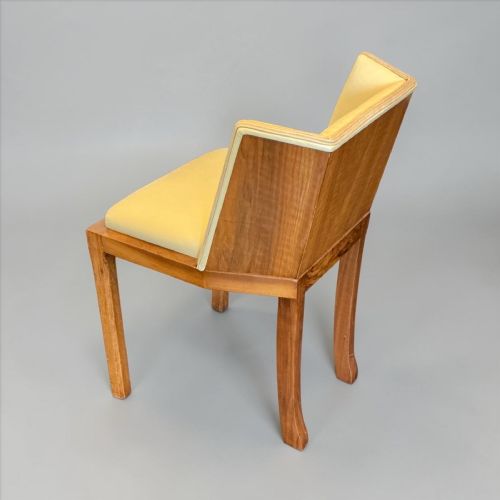
Cabinetmakers utilised dense hardwoods such as mahogany, oak, walnut, rosewood, and burr walnut to build robust frames capable of withstanding daily use around the dining table. Timber components were frequently carved, turned, or polished, showcasing the natural grain of the wood.
Seats were upholstered in leather, sometimes in tan or black, and secured using brass studs. Selected examples incorporated gilded highlights, caning, or elaborate carved detailing reflecting revival movements like the Gothic, Jacobean, and Chippendale styles.
Dining chair sets appear alongside matching tables, salon chairs, and individual carvers.
Defining quality
The distinction between tiers rests upon the choice of timber and the ambition of the carving. Dense, well-figured mahogany or burr walnut paired with crisp, deep relief carving separates ordinary production from exceptional craftsmanship.
Proportion and the integrity of the set dictate value. Large, uniform sets retaining their original leather and structural rigidity command greater attention than assembled groups or pieces with altered frames.
Harry and Lou Epstein·John Taylor and Son
The Leather Seated Dining Chairs Glossary
- Carver
- An armchair, traditionally placed at the head of a dining table, featuring supportive armrests matching the side chairs in a set.
- Shield back
- A chair back shaped in the outline of a heraldic shield, popularised during the Georgian and Hepplewhite revival periods.
- Balloon back
- A rounded, oval-shaped chair back resembling a balloon, characteristic of Victorian seating design.
- Barback
- A horizontal crossbar set across the upper back of a chair, typical of William IV dining seats.
- Sabre leg
- A concave, outwardly curving furniture leg that tapers toward the foot, often seen on Regency and later dining chairs.
Leather Seated Dining Chairs: Frequently Asked Questions
How do I care for antique leather seats?
Keep leather seats away from direct sunlight and heat sources to prevent the material from drying out or cracking. Apply a suitable leather conditioner periodically to maintain suppleness and longevity.
Dust the wooden frames regularly with a soft cloth and avoid chemical polishes that might damage the antique finish.
Are these chairs comfortable for long dinners?
Many of these dining chairs offer supportive high backs and padded leather seats designed for extended seating. Carver armchairs provide additional support at the ends of the table.
Upholstery depth and seat height vary by period, with Victorian and Edwardian examples often providing generous proportions.
How do I match chairs to my table?
Consider the primary wood type, such as oak, mahogany, or walnut, to coordinate with existing furniture. Matching the historical style, such as Georgian or Gothic revival, helps maintain a cohesive interior.
Height clearances under the table apron are important when pairing antique seating with modern dining tables.
How do I identify the period of a chair?
Examine the timber species, joinery methods, and stylistic cues such as carved motifs or leg shapes. Victorian and Edwardian pieces often display heavier proportions and revival details, while Georgian items favour refined mahogany.
Comparing the specific back design and hardware, such as brass studding, aids in placing the piece within its historical era.