
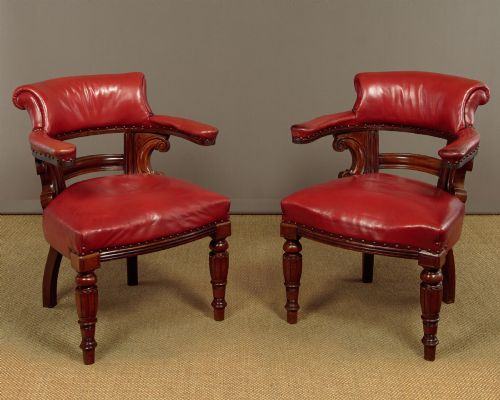
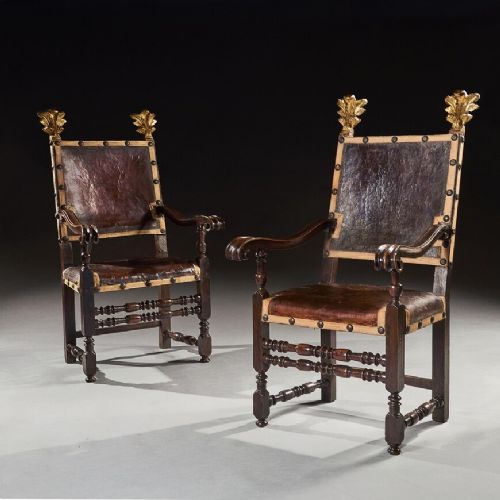
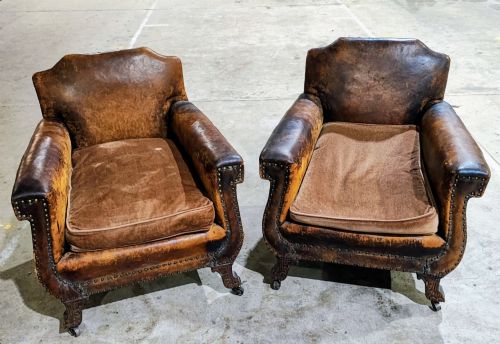
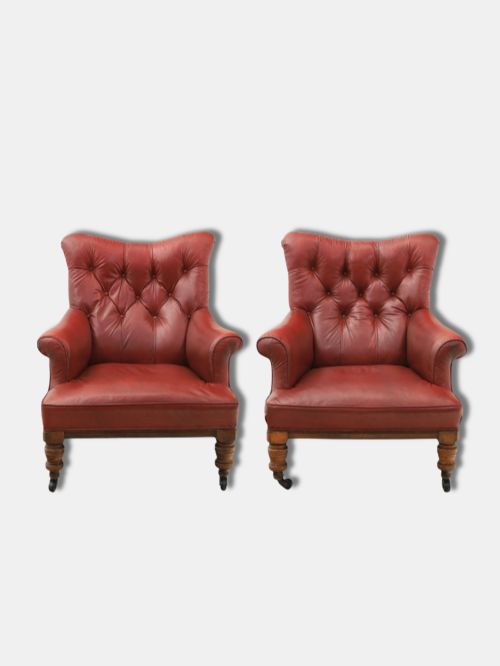
Leather Pair of Chairs
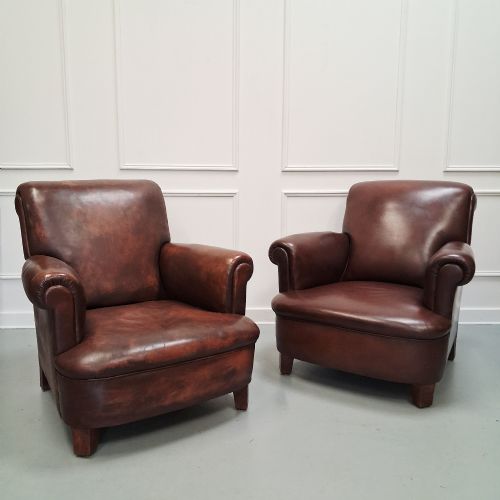
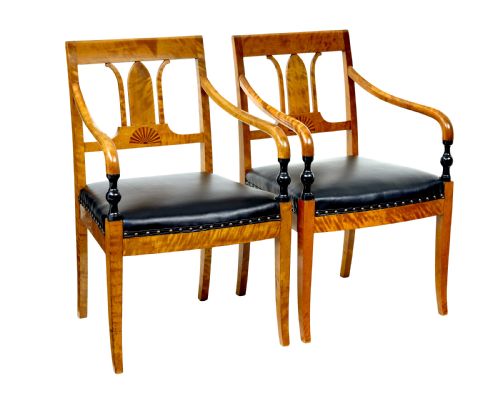
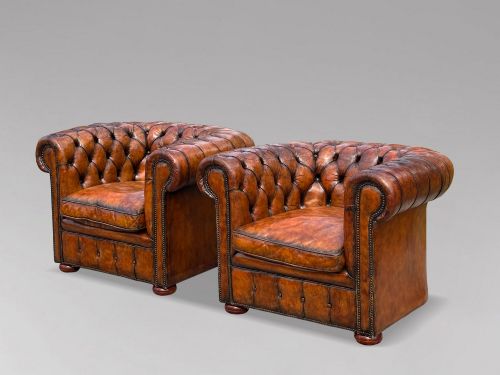
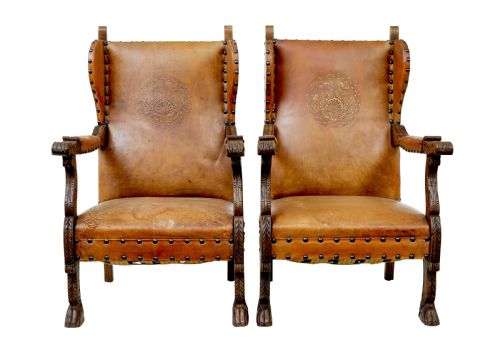
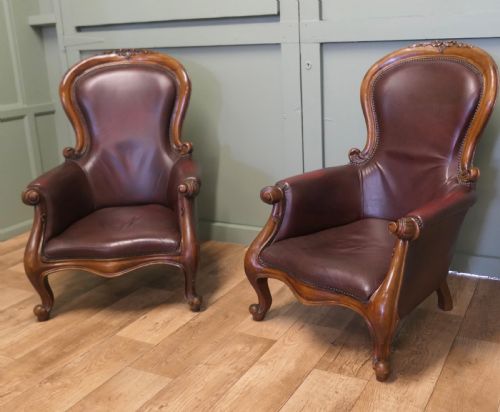
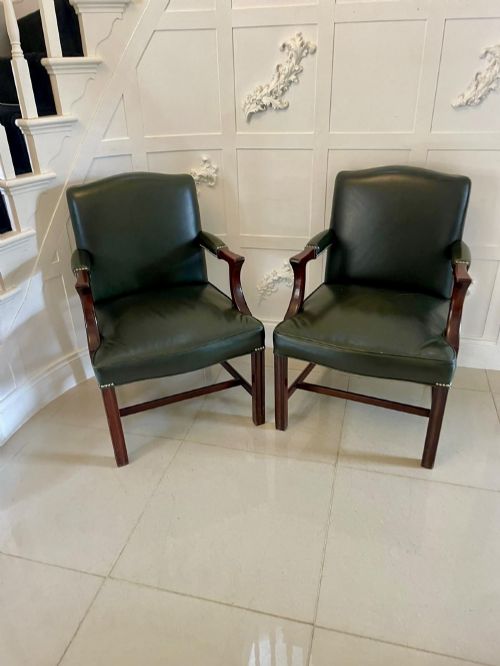
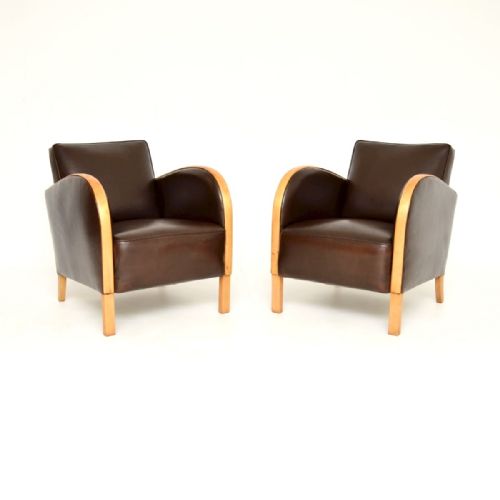
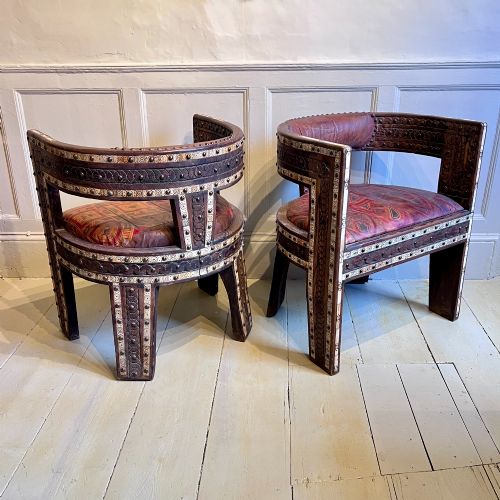
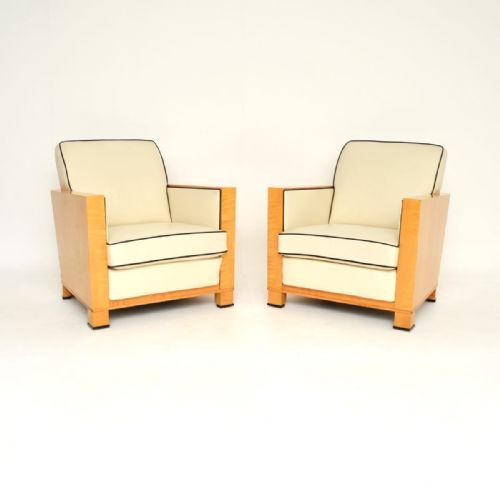
When you search for a leather pair of chairs, you find matching seats spanning Victorian library armchairs to 1930s club seating.
Leather Pair of Chairs
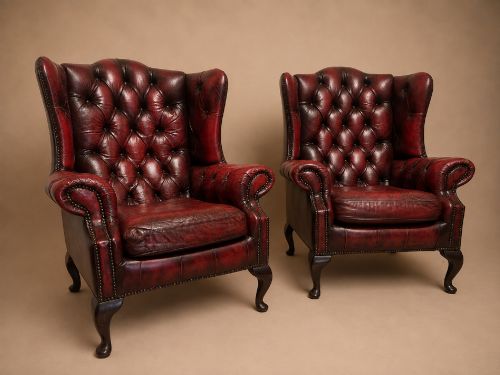
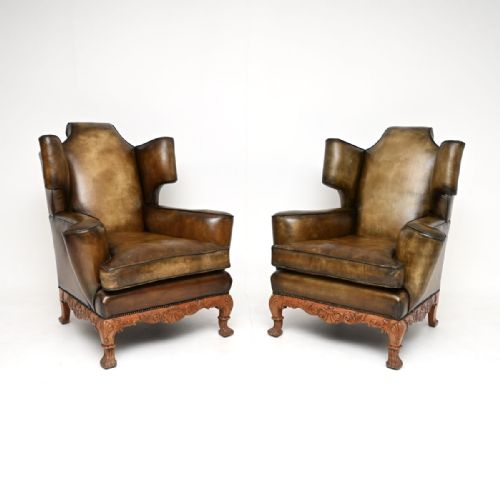
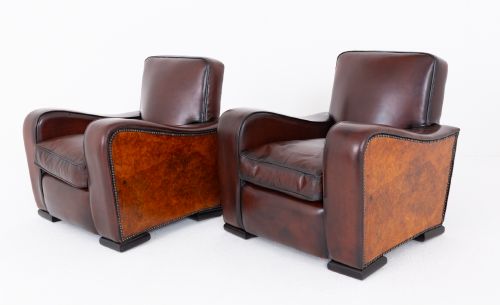
A leather pair of chairs brings together matching seating designed for libraries, studies, and drawing rooms across multiple centuries. Buyers encounter heavy Victorian buttoned library models, low Edwardian wingbacks, and streamlined 1930s club chairs.
The selection ranges from formal mahogany desk chairs with leather pads to robust oak framing and deep French club designs. Most pieces arrive as matching duos intended for firesides or reading corners.
Materials and construction
Frames rely on dense hardwoods such as mahogany, walnut, oak, and birch, providing structural support for daily use. Joinery techniques secure these timbers before upholstery hides the interior framework.
Hides are stretched across padding and secured with brass tacks, piping, or deep buttoning. Secondary timbers appear on internal bracing and underside panels.
Some club chairs were built wide enough to accommodate heavy winter coats.
Judging quality
Quality rests in the weight of the timber frame and the suppleness of the hide. Denser woods like mahogany and walnut offer greater longevity than softer timber alternatives.
Hand-finished buttoning and precise brass detailing separate standard commercial seating from finer workshop productions. The depth of the patina on the leather indicates age and initial hide grade.
Gordon Russell·Hille
The Leather Pair of Chairs Glossary
- Club chair
- A deep-seated lounge chair with padded arms, originating in France and England during the early twentieth century. These low seats prioritize comfort and feature substantial leather upholstery.
- Bergère
- An enclosed armchair with upholstered sides set into a wooden frame. The exposed timber frame often shows carved details or polished finishes.
- Wingback
- An armchair with high back and side panels designed to shield the occupant from drafts. These panels extend down to form armrests.
- Button-back
- An upholstery technique where indentations are formed by pulling strings through the padding to secure buttons. This method keeps internal stuffing evenly distributed.
- Carver
- An armchair designed to match a set of dining or desk chairs, featuring extended armrests. They typically stand at the head of a dining table or beside a desk.
Leather Pair of Chairs: Frequently Asked Questions
How do I care for antique leather chairs?
Keep leather chairs away from direct heat sources and direct sunlight to prevent the hide from drying and cracking over time. Apply a suitable leather conditioner periodically to maintain flexibility and preserve the natural surface.
Dust the frames and crevices regularly with a soft cloth. Avoid using harsh chemical cleaners that strip the original finish from the leather or the underlying timber.
Are these chairs comfortable for daily use?
Most models feature deep padding and supportive sprung bases designed for prolonged seating. Library and club designs specifically prioritize ergonomic comfort for reading and relaxing.
Older padding materials may feel firmer or softer depending on previous restoration work. Test the seat height and back angle to ensure it suits your living space.
How do I identify Victorian leather chairs?
Victorian examples frequently employ dark hardwoods such as mahogany, walnut, and rosewood paired with deep buttoned leather. Common forms include balloon backs, spoon backs, and heavy library armchairs.
Construction methods from this era often include hand-turned wooden legs and traditional coil spring assemblies. Look for period joinery and patination consistent with nineteenth-century manufacturing.
What is the difference between club chairs and wing chairs?
Club chairs feature low, rounded backs and deep, wide seats built for relaxed lounging. They emerged prominently in the early twentieth century with thick leather upholstery.
Wing chairs possess high backs with protective side panels designed to block room drafts. This older silhouette supports an upright posture compared to the reclined stance of a club chair.