


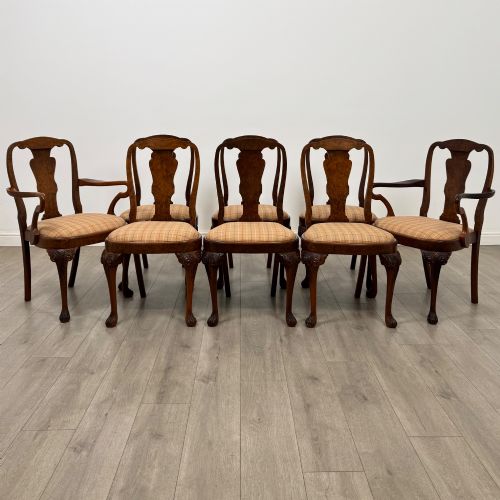
Queen Anne Style Seating
Queen Anne style seating brings graceful cabriole legs and solid walnut frames to dining rooms and libraries.
Queen Anne Style Seating
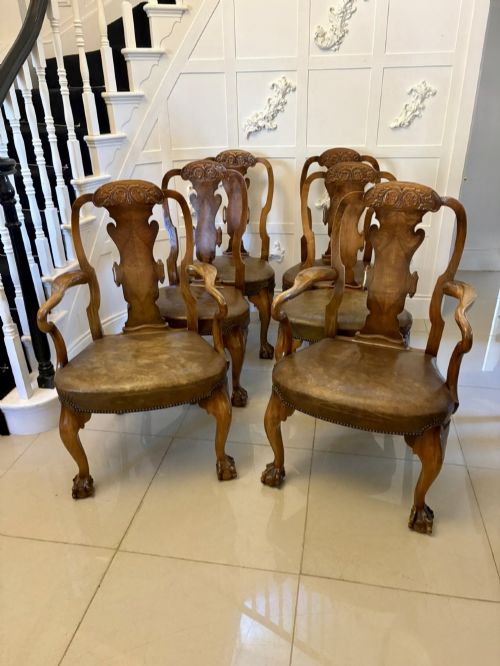
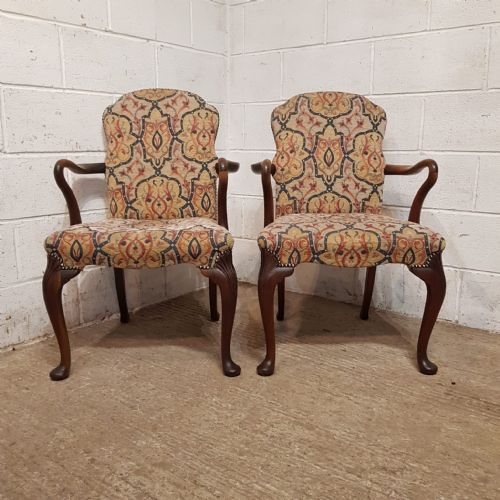
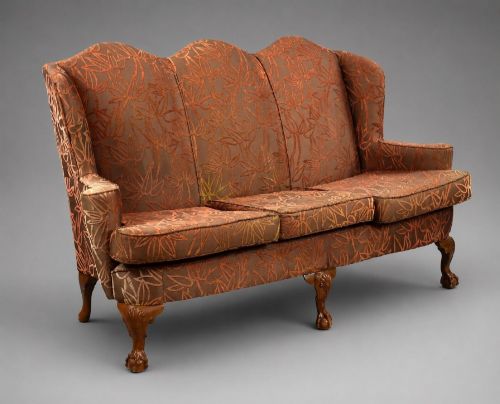
When you search for queen anne style seating, you encounter dining chairs, armchairs, settees and stools shaped by the distinctive design vocabulary originating in the eighteenth century and revived extensively across the nineteenth and twentieth centuries. The pieces on this page span from genuine eighteenth-century examples to Victorian, Edwardian and nineteen-twenties revivals, reflecting how enduringly popular these curving forms remain.
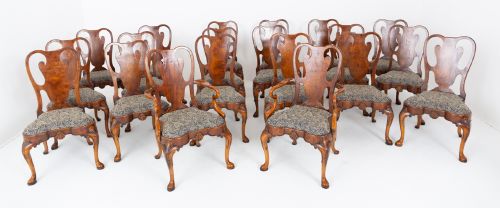
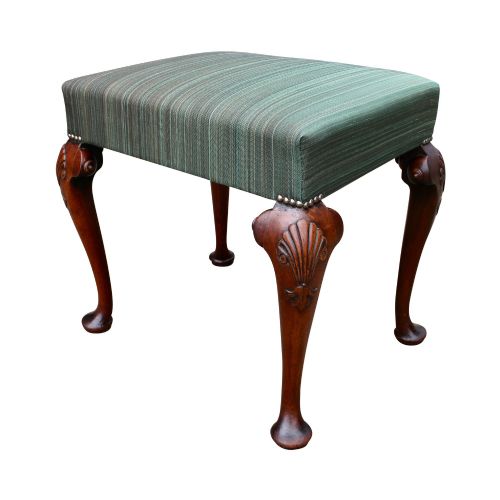
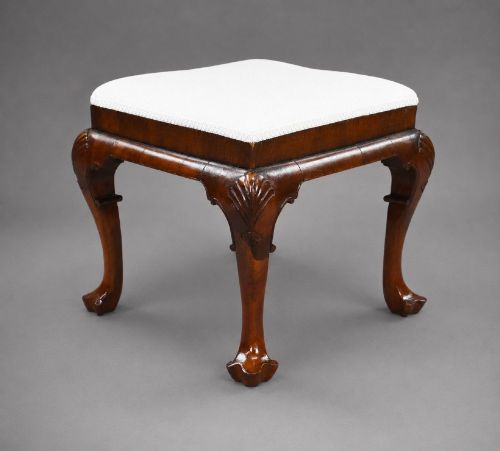
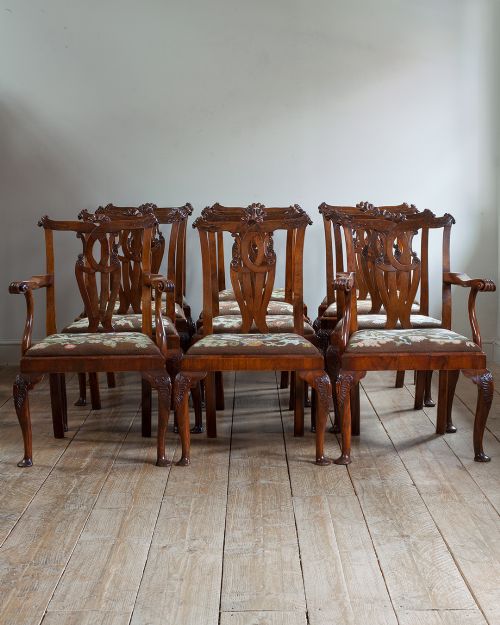
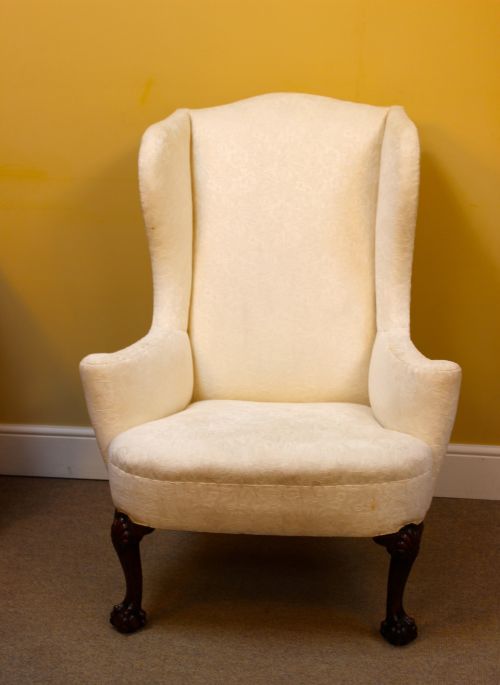
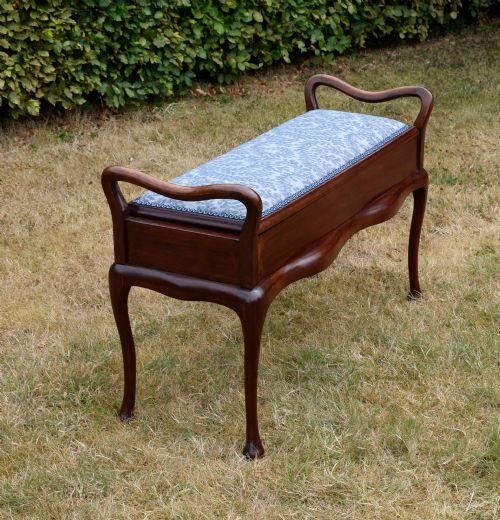
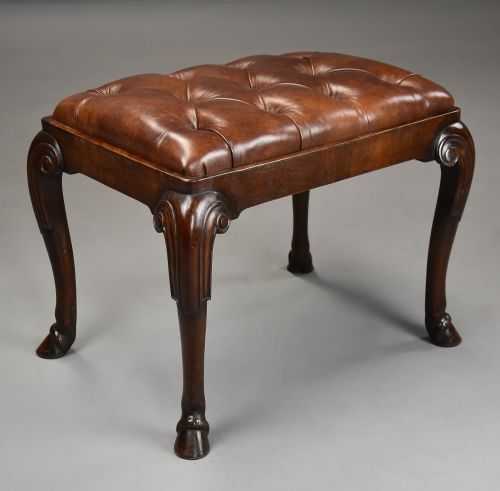
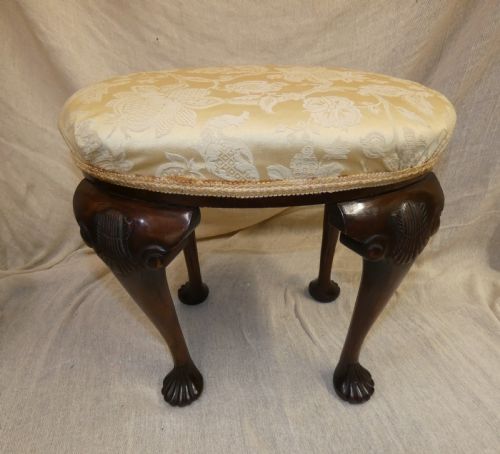
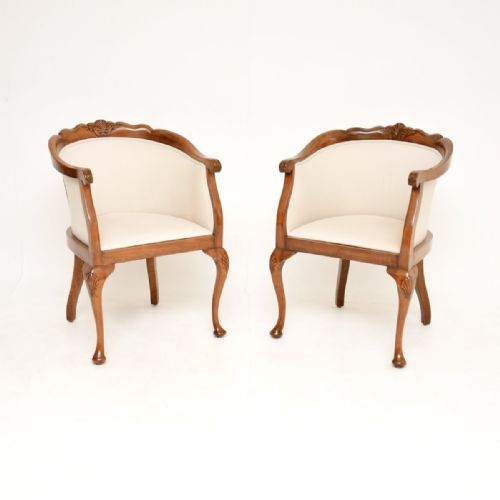
Dining chairs form the largest group, often found in matched sets of six, eight or twelve, alongside individual armchairs, library chairs, wing armchairs and various stools including dressing and piano variants. Walnut and burr walnut dominate the frames, complemented by oak, mahogany and cherry, while textiles, leather, velvet and needlepoint provide the upholstery.
Materials and construction
Makers relied heavily on walnut and burr walnut for frames, utilising the rich grain patterns to add visual depth to splat backs and seat rails, while occasional pieces utilise oak, mahogany or cherry. Timber was shaped to create the characteristic curving uprights and pad or claw and ball feet.
Upholstery techniques involved supportive webbing and padding finished with textiles, fabric, leather, brass detailing or velvet. Frames frequently incorporated traditional joinery methods to ensure stability across high-stress points like the knees of cabriole legs.
Elm makes a surprise appearance in a grand set of twenty dining chairs.
Assessing quality and craftsmanship
The distinction between ordinary and superior pieces rests on the crispness of carved details, the choice of timber figurations such as burr walnut, and the structural integrity of the frame. Well-executed cabriole legs flow seamlessly into the seat rail without awkward joins.
Larger sets command attention because matching twelve or twenty chairs requires uniform timber selection and consistent handcrafting across every piece. The quality of subsequent upholstery work and the preservation of original timber surfaces also influence overall standing.
Charles Tozer
The Queen Anne Style Seating Glossary
- Cabriole leg
- A furniture leg that bends outward in a convex curve at the top and inward in a concave curve below, resembling the leg of an animal. This form defines the silhouette of nearly all pieces in this category.
- Splat
- The vertical central strip of wood in the back of a chair, often vase-shaped in walnut seating to support the spine comfortably. It provides the primary canvas for subtle carving or plain polished grain.
- Wing armchair
- An upholstered armchair with side extensions designed to shield the occupant from draughts and retain fireplace heat. These large seats often feature exposed wooden legs beneath padded frames.
- Burr walnut
- Wood taken from a walnut tree growth featuring intricate, swirling grain patterns. Cabinet makers prized this veneer for tabletops and chair backs to create decorative visual appeal.
- Stool
- A seat without back or arms, appearing here as dressing, piano or foot variants. Many share the same cabriole leg geometry as their larger chair counterparts.
Queen Anne Style Seating: Frequently Asked Questions
How do I spot a reproduction?
Distinguishing original eighteenth-century work from later revivals requires examining timber shrinkage, tool marks and construction methods. Nineteenth and twentieth-century makers often copied the earlier forms closely.
Secondary woods and modern fixings usually point toward a later revival date, whereas genuine period pieces show characteristic hand-cut joinery and authentic patina.
Are large dining sets matched?
Large sets of twelve or twenty chairs often combine original framework with carefully gathered companions sharing identical styling. Makers during the revival eras also produced extensive matching suites.
Examining the underside of the frames and the consistency of the walnut grain reveals whether a set grew together over time or was produced as one unified commission.
How should I care for walnut?
Walnut benefits from stable room temperatures and protection from direct sunlight to prevent the timber and burr veneers from drying out. Gentle dusting maintains the surface finish.
Applying occasional appropriate wax preserves the natural lustre of the wood without building up heavy chemical layers that obscure the grain.
What defines a cabriole leg?
The cabriole leg mimics an animal limb with a double curvature, sweeping outward at the knee and curving inward toward the foot. This structural form appeared extensively during the early eighteenth century.
Revival makers copied this geometry faithfully, applying the shape to dining chairs, stools and armchairs to achieve visual balance and strength.