

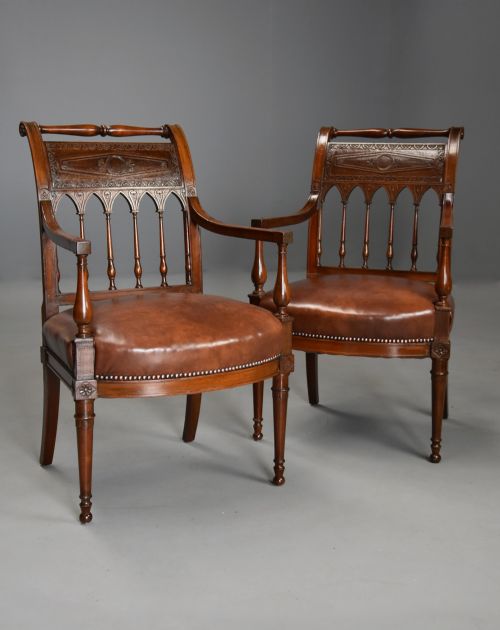
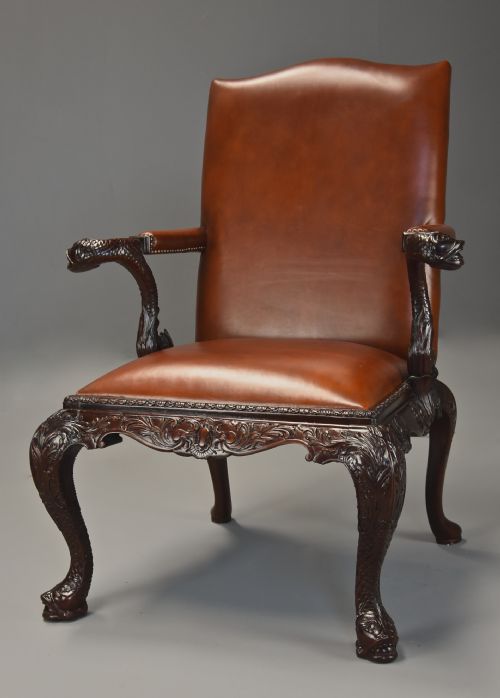


Leather Open Armchairs
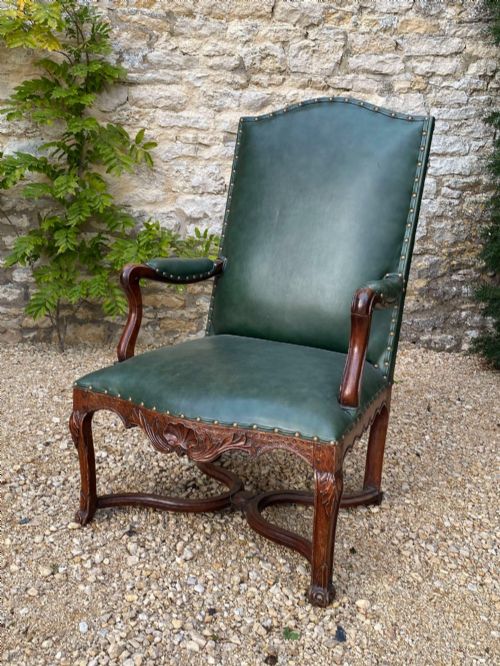
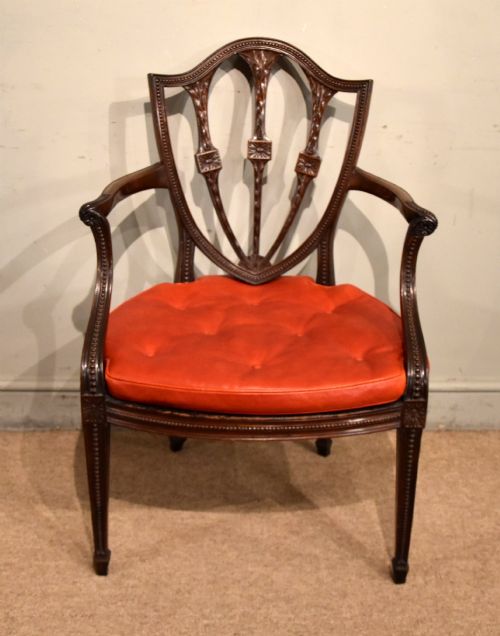
These leather open armchairs combine sturdy wooden frames with supportive hide upholstery, offering an authentic period seat for a desk or library.
Leather Open Armchairs
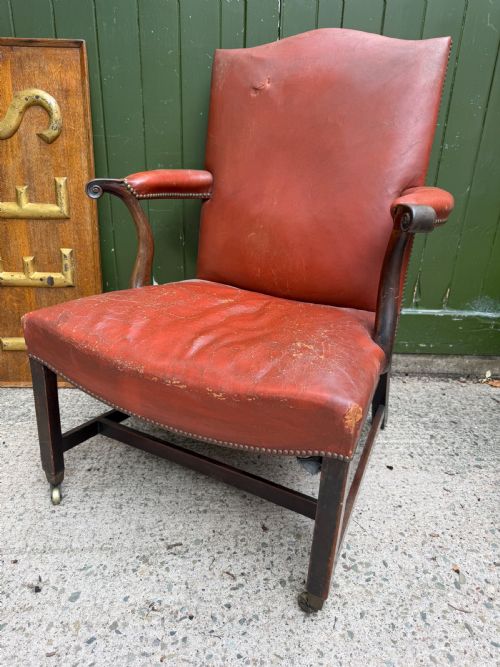
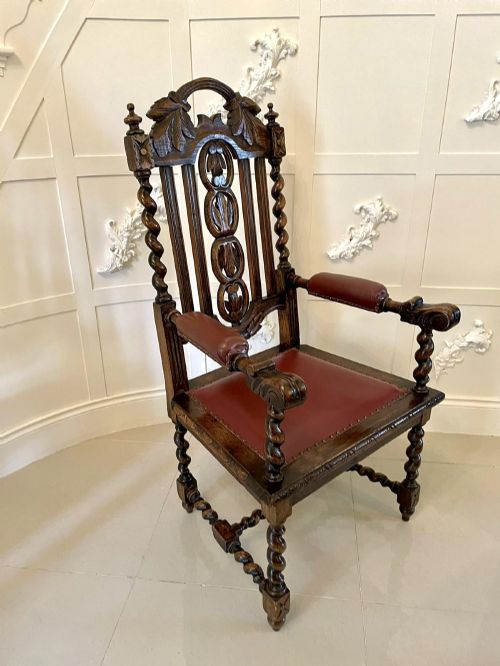
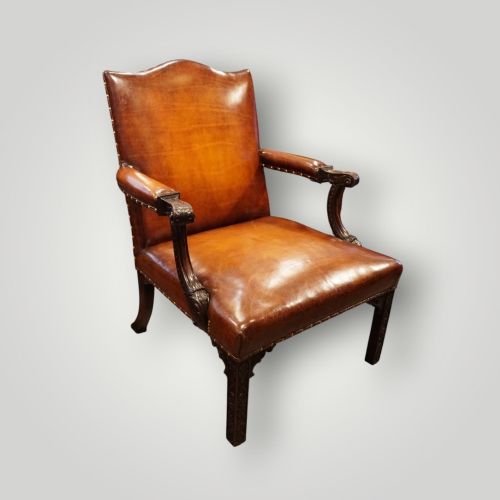
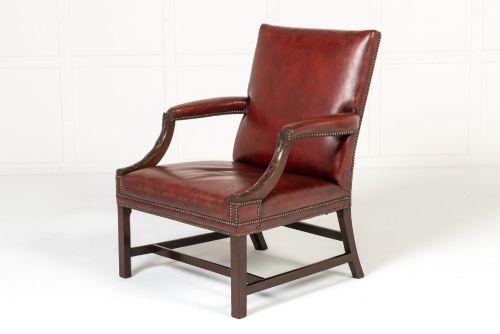
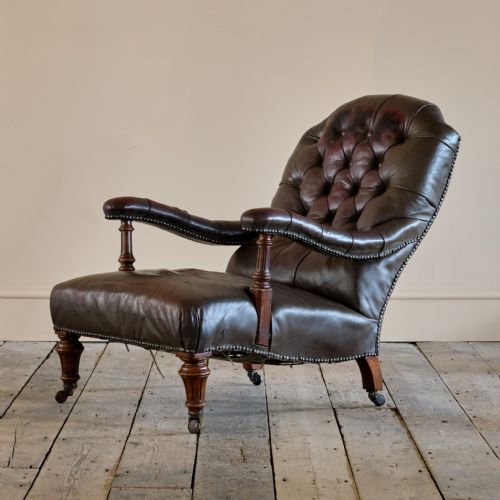
Leather open armchairs provide substantial seating with exposed wooden frames and upholstered armrests, appearing frequently in forms such as the Gainsborough library chair and the desk chair. They serve workspaces and reading rooms well, bridging formal architectural styles with domestic comfort.
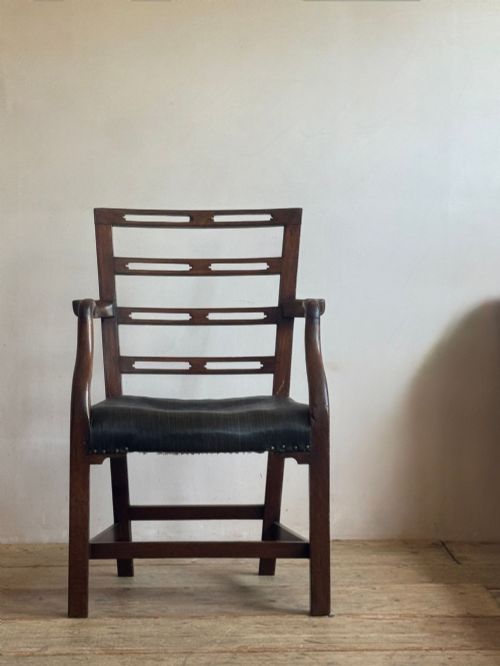
The pieces on this page span several centuries, with 18th-century examples featuring mahogany frames and 19th-century interpretations drawing on Georgian, Victorian, and Gothic revivals. Oak, walnut, and rosewood frames also appear alongside regional variations in birch and teak.
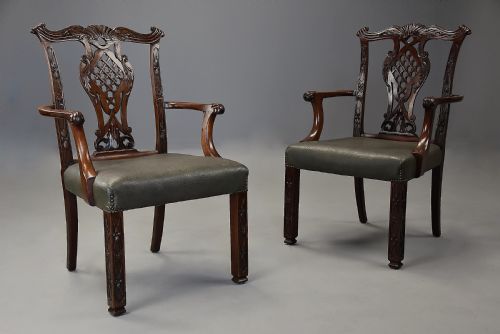
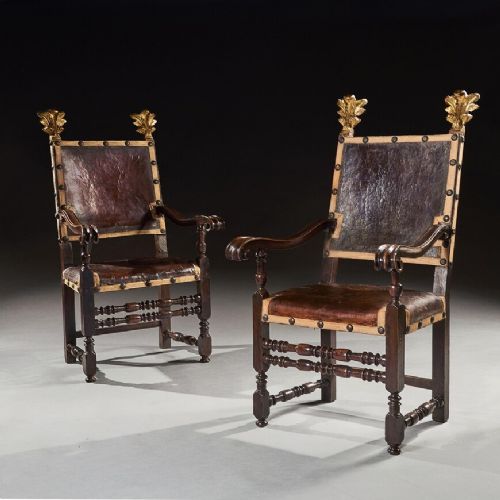
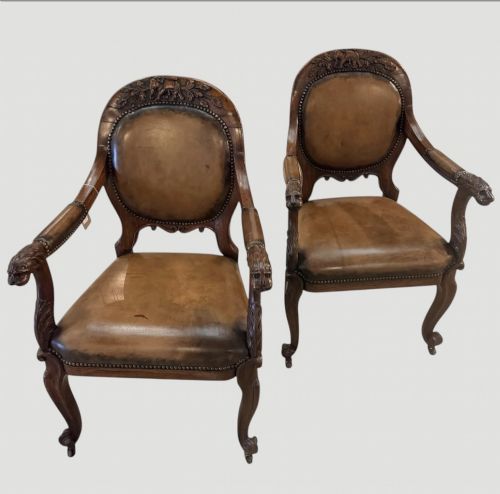
Buyers encounter both single library chairs and matching pairs, often utilised as partners at a partner's desk or flanking a fireplace. Forms range from low-slung reading seats to high-backed executive desk chairs.
How They Were Made
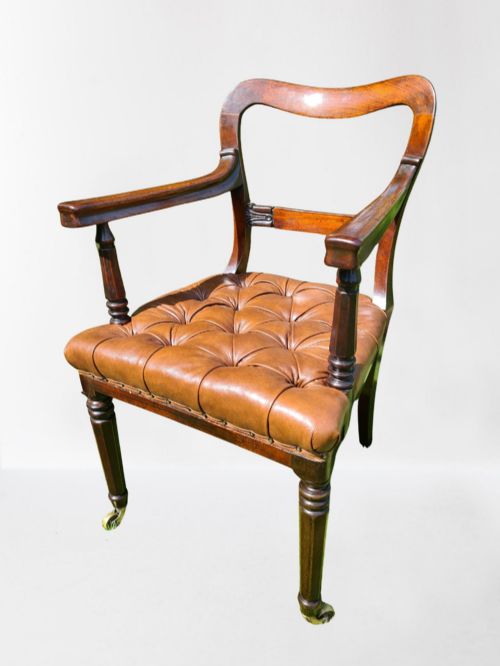
Frames are constructed from dense hardwoods like mahogany, oak, walnut, and rosewood, joined with traditional mortise and tenon joinery. Carved details such as blind frets, claw-and-ball feet, or reeded arms are worked directly into the timber.
Upholstery relies on supportive horsehair or stuffing contained within English hide leather, secured to the frame with brass or iron clout nails and studwork. Leather surfaces are frequently hand-dyed to achieve deep coloration across the seat and padded arms.
Leather Open Armchairs Retail Price Guide 2026
Typical asking prices for leather open armchairs among the pieces listed under this phrase on Sellingantiques today, from the lower quarter to the upper quarter. They describe what is for sale here now, not the wider market.
A sturdy oak library throne built for an Eisteddfod reading hall stands ready to host grand domestic decrees.
What Varies in Quality
Quality rests in the harmony of the timber selection and the precision of the frame's carving, where crisp mouldings and substantial proportions elevate a piece from utility to high design. Secondary woods used in internal framing also indicate the workshop standards of the period.
The treatment of the hide dictates the tactile success of the chair, separating uniform modern replacement leather from patinated, hand-dyed English hide that shows the gentle wear of decades. Frame rigidity and the integrity of traditional joints determine structural longevity.
Gillows·Bruce James Talbert
The Leather Open Armchairs Glossary
- Gainsborough
- A wide-seated, upholstered armchair with open padded arms and short legs, designed in the mid-18th century for libraries and writing desks. These chairs feature supportive high backs and generous proportions.
- Open armchair
- A seat featuring exposed wooden arms without full upholstery panels enclosing the sides. This construction showcases the carved woodwork of the frame.
- Blind carving
- Carved ornamentation applied to a flat surface in low relief, often imitating Chinese fretwork popular in mid-Georgian mahogany furniture. It adds texture without interrupting the clean lines of a rail or leg.
- Parcel-gilt
- Woodwork decorated with areas of applied gold leaf alongside exposed natural timber, highlighting specific carved motifs. This finish is frequently seen on Baroque and decorative continental pieces.
- Fauteuil
- An upholstered open-armed armchair of French origin with an exposed wooden frame, originating in the seventeenth century. The style emphasises elegant curves and carved arm supports.
Leather Open Armchairs: Frequently Asked Questions
What is a Gainsborough chair?
A Gainsborough chair is a wide, open-armed desk or library armchair featuring a high upholstered back and short legs.
They were originally built in the eighteenth century to accommodate the voluminous fashions of the era while providing comfortable seating for writing.
Are these chairs suitable for daily desk use?
Many of these pieces function exceptionally well as executive or library desk chairs due to their supportive padded backs and sturdy wooden frames.
Buyers should check the seat height against modern desk clearances before regular daily use.
How do I care for antique leather upholstery?
Antique hide leather benefits from occasional light conditioning with appropriate animal fats or specialised waxes to prevent the material from drying and cracking.
Keeping these chairs away from direct sunlight and heat sources preserves the natural colour and patina of the hide.
How can I tell a Georgian chair from a Victorian copy?
Eighteenth-century originals typically display secondary woods consistent with the period and hand-cut joinery showing subtle irregularities.
Victorian revival pieces often utilise heavier framing timber, machine-sawn components, and styles explicitly recalling earlier reigns.