
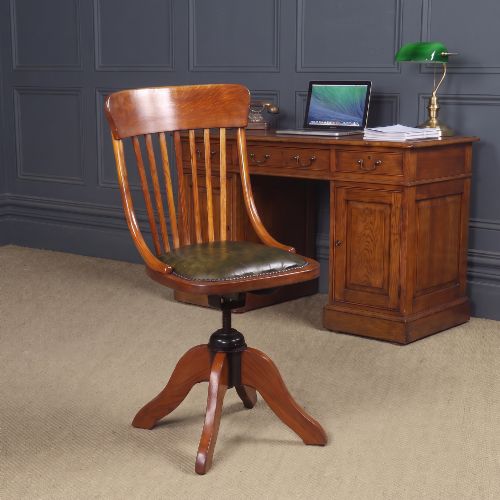
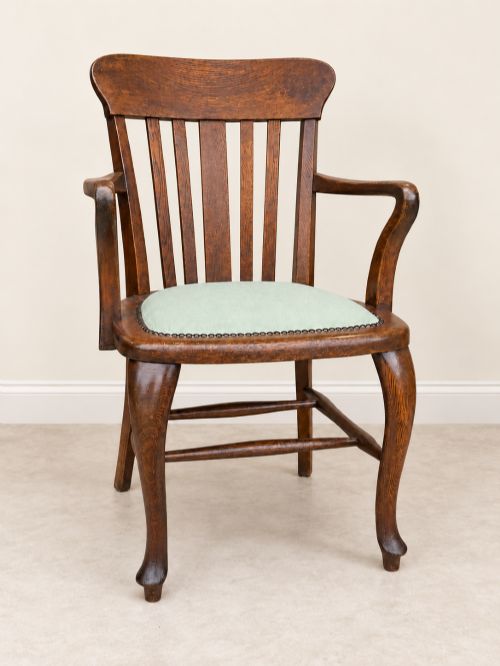
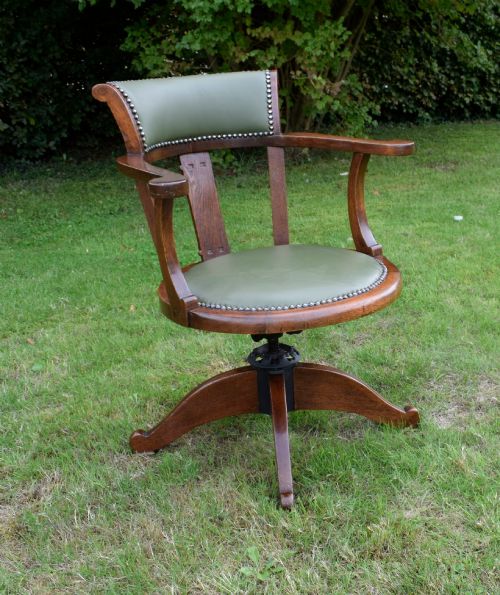
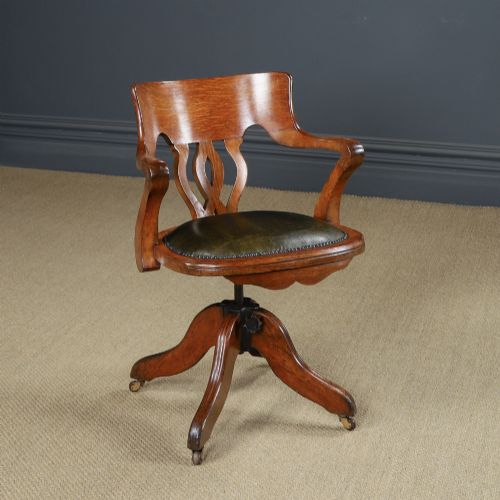
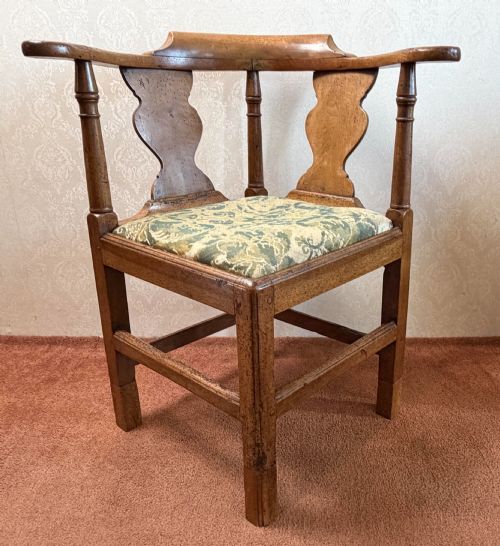
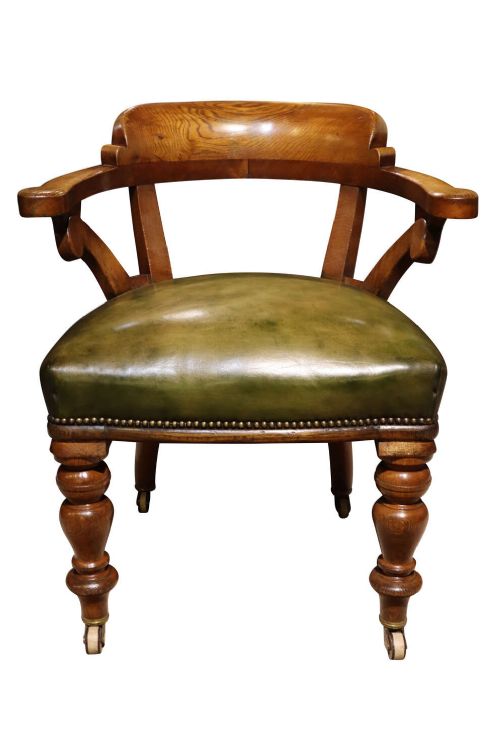
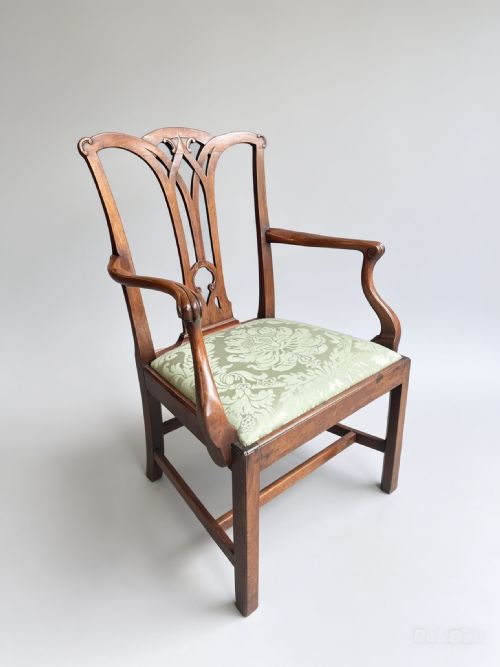
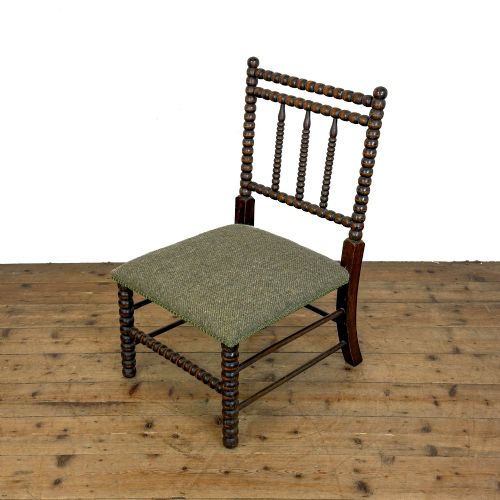
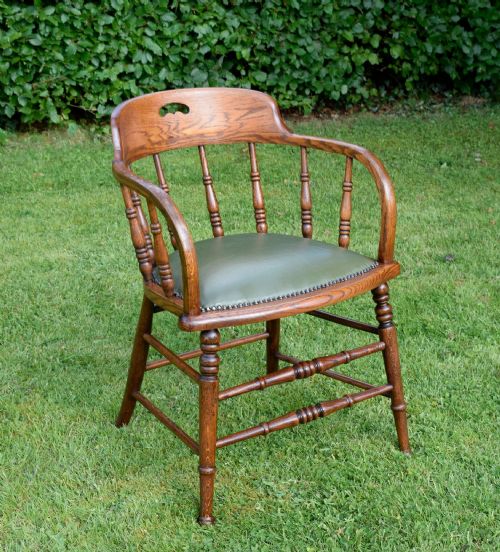


Green Oak Desk Chair
A green oak desk chair brings functional timber construction and leather upholstery together for the workspace.
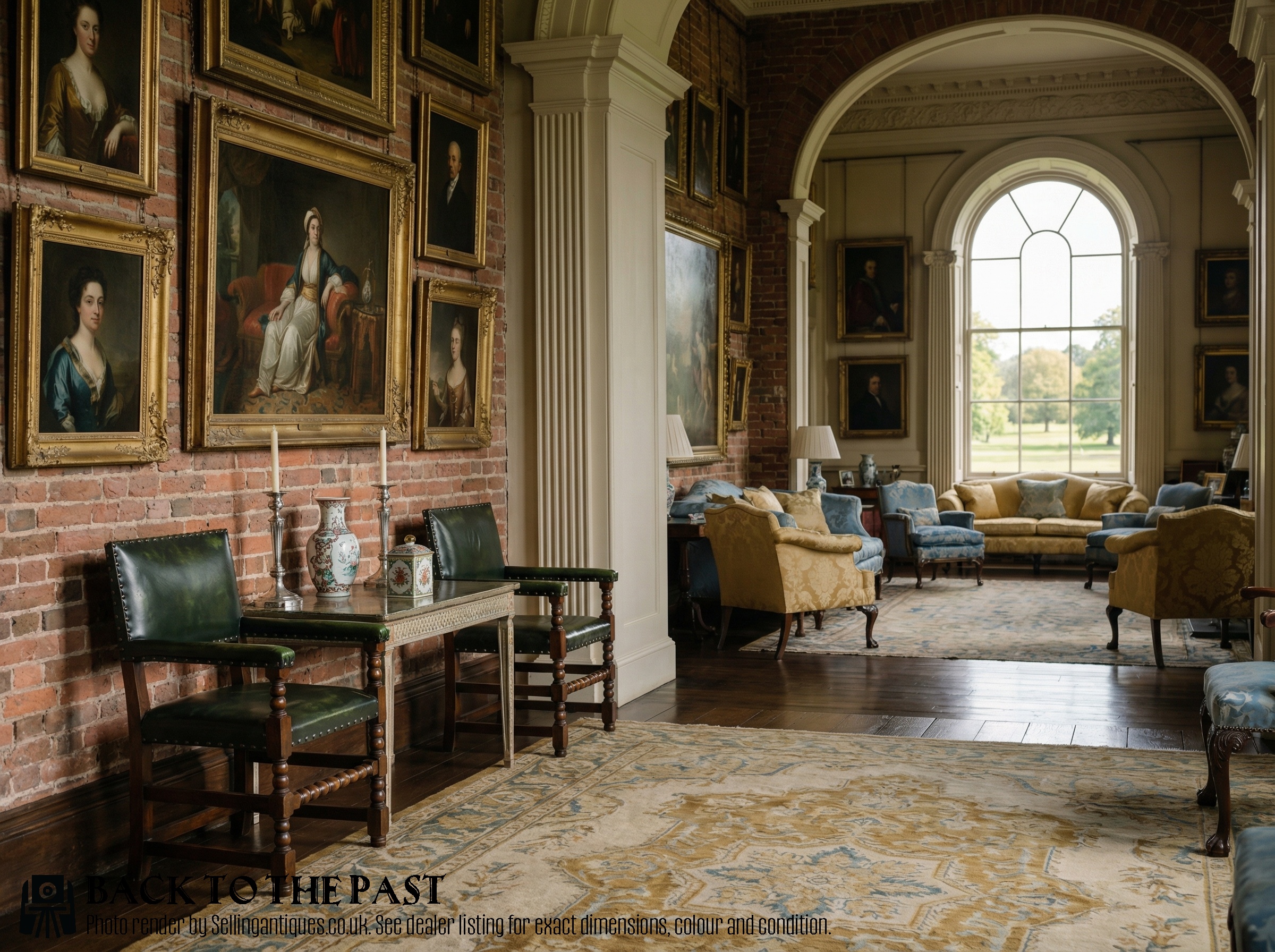
Green Oak Desk Chair
A green oak desk chair combines a sturdy timber frame with leather seating designed for daily workspace use. The evidence shows these pieces appear predominantly from the Victorian and Edwardian eras, running through the nineteenth and early twentieth centuries.
Buyers will frequently encounter revolving office desk armchairs and swivel variants outfitted with green leather upholstery. Forms range from library armchairs and smokers bows to solid wood side chairs and carvers.
Origins stretch across English, Scottish, and American workshops, with styles spanning Arts and Crafts, Gothic Revival, and Jacobean Revival alongside simpler vernacular country designs.
Materials and construction methods
Makers constructed these seats using solid oak frames, occasionally incorporating bentwood or ash elements for curved structural components. The timber is often finished to display the natural grain, sometimes referred to as golden or solid oak.
Upholstery relies on green leather, fixed to the frame with brass or iron tacks and sometimes buttoned for support. Mechanical adjustments on revolving models utilise cast iron and brass swivel mechanisms.
Listings feature oak, leather, brass, cast iron, velvet, and mahogany across Victorian, Edwardian, and Arts and Crafts styles.
Evaluating construction and materials
Quality separates primitive domestic seating from purpose-built commercial office furniture through the complexity of the timber turning and the integration of the swivel mechanism. Superior examples feature heavy solid oak frames with substantial gauge iron and brass hardware that supports smooth rotation.
The grade of the green leather hide and the neatness of the upholstery work also distinguish finer productions. Early patent mechanisms and branded workshop stamps indicate higher workshop standards.
Bell Barn Furniture·William Angus And Co·Heywood Brothers And Wakefield Co
The Green Oak Desk Chair Glossary
- Smokers Bow
- A sturdy low-backed wooden armchair with a turned spindle gallery, commonly used in offices and smoking rooms.
- Revolving
- A seating mechanism allowing the upper portion of the chair to rotate fully on a central iron or brass spindle.
- Carver Armchair
- An armchair designed in a matching style to a set of dining or office side chairs, typically featuring open arms.
- Bentwood
- Wood that has been heated and bent into curved shapes, frequently utilised for the arched backrests of office chairs.
- Tub Chair
- An upholstered seating form where the back rail curves continuously down to form enclosing armrests.
Green Oak Desk Chair: Frequently Asked Questions
What periods do these chairs come from?
The recorded pieces date primarily from the Victorian and Edwardian periods, stretching from the mid-nineteenth century into the early twentieth century. Earlier eighteenth-century examples also appear occasionally.
Construction styles shift from heavy Victorian library designs to standardised Edwardian revolving office chairs.
How were these chairs used originally?
These pieces served as functional seating for offices, libraries, and studies during the industrial expansion of the nineteenth and twentieth centuries. Revolving models allowed clerks and professionals to reach different parts of large double desks.
Stationary armchairs provided comfortable seating for reading and administrative tasks in private homes and institutions.
Are the swivel mechanisms original?
Many Edwardian and Victorian office chairs retain their original cast iron and brass revolving ironmongery. These metal components permitted height adjustment and rotation.
Examining the underside reveals the heavy hardware typical of commercial office furniture production from that era.
How do I care for the leather upholstery?
The green leather surfaces benefit from gentle cleaning and occasional conditioning to maintain the hide. Avoid harsh chemical cleaners that might strip the original colour.
Keeping the timber frame nourished with suitable wax preserves the oak grain over years of daily use.