

Leather Library Seating
Leather library seating offers substantial comfort through rich hides and sturdy timber frames spanning centuries of craftsmanship.
Leather Library Seating
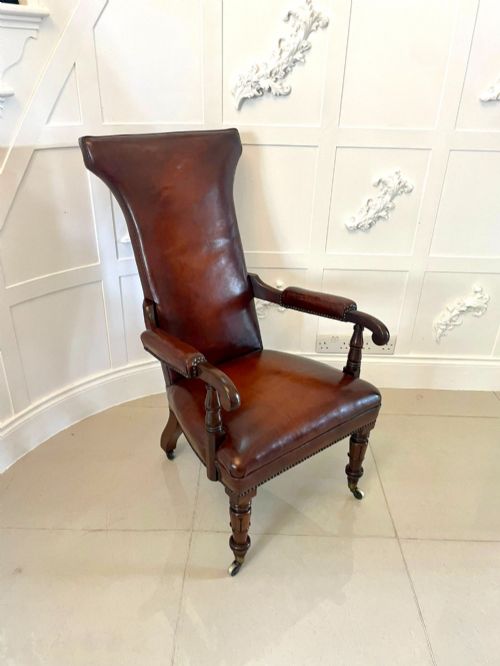
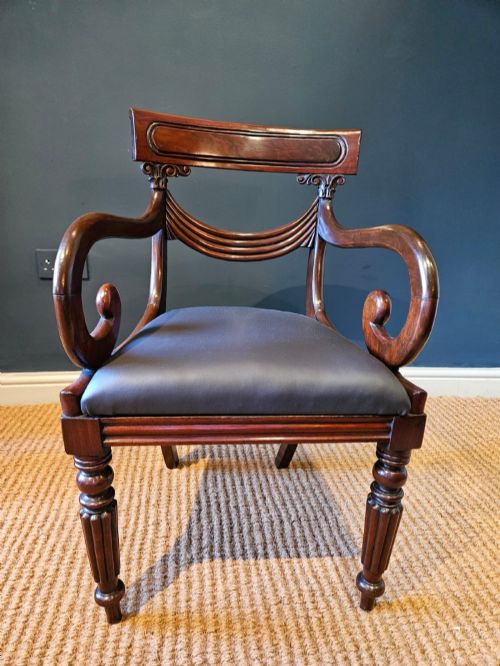
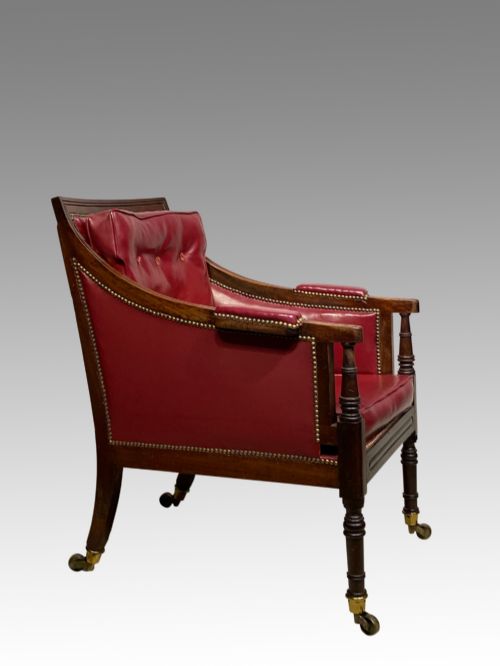
Leather library seating comprises armchairs, desk chairs, reading chairs, sofas, and stools originating from periods such as the Georgian, Regency, and Victorian eras. These pieces serve study rooms and sitting spaces alike, providing firm support and enduring utility.
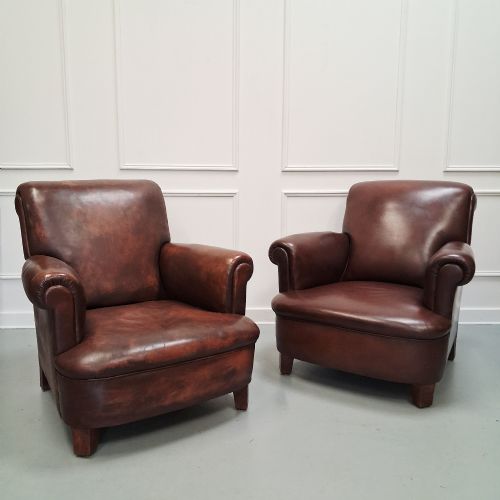
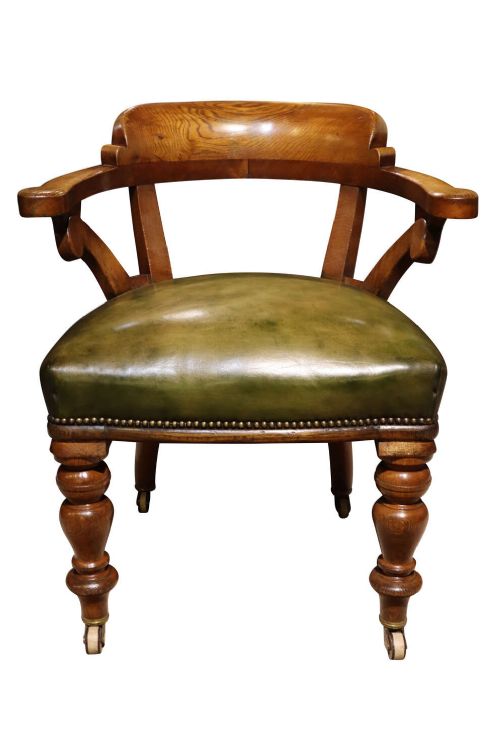
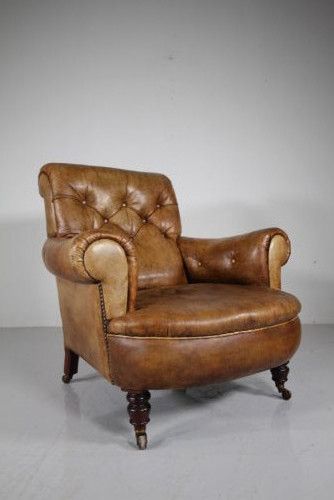
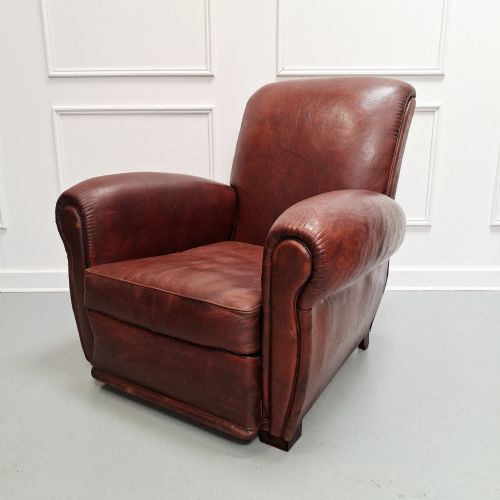
The most common forms on this page include mahogany desk chairs and upholstered armchairs from the nineteenth century, alongside French club chairs and Scottish school fireside chairs from the early twentieth century. Buyers encounter robust oak, walnut, and rosewood frames paired with buttoned or plain hide upholstery.
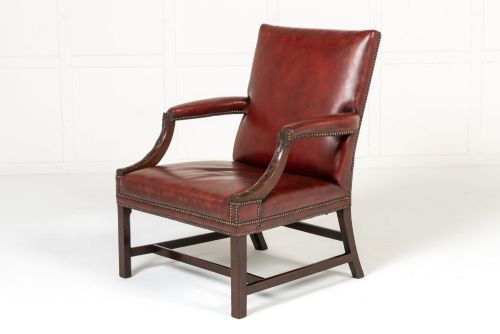
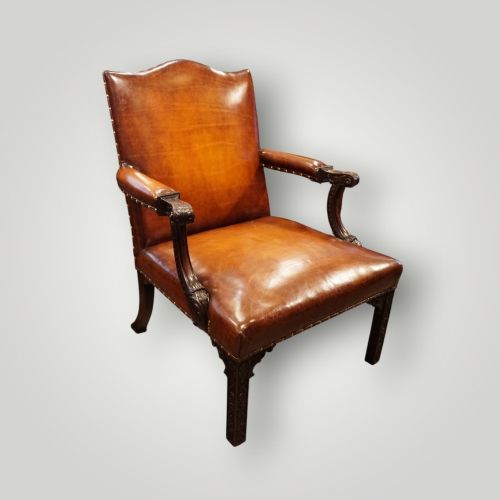
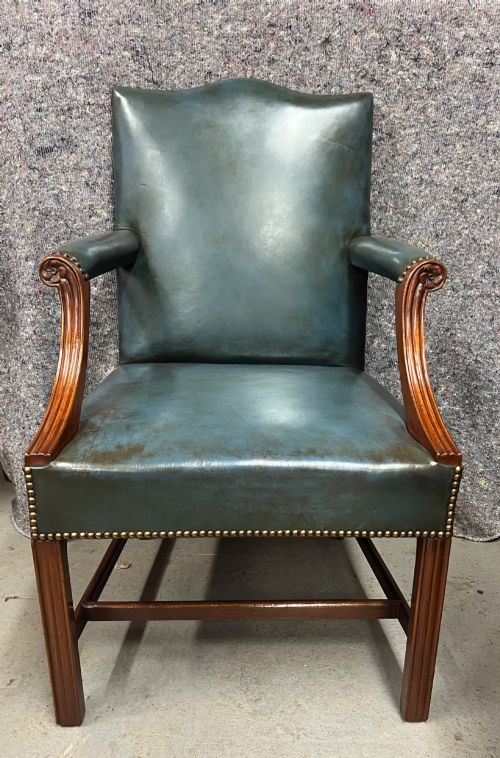
Makers and designers of these furnishings often drew upon classical proportions, resulting in substantial Gainsborough chairs and expansive Chesterfield sofas. Such seating reflects the domestic demands of historic libraries and studies.
Materials and Technique
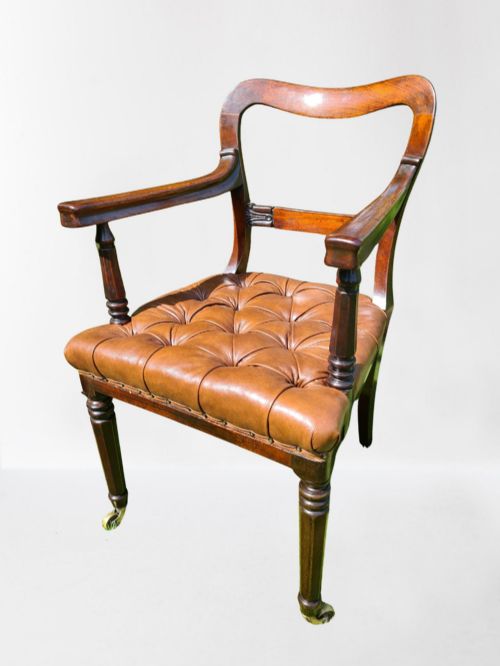
Timbers such as mahogany, oak, walnut, and rosewood form the structural skeletons of these seats, frequently shaped through turning, carving, and joinery. Brass detailing, including castors and inlaid accents, appears alongside cane panels and turned wooden supports.
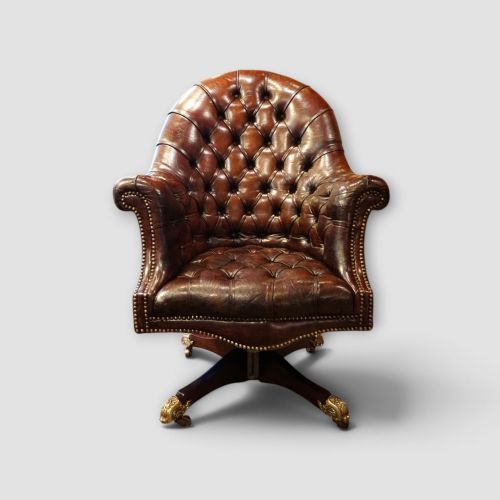
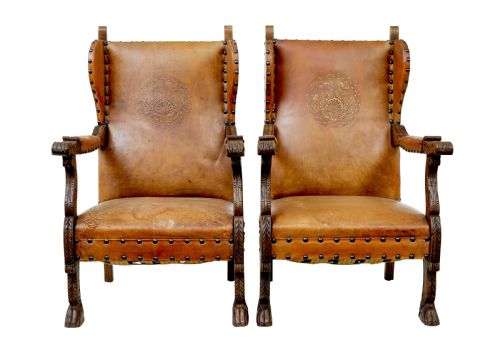
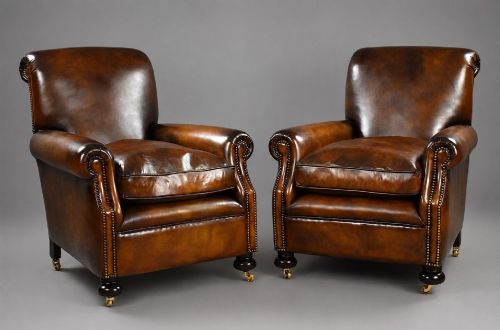
Upholstery relies on hand-dyed English hide and embossed leather fastened over sprung or stuffed interiors. Buttoning and hand-tacking secure the leather tightly to the wooden frames, ensuring durability across decades of use.
Several armchairs arrive with deep buttoning originally designed to keep stuffing firmly distributed while eighteenth-century readers dozed off.
Standards of Construction
Quality rests in the depth of timber carving, the choice of dense hardwoods like mahogany and oak, and the integrity of the joinery supporting the seat frame. Superior examples demonstrate precise hand-carving, such as blind fretwork, and balanced proportions.
The treatment and ageing of the leather dictate tactile and visual distinction, where hand-dyed hides retain supple texture and rich patina. Inferior pieces often display rigid modern substitutes or compromises in the stability of the wooden underframe.
Gillows·Bruce James Talbert
The Leather Library Seating Glossary
- Gainsborough chair
- A type of open-framed armchair with padded armrests and a wide seat, originating in the mid-eighteenth century. These chairs were traditionally designed for writing desks or parlours.
- Bergère
- An enclosed armchair with cane or upholstered sides and back panels. The wooden frame is typically exposed and polished.
- Chesterfield
- A large upholstered sofa or armchair featuring deep buttoning and rolled arms of equal height to the back. This form provides formal seating with generous proportions.
- Campaign chair
- A portable folding chair constructed for travel and military use during the nineteenth century. These pieces often incorporate brass mounts and collapsible wooden frames.
- Blind fretwork
- Carved ornamentation applied to furniture frame surfaces in low relief, resembling interlaced ribbon or geometric patterns. This technique frequently decorates eighteenth-century mahogany rails.
Leather Library Seating: Frequently Asked Questions
How do I distinguish a genuine nineteenth-century leather armchair from later reproductions?
Examine the timber framing for traditional joinery methods, tool marks, and natural wear consistent with age. Genuine pieces exhibit authentic patination on the hide and timber rather than artificial distress.
Check underneath the seating for webbing, horsehair stuffing, and hand-forged fixings which differ from modern manufactured equivalents.
What is the difference between a desk chair and a library armchair?
Desk chairs typically incorporate swivel mechanisms, height adjustability, or compact open frames suited for sitting close to a writing table. Library armchairs offer wider proportions, padded armrests, and deep seats intended for reading and relaxation.
Both forms utilise leather upholstery and sturdy wood frames, but their intended domestic functions dictate their scale.
How should I care for antique leather upholstery?
Maintain the hide by applying appropriate leather balms or conservation waxes to prevent drying and cracking over time. Avoid placing these pieces in direct sunlight or near direct heat sources.
Dust the surface regularly with a soft, dry cloth to preserve the natural finish and historical patina.
Are these chairs suitable for daily modern use?
Most antique leather seating is robustly constructed from solid hardwoods and durable animal hide, making them well-suited for everyday sitting. Regular maintenance of the joints and leather keeps them functional in contemporary homes.
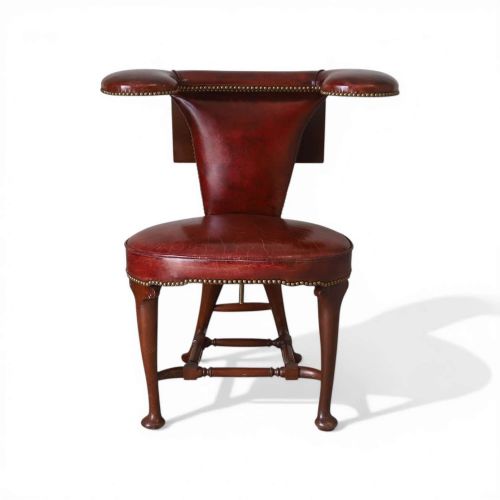
Ensure that weight capacities align with the particular construction of lighter frames like campaign or reading chairs.