


Leather Inset Office Desk
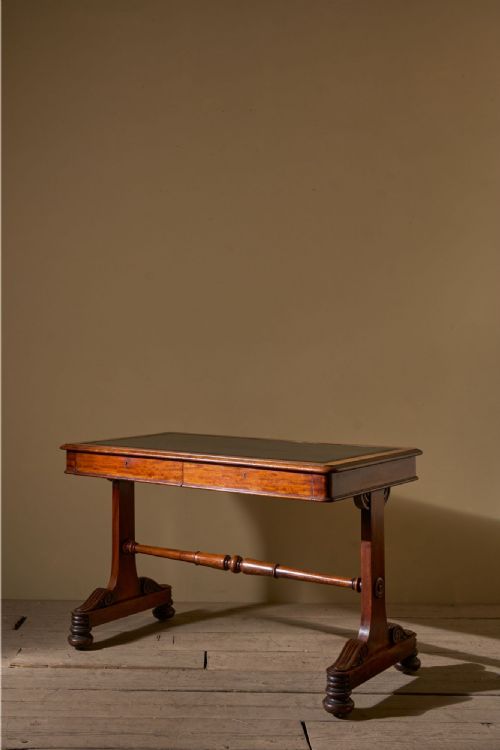
A leather inset office desk brings rich timber and a tactile writing surface together, offering both workspace and period character.
Leather Inset Office Desk
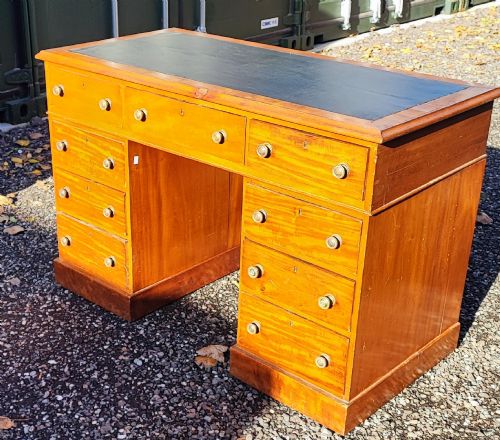
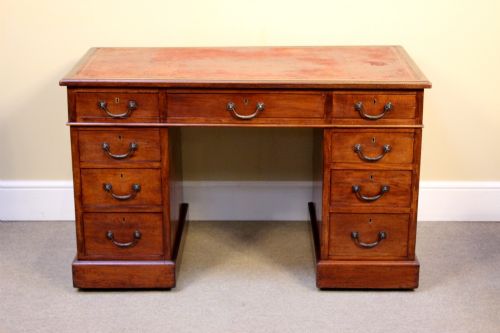
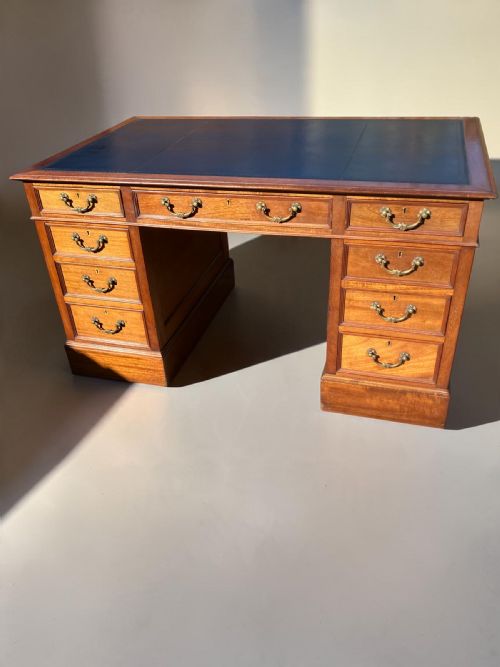
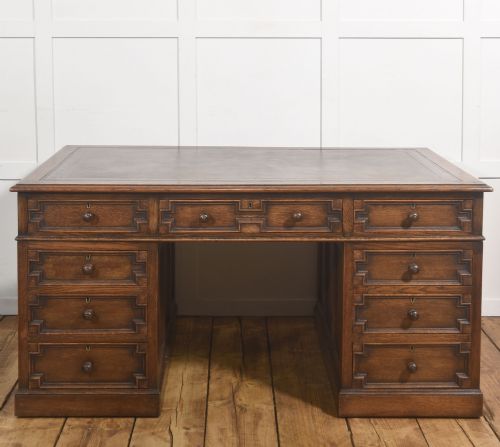
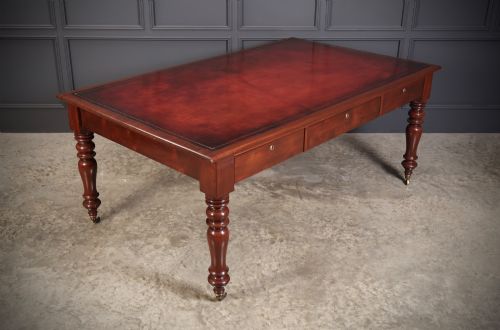
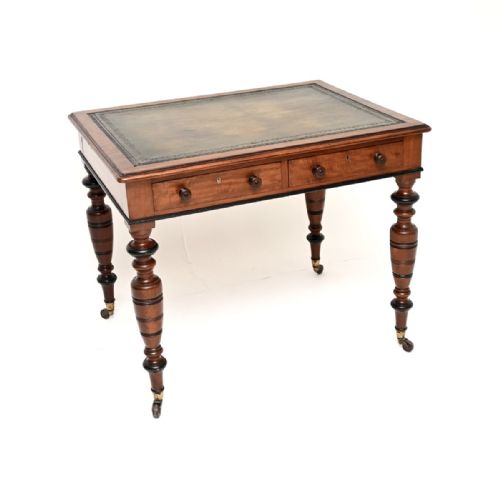
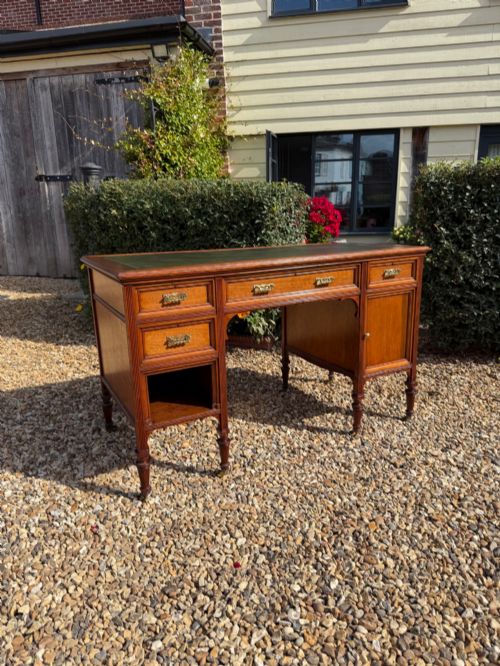
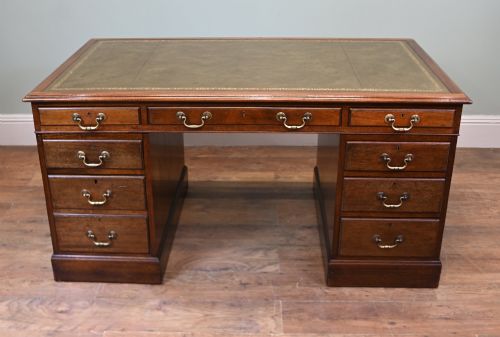
When you search for a leather inset office desk, you encounter a selection of nineteenth and early twentieth century writing furniture designed for studies and libraries. The most common form on this page is the pedestal desk, which places twin sets of drawers beneath a substantial writing surface.
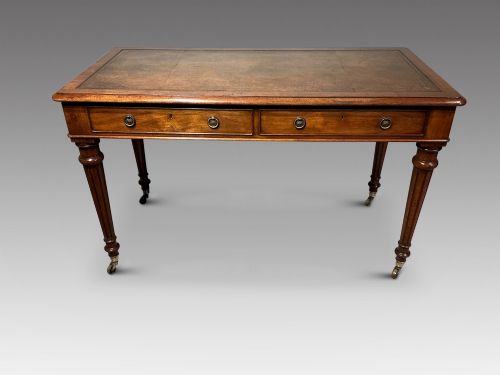
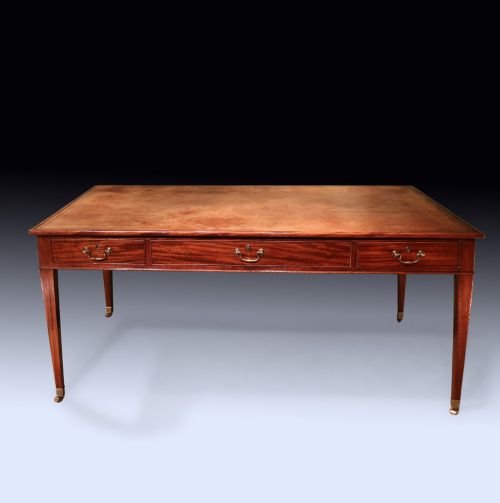
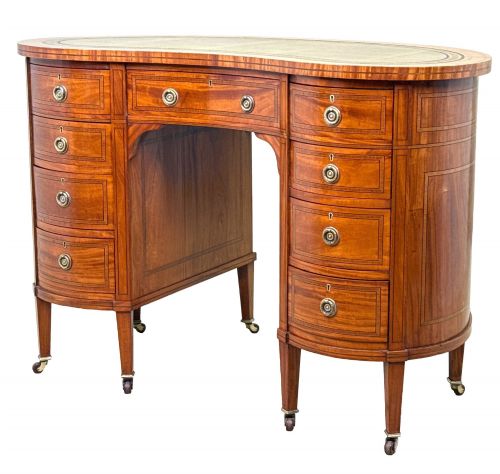
Beyond standard pedestals, the evidence includes writing tables, partners desks, and specialised variations like kidney shaped desks and Carlton house desks. These pieces span periods from the Georgian era through to the Edwardian period, often incorporating stylistic revivals such as Chippendale and Jacobean.
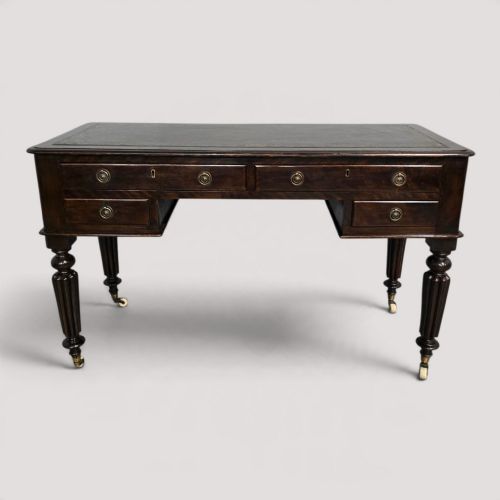
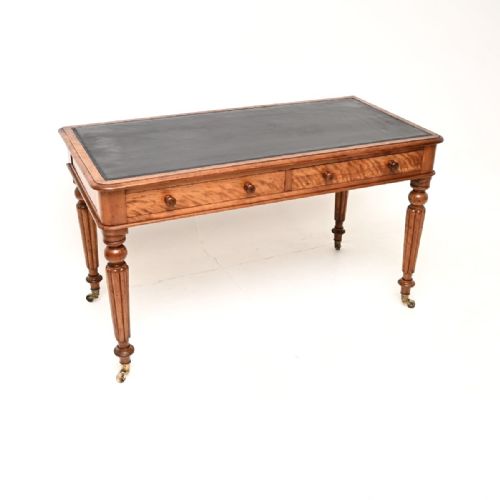
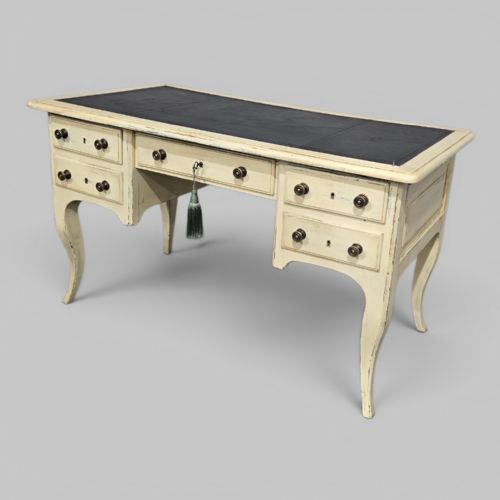
The layout typically centres on a leather writing surface surrounded by timber framing, frequently accompanied by banks of drawers or kneehole compartments. Such furniture originates from workshops and retail makers operating during the Victorian and Edwardian decades.
Materials and Construction
Makers constructed these desks primarily using solid timbers and veneers of mahogany, oak, walnut, burr walnut, and satinwood. Cabinet makers laid leather across the primary writing surface, frequently framing the hide with blind tooling and brass hardware.
Construction techniques combine traditional joinery for the drawer carcases and pedestals with applied decorative elements such as carved mahogany details or painted wood finishes. The integration of brass handles, castors, and inset leather surfaces defines the technical assembly of these desks.
Leather Inset Office Desk Retail Price Guide 2026
Typical asking prices for leather inset office desk among the pieces listed under this phrase on Sellingantiques today, from the lower quarter to the upper quarter. They describe what is for sale here now, not the wider market.
Listings feature items spanning the Georgian, Victorian, and Edwardian periods, constructed from mahogany, oak, walnut, and satinwood.
Distinguishing Quality in Construction
Quality rests in the choice of timber and the precision of the cabinet work, from figured burr walnut veneers to finely carved mahogany details. Superior examples exhibit balanced proportions, well-figured grain, and meticulous execution of secondary timbers within the drawer linings.
The integrity of the hardware, the finesse of the leather tooling, and the retention of maker signatures or stamps separate standard production pieces from finer workshop commissions. Attention to structural joinery ensures that pedestals and writing surfaces remain solid across decades of use.
Maple and Co·Johnstone and Jeanes·Howard and Sons·Rumney and Love·Shapland and Petter
The Leather Inset Office Desk Glossary
- Pedestal desk
- A desk comprising two independent pedestals of drawers supporting a single top with a central kneehole space.
- Partners desk
- A large double-sided desk designed for two people to work opposite one another, featuring drawers on both sides.
- Carlton house desk
- A fitted writing desk with a raised superstructure containing small drawers and pigeonholes arranged in a curve.
- Davenport
- A compact writing desk featuring a sloping lid and side drawers, originating in the early nineteenth century.
- Blind tooling
- An impressed decorative border on leather surfaces created using heated metal tools without gold leaf.
- Kneehole
- The central recessed space beneath a desk top that allows a chair and the user to sit comfortably.
Leather Inset Office Desk: Frequently Asked Questions
What is a partners desk?
A partners desk is a large double-sided workspace built with drawers and cupboards on both sides so two people can sit opposite each other.
These pieces were traditionally used in libraries, banks, and large administrative offices where colleagues shared a single piece of furniture.
How do I care for the leather top?
The leather inset requires gentle cleaning with a soft cloth and occasional treatment with appropriate leather balms to prevent drying.
Avoiding direct sunlight and excessive moisture preserves both the hide and the surrounding timber framing.
What timber was most commonly used?
Mahogany is the predominant timber found across these desks, appearing in various figures including curl mahogany and blonde variants.
Walnut, burr walnut, oak, and satinwood also appear frequently across Victorian and Edwardian pieces.
How do I identify a Victorian desk?
Victorian desks are typically identified through their construction methods, timber choices, and distinct period revival styling.
Maker stamps, brass hardware designs, and specific proportions characteristic of the nineteenth century further help confirm the date.