

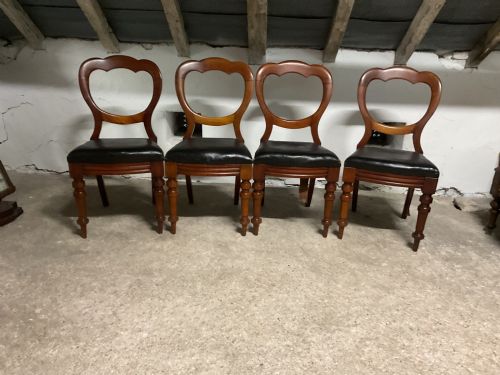
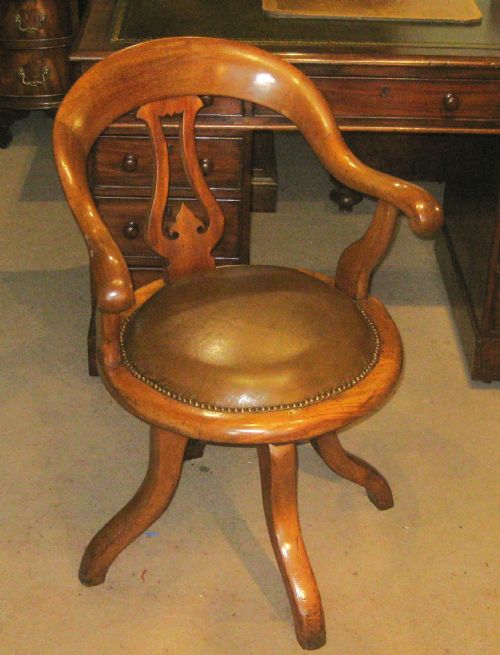
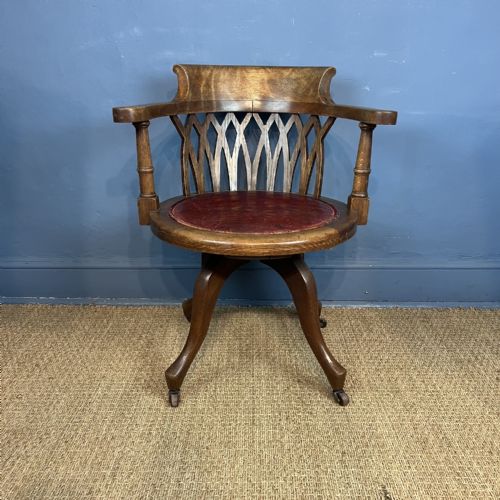
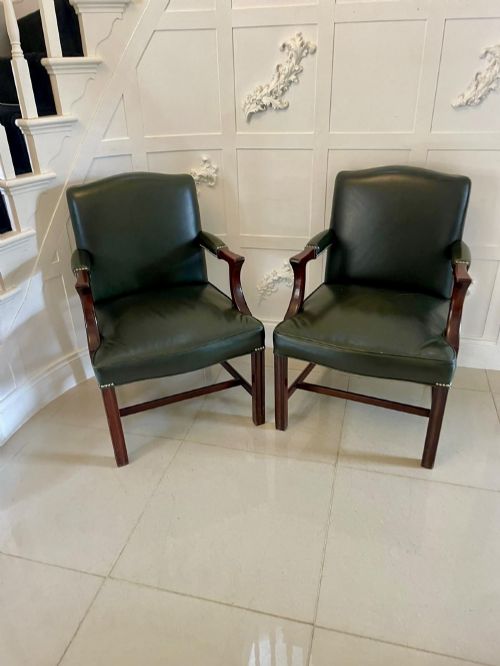
Leather Desk Chair
A leather desk chair brings working corners to life with tactile hides and solid timber frames built for daily study.
Forms and Origins
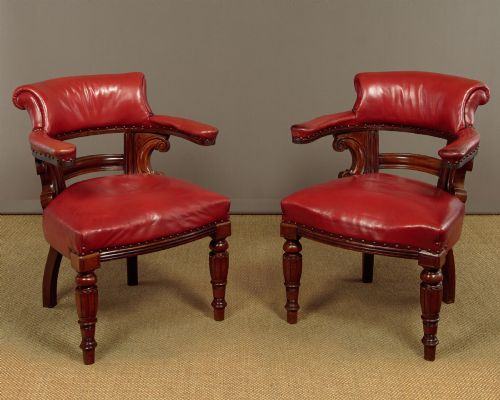
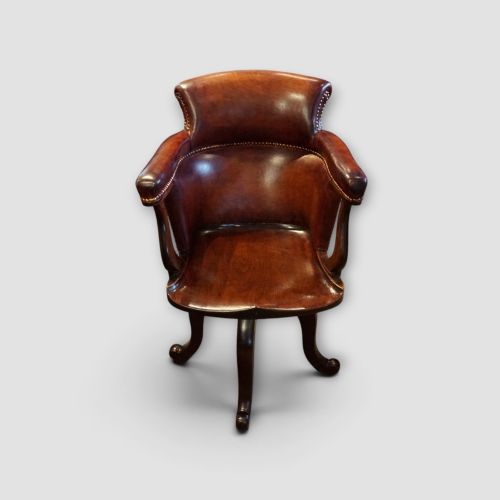
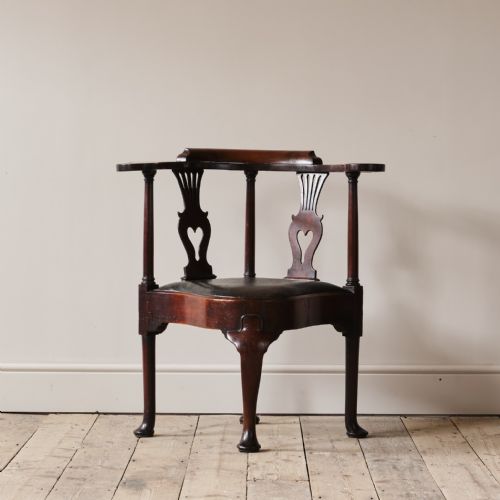
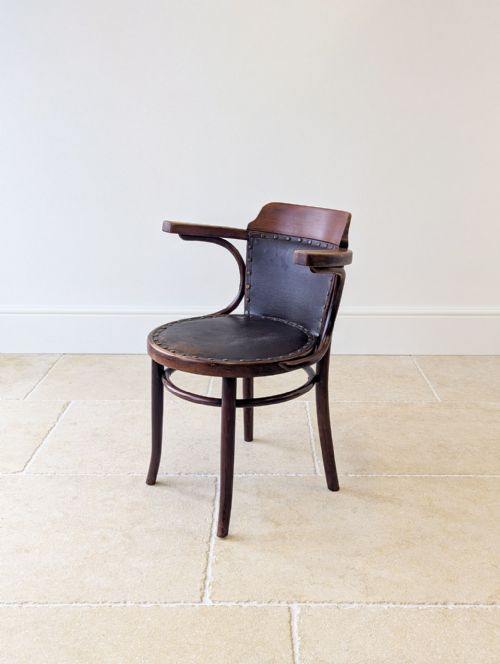
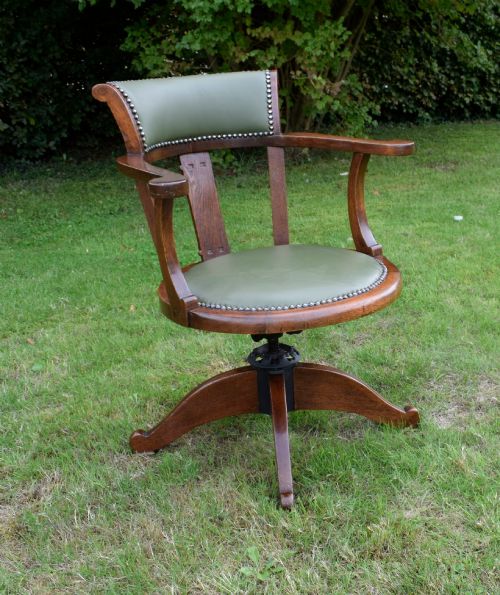
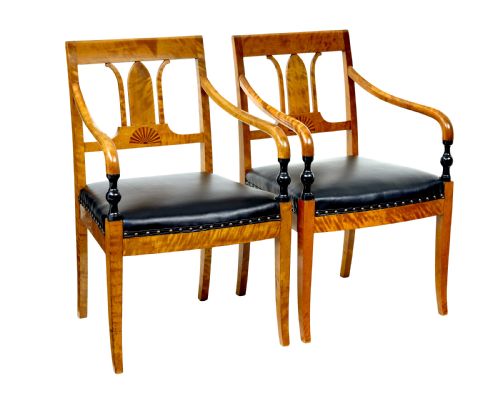
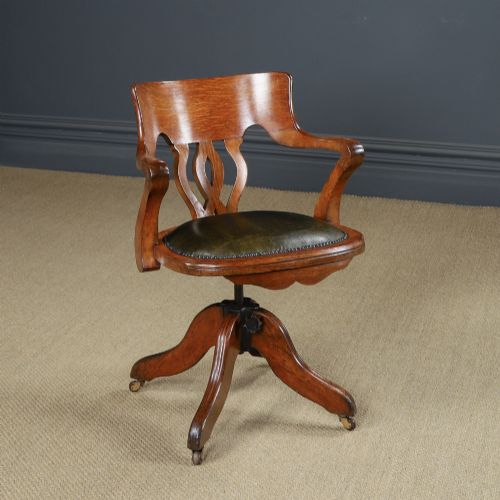
A leather desk chair combines a sturdy timber frame with a supportive upholstered seat designed for long hours at a writing table. The selection includes fixed armchairs, swivel models, and revolving variants spanning the Georgian, Victorian, and Edwardian eras.
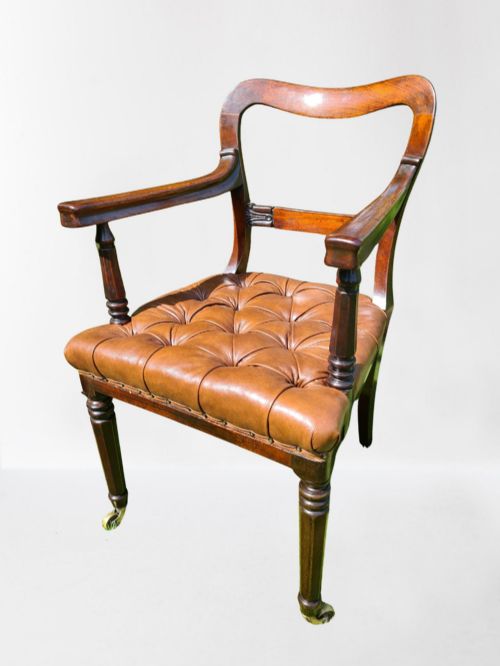
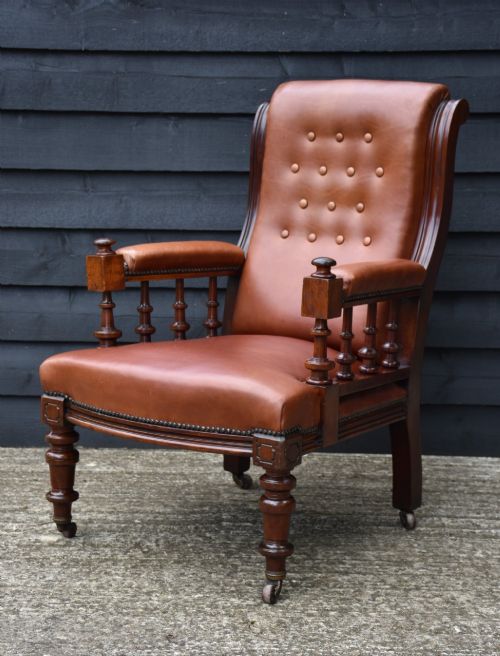
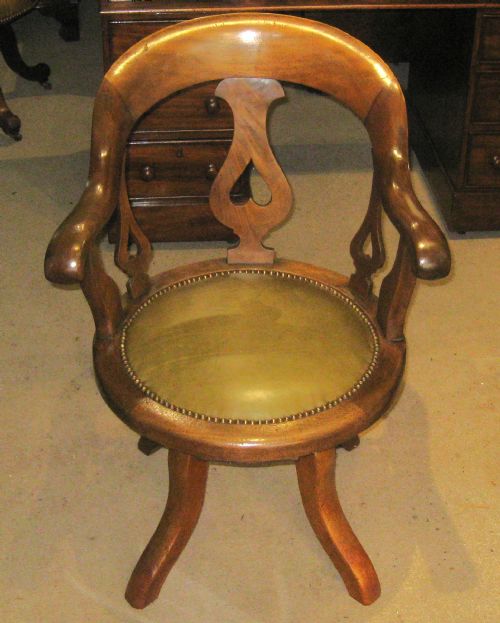
The most frequent examples found here date from the Edwardian period, often constructed from oak or beech with green leather upholstery. Earlier pieces bring substantial mahogany frames and deep buttoning to the workspace.
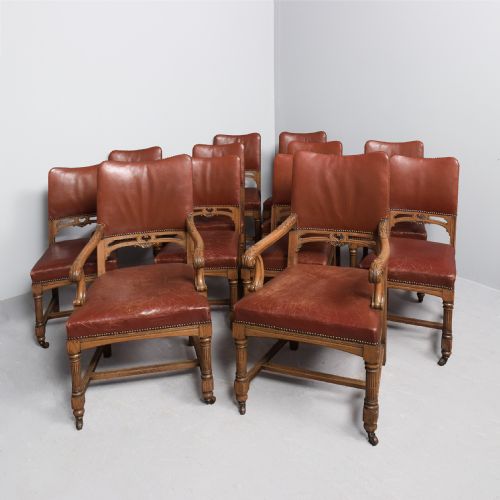
Makers from various regions adapted traditional forms into functional office seating, producing both armless side chairs and generous armchairs. These pieces reflect shifting professional needs from the eighteenth century onwards.
Materials and Construction
Frames rely on durable hardwoods such as mahogany, walnut, oak, beech, and standard wood combined with brass hardware for swivel and tilting mechanisms. Joinery utilises traditional methods to support the weight and movement inherent in office seating.
Upholstery incorporates quality leather attached over padding, frequently secured with brass nail heads or finished with deep buttoning. Timber surfaces receive polish to highlight the natural grain of the wood.
Victorian office workers spun around just as much as we do, thanks to ingenious early revolving spindles.
Quality Factors
The standard of a leather desk chair depends on the integrity of its timber frame and the richness of the upholstery hide. Solid construction in woods like mahogany or walnut sets higher grades apart from simpler beech or oak variants.
Refinement in carving, the presence of original swivel mechanisms, and balanced proportions define superior examples. Pieces retaining their early patinated leather and original brass details command greater appreciation.
WM Heywood Chair Co
The Leather Desk Chair Glossary
- Carver armchair
- An armchair with solid wooden arms, often used at a desk or as a companion piece to dining sets. These provide upright support for writing.
- Revolving desk chair
- A seating form fitted with a central spindle or pivot allowing the user to turn. Many Edwardian and Victorian versions also feature adjustable height mechanisms.
- Deep buttoning
- An upholstery technique where leather is pulled into folds and secured with tufts or buttons in a diamond pattern. This method adds structural tension and plushness to the seat back.
- Swivel tilting desk armchair
- A chair equipped with under-seat hardware that allows both rotation and backward tilt. This mechanism became popular during the late nineteenth and early twentieth centuries.
Frequently Asked Questions
How do I identify an Edwardian desk chair?
Edwardian desk chairs typically employ oak or beech frames paired with green leather upholstery and revolving bases.
They often include adjustable spindles and simpler lines compared to heavily carved Victorian or Georgian counterparts.
Were these chairs used in offices?
Yes, many revolving and tilt-action models served in professional offices, libraries, and studies from the Victorian era onward.
Their mobility and ergonomic adjustments met the demands of administrative work.
What woods were commonly used?
Cabinet makers utilised mahogany, walnut, oak, and beech depending on the period and the workshop style.
Mahogany appears frequently in formal Georgian and Victorian pieces, whilst oak and beech dominate Edwardian office seating.
How do I care for antique leather?
Maintain the hide by keeping it away from direct heat sources and applying appropriate leather balms to prevent drying.
Gentle dusting preserves the natural finish and patina developed over decades of use.