

Leather Chesterfield Chair
A leather chesterfield chair brings deep buttoning and traditional upholstery to a study or library.
Leather Chesterfield Chair
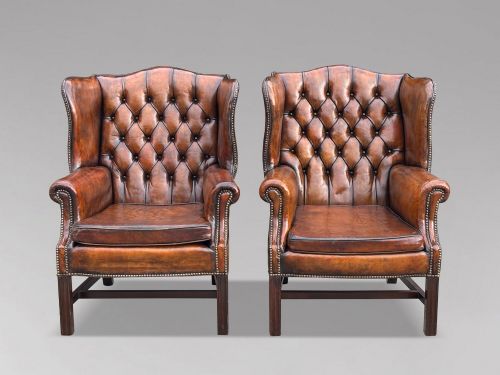
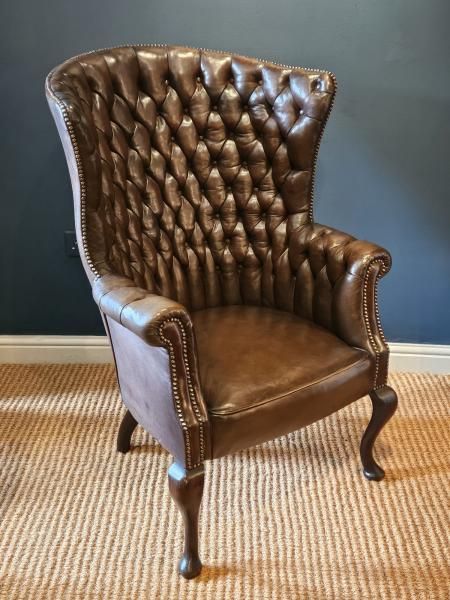
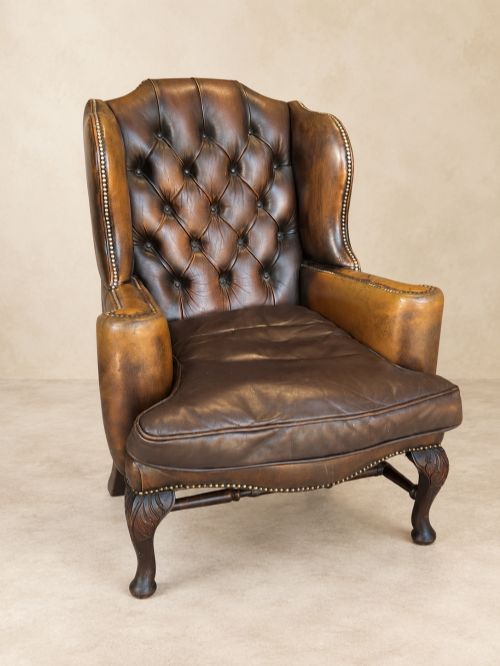
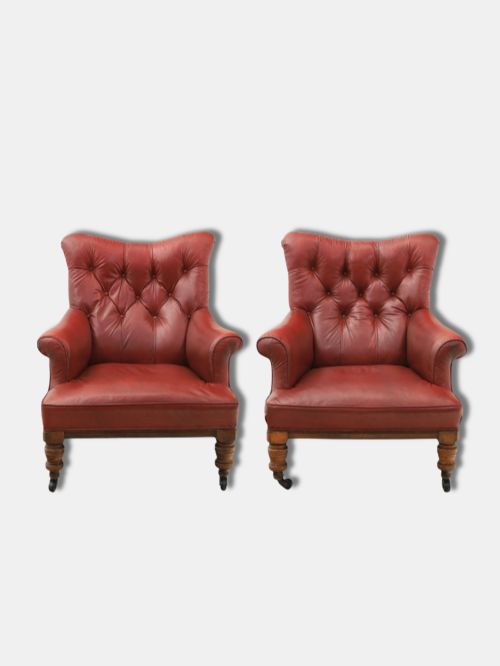
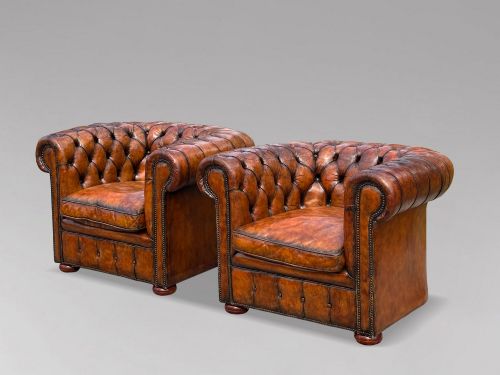
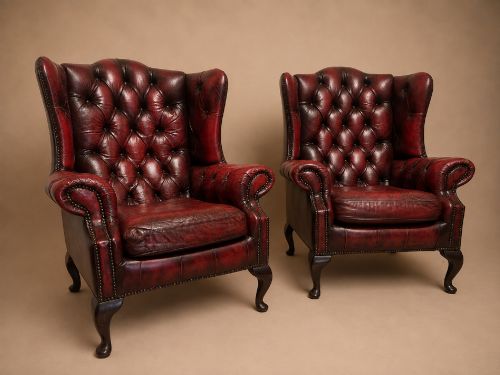
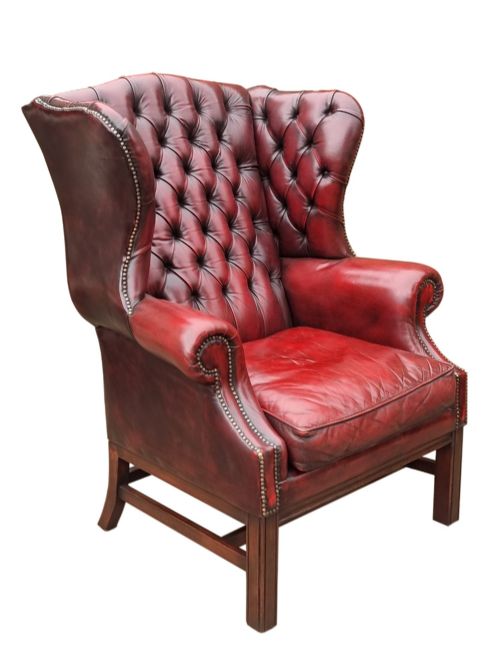
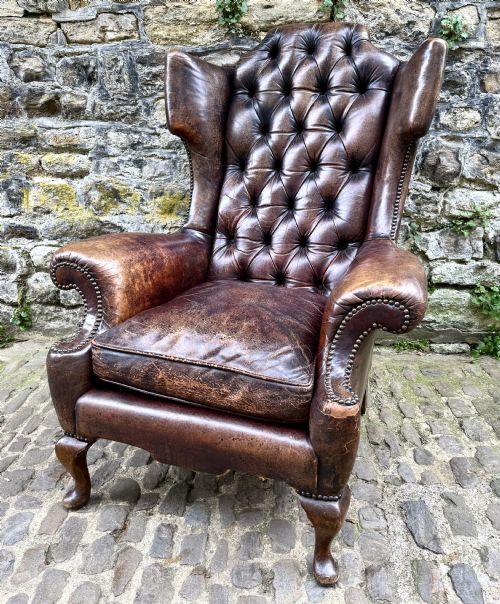
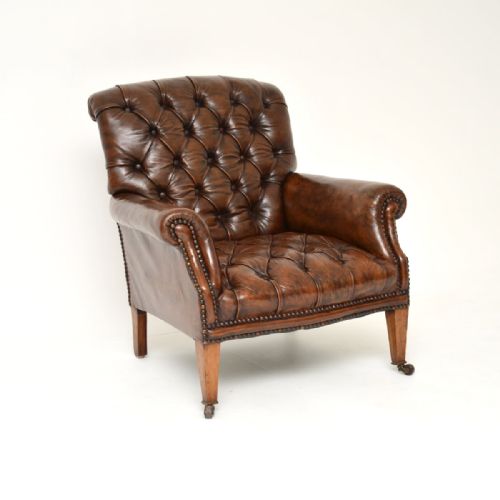
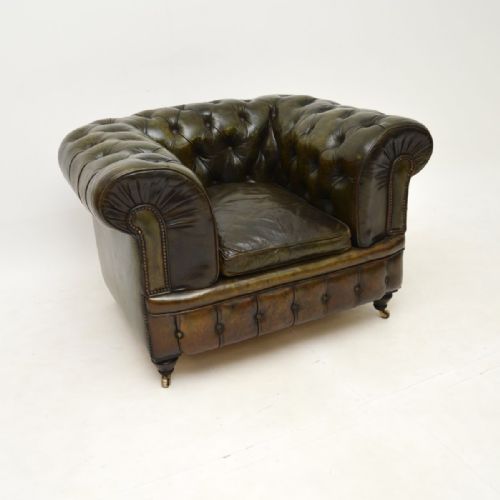
A leather chesterfield chair combines deep buttoning, scrolled arms, and leather upholstery into a substantial seat for a study or library. These pieces appear in numerous formats across the listings, from low club chairs to tall wingback designs.
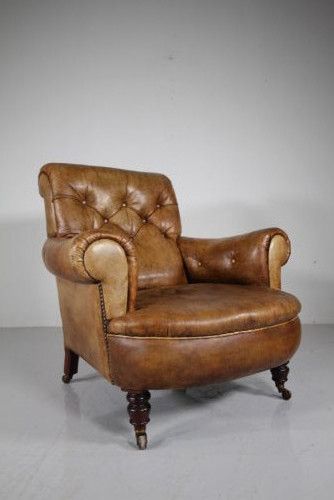
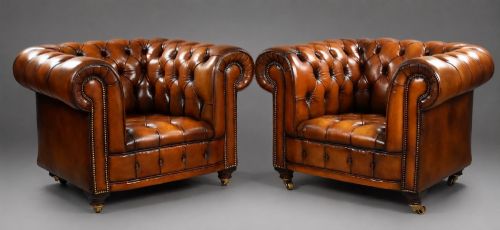
The version most commonly met on this page is the nineteenth-century Victorian or Edwardian club armchair in brown or oxblood hide. These examples frequently feature full buttoning and brass nailhead trim along the arm facings.
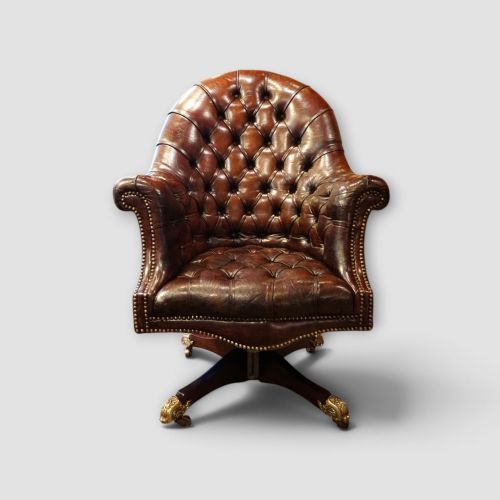
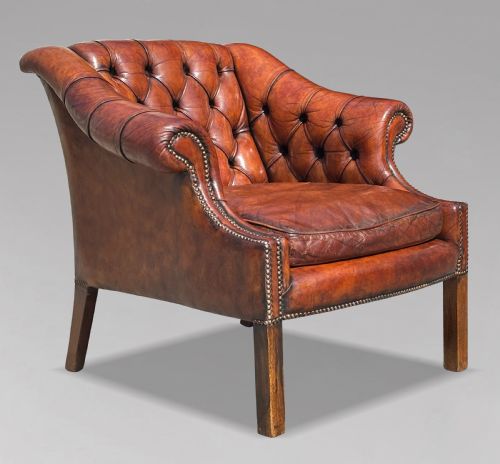
Beyond standard club models, the selection includes desk chairs, slipper chairs, and porters chairs spanning periods from the Regency era through to the 1930s. Buyers also encounter Georgian and George III style interpretations built with mahogany or hardwood frames.
How They Were Made
Makers constructed the internal frame from timber such as mahogany, oak, or general hardwood to provide a rigid foundation for the heavy upholstery. Joinery techniques relied on traditional framing methods to support the considerable weight of the springs and padding.
Upholsterers applied cattle hide over coiled springs and horsehair stuffing, securing the leather with individual brass nails driven along the wooden borders. Deep buttoning was pulled tight through the backrest and seat to create the signature diamond tufting pattern.
The listings span eight distinct periods, from the Regency era through to 1940.
What Varies in Quality
The integrity of the internal wooden frame and the tension of the original springing dictate the structural standard of each seat. Heavier timber frameworks and robust secondary woods indicate superior construction in older pieces.
The grade and preparation of the leather significantly influence the character and endurance of the upholstery. Hand-dyed hides that retain natural grain patterns demonstrate finer material selection than uniformly pigmented surfaces.
Robert Mouseman Thompson
The Leather Chesterfield Chair Glossary
- Chesterfield chair
- A heavily upholstered seat featuring deep buttoning and arms that match the height of the back. This form originated in traditional British seating design.
- Wingback
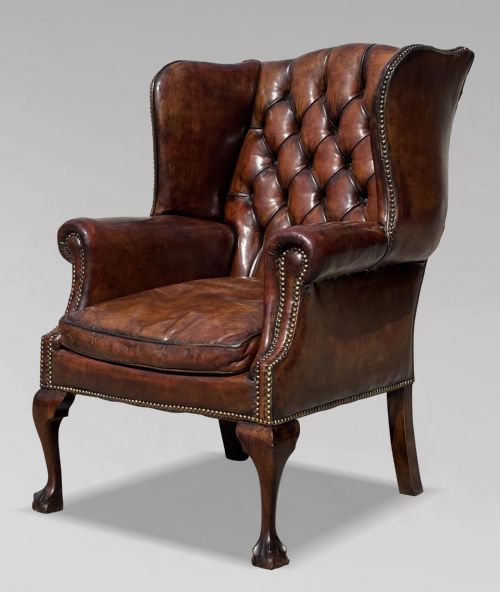
- An armchair style featuring protective side panels attached to the armrests, designed to shield the occupant from drafts. These panels extend upward to frame the head.
- Rexine
- A brand of artificial leather fabric utilised as an upholstery alternative on certain twentieth-century seating pieces. It mimics the texture of genuine hide.
- Brass nailhead
- Small decorative metal tacks hammered in rows to secure leather edges to the wooden framework. They provide both reinforcement and visual trim.
- Tufting
- The method of pulling twine deeply through padding and securing it with buttons to create a padded diamond pattern. This technique keeps internal stuffing evenly distributed.
Leather Chesterfield Chair: Frequently Asked Questions
How do I identify a Victorian leather chesterfield chair?
Victorian examples generally display heavier proportions, darker patinated hides, and dense horsehair stuffing beneath deep buttoned upholstery.
Examine the turned wooden legs and brass castors underneath to confirm nineteenth-century manufacturing methods and materials.
What is the difference between a club chair and a wing chair?
A club chair offers a low, deep seat with rolled arms designed for relaxed lounging in libraries or smoking rooms.
A wing chair incorporates high protective side panels flanking the backrest to block drafts and retain warmth around the head.
Are these chairs suitable for daily office use?
Many listings include swivel desk chairs and desk armchairs specifically adapted for prolonged seating at a writing table.
Their robust timber frames and supportive spring construction handle regular daily employment while maintaining traditional aesthetics.
How should I care for antique leather upholstery?
Maintain the hide by applying specialist leather balms periodically to prevent the natural material from drying and cracking over time.
Keep these seats away from direct heat sources and strong sunlight to preserve the original dye and patina.