




Leather Brass Stud Stool
These leather brass stud stool examples combine sturdy wood frames with traditional upholstery and metal detailing, offering a practical seat for period interiors.
Leather Brass Stud Stool
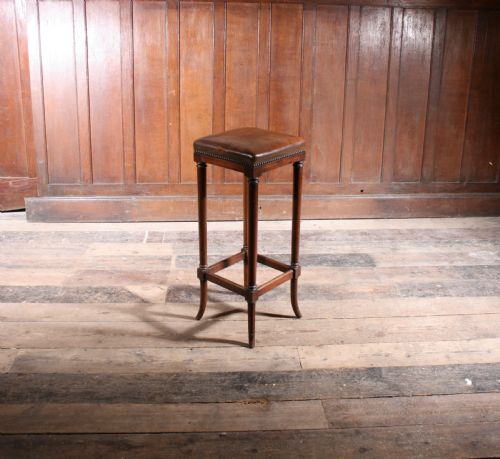
When searching for a leather brass stud stool, buyers encounter a variety of forms including footstools, long benches, ottomans, and tall stools. These pieces span periods from the Regency and William IV eras through the Victorian and Edwardian decades, alongside Carolean and Chippendale revival styles.
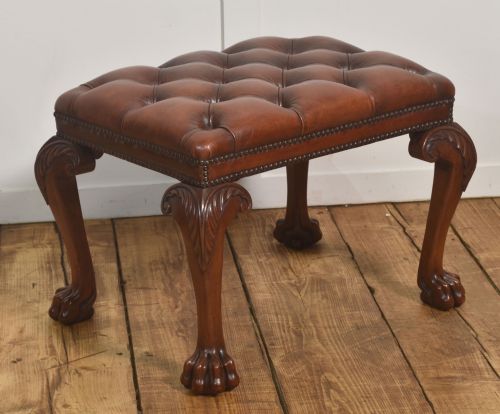
The most common versions on this page are mahogany or rosewood frames paired with buttoned or plain leather upholstery, finished with distinct metal stud work. Forms range from low dressing seats and box ottomans to large footstools and long benches designed for traditional English interiors.
Materials and construction methods
Framing timbers predominantly feature mahogany, oak, rosewood, walnut, and yew wood, shaped into cabriole or fluted legs. Hardwood structures provide the necessary rigidity to support frequent seating use.
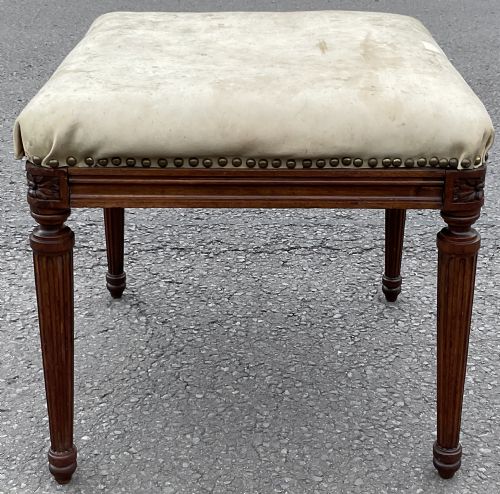
Upholstery combines durable tan, burgundy, or green leather secured to the wooden frames using individual brass studs. Artisans utilised buttoning techniques on larger footstools and ottomans to create textured, padded surfaces.
Object types range from compact footstools and dressing seats to long benches and music chairs.
Assessing quality in construction
Finer examples distinguish themselves through dense, figured timber frames such as rosewood or mahogany, paired with tightly fitted joints and hand-turned legs. Lesser pieces utilise simpler woods or heavier secondary timbers without the same precision in cabinetmaking.
The execution of the leatherwork separates standard items from superior ones. Tightly pulled leather with evenly spaced, secure brass studs and careful buttoning indicates a higher standard of period craftsmanship compared to loose or uneven upholstery.
The Leather Brass Stud Stool Glossary
- Cabriole leg
- A furniture leg that curves out and then in, resembling the legs of an animal. This form appears frequently on Victorian mahogany frames.
- Buttoned leather
- Upholstery pulled deep into the padding with tufts secured by buttons, creating a pleated grid pattern. This technique adds structural tension and visual texture.
- Box ottoman
- A seated furniture piece with a hinged top that opens to reveal internal storage space. Rosewood examples from the Regency period demonstrate this form.
- Fluted leg
- A column leg carved with vertical parallel grooves. These are often seen on Regency long benches and stools.
Leather Brass Stud Stool: Frequently Asked Questions
Where should I place a leather brass stud stool?
These pieces suit living rooms as footstools or ottomans, placed before sofas or chairs for resting feet. Long benches and low hall seats fit well in hallways or at the foot of a bed.
Their varied heights also allow them to function as occasional seating in studies or dressing rooms where traditional wooden frames complement existing furniture.
How do I care for antique leather upholstery?
Leather requires regular dusting with a dry cloth and occasional treatment with appropriate conditioning balms to prevent drying and cracking. Keeping the material away from direct sunlight and heat sources preserves its colour and suppleness.
Brass studs generally need minimal attention, though gentle cleaning helps maintain their metallic finish without disturbing the surrounding leather.
How can I tell a Regency stool from a Victorian one?
Regency pieces often utilise rosewood with refined classical details like fluted legs, reflecting earlier neoclassical influences. Victorian versions more commonly feature mahogany with heavier proportions and cabriole legs.
Examining the underlying timber and leg profiles helps reveal the specific period of manufacture.
Are these stools comfortable for daily use?
Most pieces offer firm support due to traditional padding and buttoned leather construction designed for durability. Footstools and ottomans provide a stable surface, while dressing stools and tall seats offer upright support for shorter durations.
The solid hardwood frames ensure structural stability for regular sitting.