


Leather Back Armchair
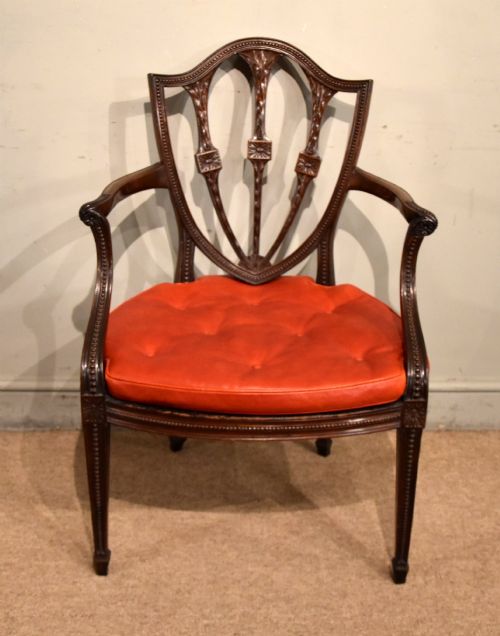
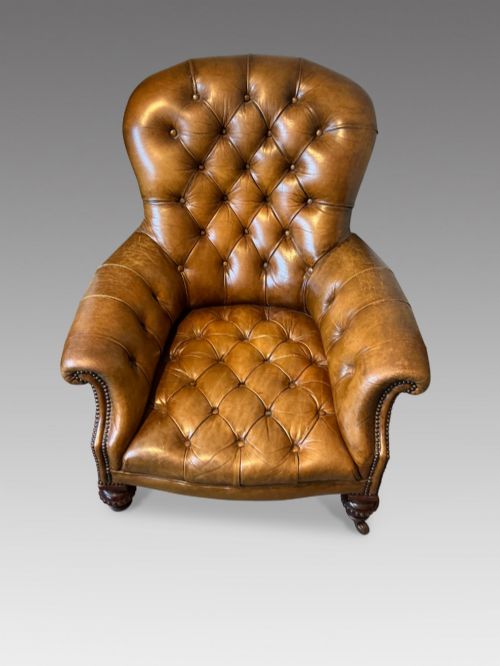
A leather back armchair brings substantial seating and deep historical character to a room, drawing on decades or centuries of traditional craftsmanship.
Leather Back Armchair
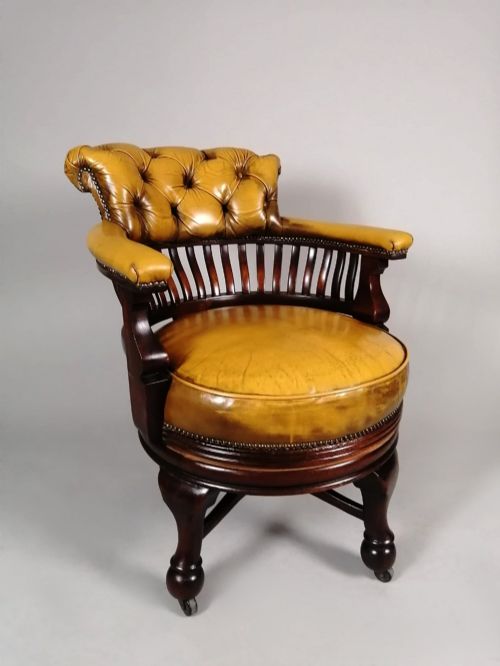
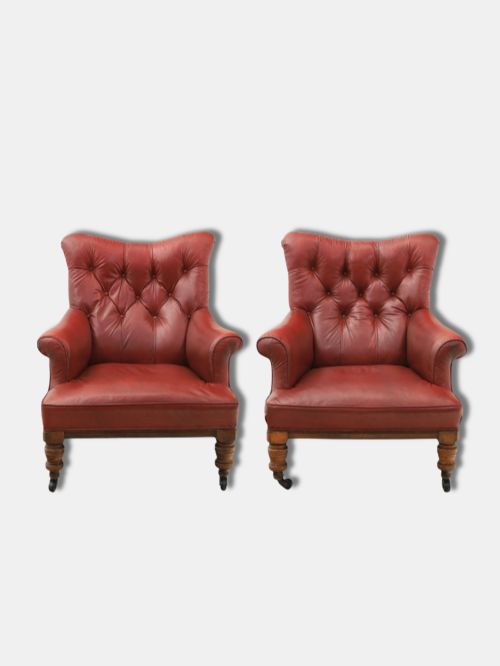
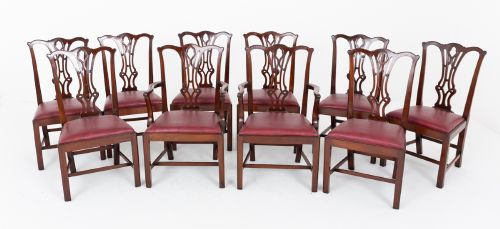
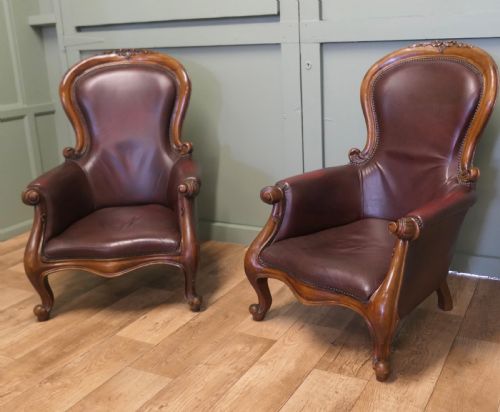
A leather back armchair encompasses diverse seating forms designed for comfort and utility, ranging from deep wingbacks to swivel desk chairs. When exploring this selection, buyers most frequently encounter 19th-century Victorian library models and early 20th-century club chairs upholstered in tanned hides.
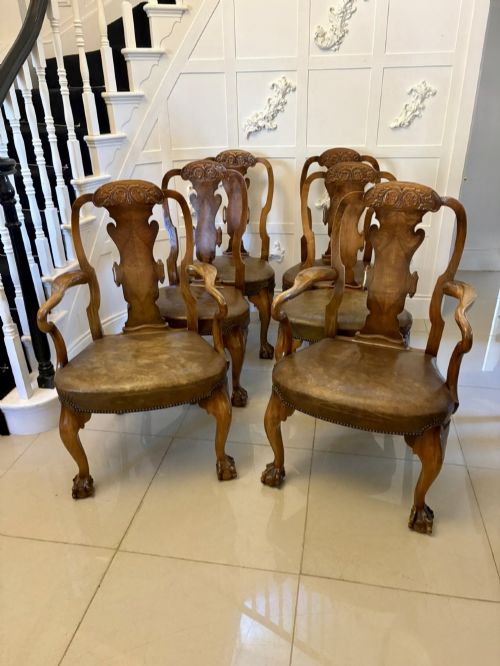
The category bridges formal parlour seating and heavy-duty study furniture, spanning Georgian periods through to Art Deco designs. Pieces incorporate solid timber frames of mahogany, oak, or walnut, paired with upholstered or exposed wooden backs.
Origins vary from English workshops to continental European makers, yielding diverse stylistic interpretations including Chesterfield, Gainsborough, and Baroque revivals. Such chairs serve equally as fireside retreats or functional desk companions in traditional interiors.
How They Were Made
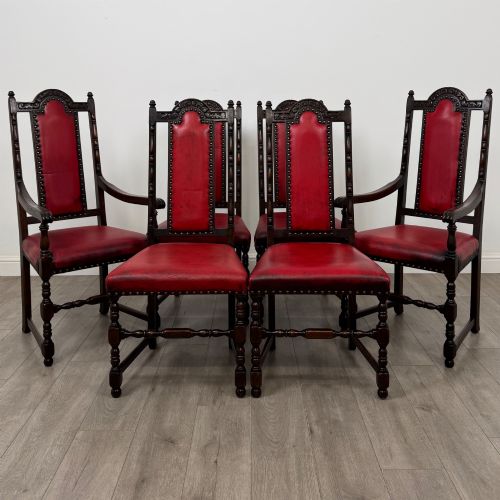
Construction relies heavily on durable hardwoods like mahogany, oak, and walnut to form stable frames that support frequent seating. Master carpenters utilised traditional joinery techniques, carving structural members or applying decorative veneers before integrating the upholstery.
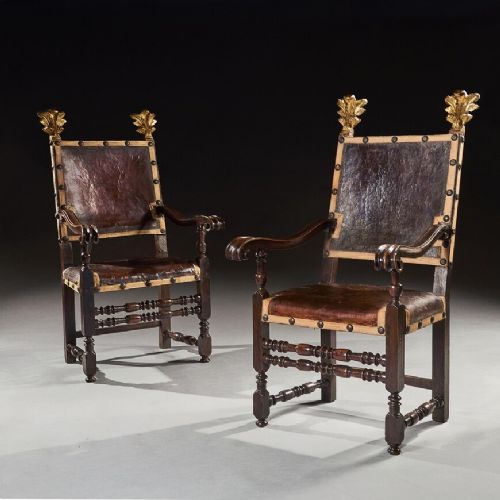
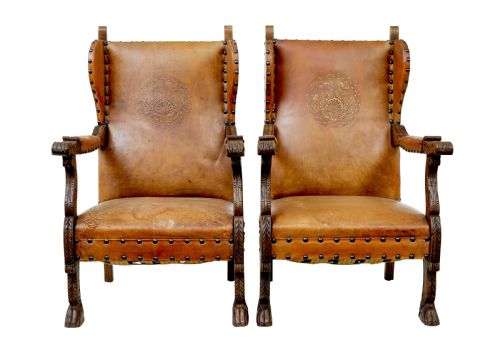
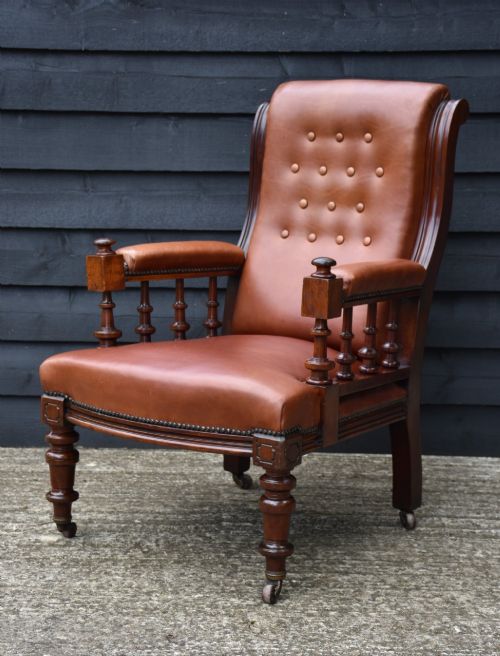
Hides were stretched across supportive webbing and stuffing materials, often secured with brass tacking or deep buttoning methods to maintain tension. Frame embellishments ranged from parcel-gilt details to hand-embossed leather panels fixed directly into the wood.
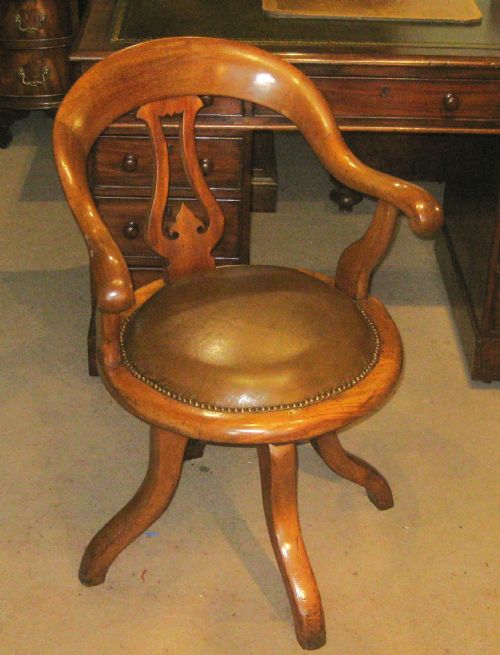
Some chairs quietly conceal revolving mechanisms that let Victorian scholars swivel briskly between opposing stacks of heavy books.
What Varies in Quality
The calibre of a leather back armchair rests largely on the structural integrity of the timber frame and the depth of the carving. Heavier, denser hardwoods demonstrate greater longevity than lighter secondary woods, while hand-carved detailing exhibits superior artisanal skill compared to mass-produced moulding.
Upholstery methods also dictate standard, with traditional hand-tied coil springing and securely anchored buttoning outlasting simpler pad builds. Furthermore, the grade of the leather hide and the preservation of its natural grain influence the overall desirability of the piece.
Harry and Lou Epstein
The Leather Back Armchair Glossary
- Wingback
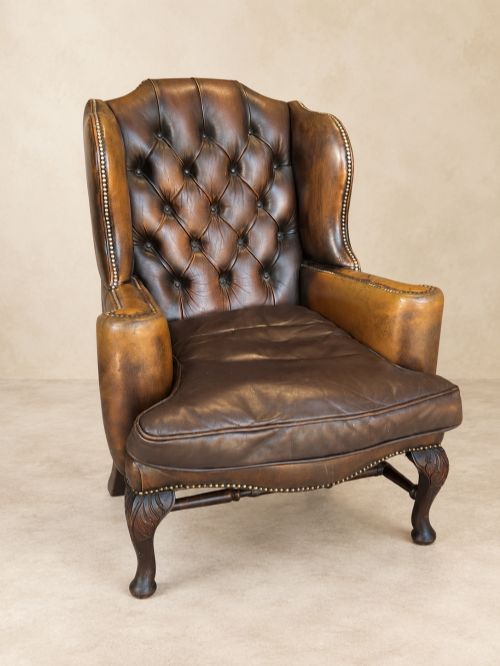
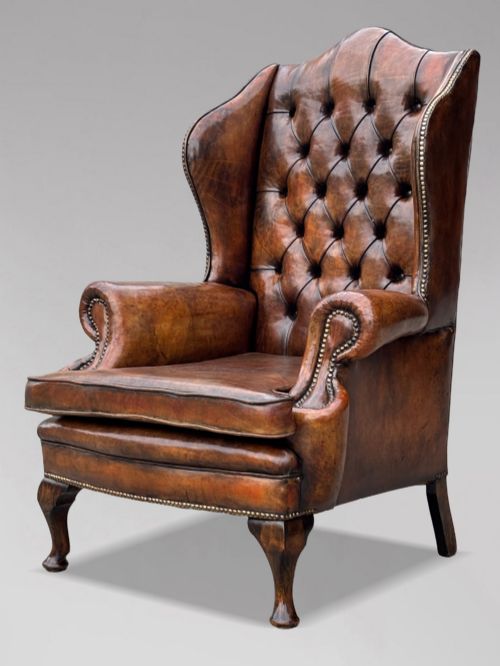
- An armchair featuring protective side panels designed to shield the occupant from draughts. These extensions angle forward from the backrest toward the arm rests.
- Button-back
- An upholstery method where tufts are pulled tight and secured with buttons in a geometric pattern. This technique creates deep creases and holds internal padding firmly in place.
- Rexine
- A brand of artificial leather made from cloth coated with nitrocellulose, camphor oil, and pigment. It gained popularity during the early 20th century as a durable upholstery alternative.
- Cabriole leg
- A furniture leg that curves outward in a convex arc and then tapers inward in a concave arc to a pad or scroll foot. The design mimics the shape of an animal's leg.
Leather Back Armchair: Frequently Asked Questions
Where should I place a library chair?
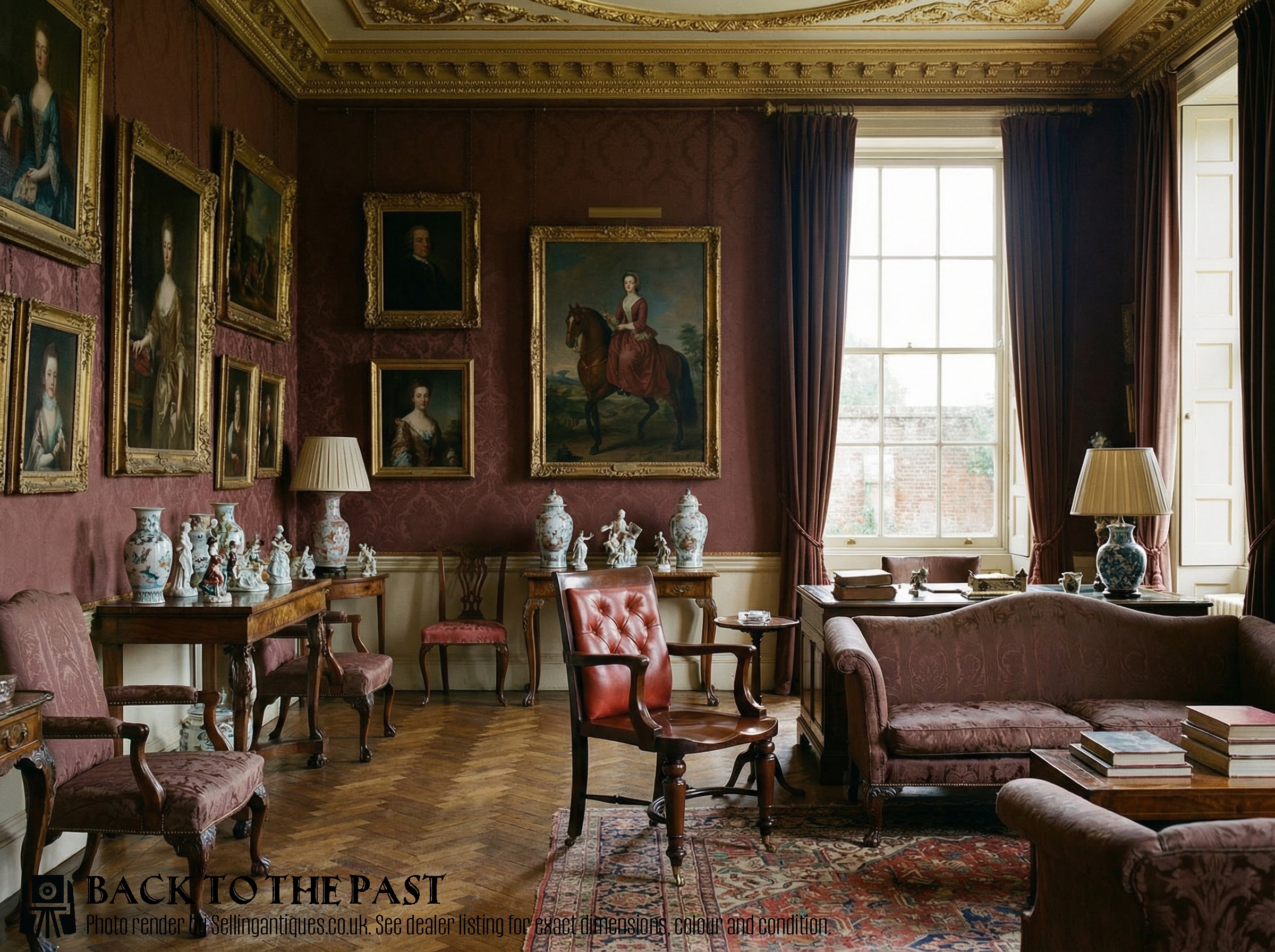
Position these substantial seats near bookshelves or beside a fireplace where their supportive backs provide comfort for reading. Ensure they sit away from direct sunlight and heat sources to protect the wood and leather.
Allow sufficient clearance around swivel or reclining variants so mechanisms operate without obstruction. They anchor large studies or spacious living rooms effectively.
Are these chairs suitable for daily desk use?
Revolving desk variants and sturdy mahogany frames function well for regular office tasks when paired with modern desk heights. Their ergonomic posture support suits extended working periods.
Ensure the castor wheels or base mechanisms remain stable before daily implementation. Upholstered padding should offer firm support rather than excessive sinking.
How do I date a Victorian piece?
Examine the timber species, joinery methods, and hardware underneath or behind the upholstery for period indicators. Golden mahogany and heavier carved walnut frameworks often signal mid-to-late 19th-century manufacturing.
Look for hand-forged screws or machine-cut elements that reveal the transitional technology of the era. Comparing style revivals like Jacobean or Gothic influences helps narrow the decade of production.