

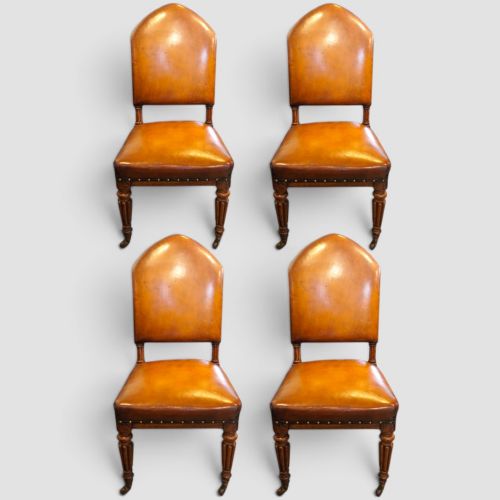
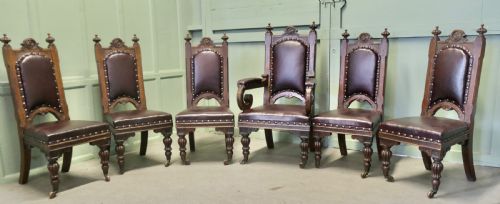
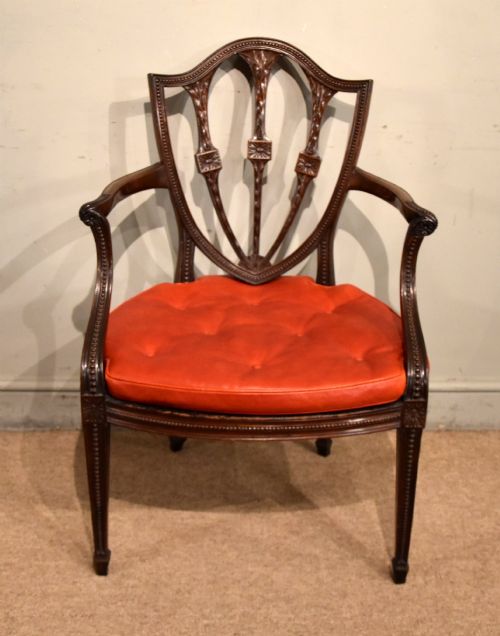
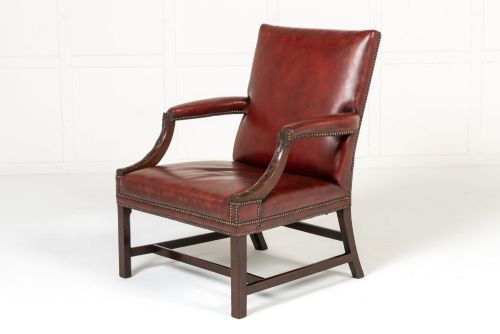

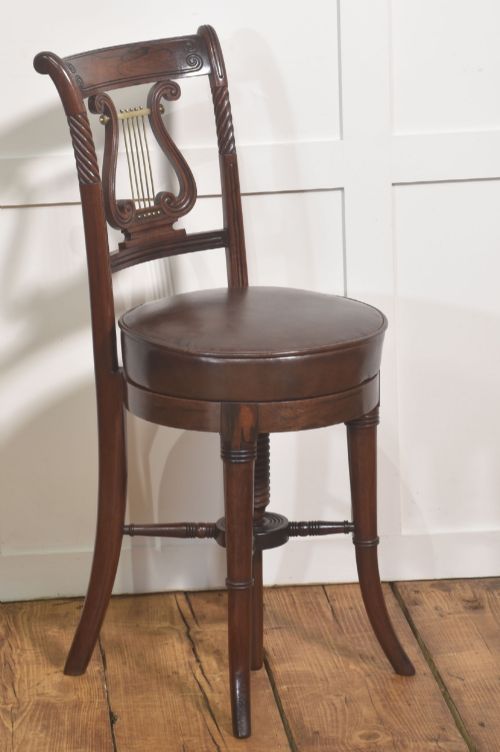
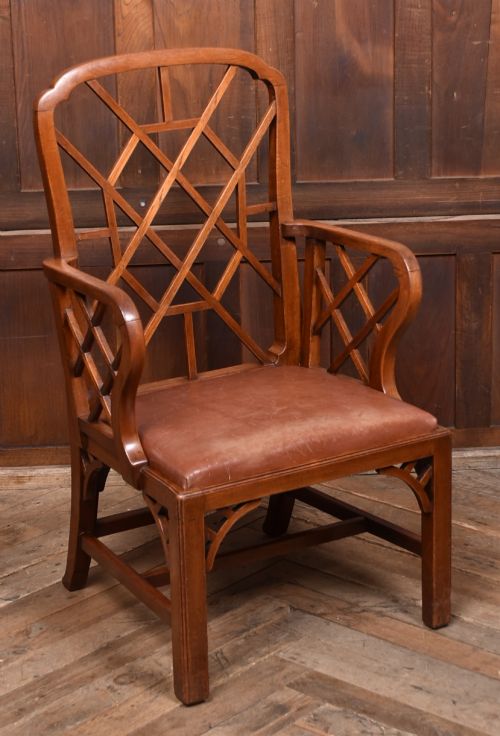
Leather Back Desk Chair
A leather back desk chair brings substance and comfort to a study, built from solid timbers with traditional upholstery that lasts for generations.
Leather Back Desk Chair
When you search for a leather back desk chair, you encounter sturdy seating designed for long hours of writing and administration at a desk or library table. These pieces combine utilitarian function with the rich grain of traditional timbers and the tactile warmth of hide upholstery.
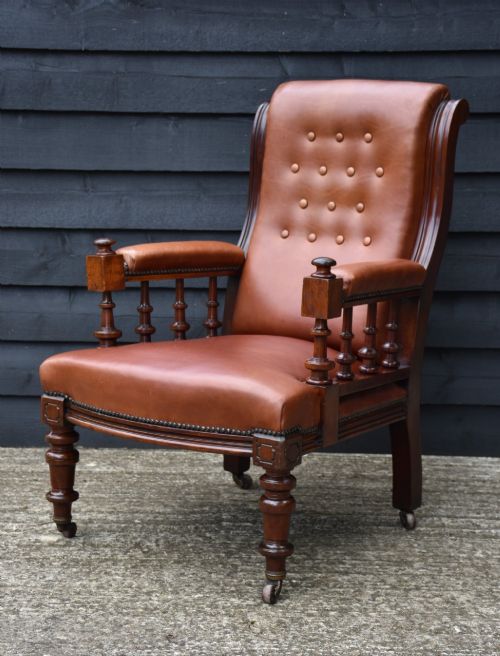
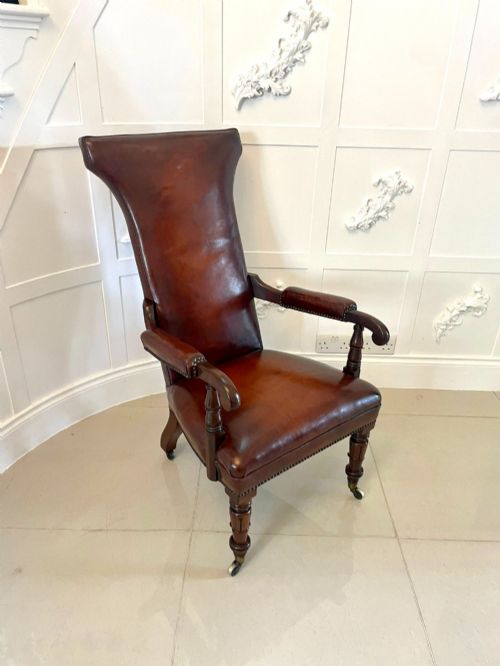
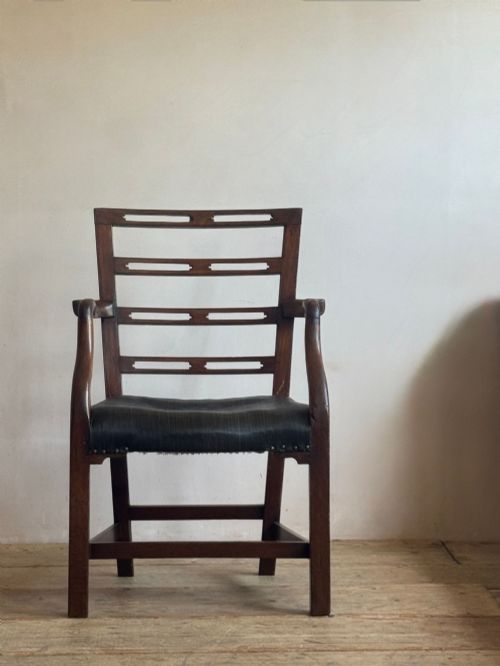
You are most likely to meet Victorian and Edwardian examples on this page, alongside earlier Georgian, Regency, and William IV forms. The selection ranges from revolving desk chairs with brass mechanisms to library armchairs and upright office chairs framed in mahogany, oak, walnut, or rosewood.
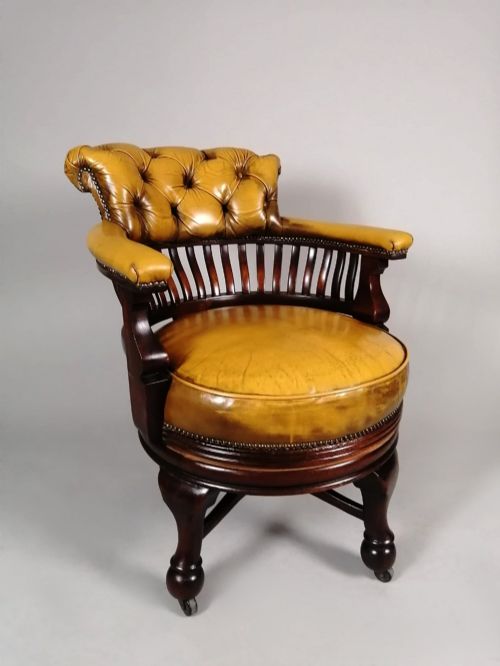
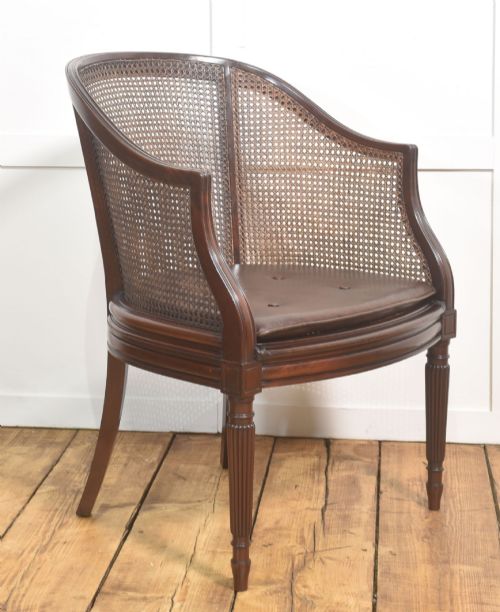
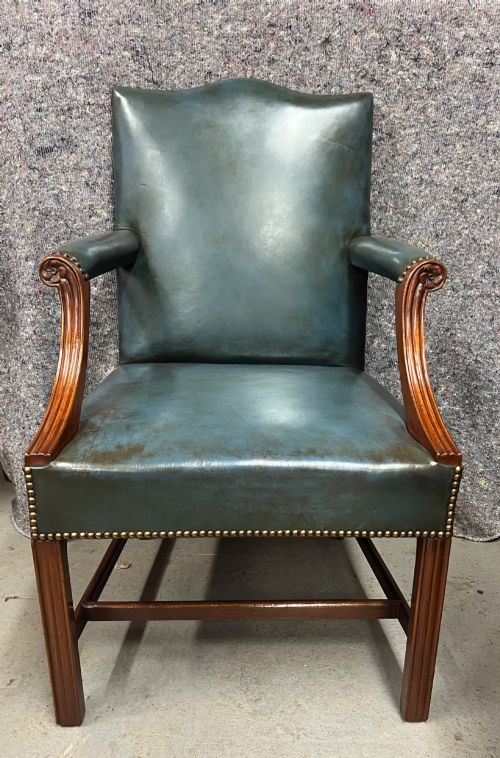
The assortment includes specialised forms like the Gainsborough chair, captains chairs, and bergères with cane panels. Many pieces feature padded leather backs and seats, sometimes finished with traditional brass buttoning or stud work.
Materials and Construction
Makers built these frames using dense hardwoods such as mahogany, oak, walnut, and rosewood, joined with mortise and tenon construction to withstand daily use. Turning, carving, and steam-bending shaped the arms, legs, and bowed backs into sturdy supports.
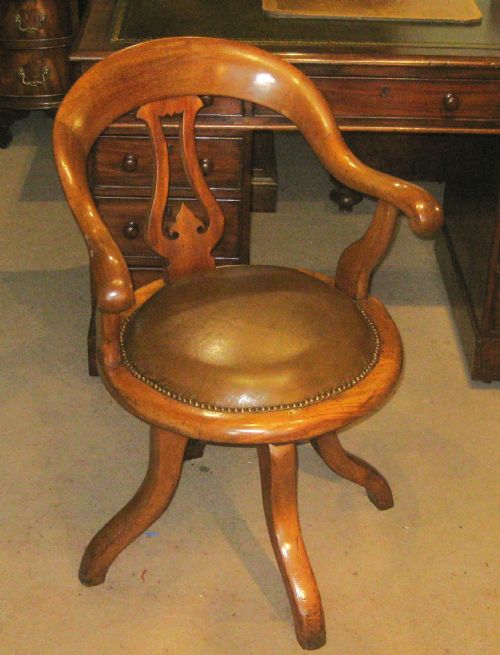
Leather upholstery was stretched over stuffed padding and secured to the timber frame using individual brass tacks or piping. Brass castors, swivels, and adjustable spindles appeared on mid-19th century and later revolving desk models to provide mobility.
Listings feature woods including mahogany, oak, walnut, rosewood, and beech, paired with leather, cane, and cast iron.
Judging Quality
Quality rests in the weight of the timber and the depth of the carving. Superior examples show crisp hand-carved detail in the mahogany or oak framing rather than soft or flat moulding.
The grade of the leather and the execution of the buttoning or stud work dictate the finish of the piece. Well-made desk chairs retain original mechanical actions that move smoothly without excessive play in the spindle or castors.
S&H Jewell·Harry and Lou Epstein
The Leather Back Desk Chair Glossary
- Bergère
- An enclosed armchair with cane or upholstered sides and back. The wooden frame is typically exposed and polished.
- Gainsborough chair
- A wide, low-backed armchair with an upholstered seat and back, open arms, and short legs. They often stand on castors for ease of movement.
- Crinoline stretcher
- An arched or hoop-shaped stretcher connecting the legs of a chair near the base for added stability. This feature appears most frequently on mid-19th century seating.
- Balloon back
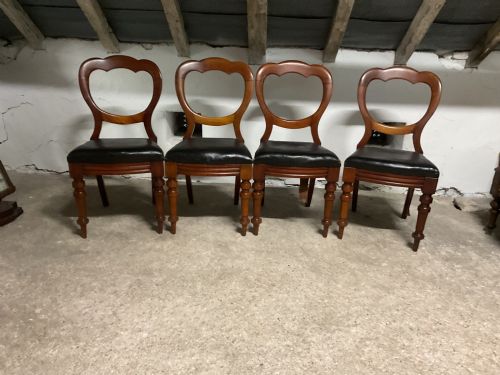
- An oval-shaped chair back resembling a child's toy balloon. This outline is common in Victorian dining and desk chairs.
Leather Back Desk Chair: Frequently Asked Questions
Are these chairs comfortable for daily work?
Most of these designs offer supportive upright postures suited for working at a desk. Their padded leather seats and backrests provide firm support during long periods of sitting.
Heavier library armchairs and revolving desk models offer deeper proportions, while lighter side chairs suit occasional correspondence.
How do I identify a Victorian desk chair?
Victorian pieces often feature darker timbers like mahogany or oak, combined with buttoned leather upholstery. Look for heavier turnings, balloon back outlines, and occasionally revolving mechanisms.
Later Victorian examples from the late 19th century introduce broader proportions and simpler structural lines.
What is a Captains chair?
A Captains chair is a sturdy wooden seat with a curved, low back rail supported by spindles that wrap around the arms. They frequently feature inset leather seats and sturdy four-legged bases.
These pieces were designed for offices, libraries, and ships where stability was paramount.
Can I use an antique desk chair with a modern desk?
Many older desk chairs fit standard modern desk heights, though you should check the clearance beneath the drawer rails. Fixed-height models from the Georgian and Victorian eras often sit slightly lower than modern office seating.
Revolving models with adjustable spindles offer more flexibility for matching different desk heights.