



Lead Crystal Stemware Set
These lead crystal stemware sets bring together centuries of drinking vessels, offering matching groups of cut, engraved, and faceted glass for the table.
Lead Crystal Stemware Set
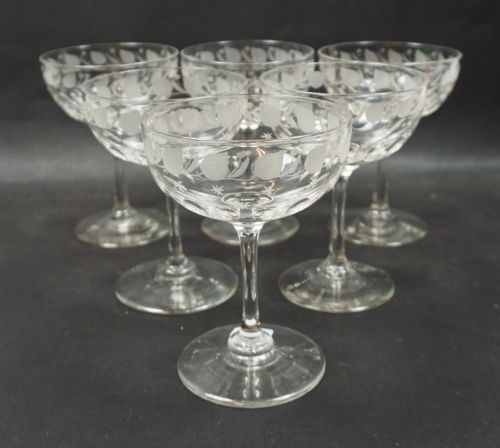
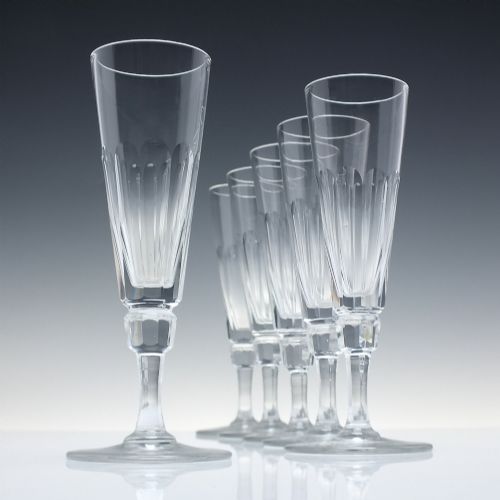
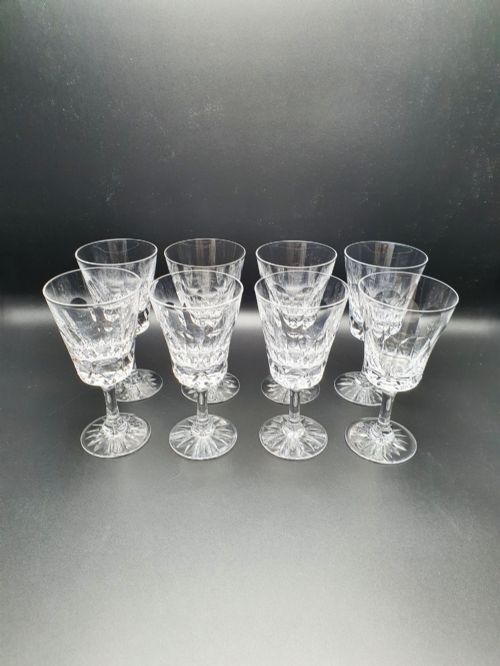
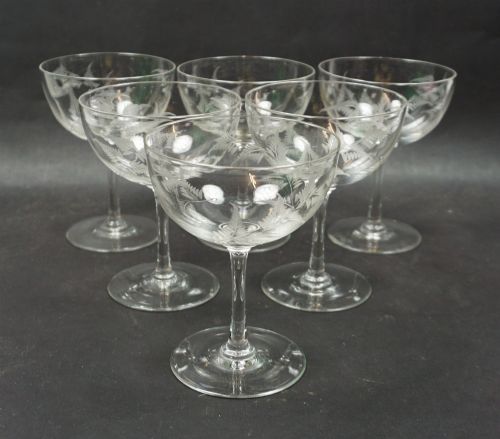
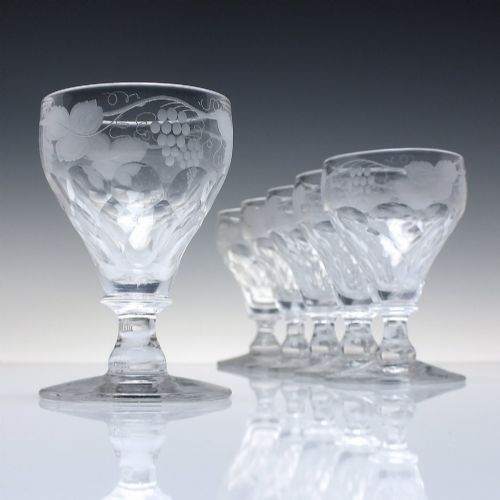
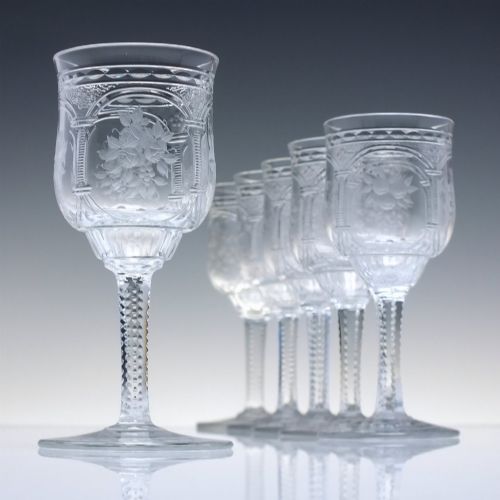
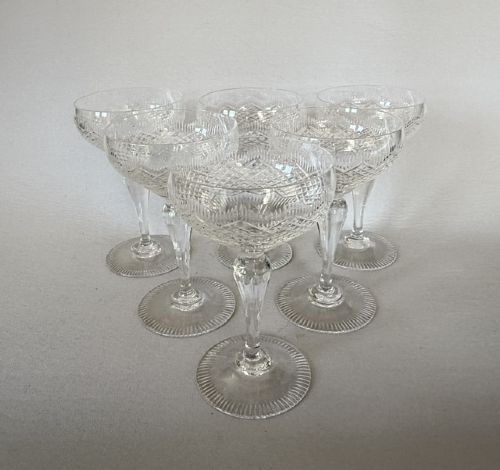
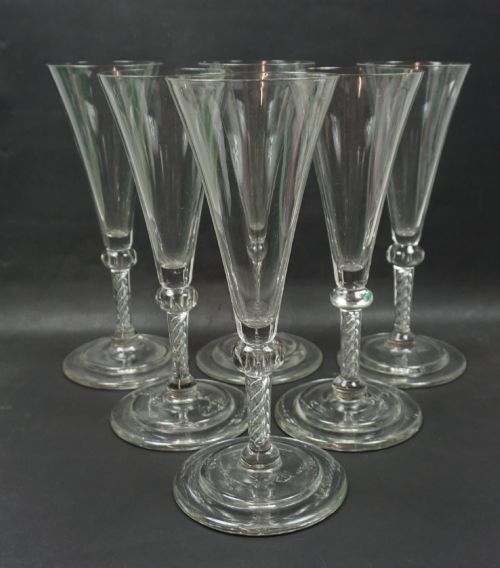
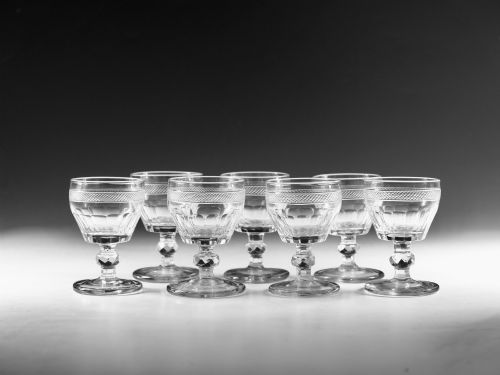
A lead crystal stemware set consists of matched drinking vessels designed for wine, champagne, port, or dessert service, appearing across various historical periods from the Georgian era through the early twentieth century. Buyers seeking a lead crystal stemware set will encounter matched groups of six or more pieces, often taking the form of champagne coupes, wine glasses, port glasses, and tall flutes.
The selections span distinct stylistic movements, including Georgian faceted drinking glasses, Victorian champagne flutes, Edwardian engraved bowls, and Art Deco or Art Nouveau designs. Most groups comprise sets of six, providing uniform service for the table while showcasing the distinct decorative techniques of their respective decades.
How they were made
The construction relies on lead crystal, glass, cut glass, flint glass, and lead glass, shaped by skilled artisans using traditional blowing and cutting methods. Molten metal is gathered, blown into moulds or free-blown, and then finished with applied stems and wide foot bases.
Decoration is achieved through wheel-cutting, engraving, and etching, producing deep facets, fern motifs, and air twist stems. Master glassmakers manipulate the heavy lead content to allow for precise cutting and brilliant light refraction across the bowl and stem.
Lead Crystal Stemware Set Retail Price Guide 2026
Typical asking prices for lead crystal stemware set among the pieces listed under this phrase on Sellingantiques today, from the lower quarter to the upper quarter. They describe what is for sale here now, not the wider market.
Ferns were so fashionable for Victorian table glass that even the bubbles in the lead seemed to grow leaves.
What varies in quality
Quality in these drinking vessels rests upon the clarity and weight of the metal, alongside the precision of the cutting and engraving. Heavier lead content yields a clearer ring and sharper refractive edges, distinguishing superior examples from lighter plain glass alternatives.
The refinement of the stem and the symmetry of the bowl also dictate the tier of craftsmanship. Superior sets display uniform height, crisp wheel-cut facets without surface wobble, and delicate, even engraving that shows a steady hand.
John Walsh Walsh·Baccarat Vallee
The Lead Crystal Stemware Set Glossary
- Lead crystal
- Glass containing a significant proportion of lead oxide, which increases weight, brilliance, and softness for easier cutting. It is the primary material for high-end decorative stemware.
- Champagne coupe
- A shallow, broad-bowled glass originally designed for sparkling wine, popular from the Victorian period through the early twentieth century. Its wide brim allows bubbles to dissipate quickly.
- Air twist stem
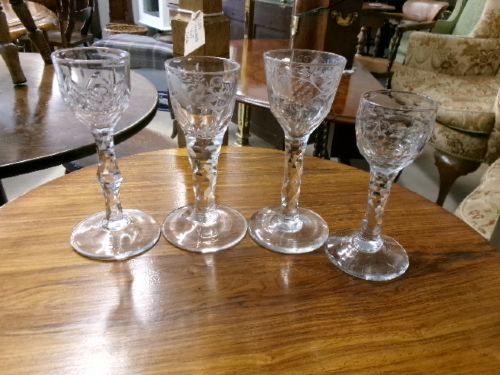
- A decorative stem formed by drawing out tiny air bubbles trapped within the molten glass during manufacture, twisting them into a helical pattern. This technique is often found on Georgian and later revival pieces.
- Pan top
- A bowl shape with sides that flare outwards slightly towards the rim, resembling an open pan. This profile appears frequently on port and wine glasses from the Edwardian era.
- Faceted stem
- A stem cut with multiple flat planes or facets that catch and reflect light. Georgian and Victorian makers utilised this method to add sparkle to drinking glasses.
Lead Crystal Stemware Set: Frequently Asked Questions
How many pieces are usually in a set?
Most surviving matched groups comprise six individual vessels, providing a standard number for entertaining or display. Larger gatherings occasionally include sixteen pieces.
Individual pieces match in height, bowl shape, and decorative motifs, having been produced together as a unified service rather than collected piecemeal.
How can I identify a Georgian drinking glass?
Georgian examples often display thick metal, heavy foot bases, and hand-cut facets that feel distinct to the touch. The proportions tend to be sturdy, reflecting the manufacturing capabilities of the eighteenth and early nineteenth centuries.
Many feature distinctive stem formations, such as faceted or air twist designs, paired with simple bucket or pan top bowls.
Can these antique glasses be used daily?
Lead crystal stemware can be used for special occasions, provided it is handled with care and washed entirely by hand. The heavy lead content makes the glass softer than modern equivalents, so abrasive sponges and dishwashers should be avoided.
Storing them securely on stable shelving prevents accidental tipping and preserves the delicate engraved surfaces.