






Victorian Engraved Stemware
Victorian engraved stemware brings nineteenth-century craftsmanship to the table through wheel-cut detail, lead crystal, and distinctive silhouettes.
Victorian Engraved Stemware
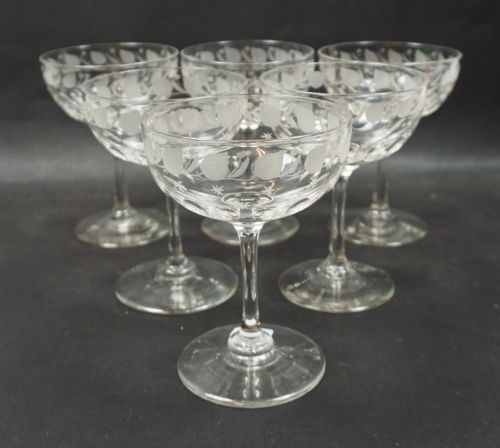
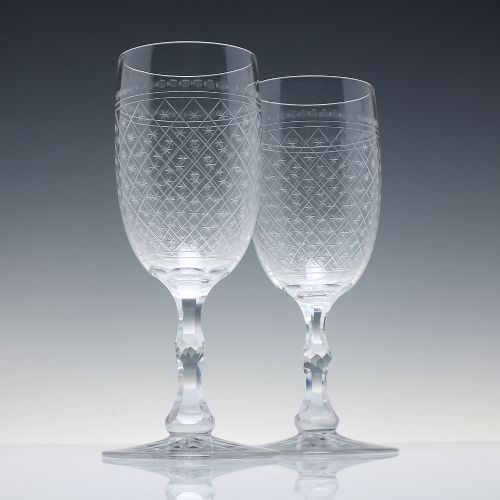
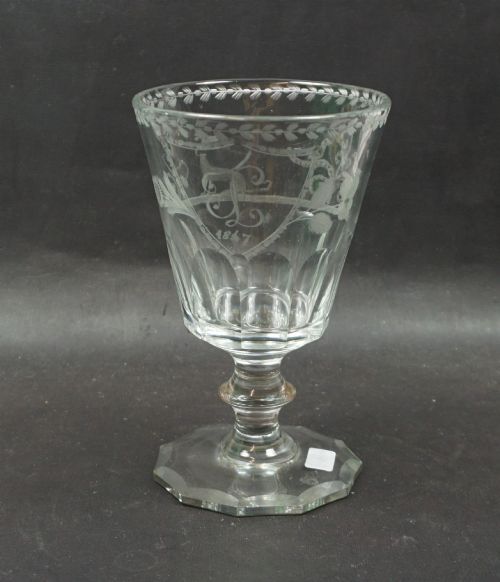
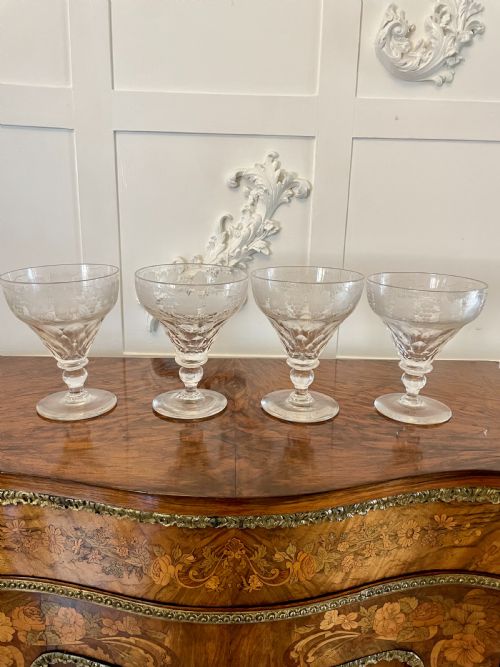
Victorian engraved stemware comprises nineteenth-century drinking vessels featuring surface decoration cut or etched directly into the body. Pieces meeting this description range from individual rummers and wine glasses to matched sets of champagne coupes.
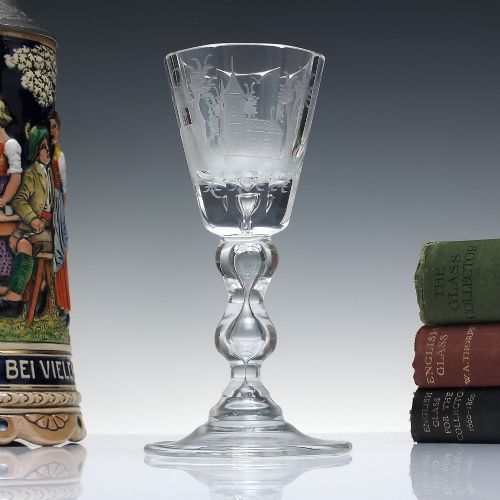
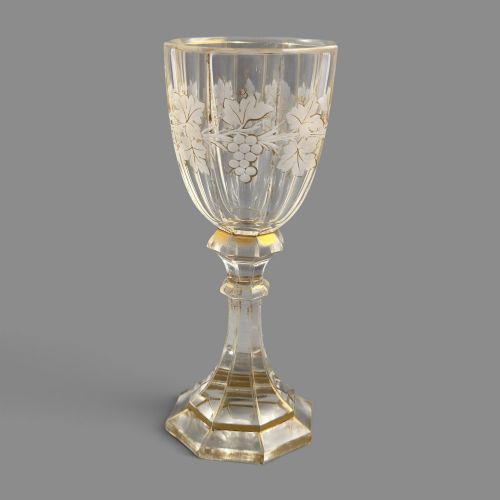
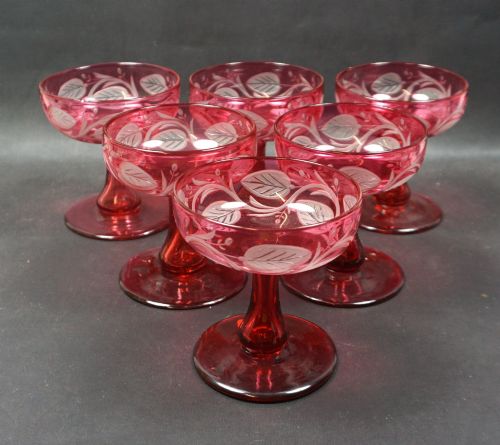
The selection on this page centres on British and continental European examples spanning the middle and late nineteenth century. Forms include tall wine goblets, marriage vessels, and amber or cranberry glass rinsers.
Buyers encounter both clear lead crystal and coloured overlay glasses bearing floral motifs such as convolvulus, alongside figural scenes like love birds. These pieces served functional roles at formal dining tables and commemorative purposes for weddings.
How they were made
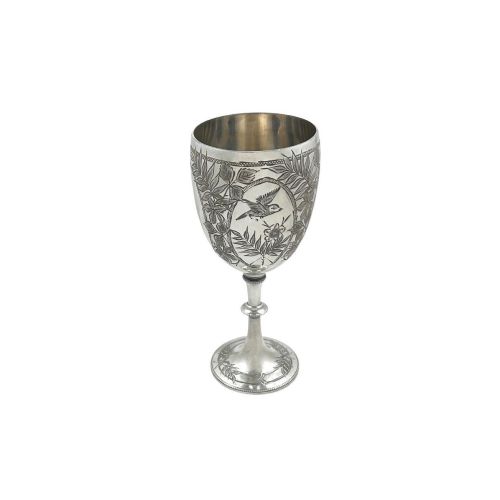
Makers utilised lead crystal and clear glass as the primary substrate, sometimes applying cranberry or amber colour layers over a clear core. Metal mounts, silver plating, and parcel gilding appear on select silver-mounted goblets.
Artisans decorated the glass using wheel-engraving, intaglio cutting, and acid etching to create detailed foliage and narrative scenes. Gold gilt accents were frequently fired onto Bohemian crystal romer goblets to highlight the surface carving.
Victorian Engraved Stemware Retail Price Guide 2026
Typical asking prices for victorian engraved stemware among the pieces listed under this phrase on Sellingantiques today, from the lower quarter to the upper quarter. They describe what is for sale here now, not the wider market.
One recorded marriage goblet from France depicts faithful love birds alongside a loyal dog, cementing domestic devotion in lead crystal.
What varies in quality
Quality rests upon the depth, precision, and clarity of the wheel-cut engraving across the bowl. Superior examples display crisp, intricate botanical details rather than shallow surface scratching.
The weight and purity of the lead crystal distinguish finer pieces from standard domestic glassware. Consistency across a matched set of champagne coupes or wine glasses also elevates the standing of the pieces.
Moser Bohemian
The Victorian Engraved Stemware Glossary
- Stemware
- Drinking vessels raised on a stem above a foot. This category covers wine glasses, goblets, and champagne coupes.
- Intaglio
- A technique where the design is carved into the surface of the glass rather than left in relief. It creates a sunken, tactile motif.
- Rummer
- A large, heavy-stemmed drinking glass popular in the nineteenth century for ale, wine, or punch. They typically feature robust bowls and sturdy feet.
- Champagne coupe
- A shallow, broad-bowled stemmed glass designed for sparkling wine. Victorian versions frequently feature delicate wheel-engraved foliage.
Victorian Engraved Stemware: Frequently Asked Questions
Are these glasses safe for daily use?
While sturdy enough for occasional celebratory toasts, nineteenth-century crystal is more fragile than modern glassware and requires careful handling.
Hand-blown vessels from this era often possess subtle structural variations that make them better suited for gentle use rather than heavy daily dining.
How can I date my Victorian glass?
Examine the pontil mark on the underside of the base, where a rough snapped scar or a polished indentation indicates the method of manufacture.
Style, depth of engraving, and material composition also provide clues, with mid-century pieces often showing heavier lead content and distinct botanical motifs.
What is the difference between etching and engraving?
Engraving involves cutting designs into the glass using a rotating abrasive wheel, resulting in deep, sharp lines with distinct tactile edges.
Etching relies on acid to eat away the exposed surface of the glass, creating softer, shallower patterns with a frosted appearance.