




Lead Crystal Rummer Goblet
A lead crystal rummer goblet is a heavy drinking vessel built for spirits or ale, prized for its generous capacity and hand-cut facets.
Lead Crystal Rummer Goblet
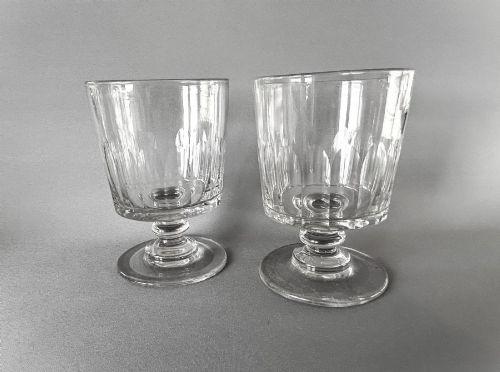
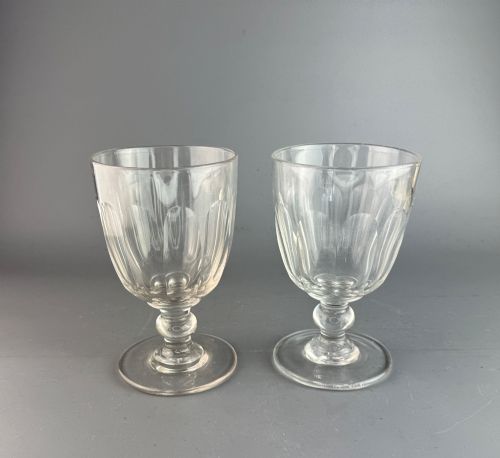
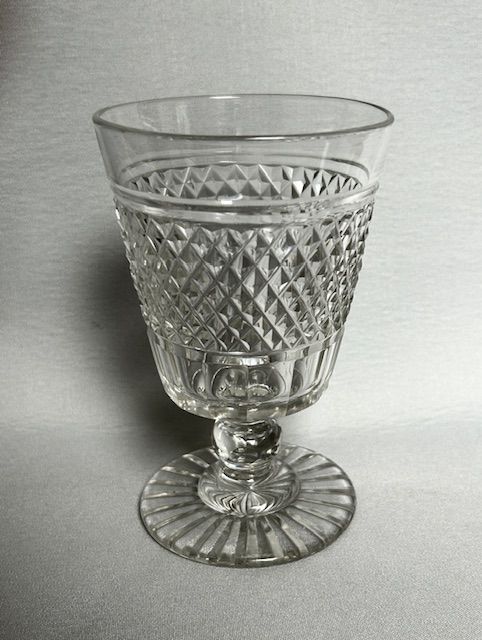
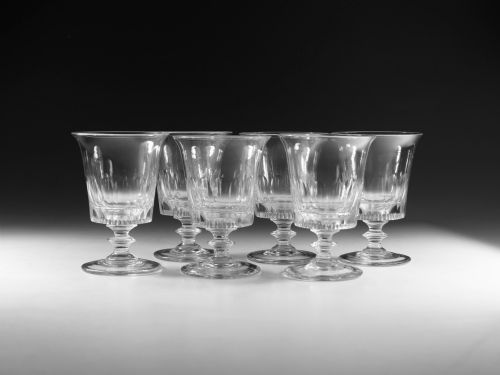
A lead crystal rummer goblet is a sturdy drinking vessel designed for spirits, wine, or ale during the Georgian, Regency, and Victorian periods. These pieces appear on this page in various forms, from plain ovoid bowls to heavily cut and engraved examples.
The English tradition dominates the selections here, often manifesting as heavy vessels with substantial bowls resting on short stems and circular or square bases. Collectors encounter both single specimens and matched pairs or sets.
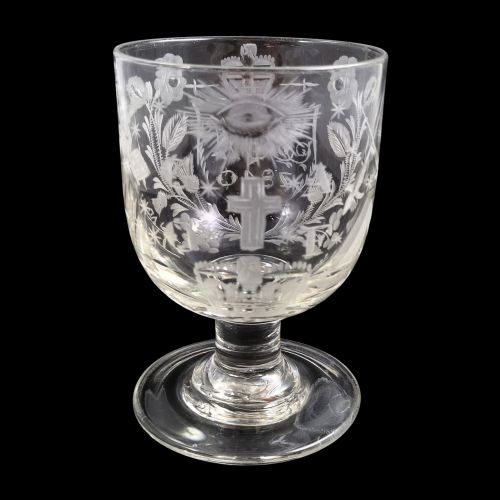
Engraved decoration frequently defines the surface, showing hops and barley, armorial crests, ships, or Masonic symbols. Clear lead glass predominates, though occasional coloured glass variants appear in hues like turquoise green.
What varies in quality
Quality rests in the weight of the metal and the clarity of the lead crystal, which gives the vessel its ring and brilliance. Superior pieces display deep, crisp wheel-cutting rather than shallow surface scratching.
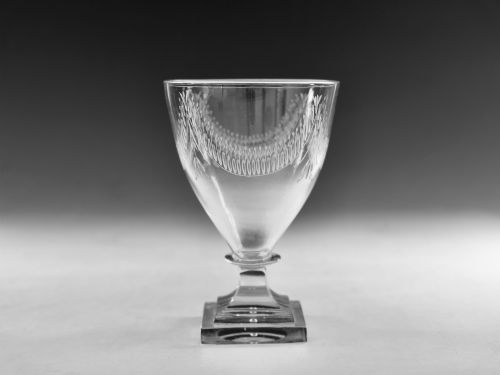
Proportion and form dictate the distinction between standard tavern ware and fine table service. Well-balanced stems, stable square lemon squeezer feet, and finely detailed armorial or botanical engraving elevate an individual piece.
Lead Crystal Rummer Goblet Retail Price Guide 2026
Typical asking prices for lead crystal rummer goblet among the pieces listed under this phrase on Sellingantiques today, from the lower quarter to the upper quarter. They describe what is for sale here now, not the wider market.
Several vessels proudly display engraved merchant ships and masonic emblems, ensuring distant toasts could honour both the sea and secret brotherhoods.
The Lead Crystal Rummer Goblet Glossary
- Lead crystal
- Glass containing a high proportion of lead oxide, which increases brilliance, weight, and workability for cutting. This material gives these goblets their characteristic heft.
- Hobnail cut
- A raised geometric pattern of square-topped facets resembling the hobnails used in boot soles. It provides a tactile grip and catches the light effectively.
- Lemon squeezer foot
- A square, pressed glass base with stepped sloping sides resembling the citrus juicer of the period. These bases provide exceptional stability to large drinking vessels.
- Ovoid bowl
- An egg-shaped drinking container that narrows slightly toward the rim. This shape concentrates the aromas of the contents.
- Flint glass
- An early term for high-clarity glass formulated with silica and potassium. It served as the precursor to modern lead crystal.
Lead Crystal Rummer Goblet: Frequently Asked Questions
What were rummer goblets used for?
These large vessels were primarily used for serving rum, punch, ale, or wine in domestic and tavern settings during the eighteenth and nineteenth centuries.
Their generous capacity made them suitable for hearty toasts and communal drinking before smaller, specialised glassware became common.
How do I date a Georgian rummer?
Dating relies on examining the manufacturing techniques, bowl shapes, and foot types visible on the piece. Earlier examples often feature pontil marks, plain stems, and hand-blown ovoid bowls, while later nineteenth-century versions show heavier machine pressing and deeper cut decoration.
Foot styles also shift from simple circular pads to moulded square lemon squeezer bases as the nineteenth century progresses.
Are these goblets safe to use?
Most antique lead crystal vessels can hold liquids safely for display or occasional use during special toasts. Modern standards advise against storing acidic beverages in lead glass for extended periods.
Hand washing in warm water preserves the historic surface and prevents thermal shock.
Why do some rummers have square bases?
Square bases, often referred to as lemon squeezer feet, were pressed in moulds during the late Georgian and Regency periods. This design prevented the heavy goblets from tipping over on crowded dining tables or rolling on tavern surfaces.