





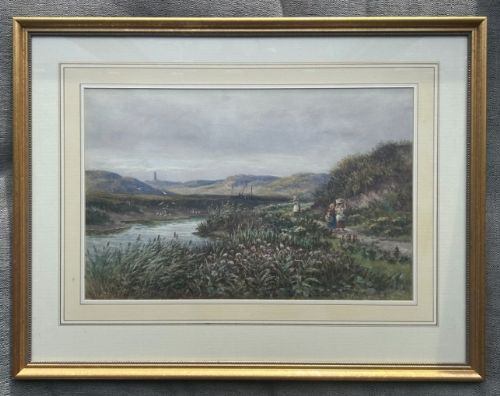


Late Victorian Watercolour Art
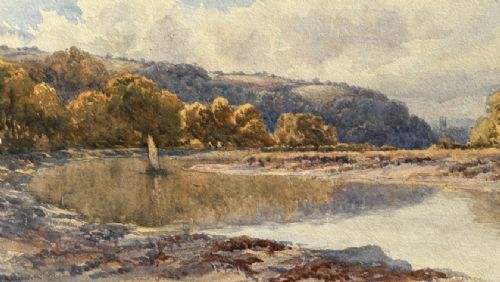
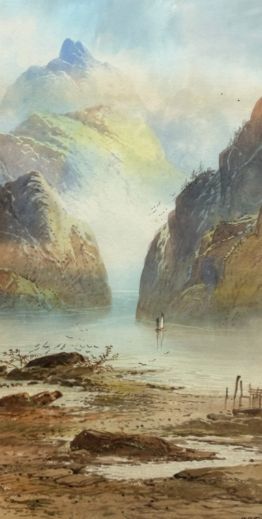
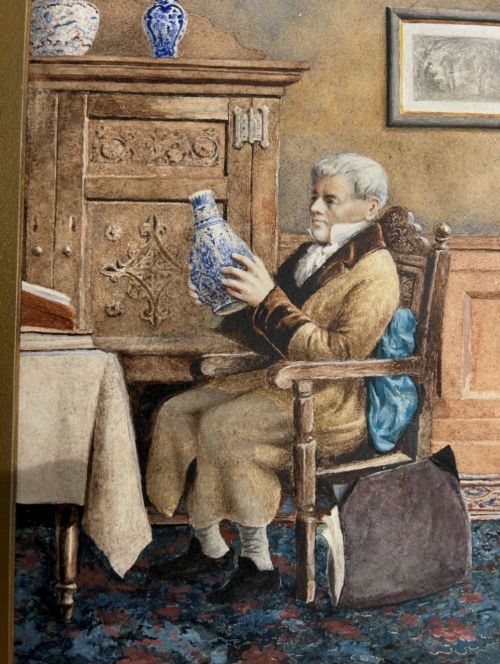
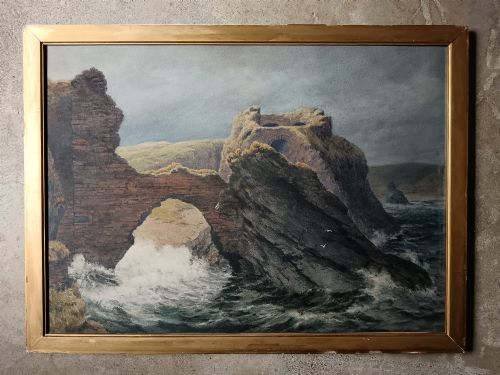
Late victorian watercolour art brings together original nineteenth-century paintings on paper capturing landscapes, coastal views, and character portraits.
Late Victorian Watercolour Art
Late victorian watercolour art comprises original paintings executed on paper support, spanning the late nineteenth and early twentieth centuries. These works document British and Irish landscapes, coastal fishing scenes, and intimate character portraits.
Buyers will most frequently encounter landscape and seascape subjects originating from Britain, often framed in period gilt wood. Genre portraits and architectural studies also appear regularly across the selection.
The objects take the form of framed wall art, ranging from expansive river views down to small miniature portraits. Many retain artist signatures, period annotations, or original mounting.
How They Were Made
These works rely on watercolour pigment applied to paper support, occasionally supplemented with pencil underdrawing or gouache highlights. Artists utilised transparent washes alongside denser opaque applications to build depth and tone.
Finished paintings are typically protected beneath glass and housed within period wooden frames, frequently finished with gilt detailing. Mounting methods often include conservation framing or original backing boards carrying handwritten provenance notes.
Materials documented in the collection include watercolour pigment, paper, gouache, and glass within timber frames.
What Varies In Quality
Quality rests upon the handling of light, brushwork fluency, and the strength of composition across the painted surface. Masterful works demonstrate confident pigment control and atmospheric depth rather than rigid academic execution.
The preservation of the paper support and pigment vibrancy heavily influences the standing of a piece. Examples retaining crisp detail and minimal fading hold greater visual impact than those affected by prolonged light exposure.
David Law·James Orrock·William Henry Earp·Alfred Young Nutt·Henry Stacy Marks·William Banks Fortescue·John Moxon·Philip Richard Morris·Robert Little·Harry Wanless·Colin H Greenwood·Henry Bailey·John Syer·Alfred Grey·Robert Buchan Nisbet·Kate E Booth·Clara Montalba·Thomas Pyne·Robert Kemp·Mary Eley·Frederick J Knowles·Carleton Grant·Montagu Barstow·John Baragwanath King·Minnie Smythe
The Late Victorian Watercolour Art Glossary
- Watercolour
- A painting method where water-soluble pigments are suspended in a water-based solution to create transparent washes on paper. This technique allows artists to build luminous effects through layered application.
- Gouache
- An opaque water-based paint variant incorporating white pigment to yield solid passages of colour. Painters often combined gouache with standard watercolours to introduce highlights.
- Genre Painting
- Artwork depicting scenes from everyday life involving ordinary people engaged in common activities. Such subjects formed a popular focus for nineteenth-century British artists.
- Provenance
- The documented history and ownership lineage of an artwork from its creation to the present day. Detailed provenance often includes exhibition labels or biographical notes attached to the reverse.
Late Victorian Watercolour Art: Frequently Asked Questions
How should these watercolours be displayed at home?
These works require positioning away from direct sunlight to prevent fading of the delicate pigments on paper. Maintaining stable indoor humidity levels protects both the paper support and the timber frame.
Displaying them under glass safeguards the surface from atmospheric dust and accidental marking.
Are these paintings signed by the artists?
Many examples bear original artist signatures, often located in the lower corners of the composition. Some pieces also feature contemporary inscriptions or exhibition labels on the reverse.
Unsigned works sometimes rely on stylistic attribution or period documentation to establish origin.
What framing do these watercolours use?
Pieces frequently retain period gilt wood frames that complement the aesthetic of the nineteenth century. These frames often show characteristic moulding and gilt finish consistent with their age.
Original backing boards and historical paper labels are occasionally preserved behind the frame.