


Original 1900s Landscape Painting
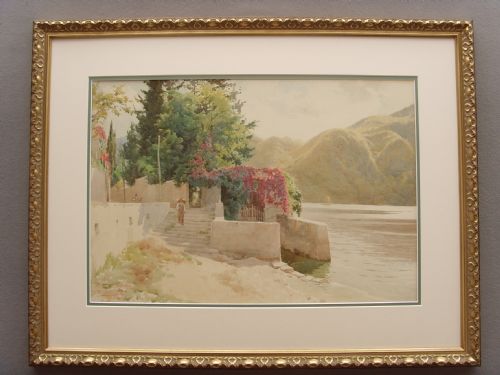
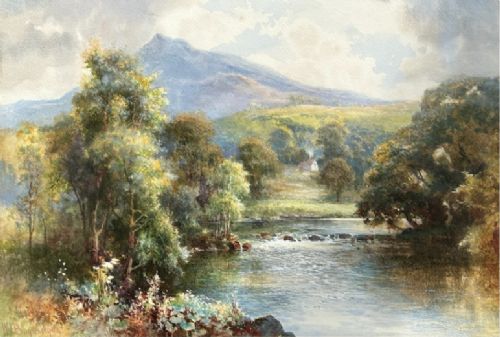
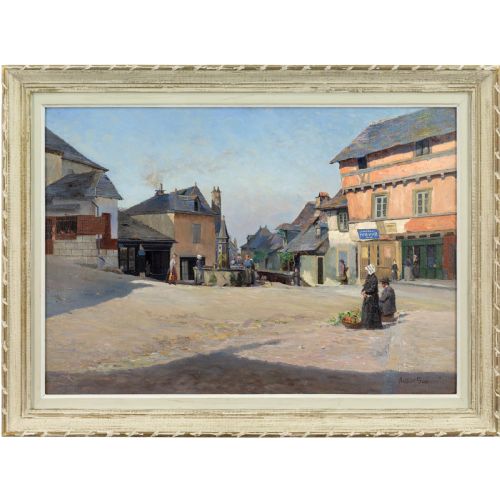
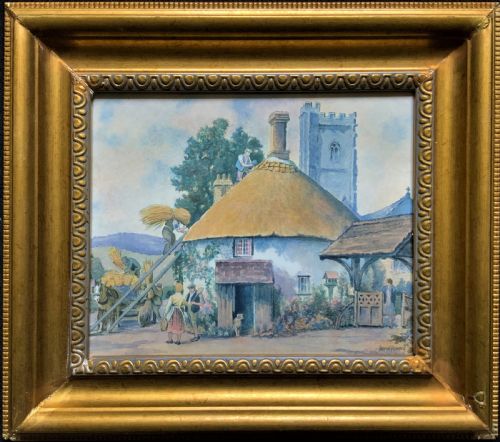
Original 1900s landscape painting captures rural and river views through Edwardian and Victorian eyes, offering a genuine piece of early twentieth-century artistry for your wall.
Original 1900s Landscape Painting
An original 1900s landscape painting brings together rural views, river scenes, and pastoral subjects created during the Edwardian and Victorian eras. These works capture specific locations such as Welsh rivers, Hampshire fields, and French squares through the brush of period artists.
The pieces on this page span from the year 1900 into the decades of 1910, 1930, and 1940. Buyers encounter works rendered both in watercolours on paper and in oil on canvas.
Framed watercolours and oil paintings dominate the selection, often preserved in wood and gilt frames behind glass. Subjects range from cattle watering and fishing rivers to Thames barges and country houses.
How they were made
Artists of this era utilised oil on canvas or watercolour on paper to build their compositions. Pigments were applied to stretched canvas or heavy paper stock, capturing the light of riversides and rural settlements.
The completed paintings were housed in wooden frames, frequently finished with gilt decoration. Glazing with glass was standard practice for watercolours on paper to protect the delicate medium from moisture and damage.
Hounds, cattle, and fenland folk share these historic frames with Thames barges and Welsh rivers.
What varies in quality
The distinction in quality rests upon the hand of the named painter and the precision of the brushwork. Works by listed artists with documented exhibition histories carry greater art historical weight than anonymous pieces.
Preservation of the original materials also defines the standard of a piece. Intact wood and gilt frames, along with well-maintained paper or canvas surfaces free from heavy restoration, set the finer examples apart.
William Joseph Boyes·Arthur Gué·Arthur Wardle·Rowland Henry Hill·Edward Henry Eugene Fletcher·William Grant Murray·Alfred Grey·Thomas James Lloyd·David Heward
The Original 1900s Landscape Painting Glossary
- Edwardian
- Pertaining to the reign of King Edward VII, spanning from 1901 to 1910. This style often reflects a bright, pastoral optimism in British art.
- Watercolour
- A painting method in which the paints are made of pigments suspended in a water-based solution. It is typically executed on paper.
- Gilt
- Covered thinly with gold leaf or gold paint. This finish frequently appears on the wooden frames enclosing period paintings.
- Post-Impressionism
- An art movement that extended Impressionism while rejecting its limitations. Artists focused on vivid colours and distinct brushstrokes.
Original 1900s Landscape Painting: Frequently Asked Questions
How do I hang a heavy oil painting?
Heavy oil paintings require sturdy picture hooks fixed directly into wall studs or secure masonry fixings. Utilising two anchor points distributes the weight evenly and keeps the frame level.
Ensure the hanging wire or brackets on the wood frame are tightly secured before mounting. Position the painting at eye level to best appreciate the canvas.
Can I put a watercolour in direct sunlight?
Watercolours on paper are sensitive to ultraviolet light and fading. Direct sunlight will cause the pigments and paper stock to degrade over time.
Position these pieces away from south-facing windows or use UV-filtering glass when framing. Proper placement preserves the original tones of the artist's palette.
How do I clean an antique frame?
Dust wood and gilt frames gently with a dry, soft brush or microfibre cloth. Avoid applying water or chemical cleaners to gilt surfaces, as moisture strips the gold finish.
Regular, gentle dusting prevents grime accumulation without risking the integrity of the antique wood and ornamentation.
What is the difference between oil and watercolour?
Oil paintings utilise pigment suspended in drying oil applied to canvas, offering rich texture and depth. Watercolours use water-soluble pigments on paper, creating a transparent and luminous effect.
Oils are typically displayed without glass in a heavier frame, while watercolours require glass protection against dust and moisture.