
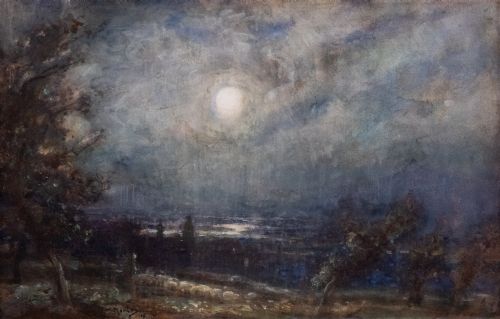


Grey Atmospheric Landscape Painting
These grey atmospheric landscape painting works capture quiet vistas and moody skies, offering buyers a subtle tonal palette for traditional interiors.
Grey Atmospheric Landscape Painting
A grey atmospheric landscape painting captures tranquil rural and coastal scenes using muted tones and soft light. When you search for grey atmospheric landscape painting, you encounter works spanning the nineteenth century through the mid twentieth century.
The selection here encompasses British Impressionism, Post-Impressionism, and the Northern School. These pieces depict rivers, bridges, and mountain views with a characteristic tonal restraint.
Watercolours on paper and oil paintings on canvas or board represent the primary formats available. Coastal marine views and quiet river scenes dominate the subject matter across these periods.
Materials and techniques
Artists painted these works using oil paint on canvas or board, alongside watercolour pigment applied to paper. Canvas provides a textured ground for heavier oil applications, while paper supports fluid watercolour washes.
Plein air techniques allowed painters to capture changing light conditions directly outdoors. Watercolour artists utilised washes to build soft atmospheric effects, whereas oil painters layered pigment to create depth in skies and water.
Listings feature works created between eighteen seventy and nineteen sixty, spanning both the nineteenth century and the mid twentieth century.
Assessing quality
The strength of composition and the handling of tonal graduation separate finer works from simpler student pieces. Superior examples demonstrate a confident control of light and shadow, particularly in rendering overcast skies and reflective water.
The subtlety of pigment application determines how successfully an artist evokes mood and weather. Works that balance restrained grey palettes with precise topographical detail command greater visual presence.
Thomas William Morley·Robert Leslie Howey·William Grant Murray·Frank Shenton·Frank Wasley·William A Macdonald·Frederick William Jackson·Fred Lawson·Herbert John Finn·WE Atkinson·Walter Duncan
The Grey Atmospheric Landscape Painting Glossary
- Watercolour pigment
- A colour medium suspended in a water-soluble binder, applied to paper to create translucent washes.
- Oil on canvas
- Pigment mixed with drying oil applied to a stretched woven fabric surface, allowing for rich texture and blending.
- Plein air painting
- The act of painting outdoors to capture the actual light and atmosphere of a specific landscape.
- British Impressionism
- A painting style focusing on light and everyday subjects, marked by visible brushstrokes and naturalistic colour.
Grey Atmospheric Landscape Painting: Frequently Asked Questions
What subjects appear in these paintings?
The works depict rivers, bridges, coastal marine scenes, and mountainous terrain. Many feature specific locations such as the River Thames, Westminster Bridge, and northern English landscapes.
Artists focused on natural settings under overcast or evening light, emphasising atmospheric weather conditions rather than bright sunlight.
How should I care for watercolour works on paper?
Watercolour paintings require protection from direct sunlight to prevent fading of the pigments. Framing behind conservation glass with acid-free mounts safeguards the paper from environmental moisture and damage.
Displaying these pieces in rooms with stable humidity levels preserves both the paper support and the delicate pigment layers.
How do oil paintings on canvas differ from board?
Canvas offers a flexible woven textile surface that often retains visible texture from the weave beneath the paint layers. Board provides a rigid, flat support that prevents the cracking associated with aged canvas.
Both materials were widely used across the nineteenth and twentieth centuries depending on the artist's preference for studio or outdoor work.
How can I identify the period of a landscape?
Stylistic clues such as brushwork, framing style, and the integration of Impressionist techniques help narrow down the date. Nineteenth-century works often lean toward academic topographical precision, while twentieth-century examples embrace looser Post-Impressionist brushwork.
Signatures, artist dates, and recorded titles in the evidence provide definitive markers for specific periods.