
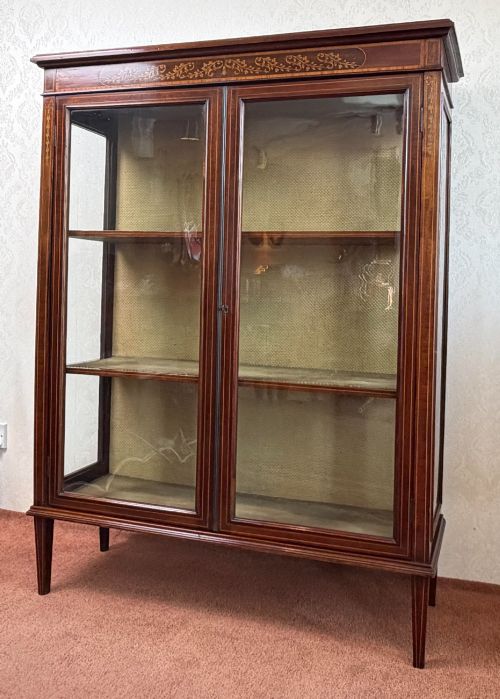


Late Victorian Vitrine
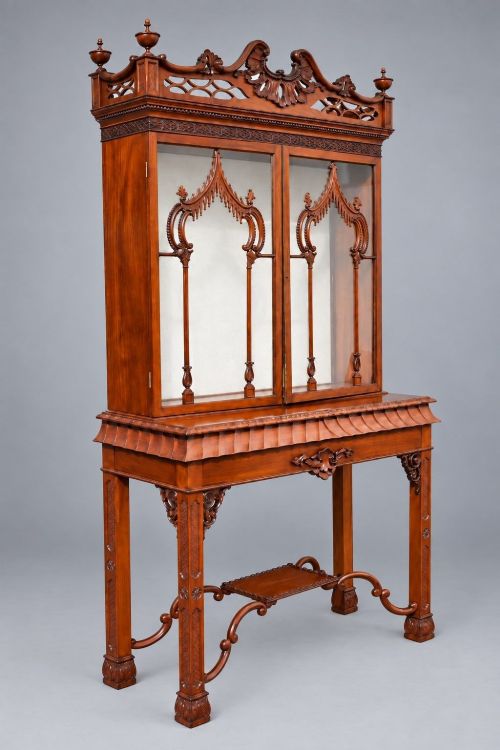
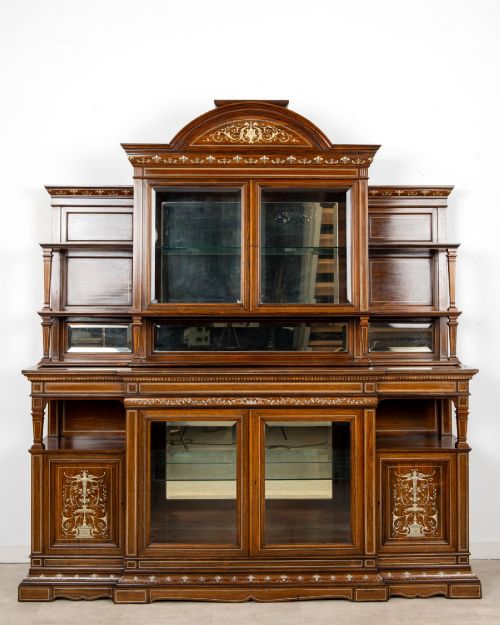
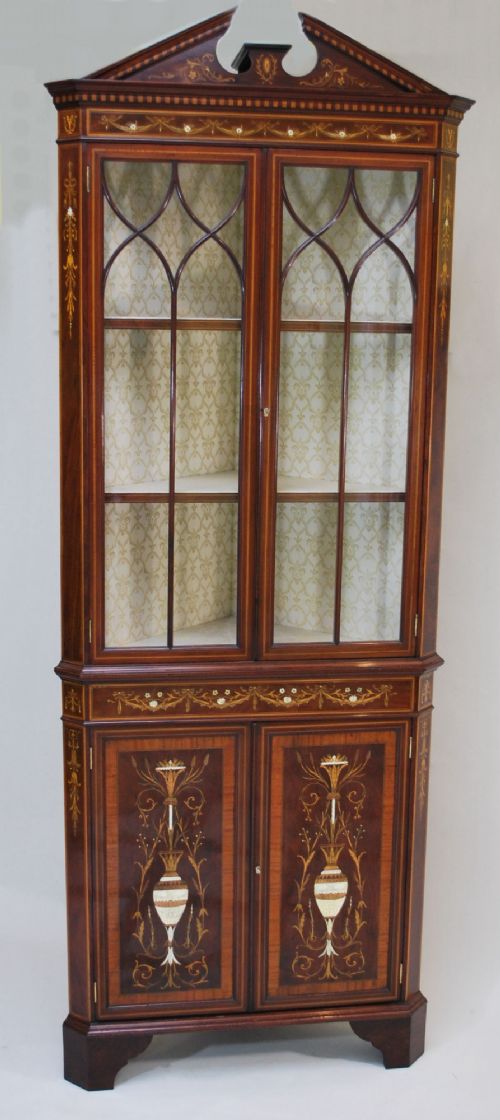
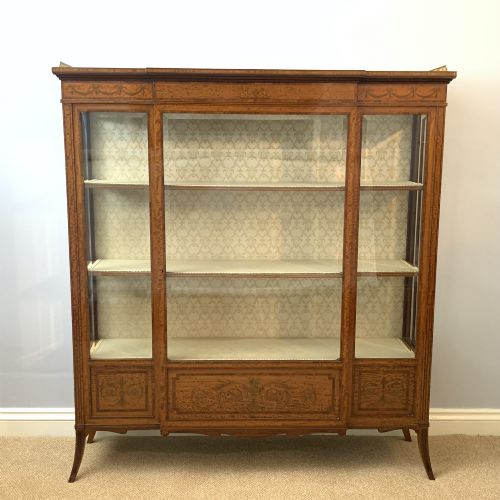
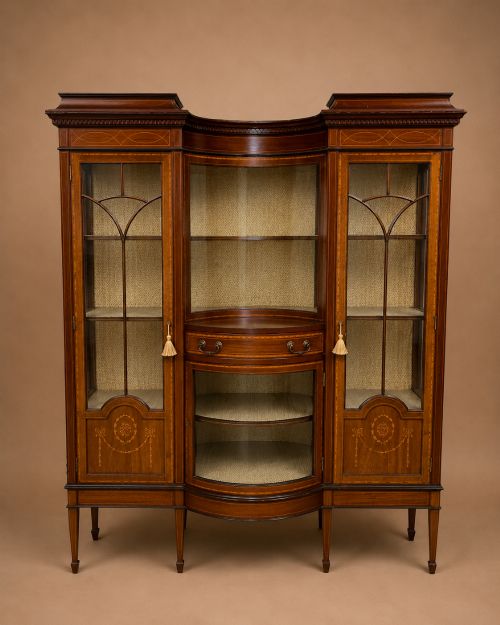
A late victorian vitrine displays precious objects behind glass, bringing polished timber and refined glazed framing into a room.
Late Victorian Vitrine
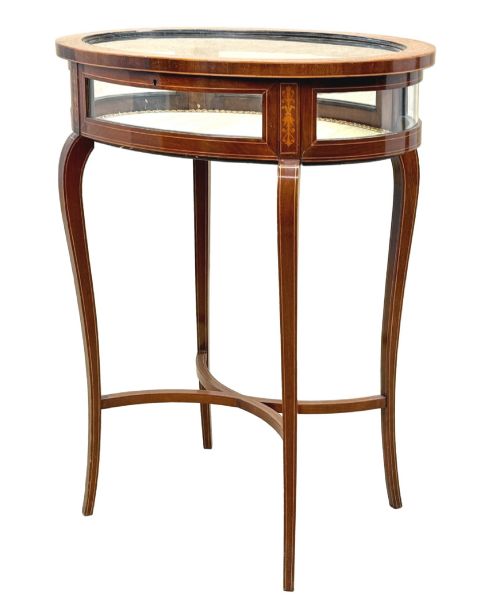
A late victorian vitrine takes the form of a display cabinet, corner cabinet, or bijouterie table designed to show off collections. These pieces emerge predominantly from the nineteenth century, around eighteen-ninety up to nineteen-hundred, spanning the Victorian and Edwardian eras.
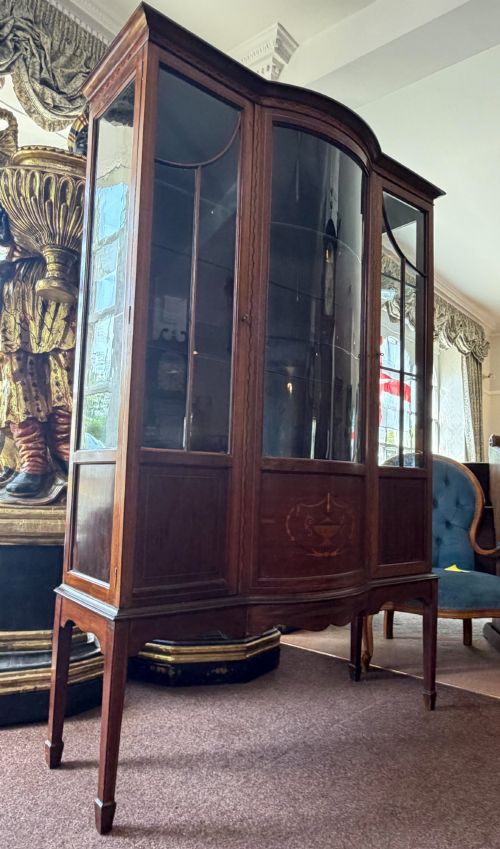
Mahogany forms the primary timber encountered on this page, often paired with satinwood, rosewood, walnut, kingwood, or oak. Cabinets frequently feature glazed doors, bow fronts, serpentine shapes, or astragal glazing, while table variants present glass tops for viewing items from above.
Revival styles heavily influence these pieces, bringing Chippendale, Sheraton, and French Louis XV aesthetic vocabulary into late nineteenth-century parlance. Makers such as Edwards and Roberts or Collinson and Lock occasionally stamp their production on these cabinets and salon pieces.
What varies in quality
The refinement of the timber inlay and the precision of the cabinet woodwork dictate the grade of a piece. Delicate fruitwood marquetry and well-executed serpentine or bow fronts elevate certain cabinets into exhibition grade territory.
The sophistication of the stylistic revival, whether Chippendale or French Louis XV, combined with documented maker attributions, separates standard production from exceptional examples.
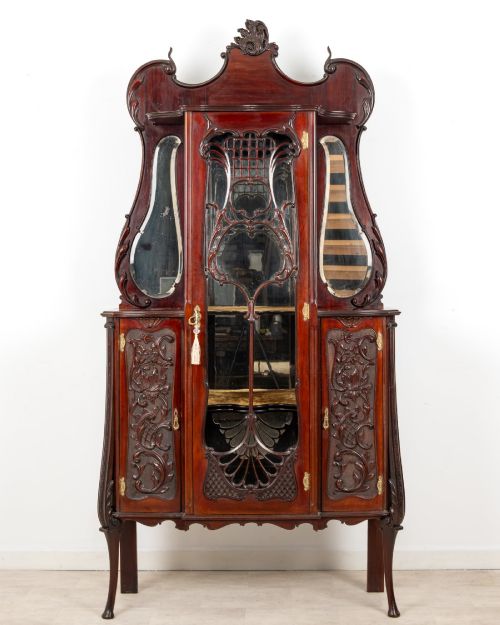
German beer emblems adorn one heavily carved oak bookcase cabinet on stand, revealing an unexpected Continental touch.
Collinson and Lock·Edwards and Roberts·Angela Kaufman
The Late Victorian Vitrine Glossary
- Vitrine
- A glass-fronted cabinet designed for displaying fine objects and curiosities. These pieces often feature glazed sides as well as doors to maximise ambient light.
- Bijouterie table
- A glass-topped display table intended for jewellery, medals, and small decorative items. They frequently sit on slender legs with hinged glazed lids.
- Astragal glazing
- Wooden or metal bars that divide a glass window or cabinet door into smaller panes. This technique creates geometric patterns across the front of display cabinets.
- Serpentine front
- A furniture front characterised by a concave central section flanked by two convex ends, or the reverse. This undulating curve requires skilled woodworking.
- Ormolu
- Gilded bronze mounts applied to furniture for decorative effect. French-influenced pieces utilise these metal ornaments on corners and legs.
Late Victorian Vitrine: Frequently Asked Questions
What is a late victorian vitrine used for?
These cabinets serve to display porcelain, silver, and small collections safely behind glass while keeping dust away. They turn everyday rooms into personal exhibition spaces.
Table versions specifically hold flat items like jewellery, medals, or miniatures under a transparent glass top for close inspection from above.
How do I identify a late victorian piece?
Look for nineteenth-century timber choices such as mahogany, satinwood, and rosewood combined with revival styles like Chippendale or Sheraton. Construction methods often include fruitwood inlay and glazed doors.
Dates generally cluster around eighteen-ninety to nineteen-hundred, bridging the Victorian era into early Edwardian production.
Where should I place a vitrine at home?
Position your cabinet against an interior wall where natural light can strike the glass panels without causing direct fading to delicate interior contents. Corner cabinets fit neatly into unused angles of a room.
Bijouterie tables work well in reception spaces or drawing rooms where guests can walk around the piece to view items from above.
What is the difference between a cabinet and a vitrine?
A standard cabinet often conceals contents behind solid wooden doors, whereas a vitrine prioritises glass panels on the front and frequently the sides. This allows maximum visibility for decorative objects.
Some variants combine storage compartments below with glazed display space above, or take the form of low tables with glass lids.