

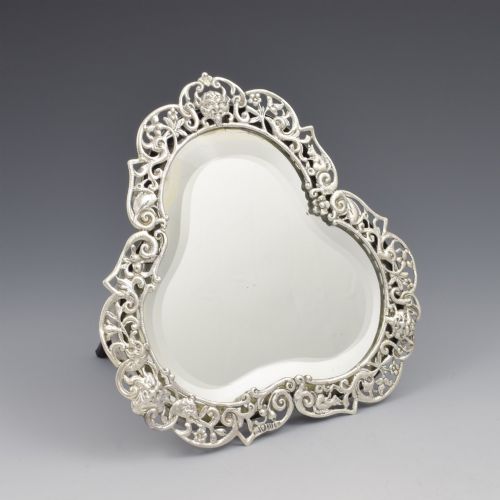


Late Victorian Silver Frame
A late victorian silver frame brings the domestic elegance of the nineteenth century straight to a mantelpiece or desk.
Late Victorian Silver Frame
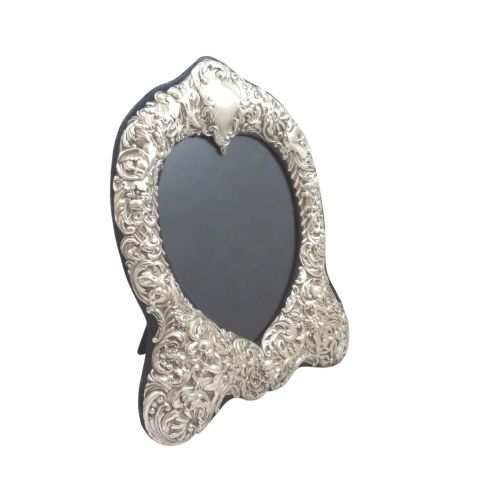
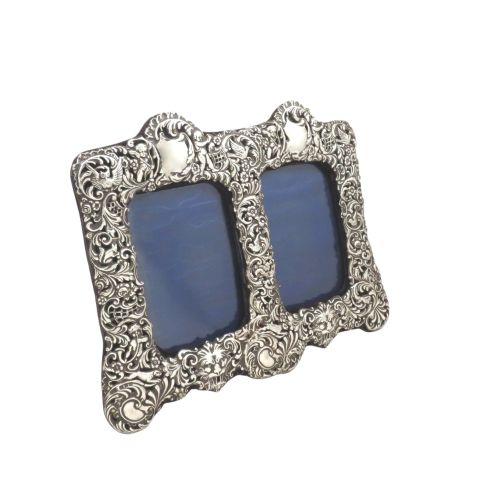
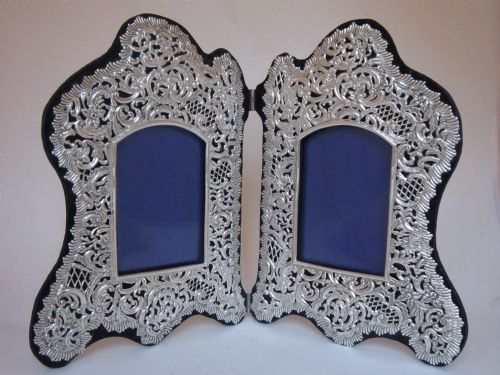
A late victorian silver frame takes several familiar domestic forms, primarily designed to hold cherished photographs or reflect light from a dressing table. Most examples encountered on this page function as easel frames for photographs, alongside standing table mirrors and picture frames.
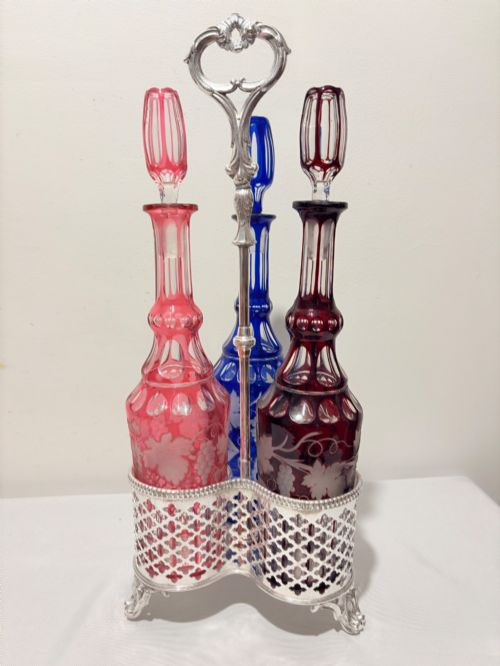
The materials span solid sterling silver and silver plate, frequently backed with wood or velvet to provide structural support. Many pieces incorporate glass components, ranging from simple protective panes to cut glass and coloured glass inserts within condiment sets or decanter stands.
The styles reflect the decorative tastes of the closing decades of the nineteenth century, including rococo flourishes, pierced work, and naturalistic motifs of animals and birds. These objects served both functional and decorative purposes in period interiors, framing portraits of family members or holding household glassware.
How they were made
Silversmiths utilised sterling silver or applied silver plating over base metal foundations, shaping the metal through embossing, piercing, and fretting techniques. Borders often received decorative treatments such as gadrooned edges, embossed scrolls, flowers, or cherub motifs.
Backings typically consisted of wood covered in velvet or fabric, fitted with folding easel stands for tabletop display. Glass elements were hand-cut or blown, particularly in items like decanter stands and table mirrors where glass and silver combined.
Listings feature items from the Victorian period up to 1900, utilising sterling silver, silver plate, glass, wood, and velvet.
What varies in quality
The distinction between standard and superior pieces rests upon the crispness of the metalwork embossing and the complexity of the design. Heavy gauge solid sterling silver examples with intricate hand-pierced detailing or figural motifs represent the upper tier of production, compared to simpler stamped silver plate.
The integrity of the structural elements also defines standard, with original wooden backs and intact velvet linings preserving the utility of the object. Maker marks from prominent silversmiths provide documentation that elevates the standing of an individual piece.
Walker And Hall·Syner And Beddoes·The Goldsmith Co·Henry Matthews·William Comyns·Atkin Brothers
The Late Victorian Silver Frame Glossary
- Sterling silver
- A silver alloy containing 92.5 percent pure silver and 7.5 percent other metals, usually copper, ensuring durability for decorative items.
- Silver plate
- A layer of silver applied to a base metal core, offering the visual appearance of solid silver at a different production cost.
- Easel back
- A hinged support attached to the rear of a frame or mirror that allows it to stand upright on a flat surface.
- Gadroon border
- A decorative band of repeated convex curves or arcs ornamenting the outer edge of a silver frame.
- Fretwork
- An ornamental design created by piercing or cutting patterns through the surface of the metal.
Late Victorian Silver Frame: Frequently Asked Questions
How do I date a late victorian silver frame?
Dating relies heavily upon the assay office hallmarks stamped into the silver. Letters correspond to specific years of testing in cities like Birmingham, Chester, or London.
Stylistic cues also help narrow down the period. Pieces featuring cherubs, scrolls, and rococo Revival motifs generally align with the closing decades of the nineteenth century.
How were these frames displayed originally?
These pieces were designed primarily for tabletop placement in parlours, bedrooms, and studies. The folding easel backs allowed them to stand securely on desks, mantelpieces, and dressing tables.
Some variations included hanging loops or rings for wall mounting. Table mirrors and picture frames served similar domestic functions in Victorian interiors.
How should I clean a silver frame?
Cleaning requires a soft cloth and a gentle silver polish formulated to remove tarnish without abrading the embossed details. Harsh chemical dips should be avoided, especially on pieces with velvet or wood backings that might sustain water damage.
Applying polish with light pressure preserves the original definition of the stamped or chased patterns.