
Late Victorian Oak Table
A late victorian oak table brings robust timber and earnest craftsmanship into a room, offering a sturdy surface designed for daily writing, dining or display.
Late Victorian Oak Table
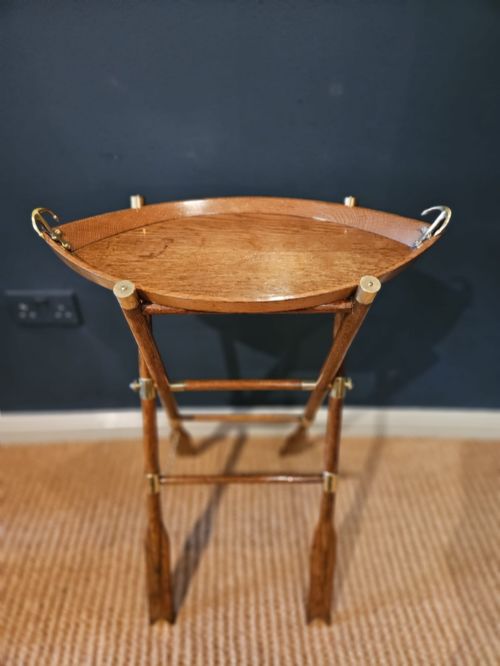
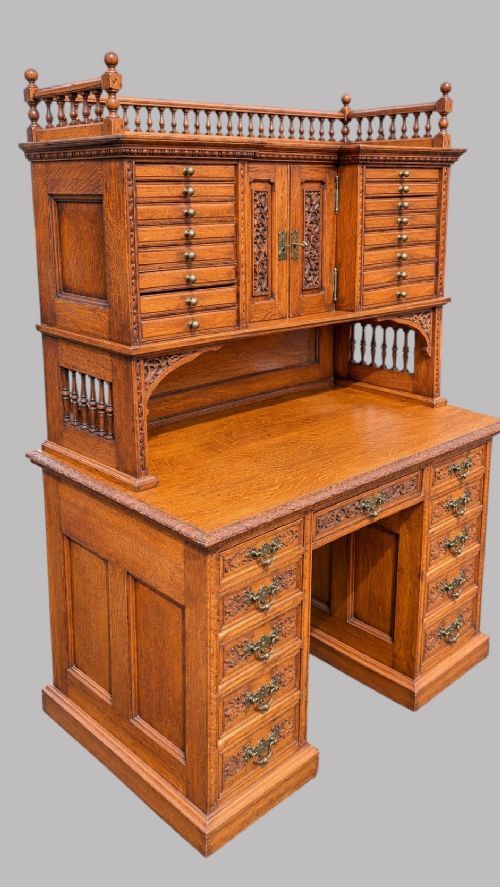
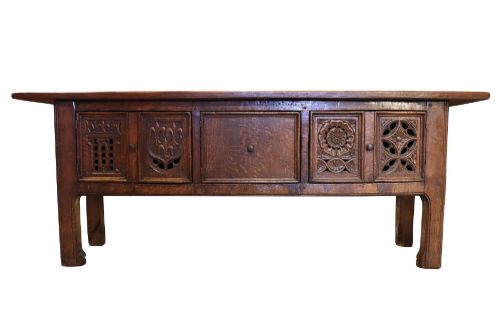
A late victorian oak table encompasses a wide variety of domestic forms, ranging from compact occasional stands and side tables to large extending dining tables and writing desks. These pieces emerged across the latter decades of the nineteenth century, reflecting both traditional domestic needs and the burgeoning influence of design reform movements.
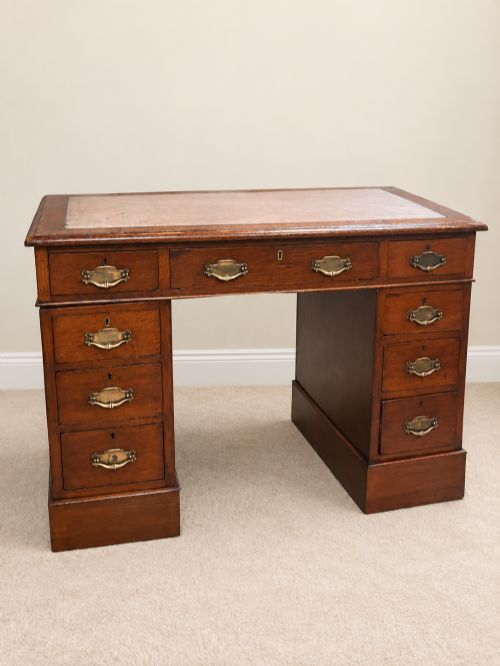
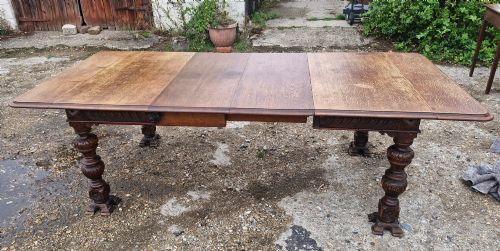
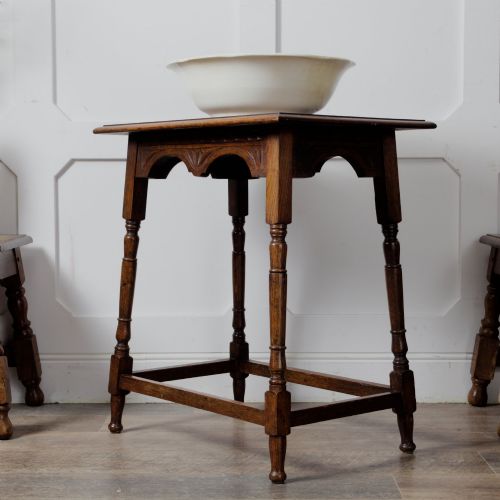
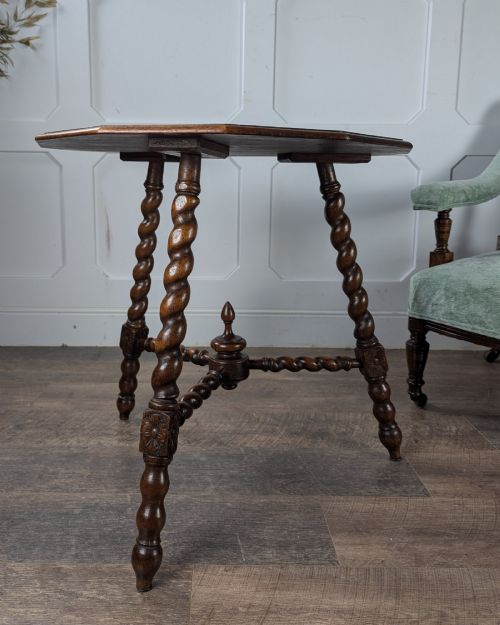
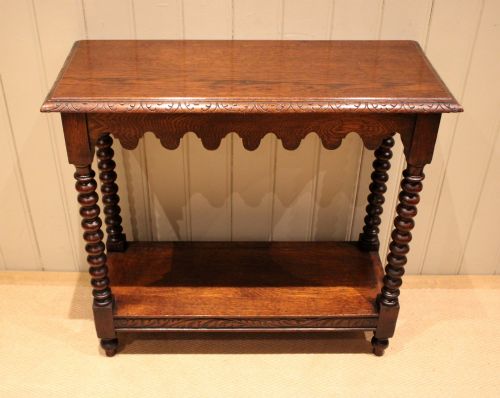
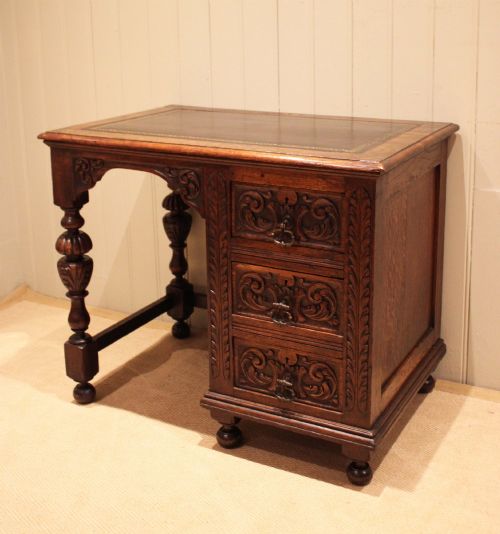
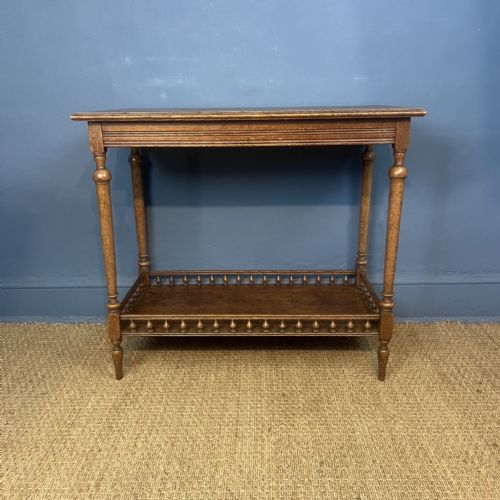
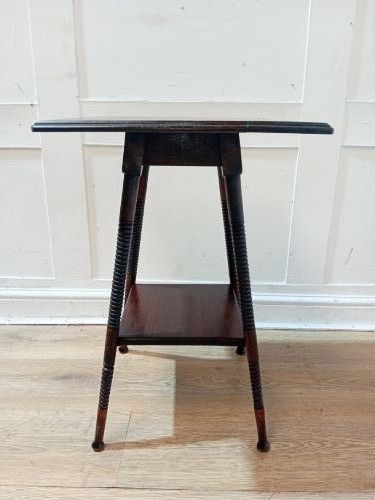
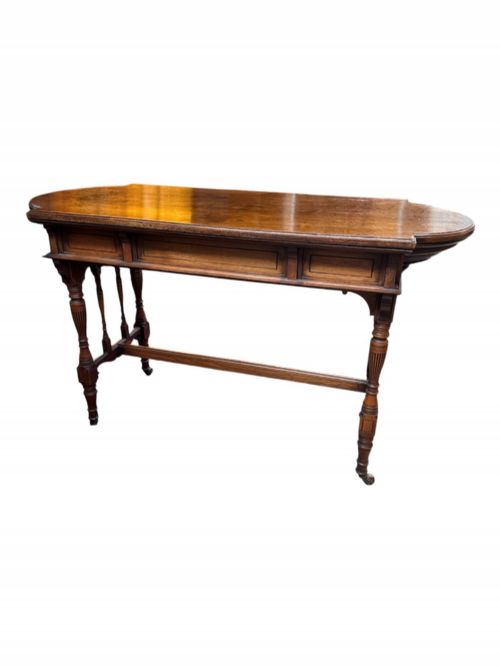
The version most commonly encountered on this page is the side or occasional table, often shaped with an octagonal or rectangular top, alongside larger refectory and extending dining tables designed for family meals. Desks and writing tables also appear frequently, constructed to accommodate the paperwork of a bustling household or library.
Originating predominantly in British workshops, these tables demonstrate the enduring popularity of native hardwood during a period that also embraced stylistic revivals such as Gothic, Jacobean, and the emerging Arts and Crafts ethos.
Materials and Technique
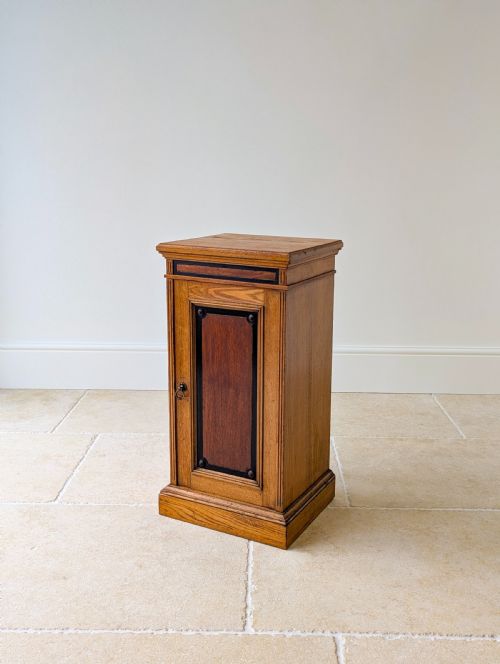
Construction relies heavily upon solid oak, prized for its dense grain and durability, sometimes complemented by auxiliary timbers or selected sections of bleached and golden oak. Artisans utilised traditional joinery methods, including mortise and tenon joints, to ensure the structural integrity of heavy dining and pedestal tables.
Certain tables cleverly double as game boards, incorporating inlaid chess grids and hidden compartments for cards.
Assessing Quality
Quality rests upon the selection of timber and the precision of the underlying construction, where quartersawn oak displaying prominent medullary rays signals superior material selection. The depth and crispness of hand-carved details distinguish master workshops from routine production pieces.
Proportion and structural honesty elevate certain examples, particularly within the Arts and Crafts and Aesthetic Movement styles where simplicity of form demands flawless execution. Original hardware, intact extending mechanisms, and well-preserved finishes further separate standard utilitarian items from exceptional survivals.
Liberty of London·William Birch·Winterhalder and Hofmeier·Wright and Hunter·Gillows of Lancaster
The Late Victorian Oak Table Glossary
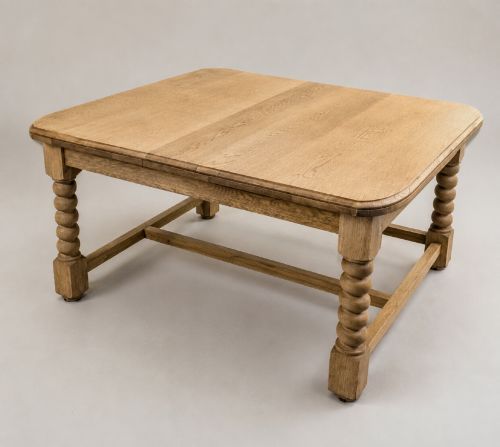
- Barley twist
- A turned wooden column resembling a spiral rope, popular for table legs and supports during the late nineteenth century.
- Refectory table
- A long, narrow dining table traditionally built with solid legs and a central stretcher for communal meals.
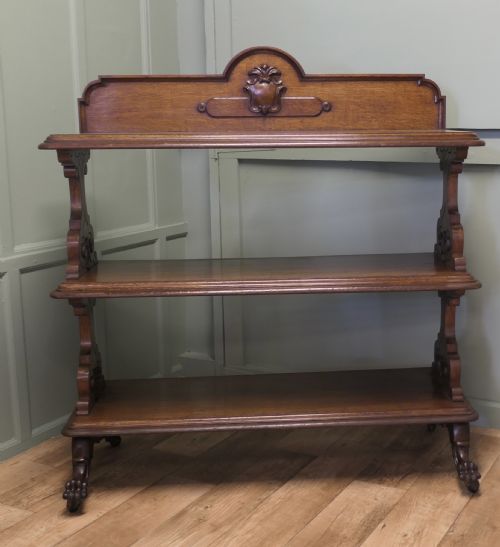
- Etagere
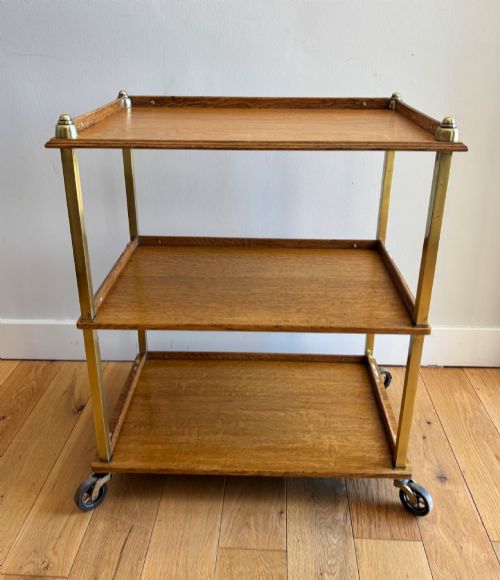
- A set of open shelves or a tiered mobile trolley used for displaying or serving small objects and drinks.
- Kneehole desk
- A writing table featuring a central recess for the legs, flanked by pedestals of smaller drawers.
- Medullary rays
- The natural ribbon-like flecks visible across quartersawn oak timber, indicating high-grade radial cutting.
Late Victorian Oak Table: Frequently Asked Questions
How do I identify a late Victorian oak table?
Look for dense native oak timber combined with stylistic markers such as Aesthetic Movement lines, Gothic revival carving, or Arts and Crafts simplicity. Dates generally span from about 1880 to 1900, often indicated by construction methods like hand-cut dovetails and traditional tenons.
Hardware and secondary materials also offer clues, as original brass handles, ceramic castors, or inset leather tops frequently accompany pieces from this era. Comparing the proportions and weight helps confirm the period production.
Can I use an antique oak table for daily dining?
Many of these pieces were engineered specifically for robust domestic use, making them well-suited for everyday meals and gatherings. Extending models offer practical flexibility for modern hosting.
Protecting the surface from excessive heat and moisture preserves the original finish while allowing the timber to endure daily family life.
How do I care for solid oak furniture?
Maintain the wood by applying occasional beeswax or natural polish to nourish the grain and protect against dryness. Avoid placing tables in direct sunlight or near heat sources to prevent timber splitting.
Using coasters and placemats safeguards the polish from liquid rings and thermal shock during regular use.
What is an extending dining table mechanism?
Wind-out mechanisms utilise a central metal screw rod operated by a detachable handle to part the table halves smoothly for extra leaves. Simpler drop-leaf or gateleg designs rely on hinged flaps supported by pivoting wooden swing legs.
These functional systems allowed Victorian households to adapt their dining spaces effortlessly for larger gatherings.