




Late Victorian Oak Seats
Late victorian oak seats bring sturdy timber craftsmanship into domestic interiors through hall benches, library armchairs and heavy dining sets.
Late Victorian Oak Seats
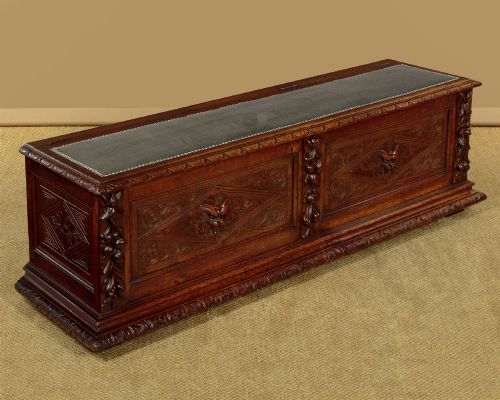
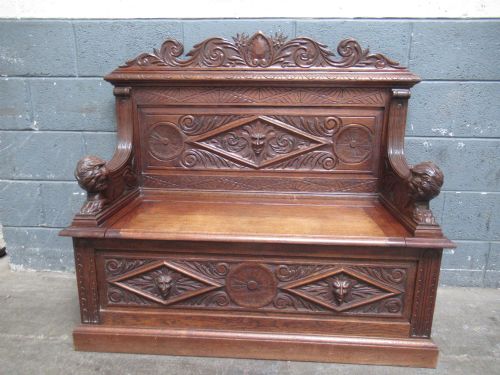
Late victorian oak seats encompass a wide assortment of domestic and hallway furniture dating from the latter decades of the nineteenth century. Buyers searching this phrase typically encounter functional seating forms built from sturdy timber, ranging from simple kitchen chairs to elaborate hall benches with carved panels and lift-up storage compartments.
The inventory on this page draws heavily from the Victorian period, specifically spanning the eighteen eighties and nineties up to nineteen hundred. Hall chairs, desk chairs, settles, and corner armchairs dominate the selection alongside sets of dining chairs and occasional club fenders.
Materials and Construction
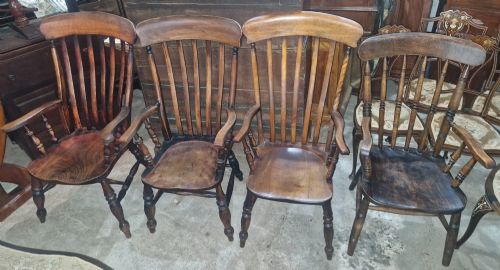
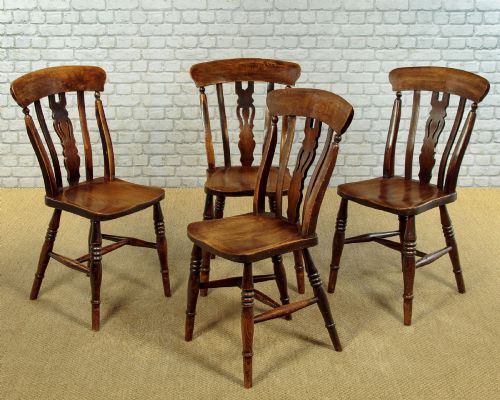
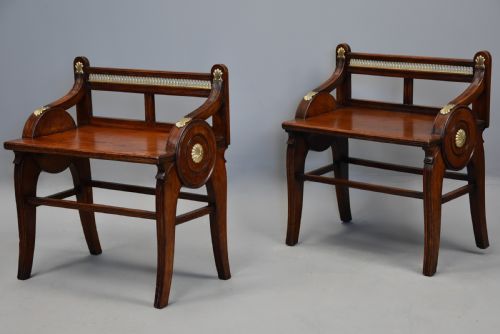
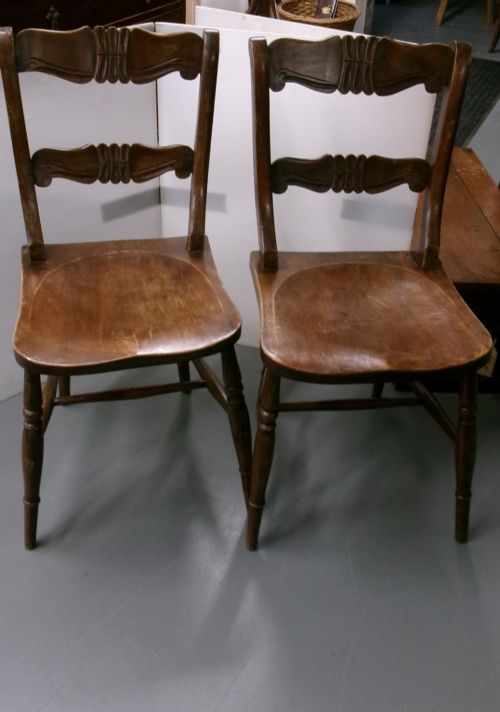
Makers utilised solid oak as the primary structural timber, often complemented by secondary woods like elm and beech in vernacular pieces such as Windsor kitchen armchairs. Brass mounts, iron brackets, and leather, velvet, or fabric upholstery appear frequently on swivel desk chairs, campaign pieces, and club fenders.
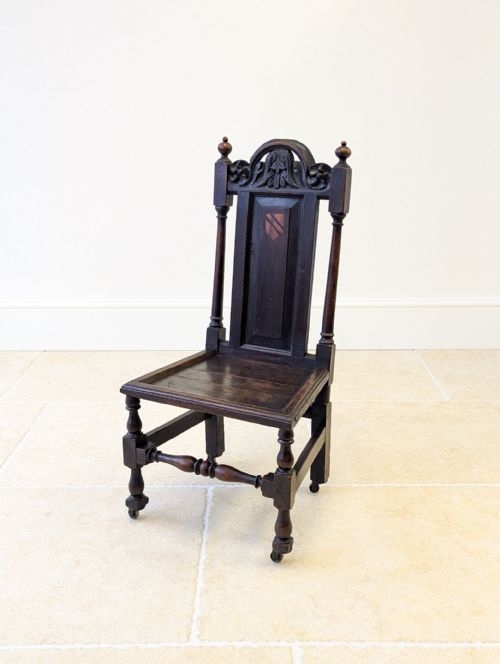
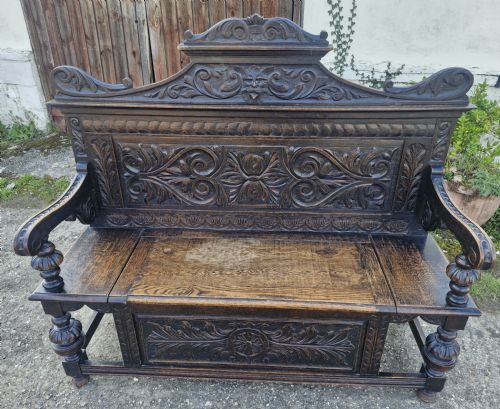
Joinery techniques combined traditional tenon and mortise framing with deep relief carving influenced by Jacobean and Gothic revival styles. Lift-up mechanisms on box seats and settles relied on sturdy iron hinges, while patent music chairs and revolving desk chairs employed early mechanical steel pivots.
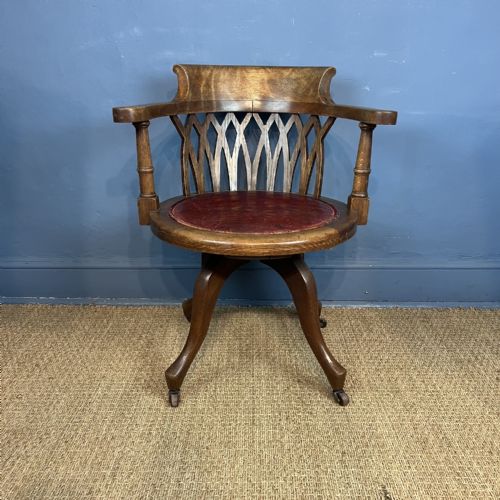
Several armchairs incorporate patent swivelling mechanisms and green leather pads designed specifically for nineteenth-century musicians and busy clerks.
Evaluating Craftsmanship
Quality in these pieces depends on the depth and crispness of the hand carving and the integrity of the timber framing. High-end examples display sharply defined foliate or strapwork carving on solid oak panels, whereas simpler pieces rely on plain turned spindles and assembled board construction.
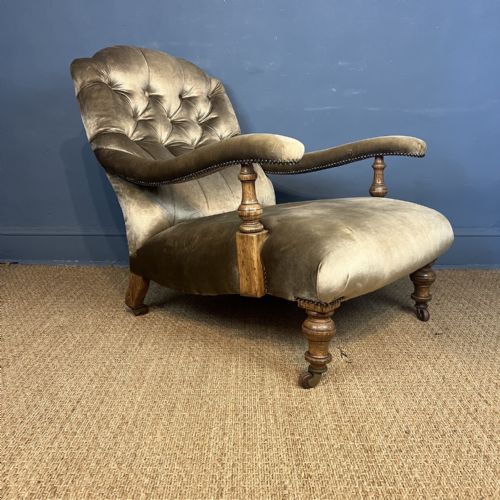
The handling of secondary materials also separates standard production from finer workshop output, such as branded maker pieces featuring solid brass mounts and intact original leather or velvet upholstery. Structural stability in high-use forms like desk chairs and hall benches dictates everyday utility.
James Shoolbred and Co
The Late Victorian Oak Seats Glossary
- Settle
- A wooden bench with a high back, solid arms, and often a hinged seat revealing a storage box beneath. These heavy pieces anchored hallways and firesides.
- Club fender
- A low, U-shaped fireplace surround topped with upholstered leather or fabric seats. They originated in gentlemen's clubs to provide warmth close to the hearth.
- Jacobean Revival
- A nineteenth-century design style mimicking seventeenth-century motifs. It is characterised by heavy geometric panelling, turned baluster legs, and deep strapwork carving.
- Windsor chair
- A wooden armchair constructed with a solid shaped seat into which the legs and back spindles are wedged. Elm and beech were commonly used for their flexible properties.
- Patent chair
- An adjustable seating form incorporating mechanical brass or iron hinges and screws. These allowed for height adjustment or swivelling in office and music room contexts.
Late Victorian Oak Seats: Frequently Asked Questions
Where were hall benches placed?
Hall benches stood in entrance hallways to provide a convenient spot for putting on outdoor footwear or waiting for carriages. Their high backs and carved panels offered a formal greeting to visitors.
Many designs also incorporated lift-up seats or enclosed boxes underneath to store umbrellas, gloves, and walking sticks out of sight.
How do I identify a desk chair?
Late nineteenth-century desk chairs typically feature revolving mechanisms, curved captain's chair backs, or sturdy upholstered armrests designed for prolonged sitting. Swivel models often rest on four-legged wooden spider bases fitted with iron castors.
Library and office variants frequently employ solid oak frames combined with brass spindles or green leather pads on the top rail.
What is a Gothic revival stool?
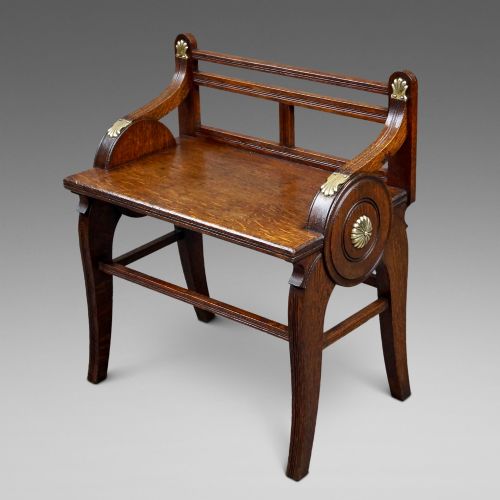
Gothic revival stools borrow architectural motifs from medieval cathedrals, such as pointed arch tracery and heavy quatrefoil piercings. They were produced as single seats or in matched suites for domestic interiors.
Craftsmen built these pieces from solid oak, often pairing them with carved ecclesiastical details that matched larger dining or library furnishings.
Can I use these chairs daily?
Most solid oak chairs from this era were built to withstand heavy daily use in kitchens, offices, and halls. Checking the frame joints and ensuring the timber remains stable is key for practical seating.
Upholstered components like leather desk pads or velvet cushion covers may require gentle conditioning or reupholstery depending on their preservation state.