


Late Victorian Glassware
Late victorian glassware brings together practical tableware and decorative objects from the turn of the nineteenth century that collectors prize for their striking colours and varied forms.
Late Victorian Glassware
Late victorian glassware encompasses a diverse array of functional vessels and decorative display pieces produced around the end of the nineteenth century. When searching for late victorian glassware, buyers encounter objects ranging from everyday dining accessories like wine glasses and decanters to ornamental vases and hand bells.
The pieces on this page originate predominantly from the 1880s, 1890s, and the turn of the twentieth century. Makers and manufacturers from this era drew upon established Victorian traditions while incorporating emerging design influences such as Arts and Crafts, the Aesthetic Movement, and Neoclassical styles.
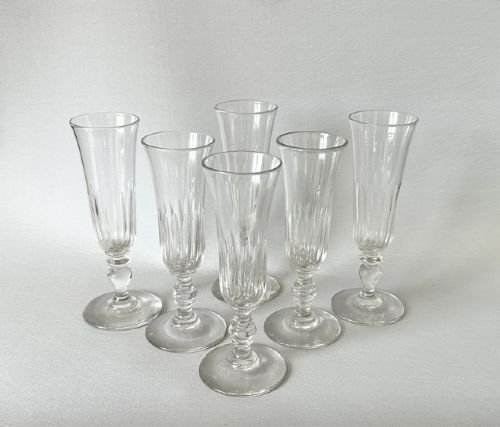
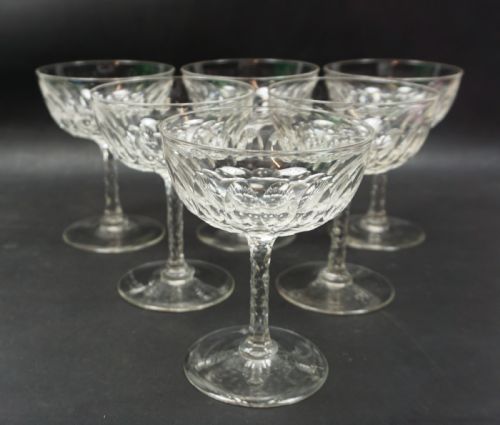
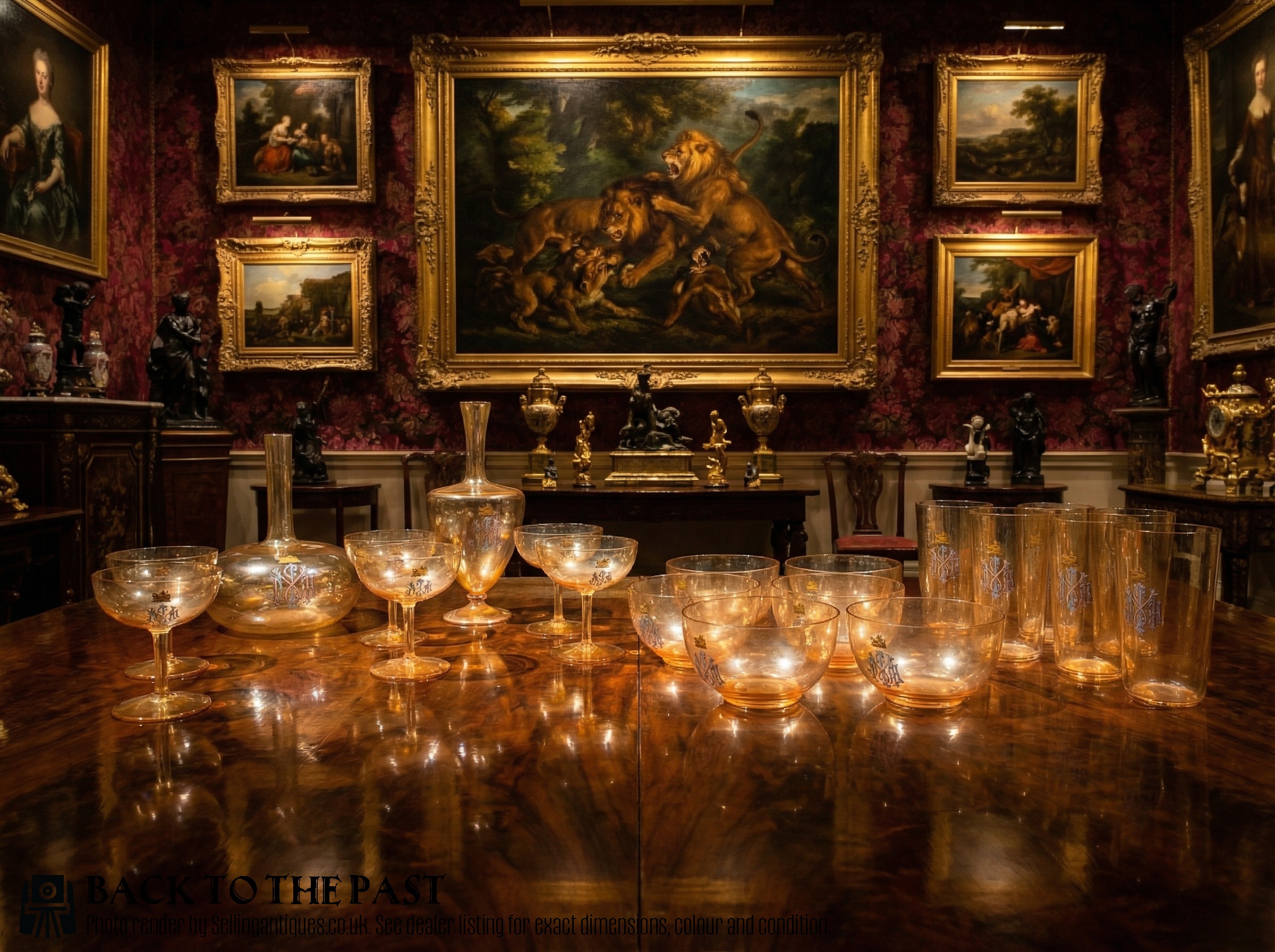
Tableware forms include matched sets of champagne flutes, coupes, and serveware intended for formal dining. Decorative items take the form of opaline baskets, gilded tazzas, and brightly enamelled vases designed to catch the light in a drawing room.
How they were made
Makers utilised free-blowing, optical blowing, and mould-blowing techniques to shape the molten material into vessels. Skilled artisans applied surface decoration through wheel-cutting, acid-etching, and polychromatic enamel painting.
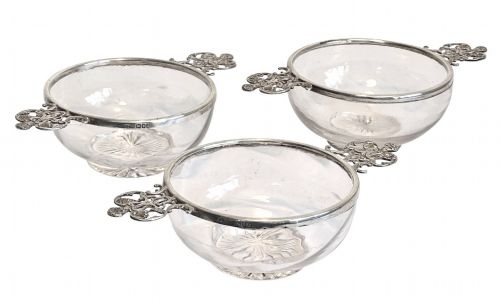
Many pieces incorporate supplementary materials such as sterling silver mounts, gold leaf gilding, and bronze mountings. The glass itself ranges from clear lead crystal and coloured opaline to layered cameo glass and shaded Bohemian glass.
Listings feature various glass colours including ruby, Bristol green, blue pearline, and opaline, alongside clear crystal and lead glass.
What varies in quality
The calibre of late victorian glassware depends heavily on the precision of the forming technique and the skill involved in surface decoration. Finely executed facet cutting on crystal stems and crisp detail in acid-cut cameo work distinguish superior examples from simpler production pieces.
Design attribution to notable makers and the integration of precious metal mounts elevate certain items above standard utilitarian ware. The depth of colour in ruby, blue, or peachblow glass and the careful application of enamel or gold leaf reflect the artisan's expertise.
William Comyns·James Powell·Stevens and Williams·Stuart for Liberty·Davidson·Richardson
The Late Victorian Glassware Glossary
- Lead crystal
- A heavy, brilliant glass made by adding lead oxide to the batch, allowing for deep cutting and sharp light refraction. It produces a clear, resonant tone when struck.
- Opaline glass
- An opaque or translucent glass, often in pale pastel shades, popular in the nineteenth century for decorative vases and tableware. It imitates porcelain while retaining the tactile qualities of glass.
- Cameo glass
- A vessel made with two or more distinct layers of coloured glass fused together, where the outer layer is carved or acid-etched away to reveal a contrasting background design.
- Optically blown
- A technique where molten glass is inflated inside a ribbed or patterned mould to create a uniform pattern of ridges or swirls within the body of the vessel.
- Tazza
- An ornamental shallow cup or bowl raised on a stem and foot, traditionally used for serving fruit or sweets on a formal dining table.
Late Victorian Glassware: Frequently Asked Questions
How do I clean antique glass?
Wash pieces by hand in warm water using a mild detergent, avoiding sudden temperature changes that can crack fragile material. Dry them immediately with a soft, lint-free cloth to prevent water spots.
Keep silver-mounted or gilded items out of soaking water to protect the metal and surface decoration from deterioration.
How do I identify the period?
Examine the form, colour palette, and decorative style against documented examples from the late nineteenth century. Aesthetic movement motifs and Arts and Crafts simplicity often point towards the 1890s.
Look for maker signatures, registered design numbers, or silver hallmarks that provide a precise date and attribution.
What is peachblow glass?
Peachblow glass is a type of shaded art glass that transitions from a pale peach tone to a deeper rose or pink colour. It gained popularity during the late nineteenth century for decorative cabinet vases.
Bohemian and English makers produced variations of this shaded effect using special heat-sensitive chemical formulas during the glass-blowing process.