
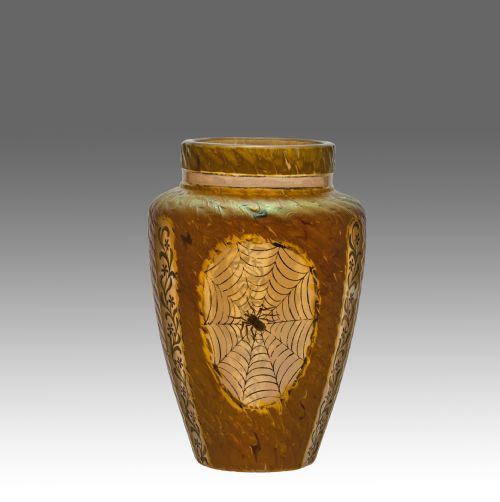


Enameled Amber Glassware
These enameled amber glassware pieces bring rich warmth and intricate decoration to a room, offering both decorative presence and historical charm.
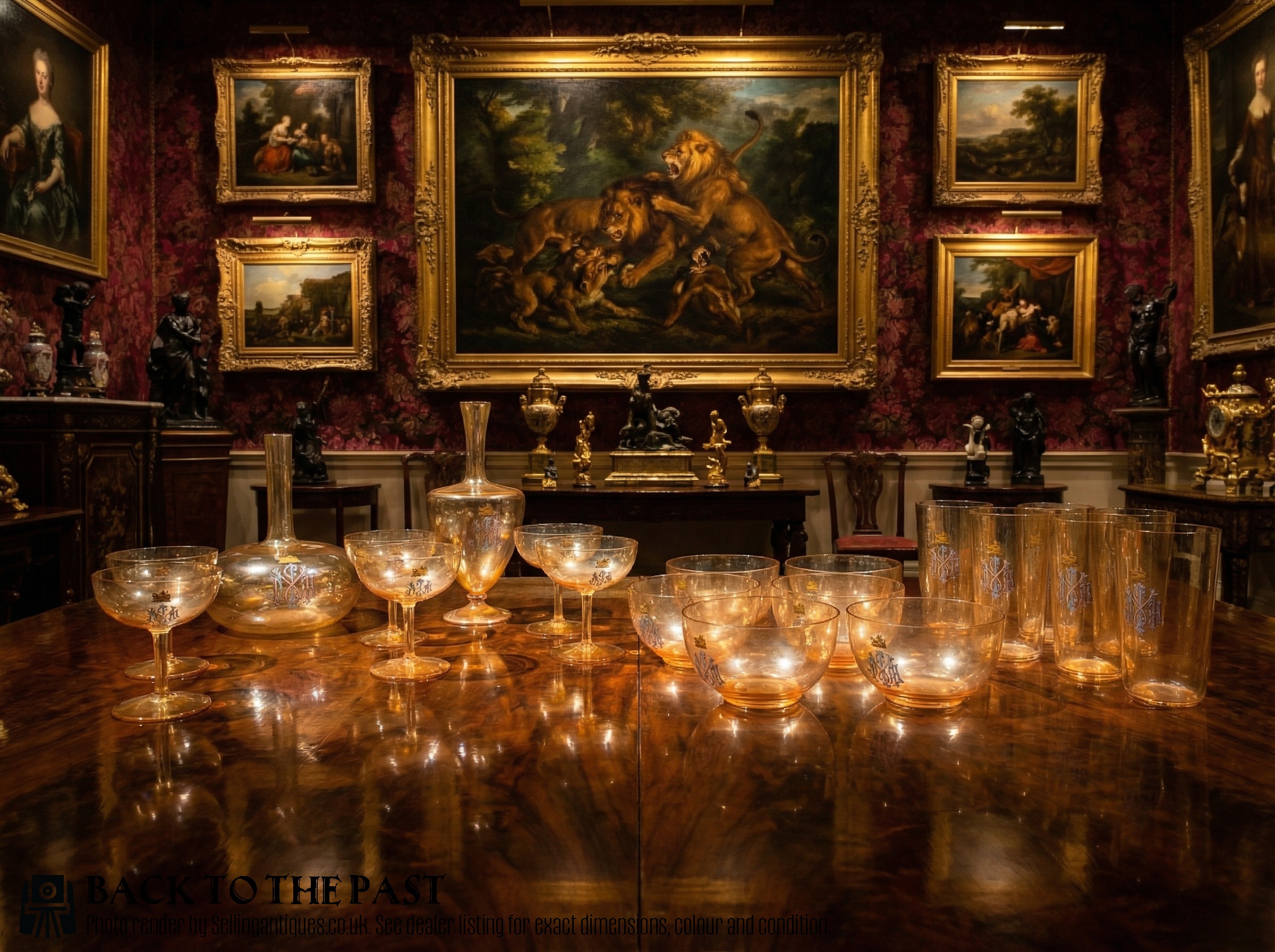
Enameled Amber Glassware
When you search for enameled amber glassware, you enter a world of richly coloured vessels decorated with detailed surface painting. These pieces range from tall nineteenth century vases to complete nineteenth century tableware services and cocktail glass services.
The selection on this page spans several distinct periods, including Victorian, nineteen hundreds, and art deco creations from nineteen thirty. You will encounter Austrian tableware sets alongside Bohemian figurative enamelled glass goblets and Venetian revival works.
Makers and origins vary across European centres of production, with notable examples from French, German, Austrian, and Czech glasshouses. Forms include individual vases such as the Kralik iridescent spider vase and Daum pieces alongside larger glassware sets.
How they were made
The foundational material is amber glass, often formed using blown glass techniques to achieve the desired vessel shape. Makers sometimes incorporated iridescent glass or cameo glass effects into the body before applying further decoration.
Surface decoration relies on enamel and polychromatic enamelled details, applied by hand to create figurative or floral motifs. Firing fixed the enamel pigments permanently to the glass substrate, ensuring the intricate patterns endured across the decades.
Some Victorian party sets were designed specifically for summer garden gatherings, proving our ancestors knew how to host a stylish outdoor soirée.
What varies in quality
Quality in these pieces rests upon the precision and complexity of the enamel work applied to the amber glass surface. Finer examples display meticulous brushwork and rich polychromatic details that remain crisp and well adhered.
The sophistication of the underlying glass form also dictates value, particularly where blown techniques create unusual contours or where iridescent and cameo treatments enhance the material depth. Complete services with uniform detailing command particular attention from collectors.
Kralik Glass·Moser·Daum·Legras
The Enameled Amber Glassware Glossary
- Enamel
- Opaque glass or paint fused to the surface of a vessel through firing. It provides vibrant colour and raised texture against the amber glass.
- Amber glass
- Glass coloured by the addition of sulphur and carbon or iron oxides during melting. This produces warm honey and brown tones characteristic of the period.
- Iridescent glass
- Glass treated with metallic oxides to create a shimmering, rainbow effect on the surface. Kralik utilised this technique effectively on spider vases.
- Polychromatic
- Featuring multiple colours within the painted or enamelled decoration. Moser pieces frequently employ this multicolored approach.
Enameled Amber Glassware: Frequently Asked Questions
What periods do these pieces date from?
The items span the mid nineteenth century through to the nineteen thirties. Victorian examples sit alongside art nouveau and art deco creations.
Production dates reflect shifts in European design, moving from ornate nineteenth century revival styles to cleaner twentieth century modernist lines.
Were these items used for dining or display?
Many pieces served practical functions during nineteenth century gatherings, such as the cocktail glass services and tableware sets from Austria. Other items, like tall vases, were purely decorative.
Matching sets indicate use during formal garden parties and evening receptions, combining utility with visual splendour.
How do I identify Bohemian or Austrian pieces?
Regional characteristics often appear in the specific choice of enamel motifs and glassblowing techniques. Bohemian pieces frequently feature figurative enamelling.
Signatures or characteristic colour palettes help attribute items to specific workshops across Central Europe and France.