

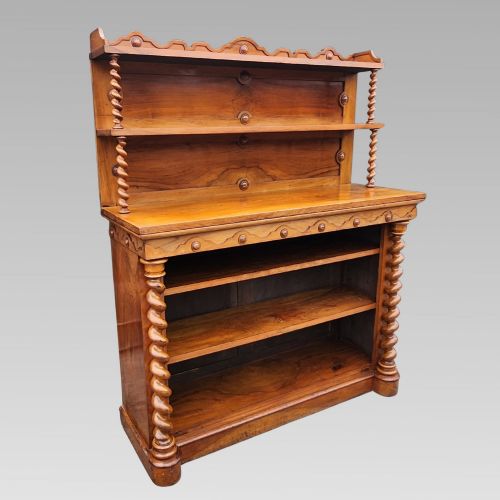


Late Victorian Carved Sideboard
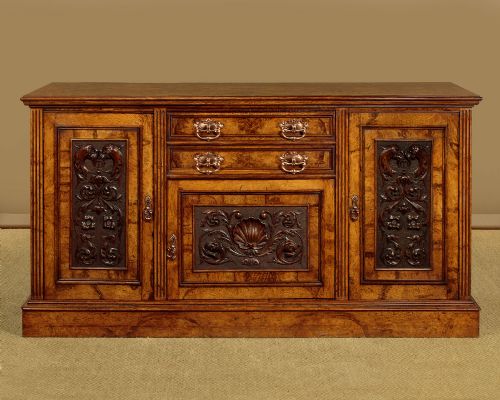
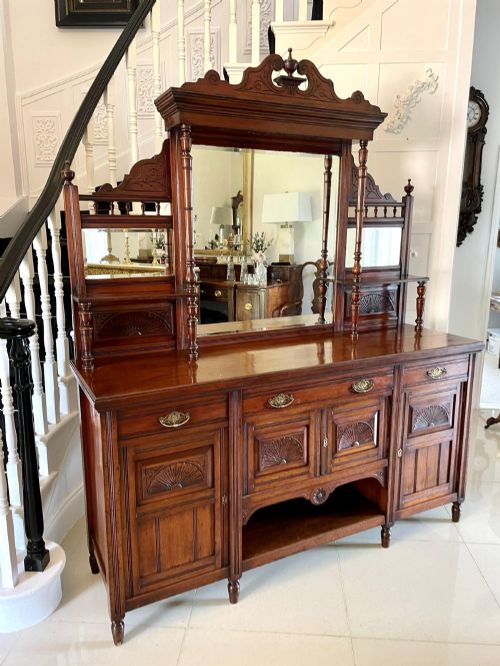
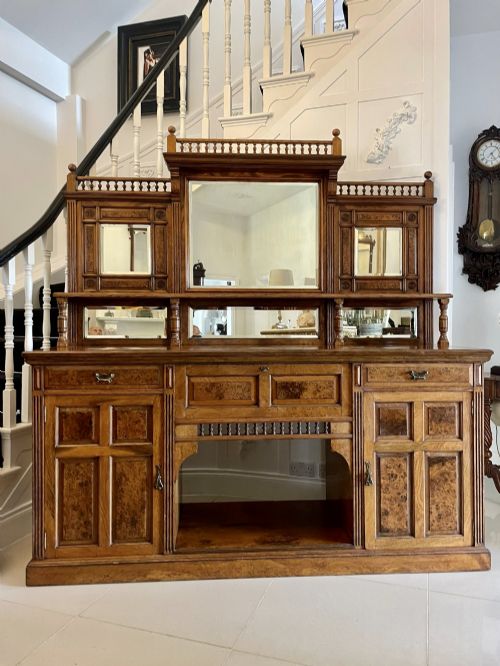
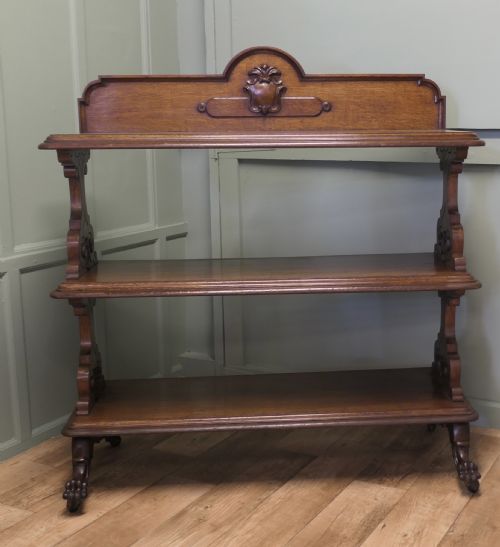
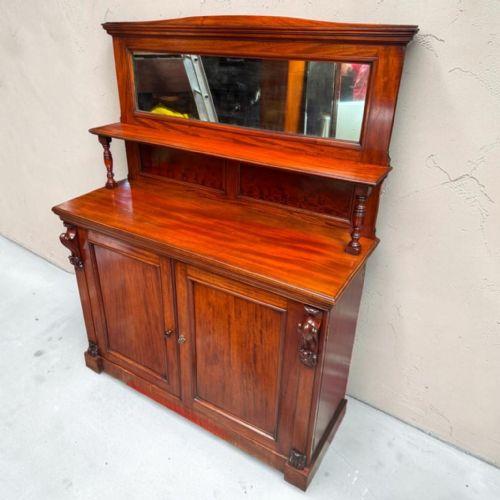
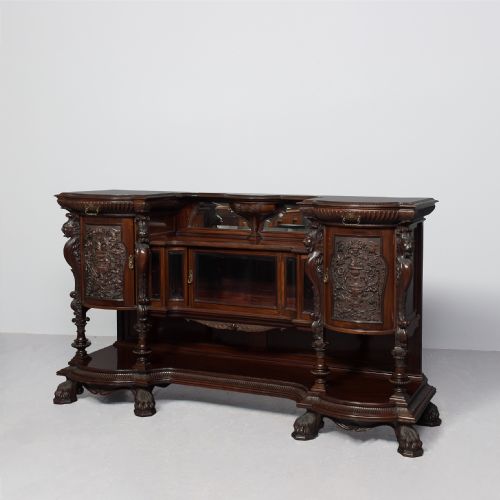
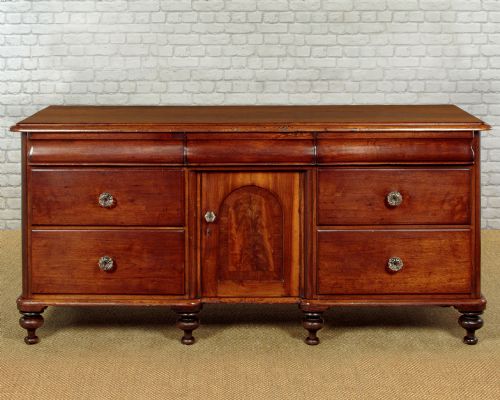
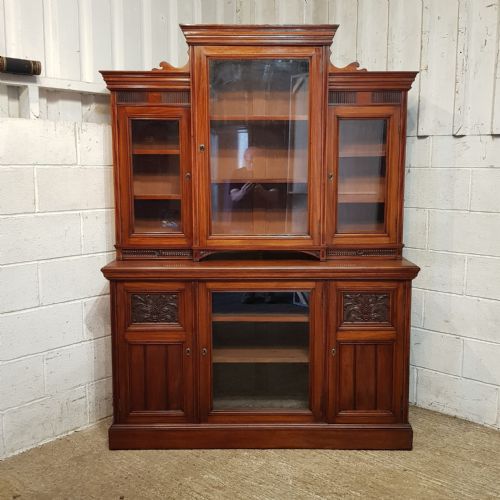
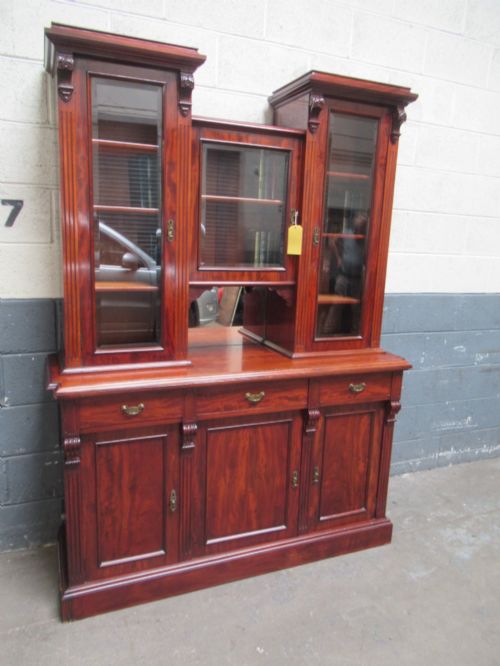
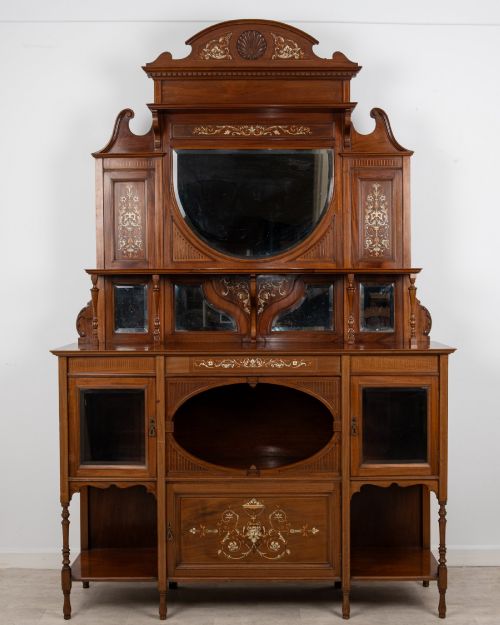
A late victorian carved sideboard brings heavy timber, mirror glass and deep relief carving together for the dining room or hall.
Late Victorian Carved Sideboard
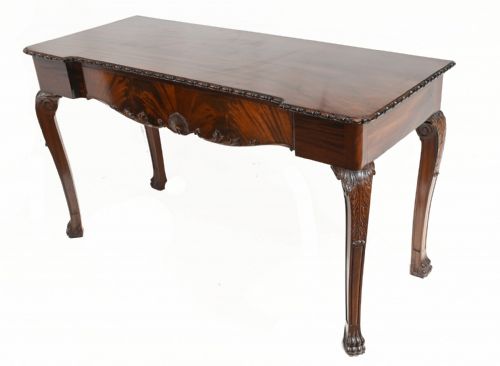
A late victorian carved sideboard typically appears in heavy oak, walnut or mahogany, often standing upon bracket feet or cabriole legs. These pieces emerge from the later nineteenth century, carrying stylistic influences from the Gothic Revival, Arts and Crafts and Aesthetic movements.
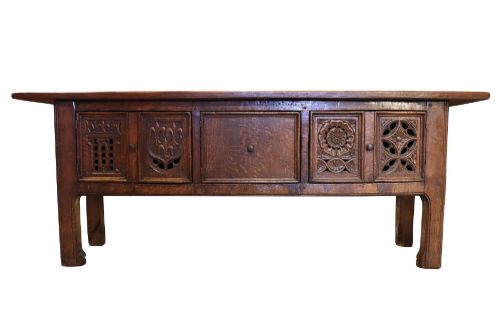
The version most commonly met on this page is the mirror back sideboard in oak or walnut, featuring carved cupboard doors, drawers and display surfaces. Alongside standard sideboards, related forms include dressers, buffet servers, credences and breakfront cabinets dating from around eighteen eighty to nineteen hundred.
Distinctions in Standard
The calibre of a late victorian carved sideboard rests upon the depth and precision of the woodcarving, distinguishing crisp hand-chisel work from shallow mechanical moulding. Superior examples display dense, well-figured timber selection, particularly in burr veneers and quarter-sawn oak.
Construction integrity separates workshop pieces from mass production, evident in tight joinery, panel alignment and original brass or bronze hardware. The integration of high-grade bevelled mirror glass and heavy marble surfaces further elevates the standing of an individual cabinet.
Watch for the unexpected green man peering out from the foliage carvings on oak sideboard doors.
Gillows·James Plunckett
The Late Victorian Carved Sideboard Glossary
- Mirror back
- A superstructure attached to the rear of a sideboard that incorporates a large mirror plate and small display shelves. This feature reflects light and showcases decorative items.
- Gothic Revival
- An architectural and decorative style drawing inspiration from medieval design. It employs pointed arches, heavy mouldings and religious or heraldic motifs.
- Green man
- A sculptural architectural ornament depicting a human face surrounded by or entwined with foliage and vines. It symbolises rebirth in woodwork and stone.
- Credence
- A small cabinet or sideboard traditionally used for holding food or utensils. In nineteenth-century revivals, it adopts medieval cupboard forms with heavy panel doors.
- Dumb waiter
- A tiered serving table or stand utilised for holding dishes without the aid of servants. These items feature rotating or fixed circular shelves upon a central pillar.
- Breakfront
- A large piece of furniture whose central section projects forward from the flanking wings. This configuration creates visual depth and breaks the linear plane.
Late Victorian Carved Sideboard: Frequently Asked Questions
What is a late victorian carved sideboard?
A late victorian carved sideboard is a substantial dining room storage unit produced in Britain during the late nineteenth century. These pieces combine cupboards and drawers with decorative timber carving and often incorporate mirror backs.
They reflect historical revival styles popular during the period, utilising heavy native and imported woods. Their scale and ornamentation suit traditional dining spaces and hallways.
How do I style a large sideboard?
Position a large sideboard against a principal wall in a dining room, hall or open living space to anchor the room. The top surface provides an ideal platform for lamps, ceramics or decorative trays.
The mirror or display back reflects ambient light while framing displayed items. Ensure adequate floor space remains around the piece to accommodate opening cupboard doors and drawers.
How do I tell Gothic Revival from Arts and Crafts?
Gothic Revival pieces display medieval architectural motifs including pointed arches, tracery, heavy lion masks and deep linenfold or geometric carvings. Their aesthetic leans toward ornate historical imitation.
Arts and Crafts pieces emphasise the natural grain of the timber, simple construction methods and honest hand-craftsmanship. They feature less historical ornamentation, focusing instead on utility and structural clarity.
How are these cabinets cleaned?
Dust timber surfaces regularly with a soft, dry cloth to prevent dirt accumulation in the carved recesses. Feed the wood periodically with appropriate wax to maintain the finish and moisture balance.
Avoid chemical cleaning agents and excessive moisture on both the timber and the mirror plate. Glass components require standard glass cleaner applied to a cloth rather than sprayed directly near the wood.