
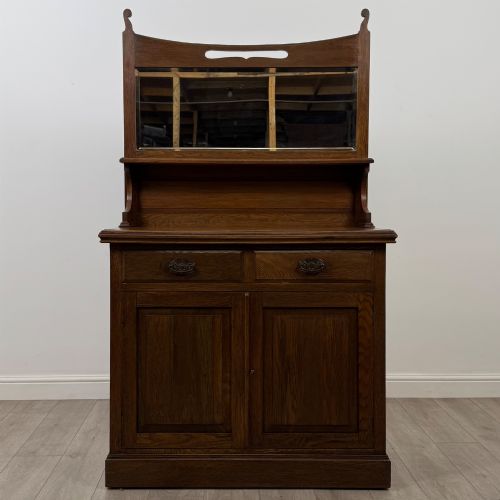
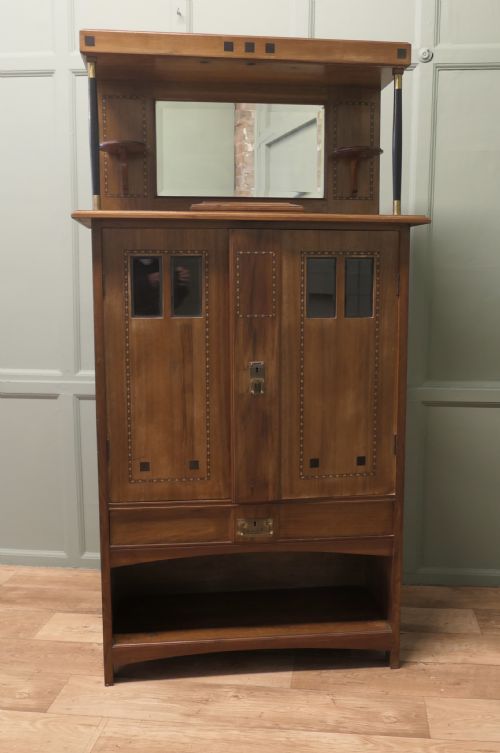
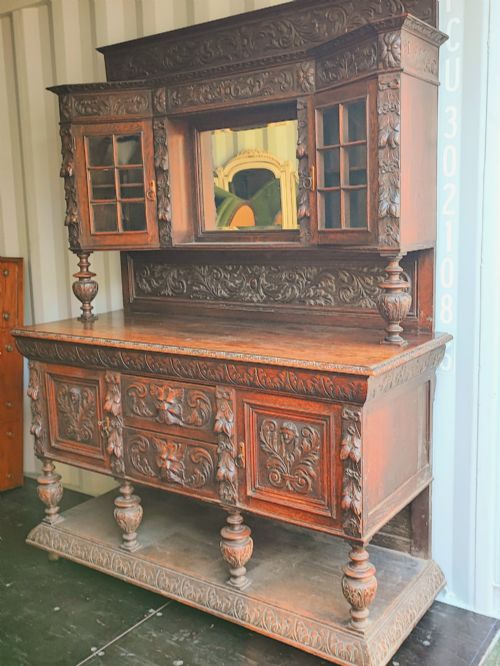
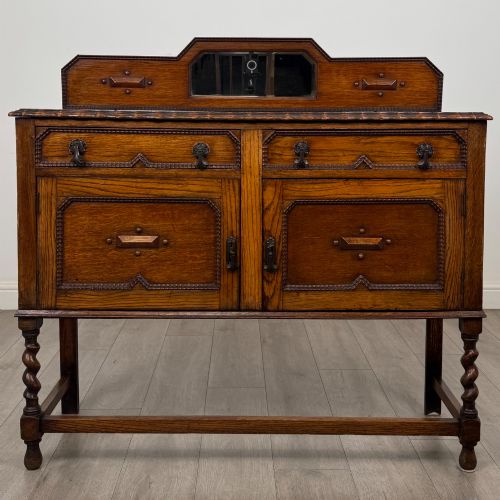
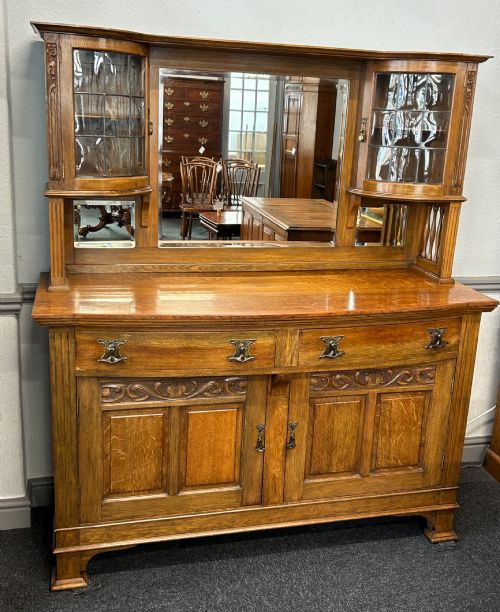
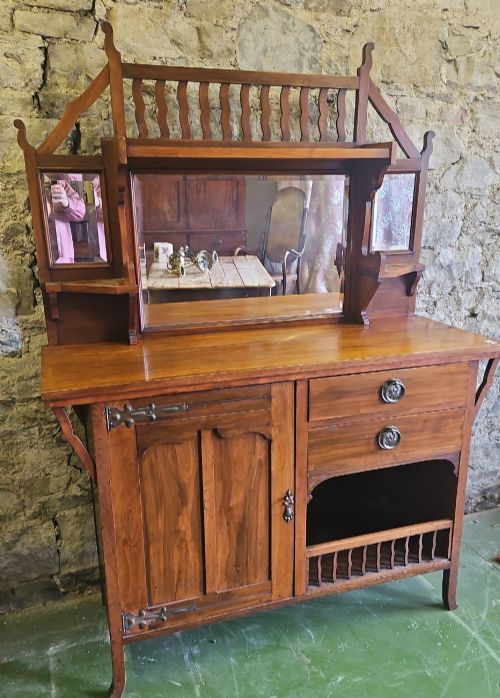
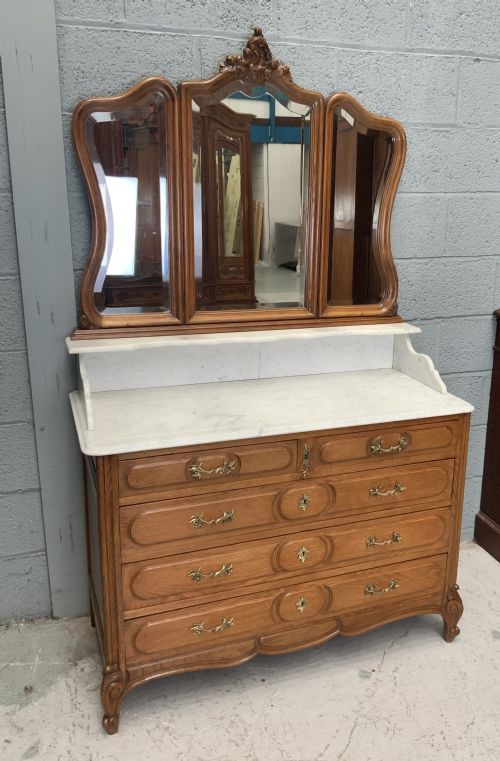


Vintage Oak Sideboard with Mirror
A vintage oak sideboard with mirror brings substantial presence and functional storage to a room through solid timber and glass.
Vintage Oak Sideboard with Mirror
When you search for a vintage oak sideboard with mirror, you are looking at substantial timber furniture designed for storage and display, spanning periods from the 19th century through the Edwardian era and the 1920s.
The versions you are most likely to meet on this page include mirror back sideboards, washstands, and dressers framed in oak, alongside related forms like cocktail cabinets and display pieces.
These items originate across Victorian, Edwardian, and early 20th-century workshops, incorporating regional variations in design from French Provincial to Jacobean Revival and Arts and Crafts styles.
How they were made
The pieces listed here rely primarily on oak timber, sometimes featuring pollard oak for distinct grain patterns, combined with glass mirror plates for the upper sections.
Construction techniques involve traditional carving and joinery, often supplemented by brass hardware, ceramic elements, and occasionally marble surfaces depending on the specific object type.
One piece even hides its beverages behind a Secessionist facade while the mirrors reflect the room.
What varies in quality
Quality across these items rests in the depth and execution of the carved detail, the selection of figured timber such as pollard oak, and the integrity of the integrated mirror glass.
The coherence of stylistic details - whether an Arts and Crafts movement influence or a Jacobean Revival form - distinguishes standard utility furniture from finer workshop examples.
The Vintage Oak Sideboard with Mirror Glossary
- Pollard oak
- Timber taken from trees that have been pollarded, producing a dense, highly figured grain pattern prized for decorative panels. It adds striking visual movement to cabinet fronts.
- Arts and Crafts
- A design movement valuing handcraftsmanship, simple forms, and honest construction over mass production. Pieces in this style often feature exposed joinery and understated hardware.
- Jacobean Revival
- A style popular in the 19th century that mimics 17th-century English furniture. It typically incorporates heavy mouldings, geometric paneling, and deep turning.
- Secessionist
- A Central European modernist movement breaking away from historicist styles. It manifests in cleaner, geometric lines and stylized decorative elements.
- Mirror back
- An upper superstructure attached to a sideboard that incorporates a large glass plate. This feature reflects light and displays objects placed on the surface below.
Vintage Oak Sideboard with Mirror: Frequently Asked Questions
What periods do these sideboards come from?
The examples on this page primarily span the Victorian and Edwardian eras, extending into the 1900s, 1910s, and 1920s.
These dates reflect the manufacturing periods recorded in the current inventory, covering both 19th-century craftsmanship and early 20th-century revivals.
How do I maintain an oak sideboard?
Oak furniture benefits from regular dusting with a dry, soft cloth and occasional treatment with suitable natural waxes to nourish the timber.
Keep these pieces away from direct heat sources and strong sunlight to prevent the oak from drying out and the mirror glass from deteriorating.
What is pollard oak?
Pollard oak is a specialised timber derived from trees pruned close to the trunk, which creates a tightly clustered, swirling grain pattern.
Cabinetmakers utilised this decorative wood for drawer fronts and feature panels to create visual contrast against plain oak.
How are mirror back sideboards used today?
These pieces function well in dining rooms and living spaces as storage cabinets and display surfaces for tableware, glassware, or decorative objects.
The integrated mirror opens up the visual space of a room while reflecting natural light from surrounding windows.