


Late Qing Occasional Tables
Late qing occasional tables are solid hardwood and rootwood furnishings offering intricate carved detail and stone inserts for everyday display.
Late Qing Occasional Tables
When you search for late qing occasional tables, you are looking at practical Chinese furnishings produced during the nineteenth and early twentieth centuries, spanning periods from eighteen eighty to nineteen hundred. These pieces encompass forms such as side tables, nests of tables, plant stands, tray tables, and low jardiniere stands.
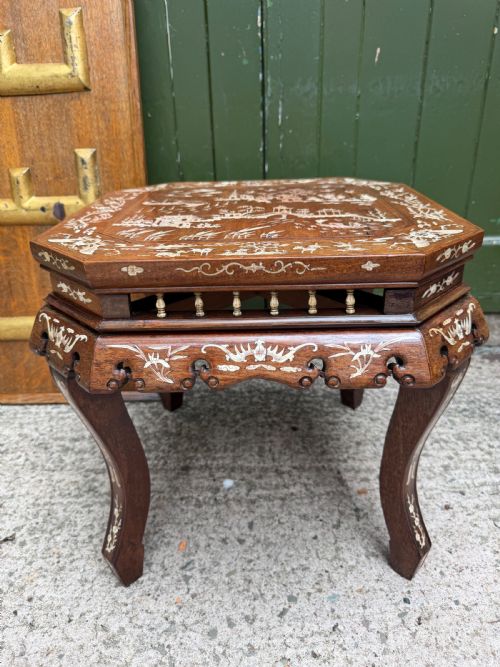
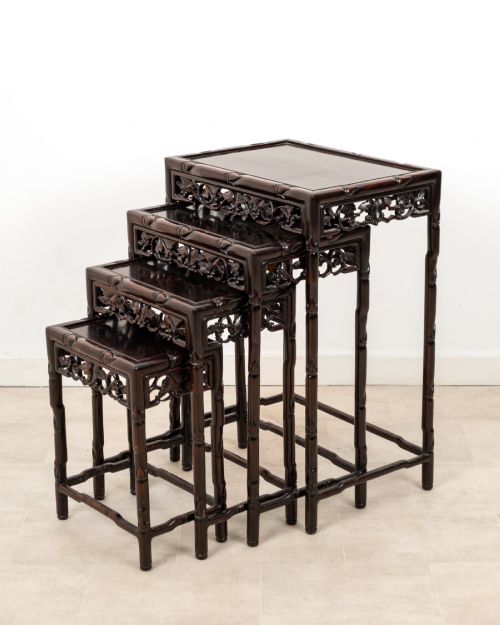
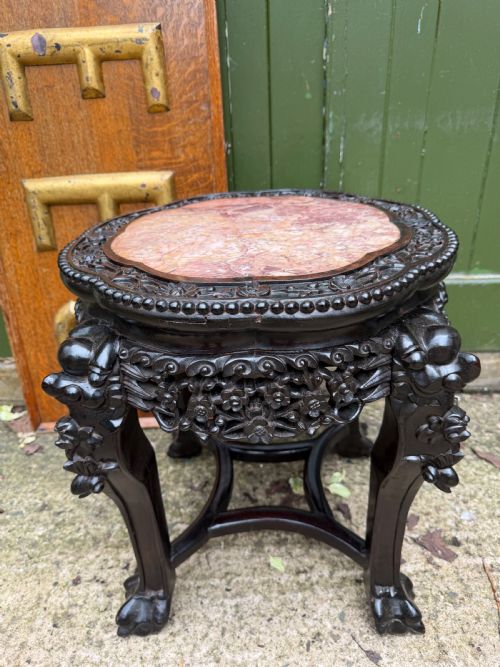
The versions you are most likely to encounter on this page include carved hardwood nest of four tables, inset marble top tables, and rootwood stands. Originating from Chinese Qing Dynasty and Chinese Export traditions, these functional items serve as adaptable surfaces for rooms.
The variety ranges from rectangular tray tables on folding bases to tripod tables and pairs of matching side tables. Each item demonstrates the distinct craftsmanship of the late nineteenth century without relying on modern reproductions.
How they were made
Makers utilised dense timbers including hardwood, rosewood, and rootwood, alongside ebonised finishes to build sturdy frames. These natural materials provide the structural foundation for the carved decoration characteristic of the period.
Surfaces frequently incorporate inset panels of variegated rouge marble, quartz, lacquer, brass, and inset wood panels. Artisans combined these contrasting stone and metal elements directly into the timber framework to create durable display surfaces.
Current listings feature items exclusively from the nineteenth century and nineteen hundred, constructed from hardwood, rosewood, rootwood, marble, quartz, lacquer, brass, and inset wood panels.
What varies in quality
The depth and precision of the carved decoration separate standard joinery from superior examples. Skilled execution in the woodwork shows sharp relief and clean joints across tripod bases and folding frames.
The selection and fitting of natural inserts like variegated rouge marble or quartz determine the refinement of the piece. Well-chosen stone exhibits striking natural patterns and sits flush within the surrounding hardwood.
The Late Qing Occasional Tables Glossary
- Hongmu
- A category of dense Chinese hardwoods used for traditional furniture. This heavy timber accommodates detailed carving.
- Jardiniere stand
- A low table or pedestal designed to hold a plant bowl or flower pot. These sturdy stands support heavy ceramic vessels.
- Rootwood
- Furniture built from the natural growth of tree roots. This organic material yields irregular and unique structural forms.
- Variegated rouge marble
- Stone exhibiting varied red and contrasting colour veining. It provides a decorative inset surface for table tops.
Late Qing Occasional Tables: Frequently Asked Questions
What are late qing occasional tables used for?
These tables function as surface space for lamps, decorative objects, and plants within living areas. Their compact proportions allow them to sit beside seating or in corners.
Nests of tables provide flexible surface area that can expand when needed and stack away compactly. Plant stands and jardiniere tables elevate heavy pots to display foliage.
How do I care for marble and quartz top tables?
Clean stone surfaces with a damp cloth and mild soap, avoiding acidic cleaners that etch polished marble. Use coasters to prevent moisture rings on the stone.
Treat the surrounding hardwood frames with appropriate furniture wax to nourish the timber. Keep these pieces away from direct heat sources to prevent wood splitting.
How can I tell the period of these tables?
Examine the construction methods, timber patination, and carving styles characteristic of late nineteenth century Chinese workshops. The combination of dense hardwoods and specific insert materials points to this era.
Dates span the late nineteenth century up to nineteen hundred, showing Qing Dynasty design elements. Comparing joinery and material use helps confirm the historical context.
Are nest of tables authentic to the late qing period?
Graduated sets of four tables were produced during the late nineteenth century in China for export and domestic use. They fit neatly inside one another to save space.
Carpentry techniques on these nesting sets match single occasional tables from the same era. They demonstrate traditional joinery suited for daily utility.