




Large Wool Oriental Rug
A large wool oriental rug anchors a room with dense patterns and substantial scale, drawing on traditions from Persia, Turkey, and Central Asia.
Large Wool Oriental Rug
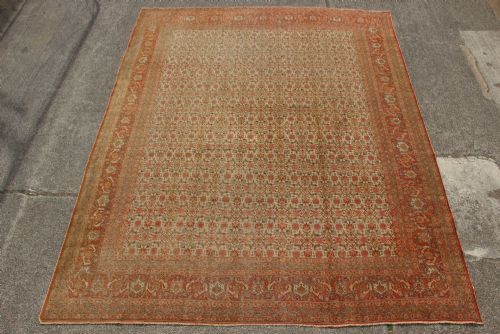
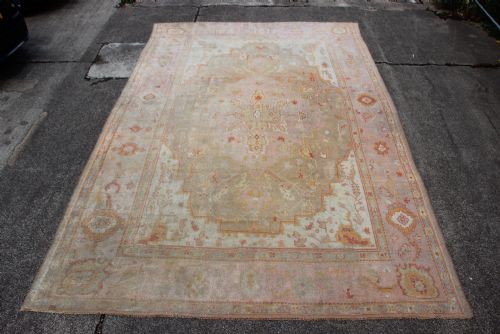
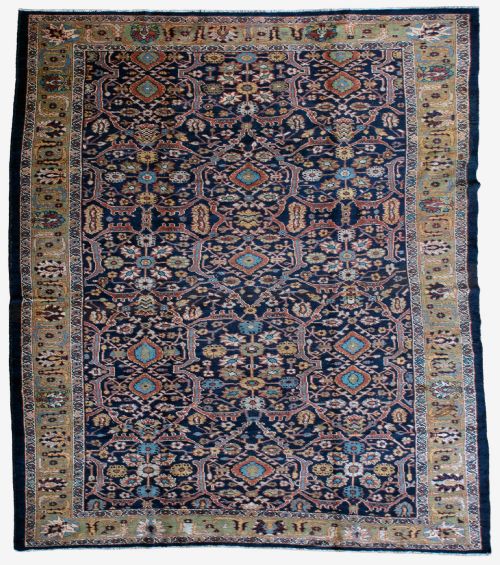
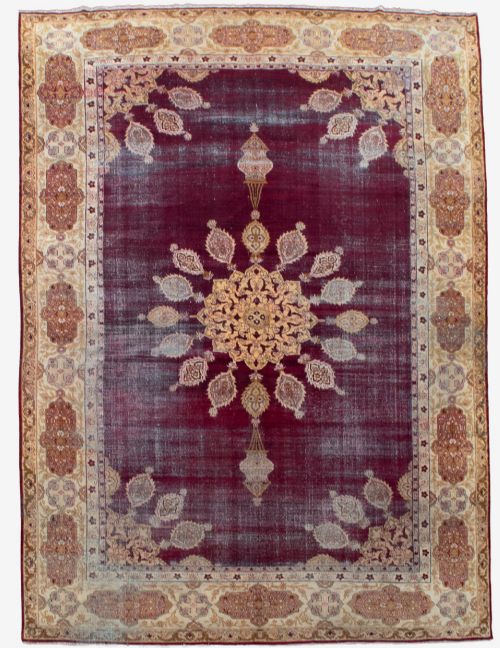
A large wool oriental rug encompasses significant floor coverings originating from workshops and tribal regions across Asia, spanning styles such as Persian Heriz, Mahal, Tabriz, and Ottoman Oushak. These pieces arrive in room-sized and country-house dimensions, often exceeding four metres in length to suit expansive interiors.
The selection on this page relies heavily on Persian village and city weaves, alongside Anatolian and Turkmen tribal pieces. Buyers frequently encounter nineteenth-century and early twentieth-century examples featuring traditional geometric medallions or expansive floral fields.
Formats range from broad square room carpets to elongated formats like hallway runners, executed in dense wool pile upon cotton foundations. Each piece reflects the specific weaving conventions of its district, whether the bold architectural lines of Heriz or the softer curvilinear palette of Kirman.
Materials and construction
Construction relies upon hand-knotted wool pile secured to sturdy cotton warp and weft foundations. The quality of the wool determines the resilience of the surface, absorbing natural dye formulations that develop subtle tonal shifts over decades of exposure and use.
Weavers tied individual knots by hand across complex geometric and floral cartoons, employing techniques passed down through generations in tribal and workshop settings. The density of these knots dictates the sharpness of the pattern and the weight of the completed carpet.
Listings feature pieces dated across the nineteenth and twentieth centuries, utilising wool pile and cotton foundations in Persian, Anatolian, and Turkmen styles.
Distinctions in quality
Quality differentiates itself through the crispness of the drawing, the harmony of the palette, and the integrity of the foundation. Finer workshops utilise superior knot density and carefully prepared wool to maintain structural stability across immense dimensions.
The handling of natural dyes and the precision of regional motifs separate standard village production from exceptionally fine city carpets. Wear patterns and historical repairs also influence the character of an individual piece without detracting from its structural execution.
The Large Wool Oriental Rug Glossary
- Gul
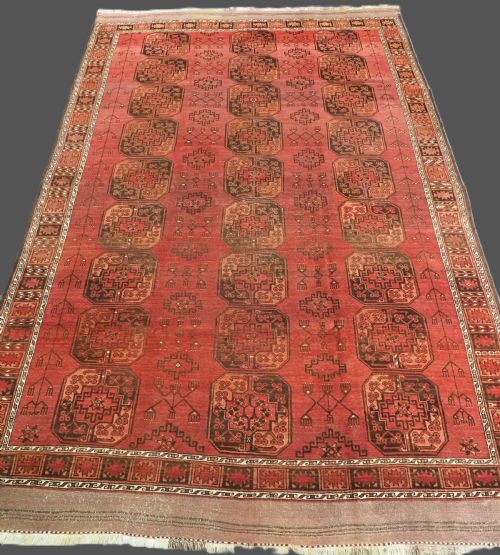
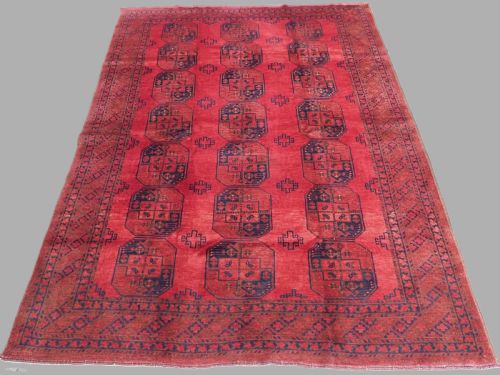
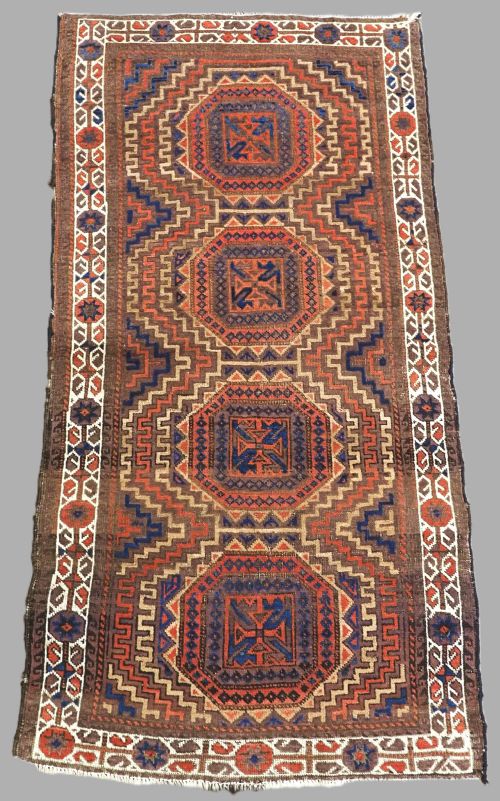
- A repeating octagonal medallion motif frequently found in Turkmen and Afghan tribal weaving. These primary design elements identify specific nomadic groups.
- Warp
- The vertical threads stretched tightly on the loom that form the structural foundation of the carpet. Fringe ends typically emerge from these parallel strands.
- Weft
- The horizontal threads passed between the warp rows to lock the knots in place. Together with the warp, they create the grid supporting the wool pile.
- Medallion
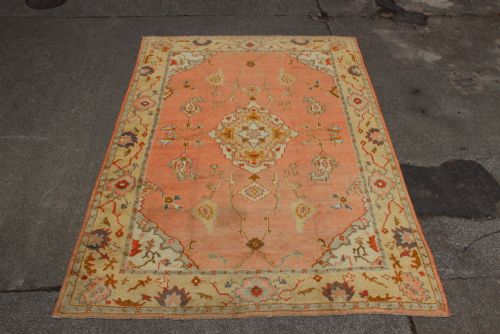
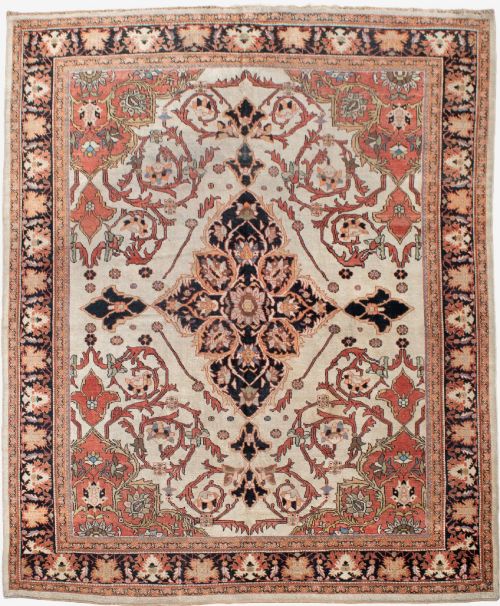
- A large central ornamental design anchored in the middle of the carpet field. Many Heriz and Oushak pieces build their entire symmetry around this focal shape.
Large Wool Oriental Rug: Frequently Asked Questions
How do I clean a large wool oriental rug?
Regular gentle vacuuming without a beater bar removes loose dirt from the wool pile. Professional specialist cleaning remains essential for deep washing to protect natural dyes.
Water exposure must be carefully managed to prevent colour migration across the cotton foundation. Immediate blotting handles accidental spills safely.
What underlay should I use?
A breathable rug pad prevents slipping and protects the foundation fibres from friction against hard flooring. It also provides additional cushioning beneath heavy foot traffic.
Selecting a natural rubber or felt underlay avoids synthetic adhesives that might interact with older wool pile. Proper sizing ensures the pad stays safely hidden beneath the edges.
How do I tell a Heriz from an Oushak?
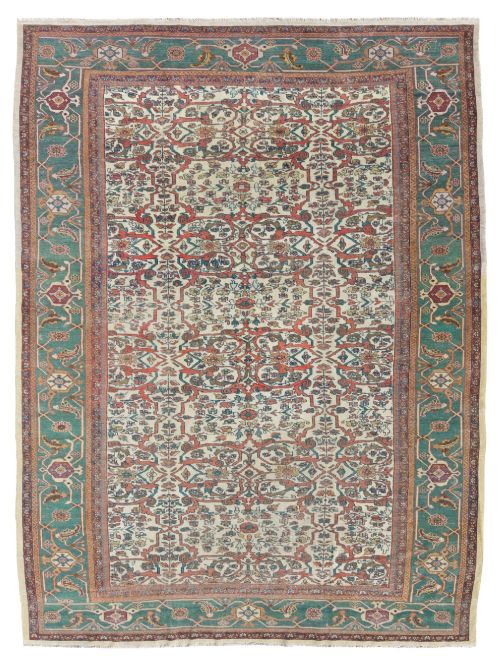
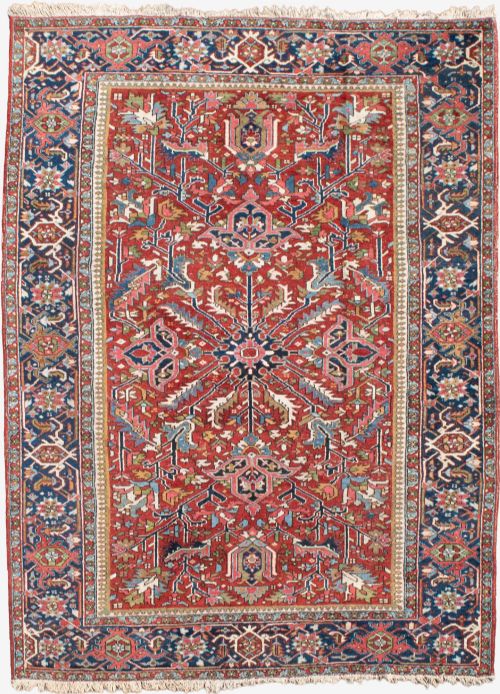
Heriz carpets feature bold, geometric medallions and strong architectural corner spandrels woven in north-west Persia. Their palette often incorporates deep reds, navy blues, and ivory ground tones.
Oushaks originate from Anatolia and display softer, more expansive floral designs with muted terracotta and pale blue washes. The wool handling and knot structure also reflect their distinct Turkish provenance.
Can these carpets handle heavy foot traffic?
Substantial wool pile and sturdy cotton foundations allow these pieces to endure regular use in busy rooms. The natural lanolin in traditional wool provides inherent resistance to dirt and wear.
Rotating the rug periodically ensures even exposure to sunlight and foot traffic. Placing pads underneath reduces direct stress on the historical fibres.