


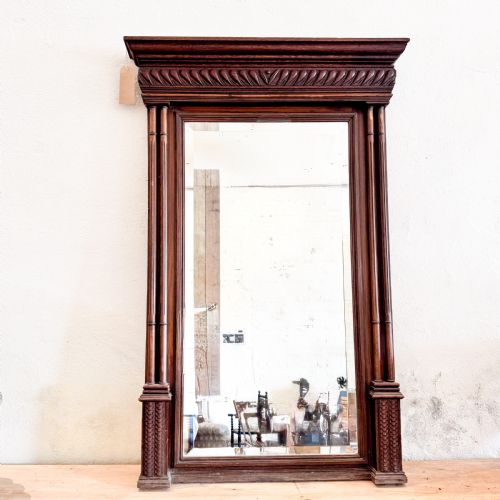


Large Wooden Mantle Mirror
A large wooden mantle mirror anchors a room, combining substantial timber frames with glass designed to rest above a fireplace.
Large Wooden Mantle Mirror
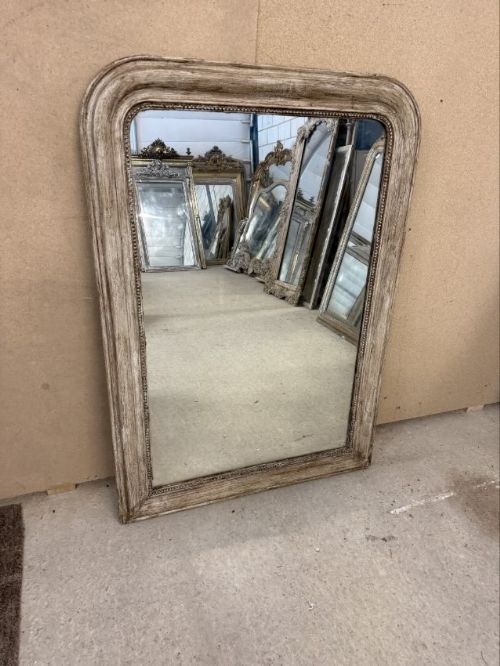
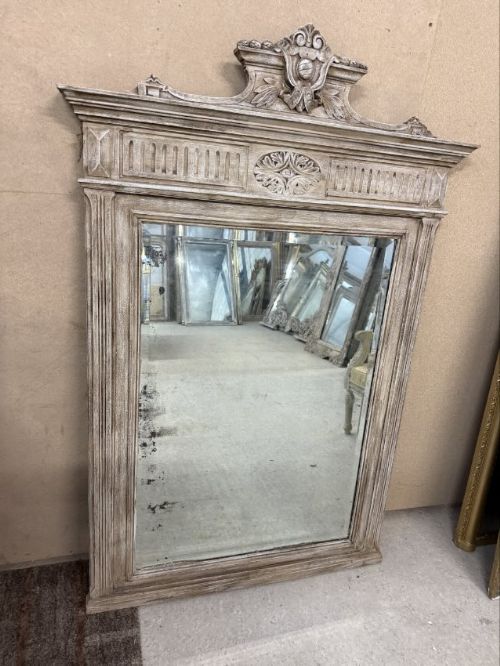
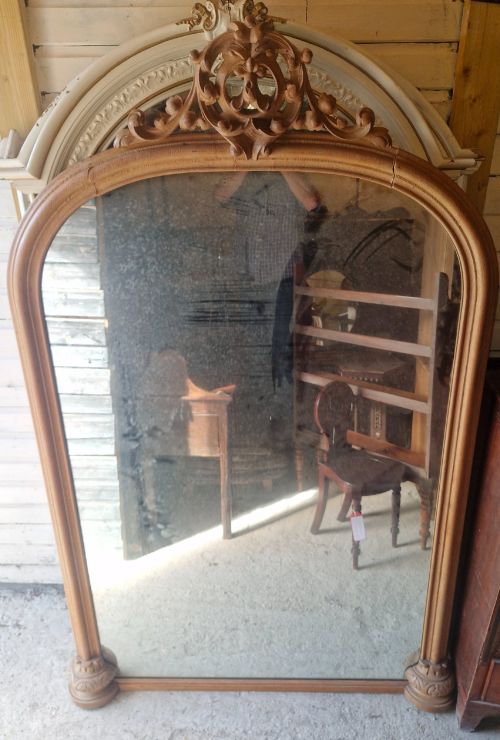
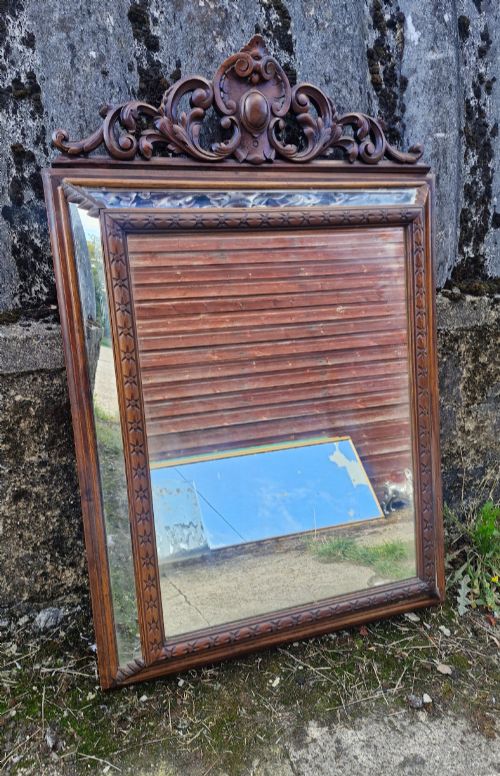
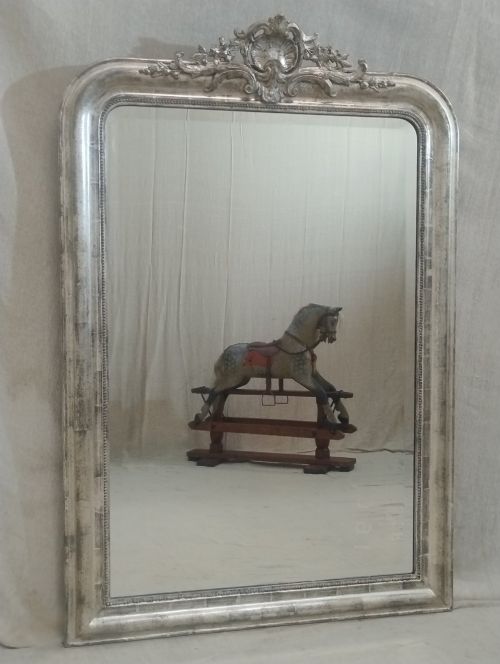
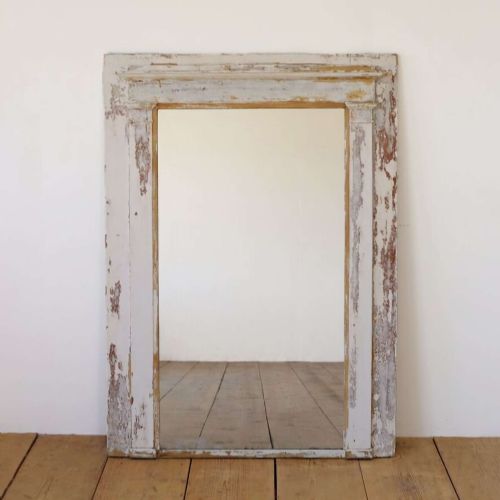
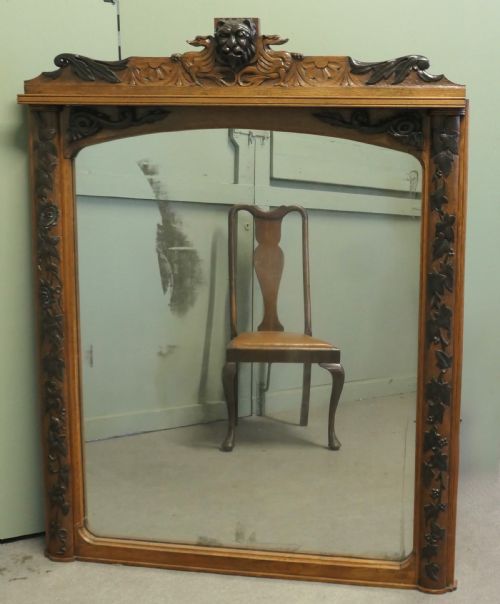
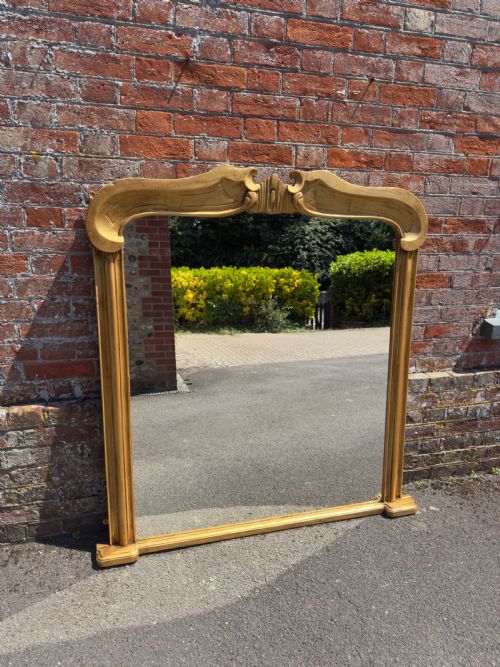
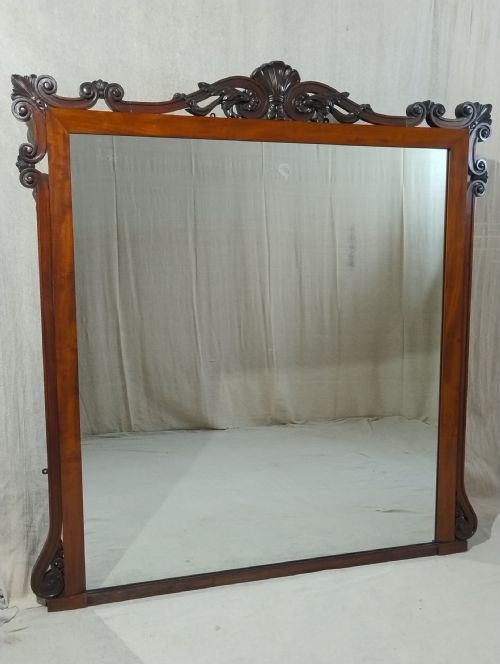
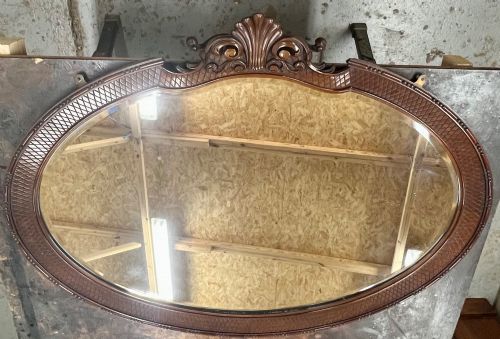
A large wooden mantle mirror is primarily encountered as an overmantel mirror designed to sit directly above a hearth, though wall-hanging formats also appear. These pieces span the Victorian period through to the early twentieth century, incorporating styles from Neoclassical and Regency to Arts and Crafts and Henri II.
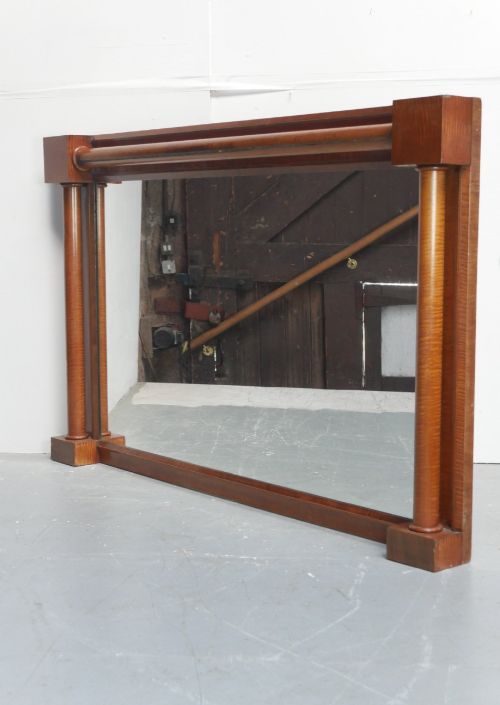
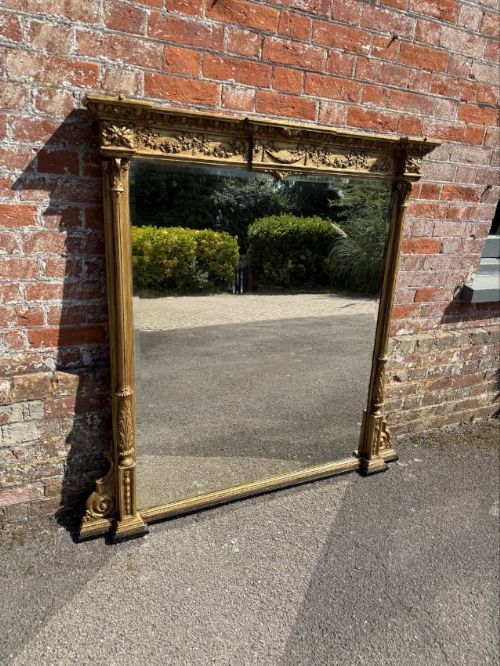
Makers constructed these frames in robust timbers such as oak, mahogany, walnut, and birds eye maple, frequently applying gesso, paint, parcel gilt, or ebonisation. Overmantel formats often feature architectural elements like columns, arched tops, or shaped crests suited to nineteenth-century domestic interiors.
How they were made
Carpenters joined substantial timber frames using traditional joinery, shaping woods like oak, walnut, and mahogany into rectilinear or arched formats. Carved details were often shaped directly into the solid wood or built up using gesso applied to a wooden base.
Surfaces received various finishes including gold leaf gilding, paint layers, ebonisation, or clear polish to reveal the grain of burr walnut and birds eye maple. Mirror glass was then set into the rebate and secured from the rear.
Large Wooden Mantle Mirror Retail Price Guide 2026
Typical asking prices for large wooden mantle mirror among the pieces listed under this phrase on Sellingantiques today, from the lower quarter to the upper quarter. They describe what is for sale here now, not the wider market.
Listings feature nineteenth-century oak, walnut, and mahogany overmantel mirrors alongside painted, gilded, and ebonised variations.
What varies in quality
Quality rests in the depth and crispness of the wood carving and the selection of timber veneers such as burr walnut or birds eye maple. Hand-carved mouldings and applied gesso ornamentation show greater proficiency in workshop execution than simpler moulded stock.
The integration of the frame's architectural proportions and the preservation of original finishes, whether giltwood, paint, or scrubbed oak, determine the integrity of the piece. Substantial framing timbers and well-executed joinery separate standard production from superior examples.
The Large Wooden Mantle Mirror Glossary
- Overmantel mirror
- A large mirror specifically designed or scaled to be hung or placed upon the mantelpiece above a fireplace. These frequently incorporate architectural framing to suit domestic hearths.
- Gesso
- A plaster-like mixture applied to wood frames to provide a smooth surface for gilding or intricate low-relief moulding. It allows for sharp decorative details that timber alone cannot easily yield.
- Parcel gilt
- A finishing technique where portions of an object are highlighted with gold leaf while other areas show the underlying wood or paint. This creates contrast across carved wooden mouldings.
- Ebonisation
- The process of treating timber, commonly fruitwood or hardwoods, to imitate true ebony. It produces a deep black surface often paired with gilt highlights on nineteenth-century frames.
- Cushion mirror
- A frame profile characterised by a broad, rounded, convex sweep resembling a cushion. This style appears frequently in nineteenth-century continental furniture forms.
Large Wooden Mantle Mirror: Frequently Asked Questions
Where should a large wooden mantle mirror hang?
These pieces are traditionally proportioned to sit on the mantle shelf or mount directly to the wall above a fireplace. Their substantial size allows them to reflect light and anchor the surrounding room.
They also function effectively on principal walls in reception rooms where a heavy timber or gilt frame can establish a focal point.
How do I identify a Victorian mantle mirror?
Victorian examples frequently combine dense hardwoods like mahogany or oak with gilt gesso ornament, architectural arches, or turned columns. The periods span the nineteenth century, showing shifts from heavy classical revivals to later arts and crafts influences.
Construction details on the reverse and the weight of the timber frame generally point to nineteenth-century workshop practices.
What is the difference between an overmantel and a wall mirror?
Overmantel mirrors are specifically scaled in width and height to correspond with nineteenth-century fireplace mantels, often featuring horizontal proportions or arched tops designed for that setting. Standard wall mirrors may follow vertical or oval formats intended for general room placement.
Many listings record overmantel pieces used interchangeably as large wall mirrors depending on interior proportions.