

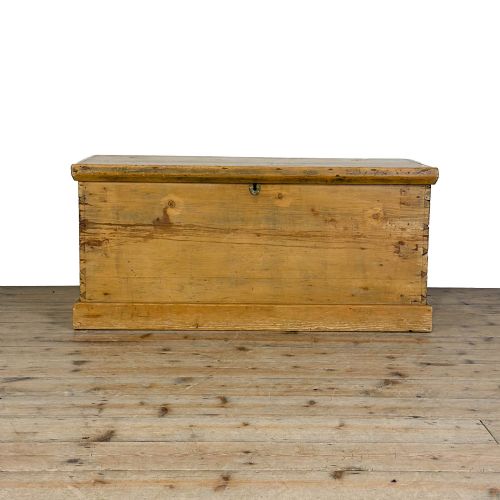
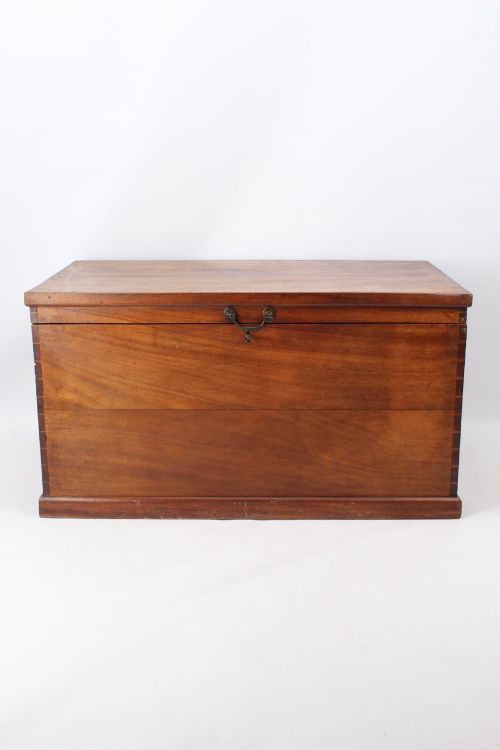
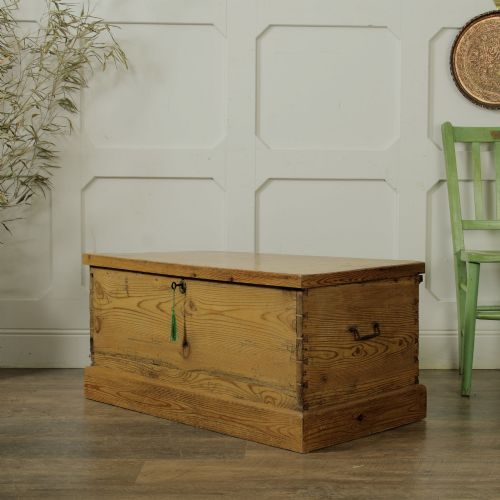
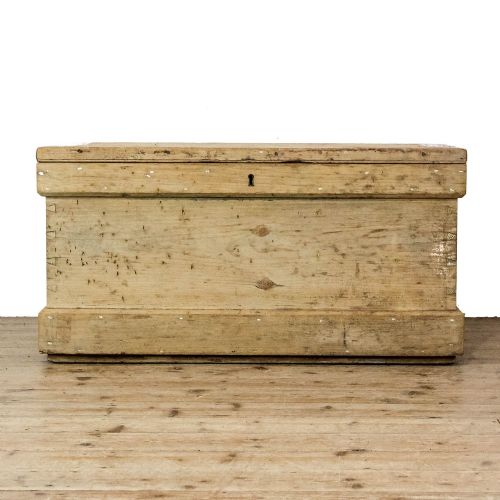
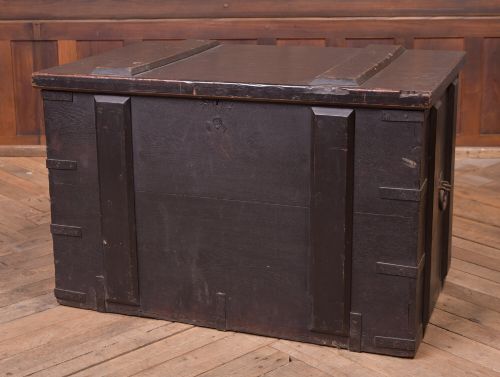
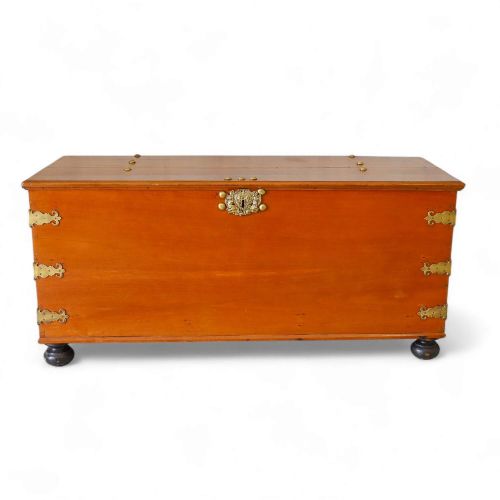
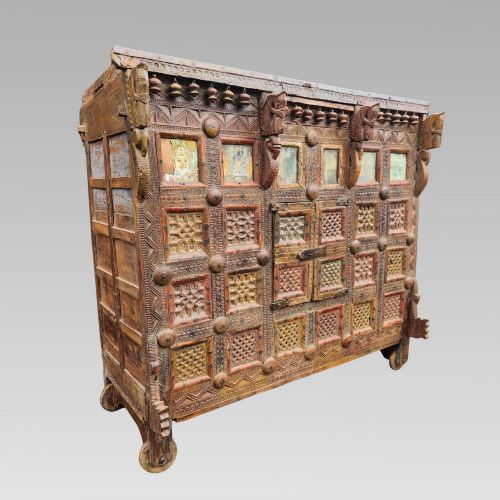
Large Wooden Blanket Box
A large wooden blanket box is a capacious utility chest built to store textiles, combining rugged timber construction with domestic service.
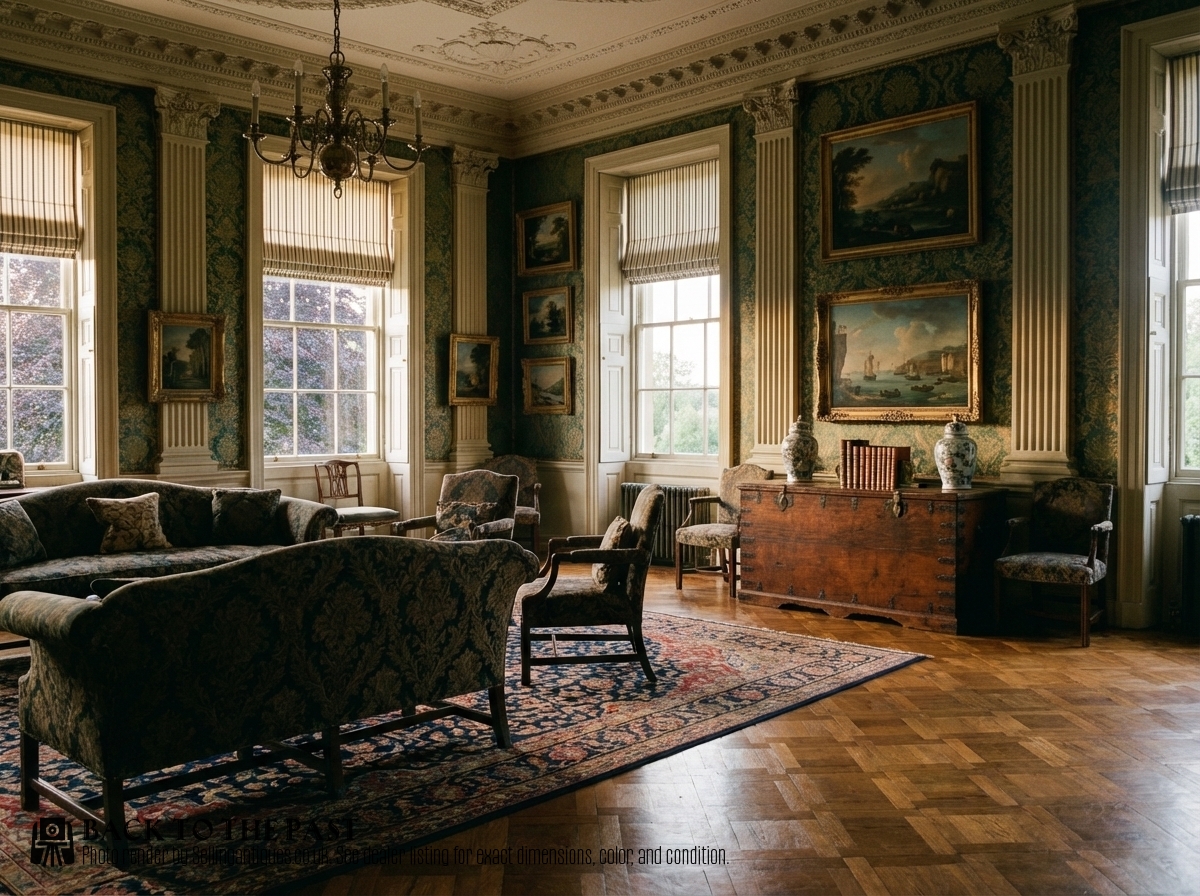
Large Wooden Blanket Box
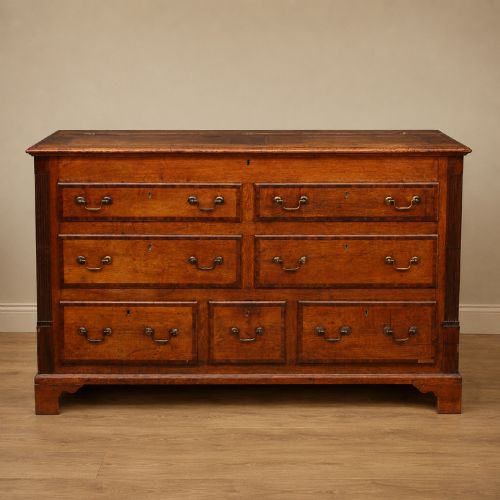
A large wooden blanket box serves as a robust storage container designed to protect textiles and household goods from dust and damp. When exploring a selection of large wooden blanket boxes, buyers encounter forms ranging from rustic utility trunks to fitted mule chests with internal drawers.
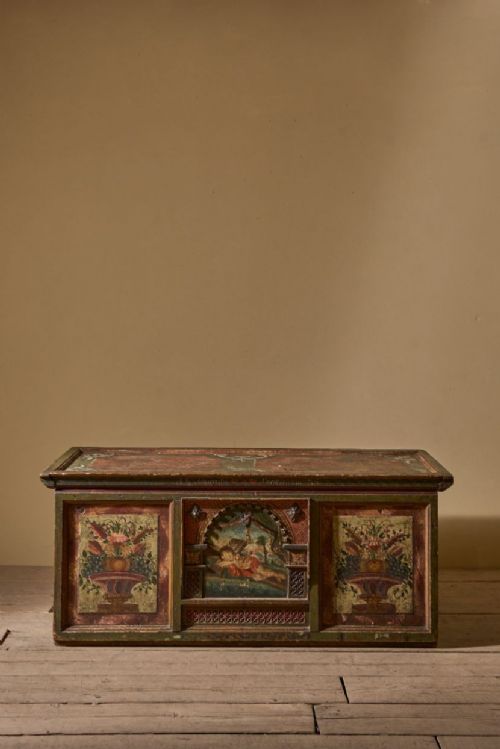
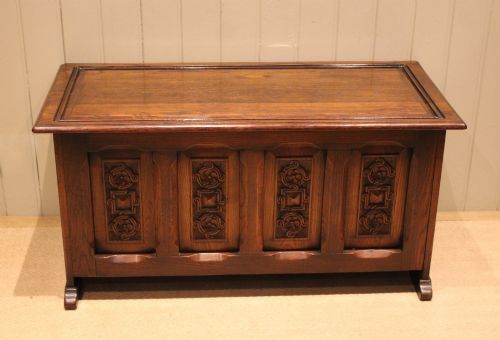
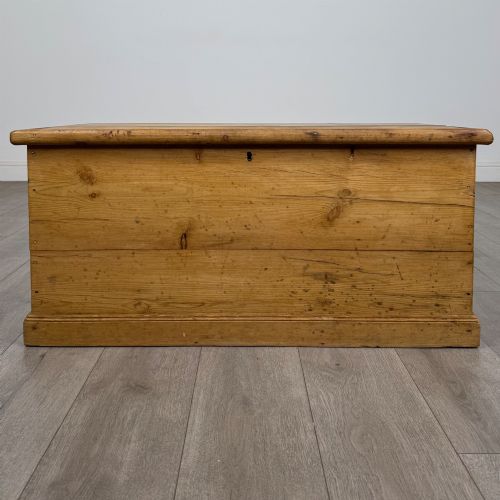
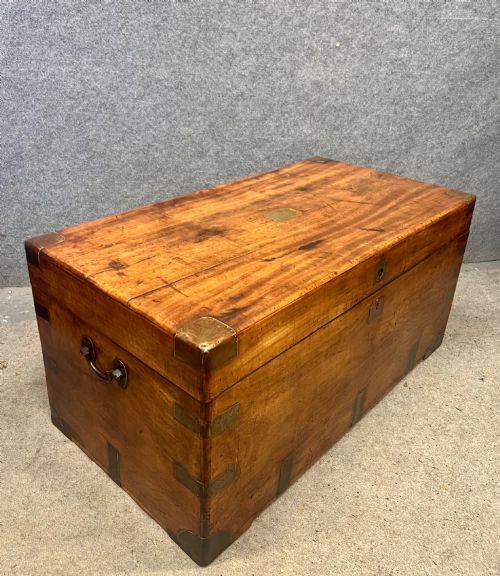
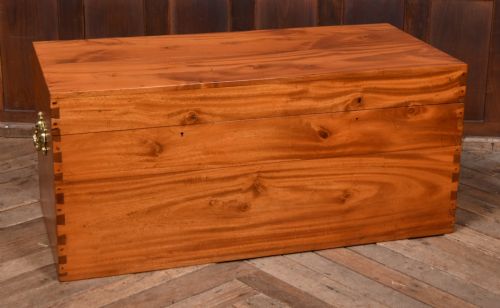
The pieces available span multiple centuries, from seventeenth-century joined oak coffers to Victorian pitch pine trunks and nineteenth-century colonial camphor wood chests. Regional variations appear frequently, including Dutch, Hungarian, and Indian constructions alongside traditional British pieces.
Materials and construction methods
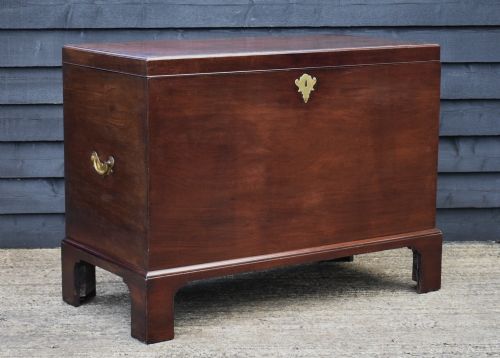
Carpenters relied on sturdy timbers such as oak, pine, mahogany, teak, and camphor wood to build these heavy storage vessels. Dense hardwoods provided structural resilience for travel and daily service, while softer conifers like pine accommodated simpler domestic utility chests.
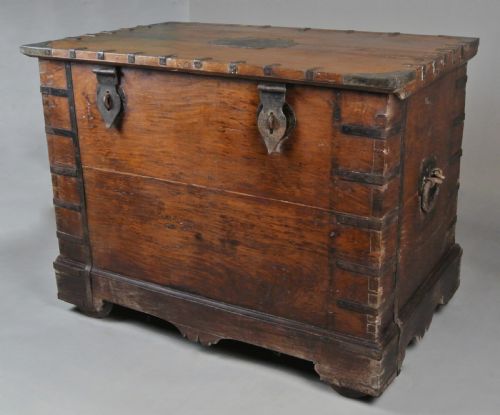
Hardware played a functional role in reinforcement and transport, incorporating forged iron straps, corner braces, and brass binding. Makers also applied surface treatments including wax finishes, decorative carving, crossbanding, and oil paint.
Several chests still whisper of distant ports through the lingering, aromatic trace of camphor wood.
Judging quality and craftsmanship
Quality rests upon the integrity of the timber selection and the joinery methods employed by the original maker. Early joined oak coffers display intricate hand-carved panels and tight peg construction, whereas later utility trunks utilise simpler board assembly.
The preservation of original hardware, such as brass binding and iron hinges, elevates the standing of a piece. Interior fittings like compartmented tills and internal drawers also distinguish bespoke travelling chests and mule chests from basic storage boxes.
The Large Wooden Blanket Box Glossary
- Coffer
- A heavy wooden chest traditionally used for storing valuables or household goods. These early forms often feature panelled construction and hand-carved details.
- Mule chest
- A storage chest fitted with one or more drawers at the base beneath the main compartment. This form bridges the gap between a traditional coffer and a chest of drawers.
- Crossbanding
- A decorative border technique where thin strips of veneer are laid across the grain of the primary wood. This detail appears on finer Georgian furniture.
- Campaign
- Describing portable furniture designed for travel, typically fitted with recessed brass handles and reinforced corners. These pieces were built for military officers and colonial administrators.
- Camphor wood
- An aromatic hardwood utilised for chests due to its natural insect-repellent properties. It is frequently associated with colonial trade and maritime transport.
Large Wooden Blanket Box: Frequently Asked Questions
What were large wooden blanket boxes used for?
These large chests served primarily to store heavy woolen blankets, linens, and garments away from dust and moths. Households relied on them as secure, portable repositories for valuable textiles before fitted wardrobes became common.
They also functioned as seating benches, tables, or travelling luggage depending on their size and sturdy construction. Military and colonial variants were specifically reinforced for long journeys across land and sea.
How do I care for a wooden blanket box?
Maintenance involves keeping the timber away from direct heat sources and extreme humidity fluctuations to prevent splitting. Periodic application of a traditional beeswax polish helps nourish the wood surface and preserve its patina.
Internal spaces should be kept clean and dry, particularly when storing textiles for long periods. Avoid harsh chemical cleaners that can strip historic finishes and wax layers.
What is the difference between a coffer and a trunk?
A coffer generally refers to a heavy, joined wooden box of earlier centuries, often constructed with frame-and-panel techniques and decorative carving. They were primary items of permanent household furniture.
A trunk typically implies a piece built with travel or transport in mind, frequently reinforced with iron or brass binding and carrying handles. Trunks span various periods from utility pine carpenter chests to brass-bound camphor wood travelling cases.