
Large Victorian Oil Painting
A large victorian oil painting brings scale and narrative depth to a room through ambitious nineteenth-century canvas works.
Large Victorian Oil Painting
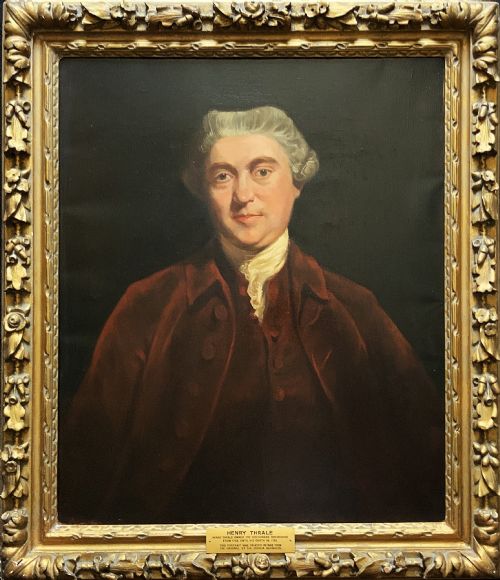
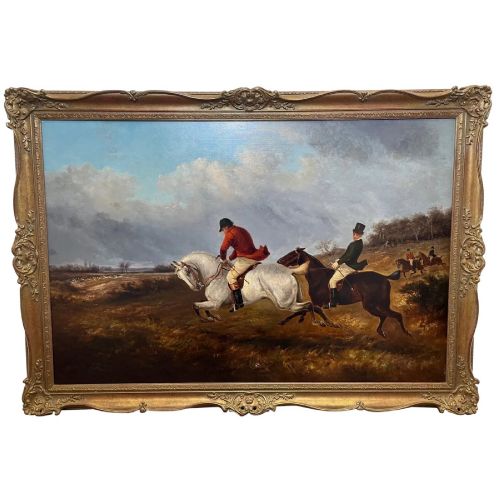
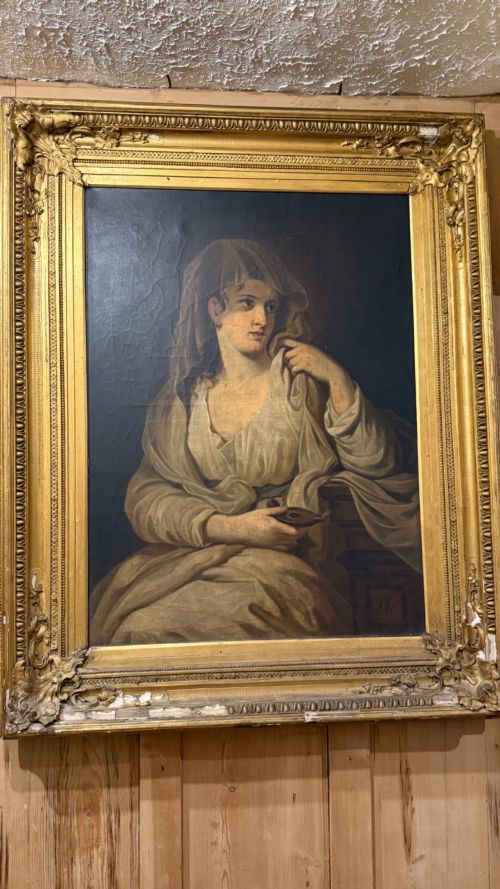
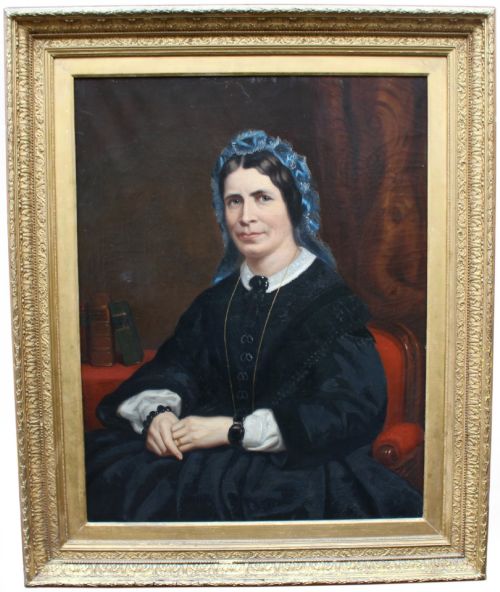
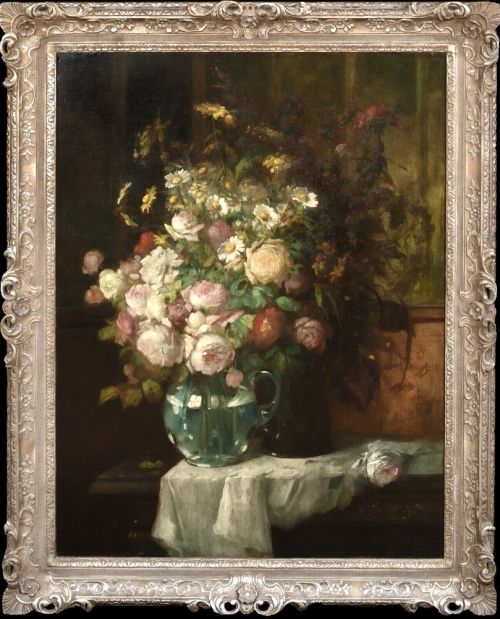
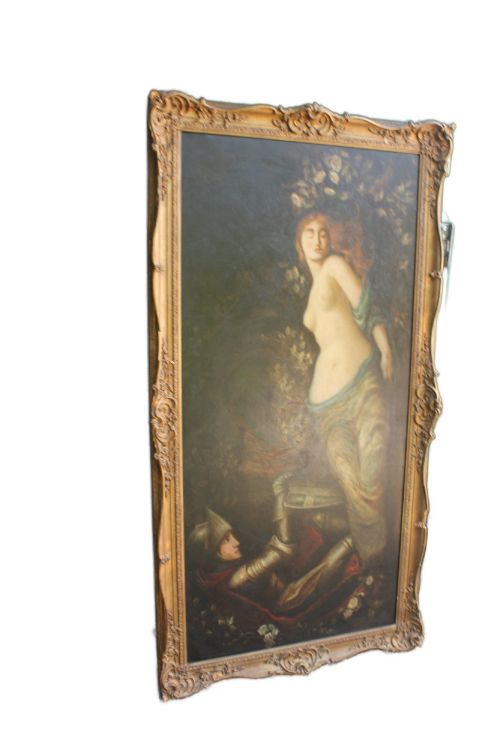
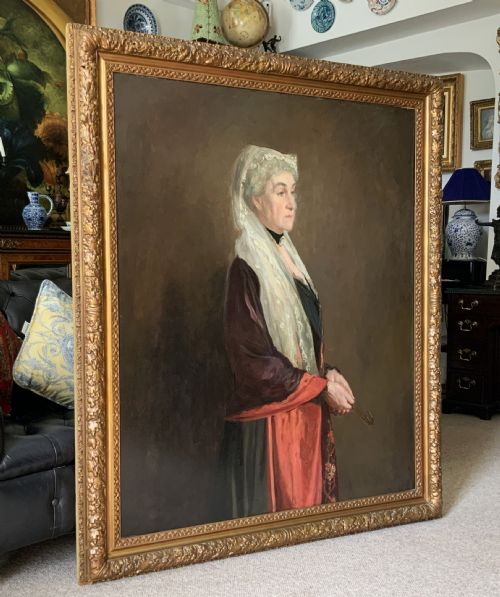
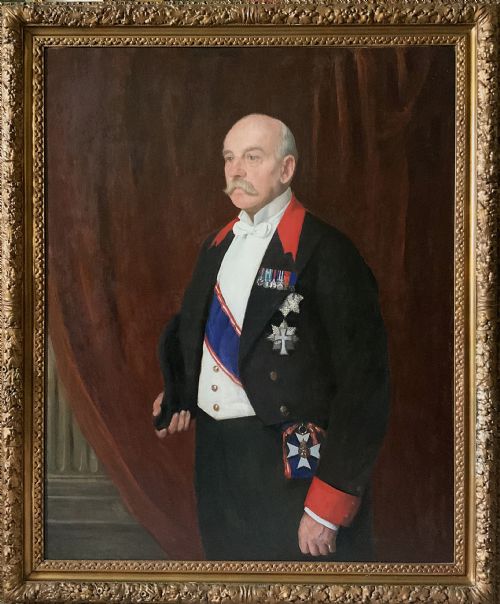
When buyers search for a large victorian oil painting, they encounter monumental canvases spanning pastoral landscapes, maritime scenes, and formal portraiture created during the nineteenth century. These substantial works often measure several feet across, designed to dominate the principal reception rooms of period properties.
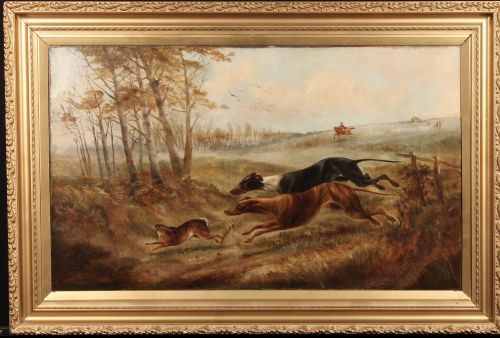
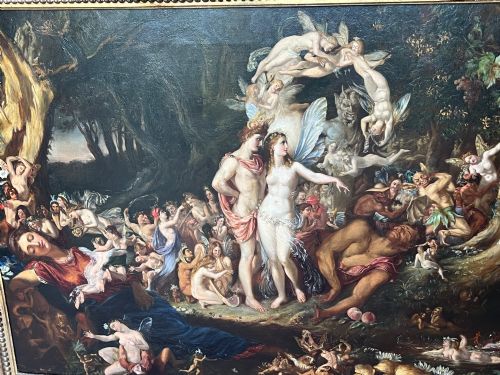
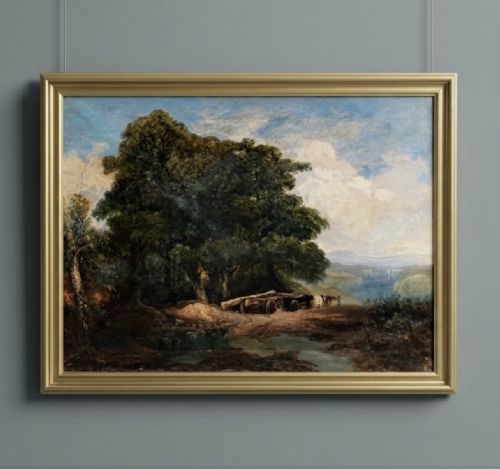
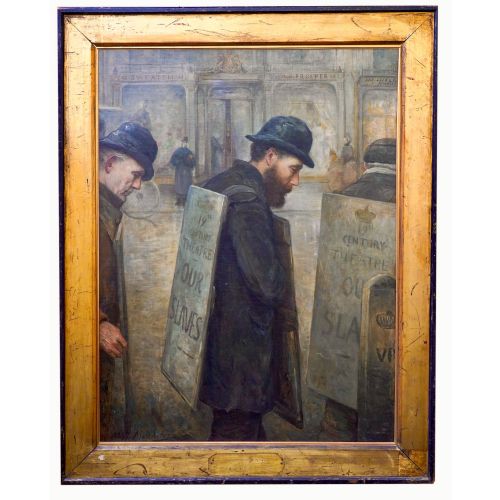
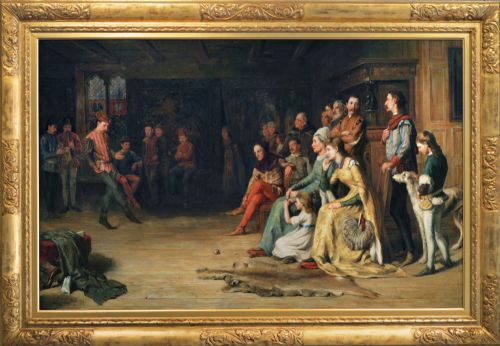
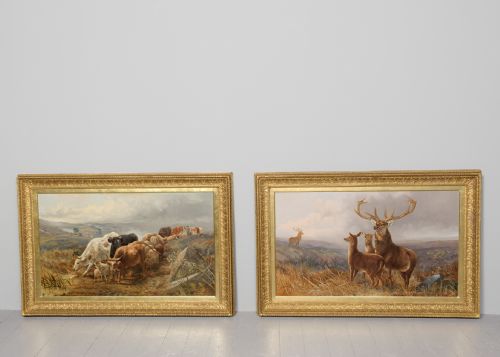
The versions met most frequently on this page include rural landscapes depicting sheep or cattle, fox hunting scenes, and detailed historical genre pieces. Many originate from British and European artists working within Victorian realism and romanticism traditions.
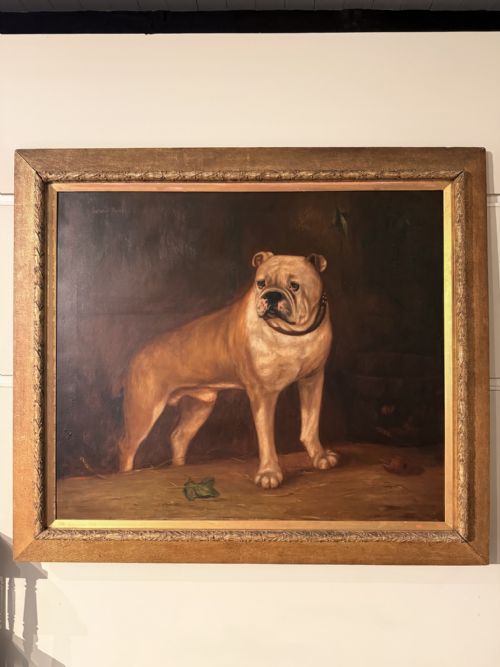
Framing is integral to these large formats, with many examples housed in their original heavy giltwood and gesso frames. The combination of ambitious canvas size and ornate period surrounds defines the visual weight of these artworks.
Materials and Construction
Makers applied oil paint to tightly woven linen canvas stretched over sturdy wooden frames, often reinforced with corner keys to maintain tension over large expanses. Pigments were layered to achieve depth in atmospheric skies, dark foliage, and fabric textures.
Heavy frames surrounding the canvases were constructed from carved wood and moulded gesso, then finished with layers of gold leaf or gilding. These robust surrounds were engineered to support the considerable weight of expansive Victorian canvases.
Several canvases depict dogs staring intently at pipe-smoking woodcutters, proving Victorians loved pets in art just as much as we do.
Evaluating Quality
Superior examples display confident brushwork, precise anatomical rendering in figures and animals, and sophisticated handling of natural light. Weaker works often show stiffness in composition and hurried execution in background details.
The integrity of the original support matters greatly, distinguishing untouched canvases from those with extensive relining and heavy overpainting. Original matching gilt frames significantly elevate the cohesion and desirability of the piece.
Sir Joseph Noel Paton·Richard Sebastian Bond·Felix Stone Moscheles·Thomas Smythe·Konstantin Stoitzner·James Hamilton·Robert Cleminson·Alexandre Le Bihan·William Henry Mander·Thomas Sidney Cooper·Thomas Bromley Blacklock·William Sydney Cooper·George Armfield·Charles Vickers·William Mellor·Louis William Desanges·John Wright Oakes·Joseph Farquharson·Tom Seymour·Sidney Yates Johnson·Walter Jackson·William Perring Hollyer·Thomas Kent Pelham·Henry W Henley·Charles H Passey
The Large Victorian Oil Painting Glossary
- Gesso
- A plaster-like mixture applied to wooden picture frames before gilding. This material was moulded or carved to create intricate ornamental relief patterns.
- Giltwood
- Wood that has been coated with a thin layer of gold leaf or gold paint. It forms the shimmering border characteristic of nineteenth-century display frames.
- Genre painting
- Artwork depicting scenes from everyday life, historical events, or literary narratives. These domestic and dramatic subjects were immensely popular during the Victorian era.
- Relining
- A conservation process where a deteriorated original canvas is adhered to a fresh backing fabric for structural support. This stabilises heavy nineteenth-century works against sagging.
Large Victorian Oil Painting: Frequently Asked Questions
How do I hang a heavy nineteenth-century canvas safely?
Large framed canvases require professional picture hanging fixings secured directly into wall studs or masonry rather than standard plasterboard hooks. The substantial weight of wood and gesso frames demands robust weight-bearing support to prevent structural damage.
Ensure the hanging wire or heavy-duty D-rings on the reverse match the total weight of the artwork. Distributing the load across two separate mounting points also keeps the large frame level.
What lighting suits a large nineteenth-century oil painting?
Position these substantial artworks away from direct, harsh sunlight to prevent pigment degradation and canvas warping over time. Warm, diffused picture lights mounted above the frame highlight the brushwork without creating excessive glare on the varnished surface.
Allow adequate wall space around the canvas so the ornate gilt frame breathes within the room. Proper clearance enhances the visual impact of expansive pastoral and historical scenes.
How do I identify a Victorian landscape from an Edwardian one?
Victorian landscape paintings typically feature dramatic romanticism, heavier impasto, and narrative human or animal elements within the scenery. Edwardian works often lean towards impressionistic brushwork and lighter, brighter colour palettes.
Examining the canvas texture, stretcher construction, and style of the signature often helps narrow down the decade. Period framing styles also provide strong contextual clues regarding the date of creation.
How should I clean a historic oil painting surface?
Dust accumulated on the canvas and ornate frame should be removed gently using a soft, dry brush or feather duster. Avoid using water, household cleaners, or damp cloths on the painted surface, as moisture can damage aged oil pigments and underlying gesso.
Professional conservators should handle deeper cleaning or removal of yellowed varnish layers. Amateur attempts at cleaning risk removing original glazes applied by the artist.