




Antique Floral Portrait Painting
These antique floral portrait painting examples bring together portraiture and botanical detail across oil, watercolour, and painted satinwood.
Antique Floral Portrait Painting
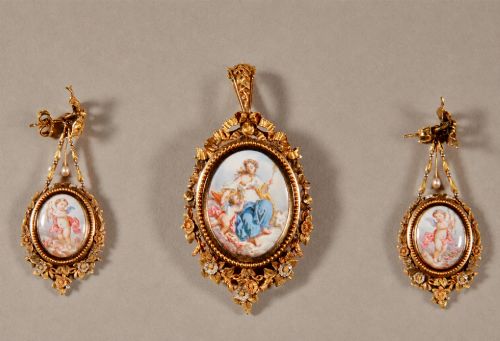
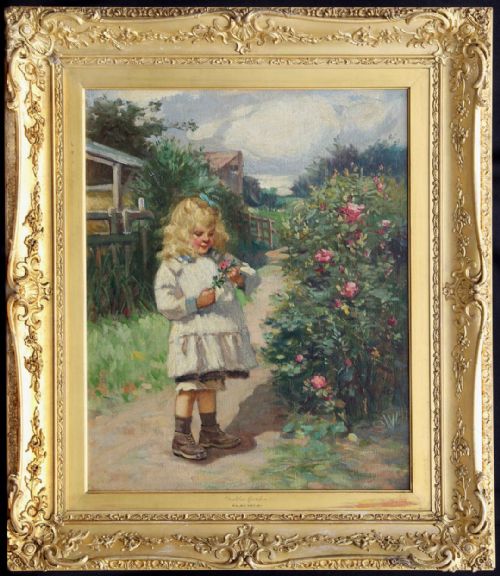
When you search for antique floral portrait painting, you encounter works spanning the nineteenth century, including Victorian and Edwardian examples. These pieces range from framed watercolours and gouache on paper to oil paintings on canvas and painted wooden objects.
The subjects typically feature young ladies with flowers, family groups, and women depicted with botanical elements such as irises or floral garlands. Alongside traditional framed canvases, the selection includes decorated occasional tables, work boxes, and reverse glass paintings.
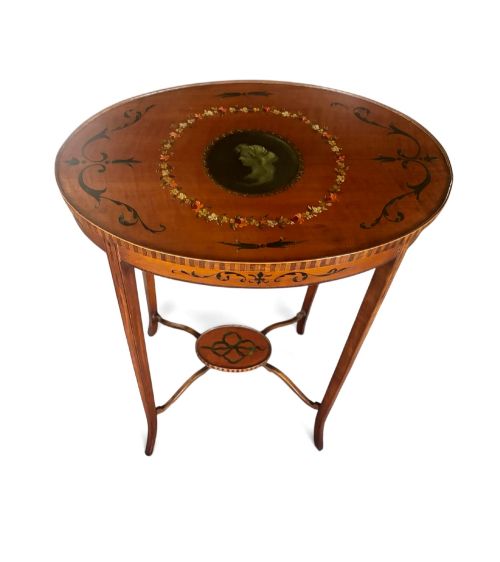
Victorian genre paintings and Edwardian satinwood items dominate the physical forms seen here. You also find Georgian style mirrors and occasional pieces that incorporate floral decoration into their surfaces.
How they were made
Painters utilised oil paint on canvas and applied watercolour and gouache to paper for the framed portrait works. Reverse glass painting techniques also appear in the archive, requiring meticulous application behind protective glass panels.
Cabinet makers constructed support pieces in satinwood and walnut, frequently incorporating hand-painted floral decoration directly onto the wood. Giltwood frames complement the oil paintings and paper works, while inlay techniques enrich the surfaces of functional items like work boxes.
Antique Floral Portrait Painting Retail Price Guide 2026
Typical asking prices for floral portrait painting among the pieces listed under this phrase on Sellingantiques today, from the lower quarter to the upper quarter. They describe what is for sale here now, not the wider market.
Materials in these listings include satinwood, oil paint, canvas, wood, giltwood, and paper across the Victorian and Edwardian periods.
What varies in quality
The nuance of expression in the subject's face and the precision of the botanical rendering distinguish finer examples from simpler vernacular pieces. Masterly handling of oil or watercolour brings depth to the portraiture and realism to the flowers.
The integration of painting and support material influences the overall standing of an item. Finely figured satinwood tables and intricate inlaid work boxes demonstrate superior craftsmanship alongside the painted panels.
Alice Anne Renshaw·Jane Maria Bowkett·Ralph Hedley RBA
The Antique Floral Portrait Painting Glossary
- Gouache
- An opaque water-based medium that provides flat, dense colour fields and precise detail in works on paper. It often appears alongside watercolour in nineteenth-century portraits.
- Reverse glass painting
- A technique where the artist paints directly onto the reverse side of a glass sheet, creating a glossy finish when viewed from the front.
- Satinwood
- A hard, yellowish timber with a lustrous sheen, highly favored by Edwardian makers for occasional tables and decorative furniture.
- Genre painting
- A style depicting scenes from everyday life involving ordinary people, frequently populated by figures with flowers or in domestic settings.
- Giltwood
- Wood that has been coated with gold leaf or a gold-colored finish, commonly used for traditional picture frames and decorative mirrors.
Antique Floral Portrait Painting: Frequently Asked Questions
What periods do these pieces come from?
The available selection spans the nineteenth and early twentieth centuries, encompassing Victorian and Edwardian eras. Pieces date from the early eighteen hundreds up to nineteen hundred.
You will encounter styles ranging from Victorian folk art and genre painting to Edwardian satinwood furniture and Georgian style mirrors.
Are all these items canvas paintings?
While oil paint on canvas forms a significant portion of the portraits, the category includes diverse material formats. Works on paper feature framed watercolour and gouache.
Beyond flat art, the selection extends to three-dimensional objects like painted satinwood occasional tables, inlaid work boxes, and reverse glass paintings.
How should I care for antique painted surfaces?
Painted wooden surfaces and oil paintings require stable indoor humidity away from direct sunlight. Dust gently with a dry, soft cloth without applying liquid cleaners.
Works on paper demand protection behind glass and conservation framing to prevent fading from light exposure over time.
What subjects appear in these portraits?
Subjects predominantly feature women and girls depicted alongside flowers, such as ladies with irises or floral garlands. Family groups and domestic genre scenes also appear within the selection.
Botanical elements integrate closely with the human subject, whether painted on canvas, paper, or the surface of occasional furniture.