
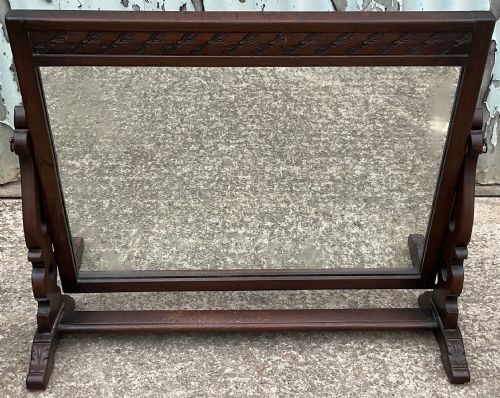


Large Victorian Dressing Glass
A large victorian dressing glass anchors a room with reflecting glass and substantial timber frames.
Large Victorian Dressing Glass
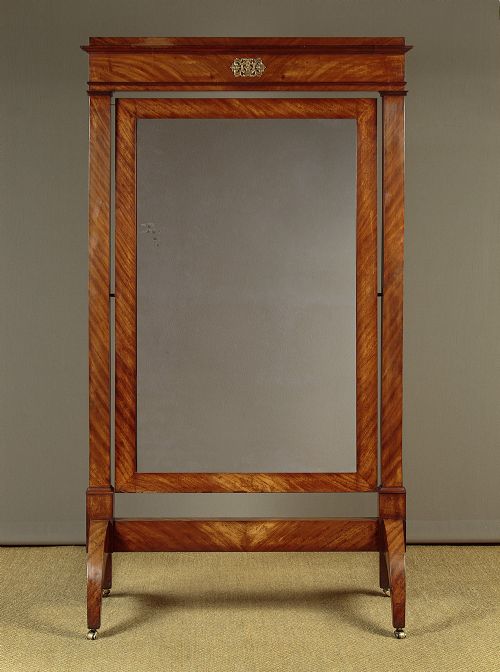
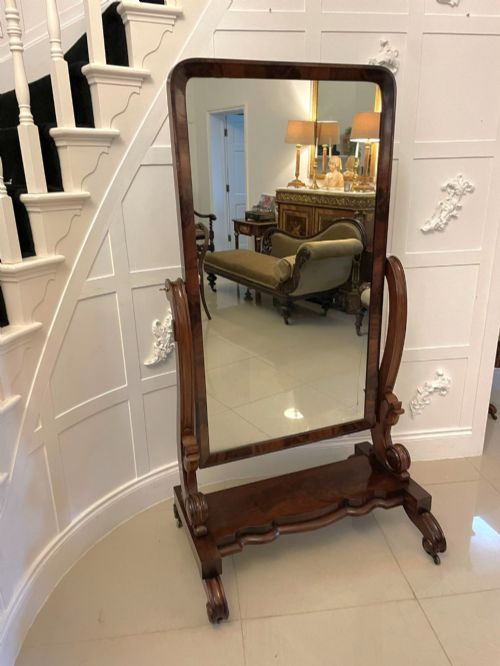
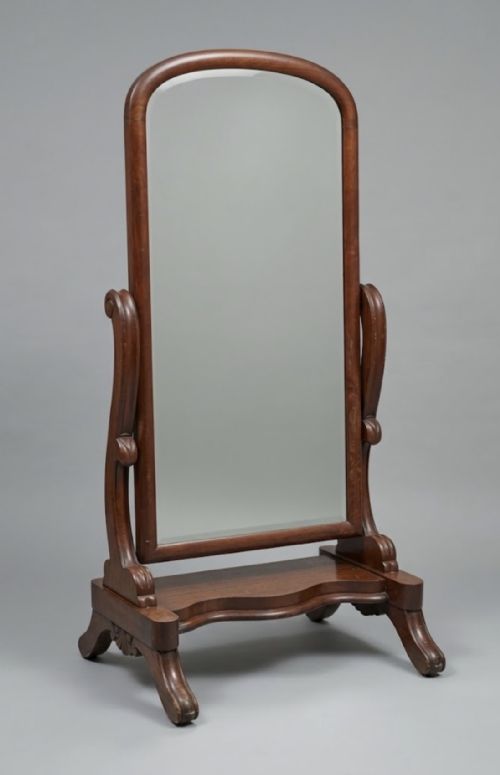
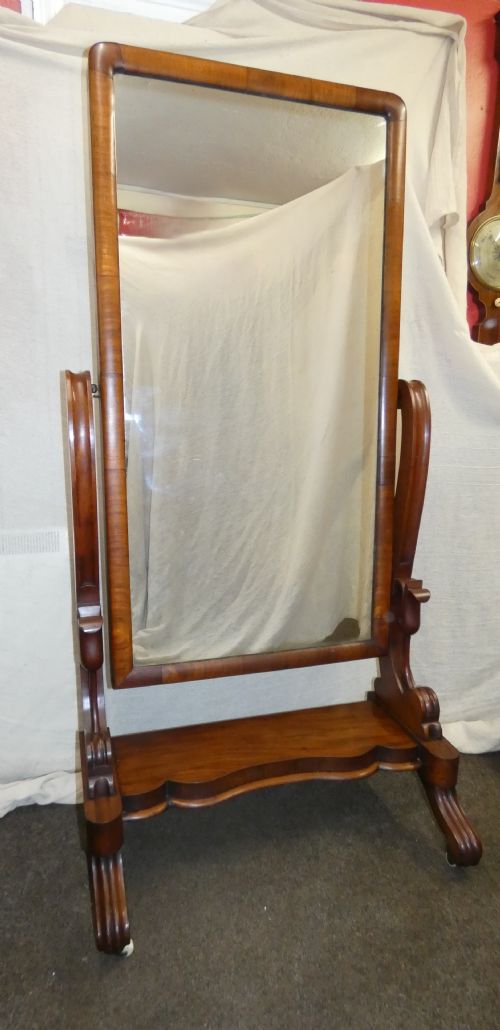
A large victorian dressing glass functions as a substantial pivoting mirror designed for full reflection during personal grooming and daily attire checks. These objects appear primarily as freestanding cheval mirrors mounted on pivoting side frames, alongside tabletop dressing and swing mirrors supported by sturdy wooden bases.
The prevailing form throughout these selections is mahogany, complemented by oak and pitch pine, often housing heavy mirror glass within arched or shaped tops. Examples span periods from the nineteenth century into later decades, encompassing revival styles such as Italian and French rococo alongside regency influences.
How they were made
Cabinet makers constructed the foundational frames using solid mahogany, oak, and pitch pine, shaping heavy timbers to support pivoting mirror plates. Joinery relied on traditional framing techniques to ensure stability across tall floor standing and tabletop formats.
Decorative surface treatments incorporate carved giltwood, gesso, and gold leaf, applying intricate ornamentation to arched tops and crestings. Brass hardware frequently secures the adjustable swing mechanisms, while silver and gold paste elements appear on related dressing items.
The selection includes Italian and French rococo revival styles alongside regency and arts and crafts forms.
What varies in quality
The refinement of carved wood and gesso ornamentation dictates the visual distinction between standard production and exceptional craftsmanship. Deeply carved foliage, balanced proportions, and sculptural giltwood detailing signal superior workshop execution.
Structural integrity rests upon the weight and density of the timber frame, alongside the quality of the original mirror glass and the precision of the brass pivot mechanism. Well-balanced floor standing cheval mirrors maintain smooth movement without sagging or straining the supporting uprights.
William Comyns
The Large Victorian Dressing Glass Glossary
- Cheval mirror
- A large freestanding floor mirror supported on four legs and a frame that allows the glass to swing. This form provides a full-length reflection.
- Swing mirror
- A glass plate mounted on vertical pivots between two upright posts, allowing the angle of reflection to adjust. These sit upon dressing tables or heavier floor bases.
- Gesso
- A plaster-based mixture applied to wood frames to create a smooth surface for gilding or painting. It accepts deep relief carving and gold leaf application.
- Giltwood
- Timber coated with gold leaf or gold paint to produce a brilliant decorative surface. It characterises ornate nineteenth-century revival frames.
- Overmantel
- A large mirror designed to hang directly above a fireplace mantelpiece. These share architectural detailing with large dressing glasses.
Large Victorian Dressing Glass: Frequently Asked Questions
Where should a large victorian dressing glass go?
Floor standing cheval mirrors suit bedrooms and dressing rooms where full-length reflection is necessary for daily attire. Placing them near natural light sources helps illuminate the glass surface.
Tabletop swing mirrors sit comfortably atop large dressing chests or marble-topped console surfaces. Ensure the supporting furniture is deep and sturdy enough to bear the weight of the frame.
How do cheval mirrors adjust?
Cheval mirrors utilise brass side pivots mounted midway up the vertical upright posts. Tightening or loosening these metal screws allows the heavy frame to tilt smoothly to the desired angle.
Properly adjusted pivots hold the glass securely in place without slipping forward or backward. Regular gentle care keeps the metal threads operating correctly.
What timber was used most?
Mahogany dominates the framing materials across these nineteenth-century pieces, prized for its strength and rich grain. Oak and pitch pine also appear frequently in heavy floor standing designs.
Cabinet makers selected these dense hardwoods to support the substantial weight of large swinging mirror glass safely. The timber was often polished to a deep dark sheen.
How do I identify a revival style?
Revival styles draw heavily upon earlier historic decorative motifs, particularly French and Italian rococo ornament. Look for asymmetric scrolls, shell carvings, and lavish giltwood application on the cresting.
These elaborate flourishes contrast with cleaner regency lines or simpler nineteenth-century utility pieces. The presence of gesso and gold leaf usually indicates a grander decorative intention.