
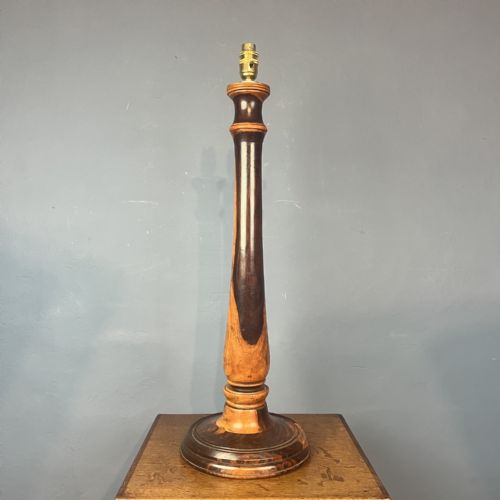


Large Victorian Candlesticks
When you want genuine presence on a dining table or sideboard, large Victorian candlesticks provide substantial weight and architectural form.
Large Victorian Candlesticks
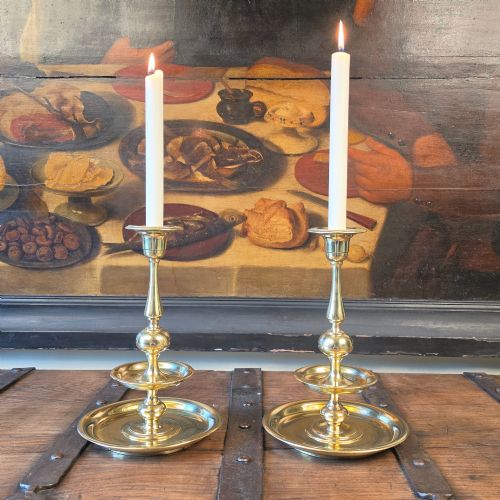
Large Victorian candlesticks dominate a room with their height, robust construction, and decorative ambitions. When searching for large Victorian candlesticks, buyers most frequently encounter heavy brass pairs designed for domestic hearths or ecclesiastical settings.
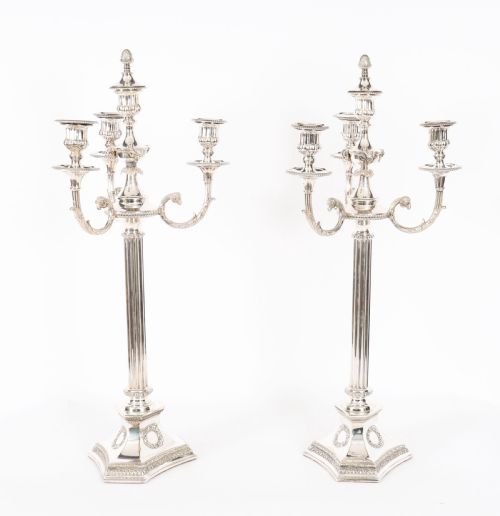
The category extends beyond simple domestic holders to encompass multi-branch candelabra, altar pieces with central spikes, and tall floor-standing examples. Many of these sturdy pieces reflect revivalist tastes, drawing inspiration from Gothic, neoclassical, and rococo precedents.
Makers utilised durable metals and mixed media, meaning pairs often survive with their original proportions intact. Whether cast in solid brass or plated in silver on copper, these objects retain their utility for interior lighting displays.
Materials and construction methods
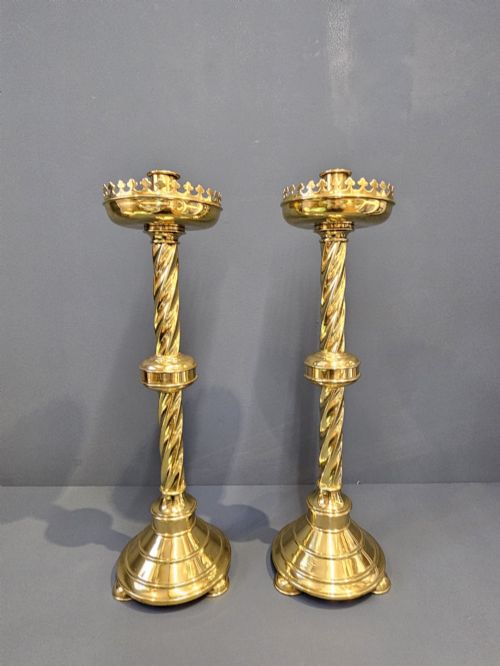
Foundry workers shaped the majority of these pieces using cast and turned brass, assembling hollow components around weighted bases for stability. Silver plating on copper or Britannia metal also appears frequently, providing a bright reflective surface that required careful maintenance.
Makers incorporated specialist decorative details such as cloisonne enamel, gilt bronze, and applied glass inserts to enrich the metal frameworks. Heavier ecclesiastical items utilised iron and thick turned timbers like oak or lignum vitae alongside the predominant brass elements.
Listings demonstrate that brass remains the dominant material for large Victorian candlesticks, followed by silver plate and bronze.
Assessing craftsmanship and condition
Quality reveals itself in the crispness of the casting and the depth of the chased surface enrichment. Superior examples display clean joints, substantial weight, and well-defined architectural details such as fluted columns or acanthus leaf capitals.
The integrity of the original components matters significantly, particularly on multi-branch candelabra where detachable sconces and screw threads must align properly. Lesser items show softened surface relief from worn moulds or poorly executed modern repairs to bent stems.
Elkington·Palmer & Co·Sitzendorf
The Large Victorian Candlesticks Glossary
- Pricket
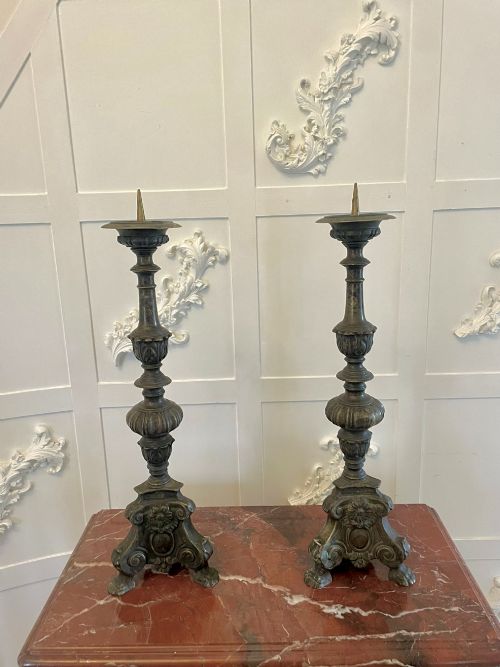
- A sharp metal spike set in the drip pan to secure a thick church candle. This form derives from medieval ecclesiastical traditions.
- Sconce
- The detachable cup at the top of a candlestick that catches melting wax. These small elements frequently go missing over time.
- Candelabra
- A branched lighting fixture holding multiple candles from a single stem. They often feature removable upper branches to convert into simple sticks.
- Ormolu
- Finely ground high-carat gold applied to a bronze base using mercury amalgamation. This technique creates a rich matte and bright golden finish.
- Corinthian column
- A classical architectural order featuring ornate capitals decorated with acanthus leaves. Makers frequently adopted this column style for tall brass and silver-plated shafts.
Large Victorian Candlesticks: Frequently Asked Questions
Why do some church candlesticks have a sharp spike?
Those sharp spikes are called prickets, and they were designed to impale large beeswax candles used in ecclesiastical ceremonies before the invention of fitted sockets.
While church prickets originated for liturgical use, domestic buyers often repurpose them today for thick pillar candles displayed on sideboards and heavy mantels.
How can I tell if silver plated candlesticks are old?
Look closely at the high-wear areas around the base rims and candle nozzles to see if the underlying yellowish copper or brass base metal shows through the silver layer.
Early Victorian Sheffield plated items were fused by heating silver sheet to a copper ingot, whereas later electroplating produced a more uniform but sometimes thinner metallic coating.
Can these large candlesticks be safely converted to electric lamps?
Many surviving examples have indeed been converted to electric table lamps by running internal wiring down the centre shaft, a practice seen frequently in historical interiors.
When buying a converted piece, check whether the historic structure was drilled or altered during the electrical installation, as original un-drilled states generally appeal more to traditional collectors.