


Large Turkish Area Rug
A large turkish area rug anchors a room with historic scale, grounding the floor with woven wool and intricate regional motifs.

Large Turkish Area Rug
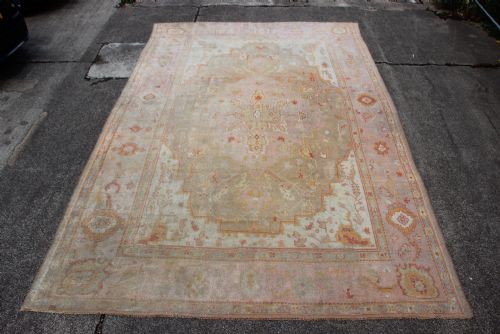
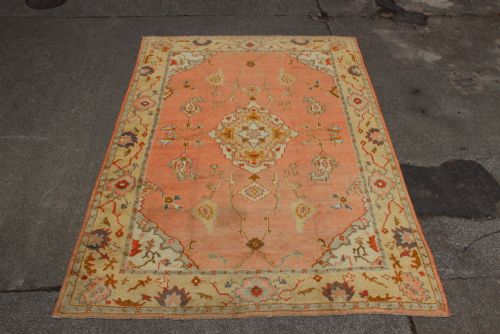
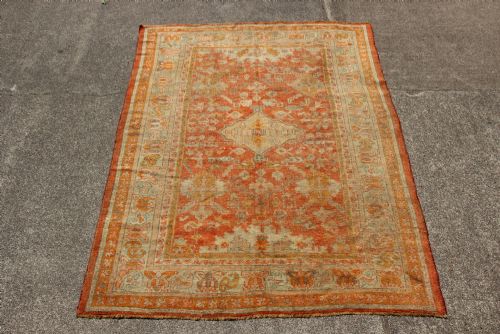
A large turkish area rug brings generous floor coverage to a room, drawing on traditions from the late nineteenth and early twentieth centuries. These woven pieces originate from regional weaving centres across Turkey, including Oushak, Ghiordes, Bergama, and Melas.
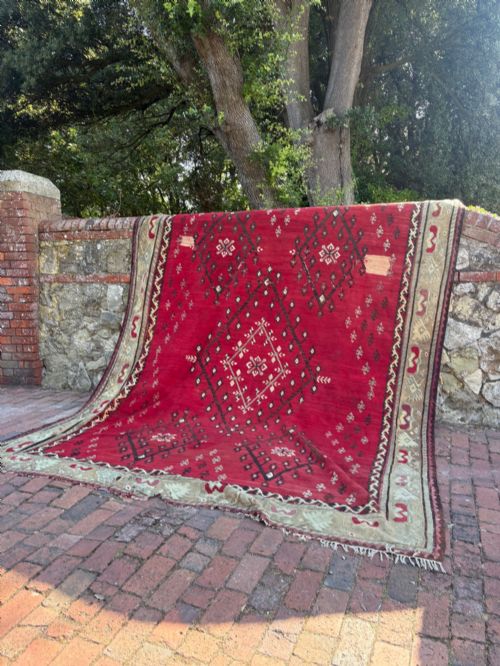
Most examples encountered here are substantial carpets or room-sized flatweave kilims produced in the decades between 1870 and 1930. They utilise traditional village and workshop designs, ranging from pale monochrome fields to bold geometric medallions.
Buyers select these substantial floor coverings to anchor large living spaces, dining rooms, or libraries. Their worn surfaces and historic dyes offer an established visual weight that modern floor coverings cannot replicate.
How they were made
Traditional weavers constructed these textiles primarily using wool for both the foundation warp and weft threads, supplemented occasionally by soft angora wool. Cotton also appears in the structural foundations of specific pieces from later decades.
The pile sections are hand-knotted, creating a dense surface that softens over generations of use, whilst flatweave kilims rely on interlocking weft techniques without a raised pile. Natural dyes impart the characteristic faded pinks, ivories, pale blues, and greens seen across these periods.
Several centuries-old carpets proudly display the occasional stray wool tuft left by a contented nineteenth-century workshop dyer.
What varies in quality
Quality in these floor coverings rests on the nuance of the colour palette, the integrity of the wool, and the sureness of the design drawing. Pieces woven with distinct botanical motifs or unusual ground colours demonstrate superior artistic ambition.
The handling of the wool and the depth of the dye saturation distinguish workshop pieces from standard village output. An even, graceful wear pattern across the surface indicates a harmonious marriage of material strength and initial construction.
The Large Turkish Area Rug Glossary
- Oushak
- A historic carpet-producing town in western Turkey known for large-scale floral designs and pale, luminous colour palettes. Pieces originating from here often feature generous proportions and fine wool.
- Kilim
- A flatweave textile produced without a pile by tightly interweaving warp and weft strands. These offer a lighter weight and distinct geometric patterns.
- Bergama
- A weaving district in northwestern Turkey associated with village rugs of strong geometric character. They frequently display bold central medallions and rich primary hues.
- Warp
- The stationary vertical threads stretched onto a loom that form the structural foundation of a knotted carpet. The fringe at either end of a rug consists of these exposed threads.
- Melas
- A town in southwestern Turkey known for distinctive village carpets utilising saturated earthy tones. These pieces often incorporate traditional prayer designs or concentrated floral motifs.
Large Turkish Area Rug: Frequently Asked Questions
How do I clean a large turkish area rug?
Gentle surface vacuuming without a rotating brush roll removes everyday dust and loose debris from the wool fibres.
Professional specialist washing is necessary for deep cleaning to protect historic dyes and prevent structural distortion.
Can these rugs go in high traffic areas?
Historic wool and cotton construction provides natural durability suited for regular movement across sitting rooms and hallways.
Using a quality underlay prevents unnecessary friction and extends the functional lifespan of the woven foundation.
What is the difference between a carpet and a kilim?
Carpets feature a dense hand-knotted wool pile that stands upright from the structural foundation, offering a plush surface underfoot.
Kilims are flatwoven without pile, resulting in a thin, reversible textile with crisp geometric edges and lower profile.
How do I date an antique turkish rug?
Stylistic markers such as specific medallion structures, regional border layouts, and specific colour palettes provide initial chronological clues.
Period markers point toward production dates spanning from the late nineteenth century through the early twentieth century.