
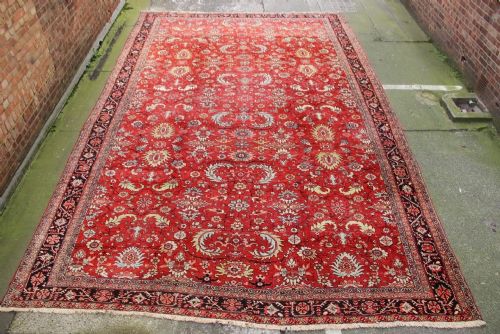
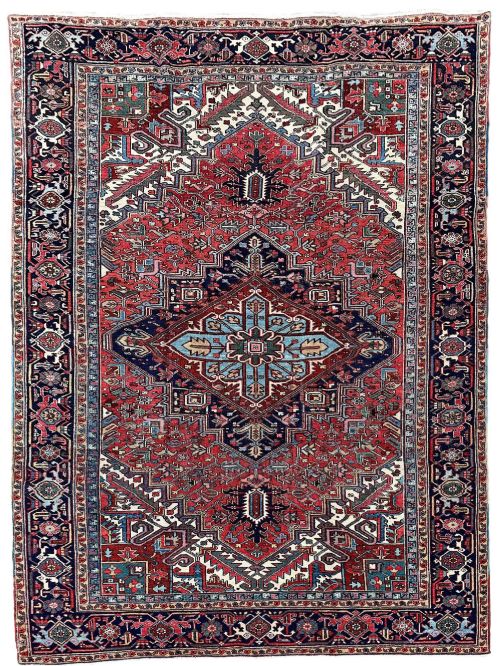
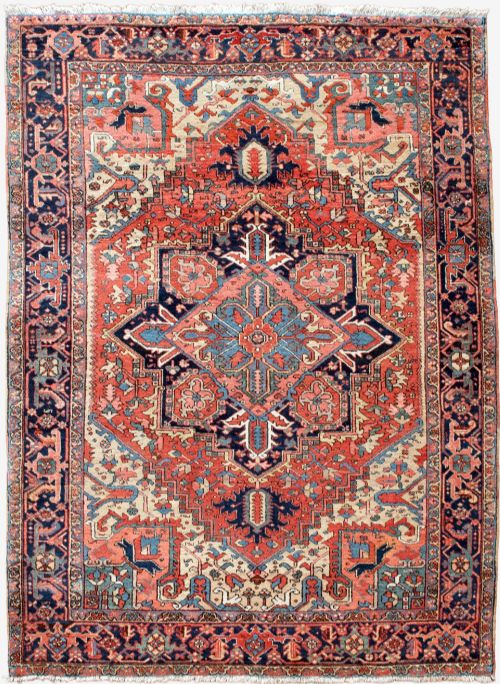
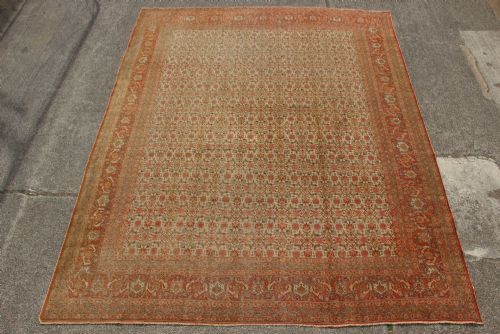



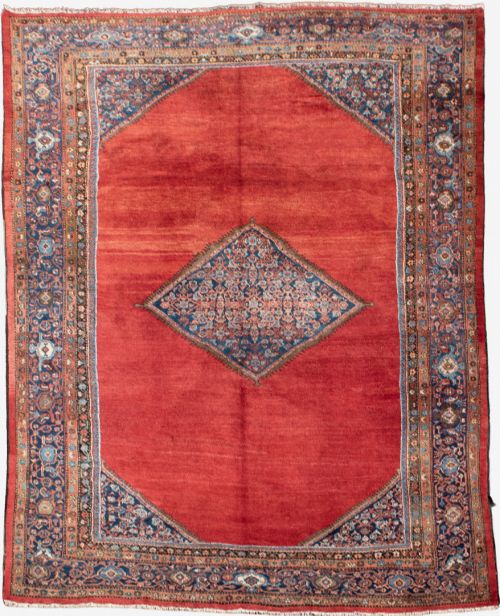
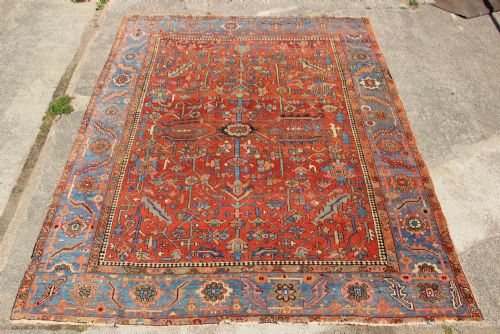
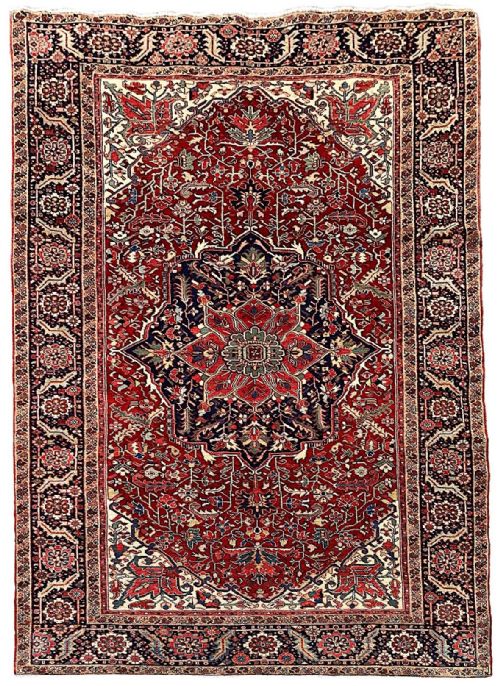
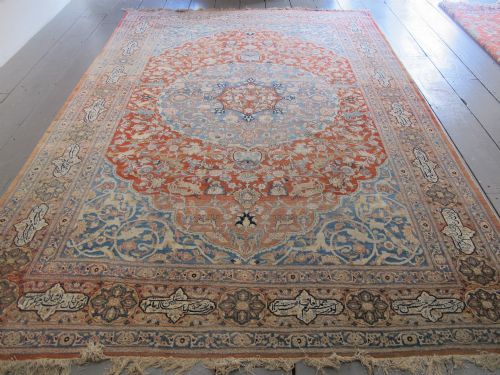
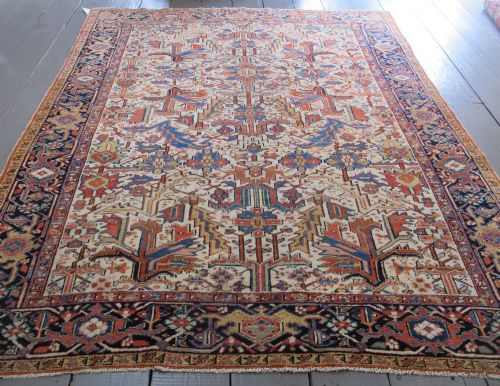
Large Terracotta Persian Rug
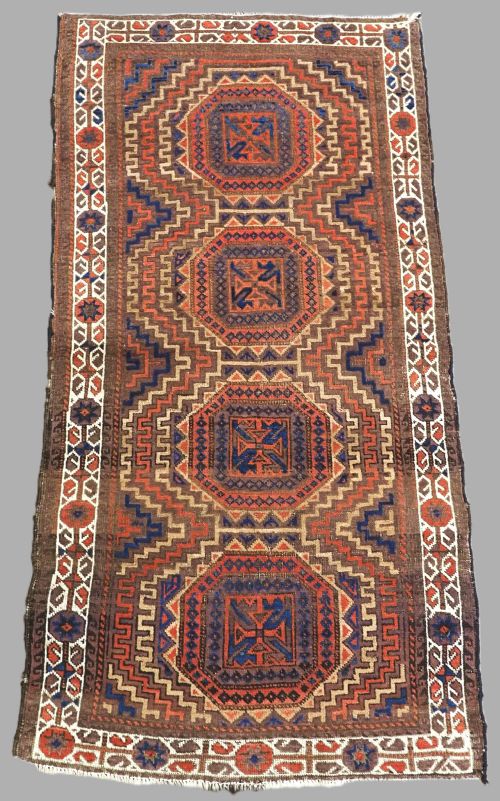
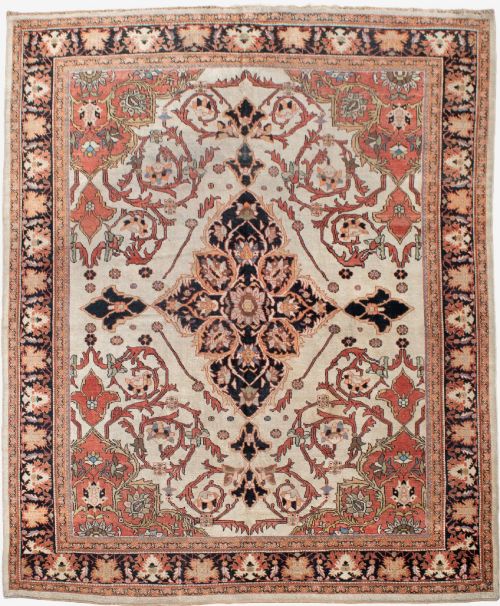
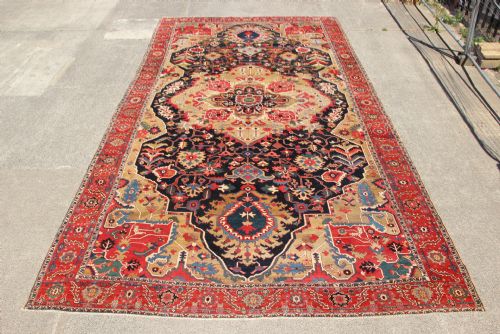
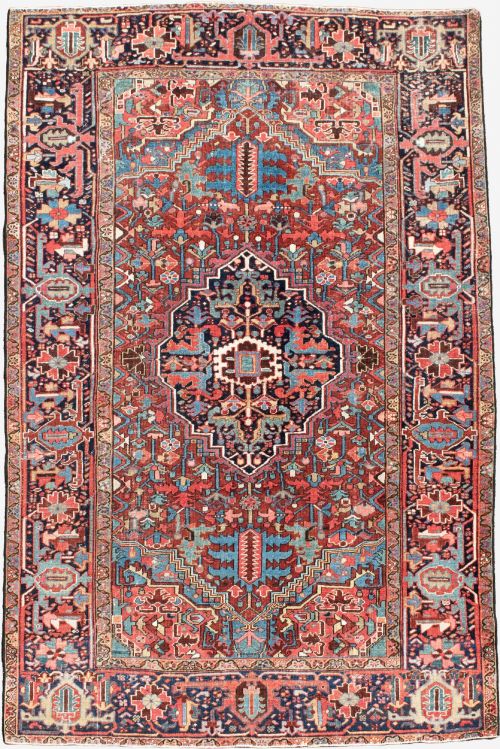
Large terracotta persian rug forms appear as substantial room-sized floor coverings originating from weaving traditions across nineteenth and early twentieth century Persia.
Large Terracotta Persian Rug
A large terracotta persian rug groups together substantial carpets and area rugs displaying warm reddish-brown earth tones derived from traditional regional dye sources. The selection spans distinct weaving districts including Heriz, Tabriz, Ferahan, and Mahal, each bringing specific regional geometry and floral vocabulary to the format.
Most examples encountered here date from the late nineteenth century through to the early twentieth century, showing substantial room dimensions suited to anchoring large reception spaces. Buyers select these works for their durable wool pile and sophisticated palette dominated by terracotta, rust, and madder red hues.
Regional designations such as Serapi, Bakshiash, and Sultanabad appear frequently within the inventory, providing varied medallion structures and all-over field patterns. These floor coverings bridge nomadic tribal aesthetics and workshop precision, reflecting the diverse origins of Persian carpet production.
How They Were Made
Construction relies upon hand-knotted wool pile secured to sturdy cotton foundations, providing the structural integrity required for large format carpets. Weavers utilised natural dyestuffs including madder root to achieve deep terracotta and rust tones that mellow gradually with age.
The density and tightness of the knotting vary according to the provenance, with city workshops employing finer symmetrical knots while village weavers produced robust, heavier piles. Hand-spun wool yarns introduce subtle tonal variations across the field, known to collectors as abrash.
Several carpets retain minor wool irregularities that reveal where a village weaver paused for tea before returning to the loom.
What Varies In Quality
Quality rests upon the integrity of the wool pile, the precision of the tribal or workshop design, and the depth of natural coloration. Examples with balanced proportions and well-rendered botanical or geometric motifs stand apart from simpler commercial productions.
The secondary foundation materials and the crispness of knotting on the reverse indicate the level of workshop care invested during manufacture. Preservation of original wool selvedges and balanced end finishes further distinguishes superior survivors from heavily restored pieces.
Benlian·Haji Jalili·Sahab
The Large Terracotta Persian Rug Glossary
- Abrash
- Natural tonal variation within the wool pile caused by changes in dye batches or hand-spun yarn lots. This gentle banding adds depth to terracotta fields.
- Heriz
- A region in north-west Persia known for durable carpets featuring bold geometric medallions and robust corner spandrels. These rugs typically display strong terracotta and navy contrasts.
- Madder root
- A natural organic dye source utilised to produce rich reds, terracotta, and rust shades in traditional Persian weaving. Over decades, this dye develops a soft patina.
- Medallion
- A large central ornamental design motif placed symmetrically in the middle of the carpet field. Many nineteenth-century room-sized rugs feature this focal arrangement.
- Selvedge
- The tightly bound outer edge running along the length of the carpet to prevent fraying. Original hand-bound selvedges indicate a well-preserved piece.
Large Terracotta Persian Rug: Frequently Asked Questions
How do I date an old Persian carpet?
Dating relies on assessing the natural dye palette, the wool quality, structural construction, and regional design traits. Nineteenth-century examples often exhibit softer madder tones and hand-spun wool.
Secondary indicators include the condition of the cotton foundation and the weave structure visible on the reverse side. Comparing these elements with documented regional pieces helps narrow the production era.
Where were these large rugs placed?
These substantial room-sized carpets were traditionally woven for grand country houses, drawing rooms, and formal reception spaces in both Persia and Europe. Their robust construction handled heavy foot traffic while providing warmth.
Today, they serve a similar architectural function, anchoring large modern living areas and dining rooms with grounding earth tones.
Are terracotta rugs difficult to maintain?
Regular gentle vacuuming without a rotating power brush keeps dust from settling deep within the wool pile. Professional cleaning by specialists in antique textiles preserves the lanolin in the wool.
Placing the carpet away from direct, harsh sunlight prevents the natural terracotta dyes from fading unevenly over time.
What is the difference between Heriz and Tabriz?
Heriz carpets typically showcase bold, geometric medallions with strong angular lines and sturdy terracotta fields suited for heavy daily use. Tabriz carpets often feature finer, curvilinear floral designs with intricate central medallions.
Both originate from north-west Persia but represent distinct aesthetic approaches between village-style geometry and urban workshop refinement.