



Large Terracotta Oil Jar
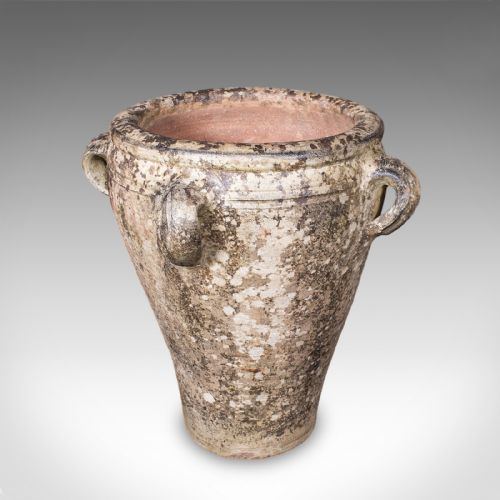
A large terracotta oil jar anchors a garden or terrace with weight and age.
Large Terracotta Oil Jar
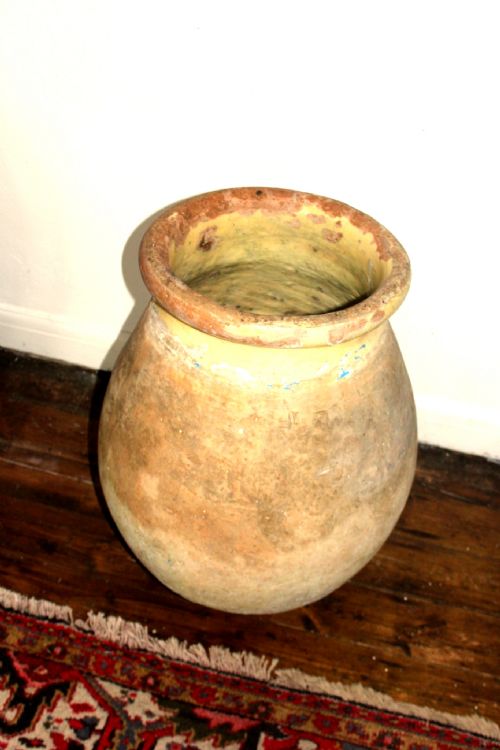
A large terracotta oil jar is a heavy storage vessel designed historically for holding olive oil or walnuts in Mediterranean regions. These pieces appear in forms such as olive jugs, Biot jars and garden urns.
The versions most common on this page date from the eighteenth century through to the early twentieth century. They originate mainly from France and Greece, reflecting rustic Mediterranean and French Country traditions.
Buyers choose these substantial vessels for outdoor terraces, courtyards and large interior spaces. Their generous scale and weathered surfaces provide an immediate sense of history.
Materials and construction
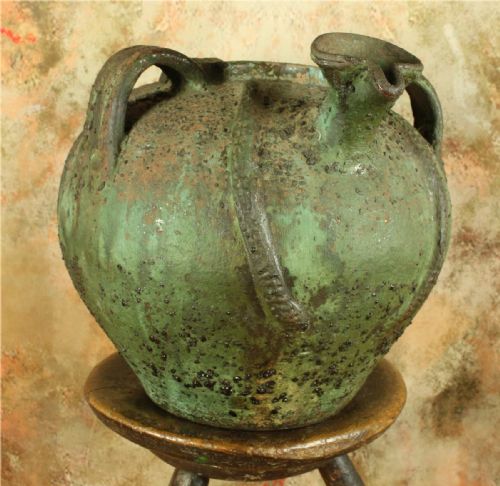
These vessels are built from earthenware clay, shaped into thick walls capable of withstanding heavy agricultural use. Many examples incorporate multiple handles for lifting and moving the heavy contents.
Surface treatments recorded on these pieces include lime wash, historical paint and natural glazes. Some variations also feature wrought iron elements or stands that support the rounded bodies of the jars.
Large Terracotta Oil Jar Retail Price Guide 2026
Typical asking prices for large terracotta oil jar among the pieces listed under this phrase on Sellingantiques today, from the lower quarter to the upper quarter. They describe what is for sale here now, not the wider market.
Several jars arrived with three handles, presumably for three strong locals.
Assessing quality and character
Quality in these vessels lies in the depth of the aged patina and the integrity of the earthenware body. Pieces that retain traces of early lime wash or original paint display greater visual depth than uniform surfaces.
Proportion and form dictate the distinction between standard utilitarian storage and finer decorative pieces. The presence of multiple handles and sturdier wrought iron stands enhances both the presence and utility of the jar.
The Large Terracotta Oil Jar Glossary
- Biot jar
- A traditional heavy terracotta storage vessel originating from the Provençal town of Biot in France. These jars were historically utilised for storing olive oil.
- Terracotta
- Fired earthenware clay ranging in colour from pale buff to deep reddish brown. This porous material weathers distinctively when exposed to the elements.
- Patina
- The surface appearance developed through age, use and weathering. On these jars, patina includes flaking paint, lime wash residues and mineral deposits.
- Olive jar
- A large bulbous vessel designed for the bulk storage and transport of olive oil. They often feature reinforced rims and multiple lug handles.
Large Terracotta Oil Jar: Frequently Asked Questions
How do I care for a terracotta oil jar outdoors?
These earthenware vessels require protection from severe frost during winter months to prevent the clay from cracking. Raising the base slightly off the ground ensures proper drainage.
Applying any modern sealants is generally unnecessary as they trap moisture inside the porous clay. Allowing the natural patina to weather outdoors preserves the historical surface.
Can these large jars be used inside the home?
Placing a large jar indoors creates a striking architectural focal point in hallways or living spaces. Using a suitable internal tray protects flooring from any residual dampness in the clay.
Many collectors mount these vessels on wrought iron stands to display them securely indoors. Their neutral earthenware tones complement both traditional and contemporary interiors.
How do I date an antique oil jar?
Dating relies on examining the forming techniques, rim shapes and surface finishes recorded across different periods. Eighteenth and nineteenth-century pieces often display hand-thrown irregularities and older lime wash layers.
Later pieces from the early twentieth century tend to show more standardised manufacturing methods. Archive comparisons with documented Biot and French country pots help confirm specific eras.
What were these jars originally used for?
Agricultural communities across the Mediterranean relied on these large vessels to store olive oil, walnuts and other essential provisions. Their thick earthenware walls kept contents cool and stable throughout the year.
The multiple handles facilitated ropes for tilting and hoisting the heavy jars during transport. Over decades of agricultural use, many accumulated layers of paint and lime wash.