


Large Stone Garden Ornament
These large stone garden ornament pieces anchor a terrace or lawn with substance, shaped from cast stone and terracotta to weather the seasons.
Large Stone Garden Ornament
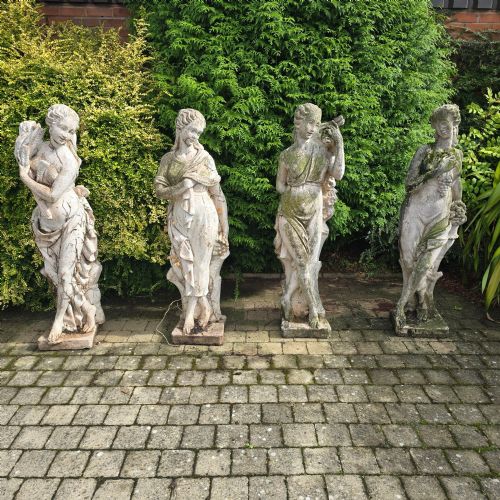
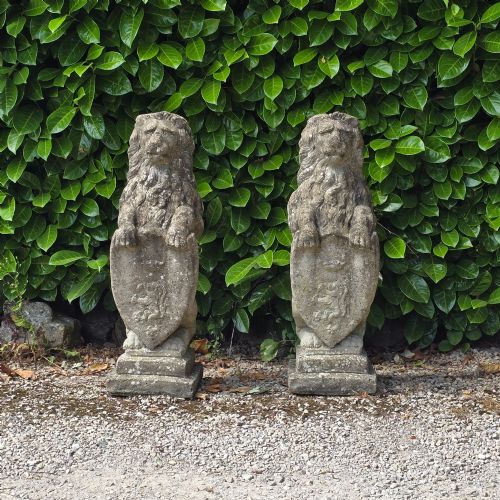
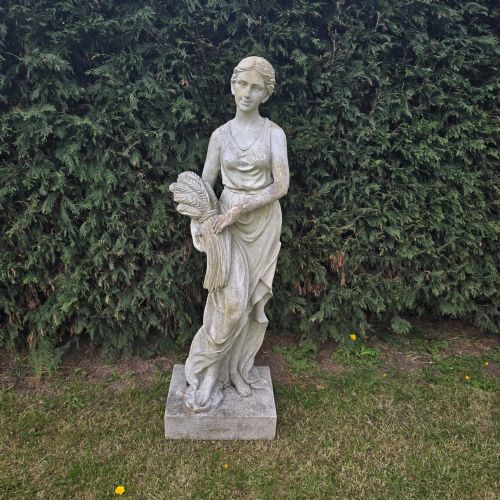
A large stone garden ornament brings architectural presence to grounds and courtyards, spanning classical figures, heraldic beasts, and substantial urns. You will encounter substantial figures such as the Four Seasons, draped ladies, cherubs, and grand lions guarding a gateway.
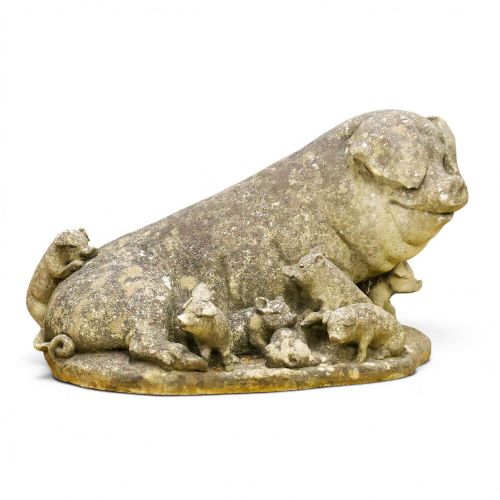
The selections range from the nineteenth century through to the middle decades of the twentieth century. Pieces arrive in various forms, including standing figures on plinths, life-sized animals, pedestals, and architectural salvage like saddle stones.
Makers and makers' origins stretch across English country house aesthetics, Italian marble traditions, and regional potteries such as Hurlford Kilmarnock. Each object defines a garden space by introducing scale, history, and sculptural weight.
How they were made
Makers utilised durable materials designed to endure outdoor exposure, predominantly cast stone, reconstituted stone, and composition stone. Terracotta and salt-glazed pottery also feature prominently, alongside solid carved marble and sandstone.
Production combined traditional masonry techniques with moulding methods for cast and composite materials. Salt-glazed pottery and terracotta required careful kiln firing to achieve the dense bodies necessary for frost resistance.
Listings span the nineteenth century through to 1950, covering materials from solid white marble and sandstone to cast stone and salt-glazed pottery.
What varies in quality
The integrity of the material itself dictates longevity and visual depth, as well-weathered surfaces display natural patination that develops evenly over decades. The choice between solid carved marble, sandstone, or dense cast stone determines the sharpness of the original form.
Hurlford Kilmarnock
The Large Stone Garden Ornament Glossary
- Reconstituted stone
- A manufactured material made from crushed stone or aggregates mixed with a binder such as cement, cast in moulds to imitate natural stone. It offers high durability for outdoor statuary.
- Terracotta
- A porous earthenware clay fired in a kiln, typically showing warm reddish-brown tones. It requires careful firing to withstand winter freezing.
- Salt-glazed pottery
- Earthenware treated by throwing common salt into the kiln during high-temperature firing, producing a dense, glossy, vitreous glaze that resists moisture.
- Pedestal
- An architectural base or support that elevates a statue, bust, or urn above ground level. It provides visual stability to large garden compositions.
- Architectural salvage
- Elements rescued from older buildings, estates, or gardens for reuse, including stone saddle stones and ornamental crowns.
Large Stone Garden Ornament: Frequently Asked Questions
How do I place large garden statues?
Position statues at focal points, such as the end of a gravel path, framing a doorway, or emerging from planting beds. Pairing matching animals or figures creates a formal sense of enclosure.
Ensure the ground beneath is level and capable of supporting substantial weight, particularly with marble and cast stone pieces.
Can terracotta garden ornaments stay outside?
Terracotta pieces tolerate outdoor environments well if the clay was fired correctly and the material remains structurally sound. Ensure they are raised slightly off the soil on bricks or feet during winter to prevent moisture absorption and frost cracking.
Sheltered placement under eaves or clearing accumulated snow helps preserve the material through severe weather.
How do I date an old stone ornament?
Dating relies on material composition, style, surface patination, and manufacturing marks. Nineteenth-century pieces often display hand-finished terracotta or dense sandstone, while mid-century examples utilise specific composition stone mixes.
Stylistic cues such as Neoclassical Revival forms also help narrow down the period of manufacture.