


Large Silver Serving Spoon
A large silver serving spoon brings substantial weight to the table, handling heavy roasts and generous portions with ease.
Large Silver Serving Spoon
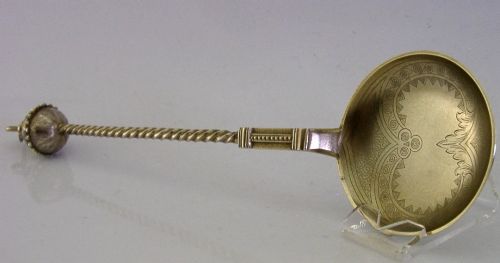
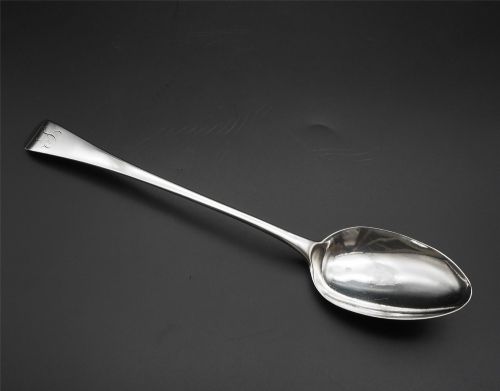
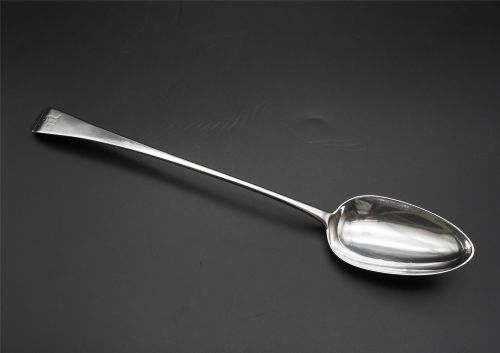
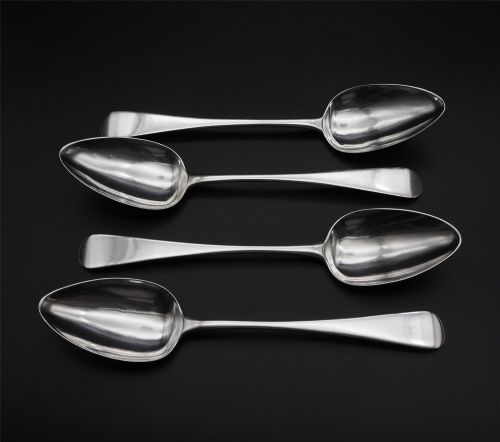
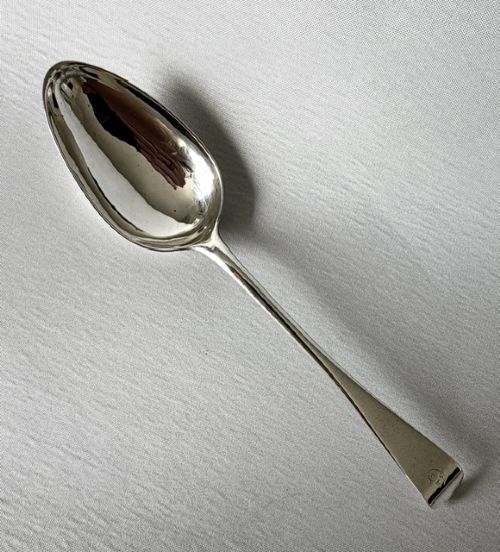
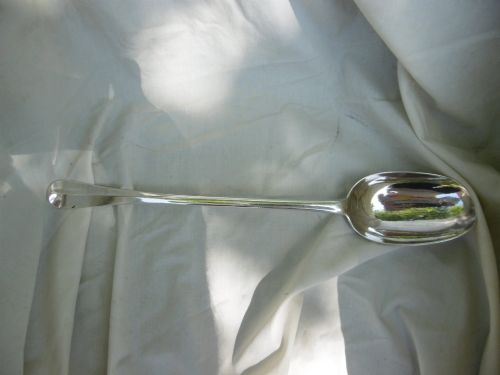
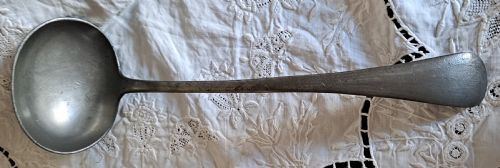
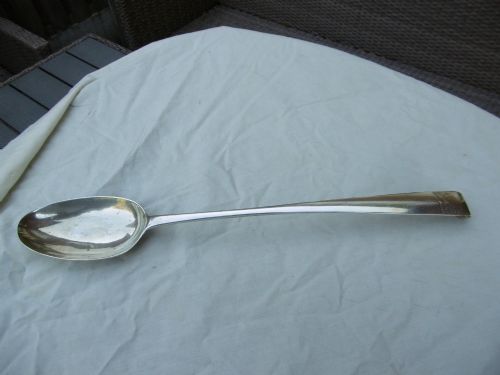
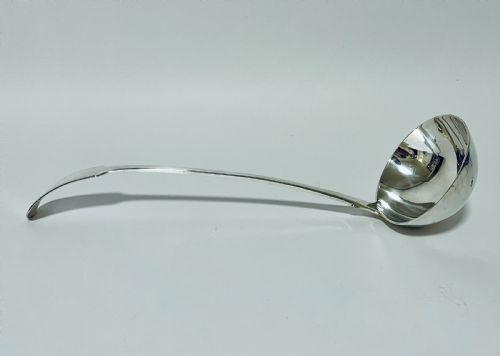
When you search for a large silver serving spoon, you encounter substantial dining utensils designed for communal table service, including basting spoons, hash spoons, and soup ladles. The selection ranges from 18th-century Georgian forms bearing clear provincial or London hallmarks to ornate Victorian patterns and early 20th-century continental designs. Most examples encountered here are solid sterling silver or silver gilt, though silver plate and pewter variants also appear.
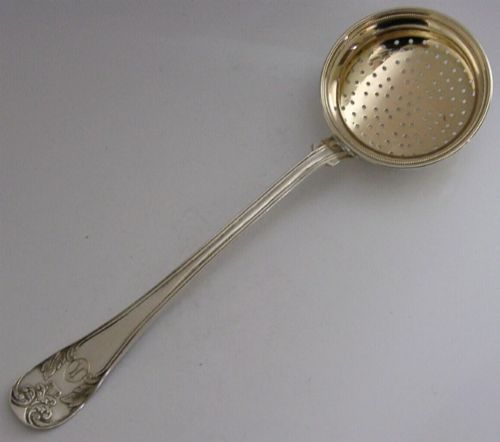
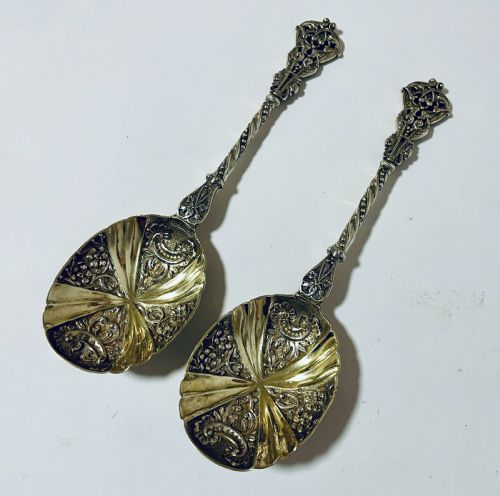
The forms vary according to their original domestic function, spanning deep-bowled soup ladles, long-handled basting spoons, and sugar sifters. Georgian pieces frequently display plain threaded borders or crisp crests, while Victorian and Edwardian iterations lean towards heavier ornamentation like the Queen's pattern or floral motifs. Pieces from this selection originate across Britain, Scandinavia, Russia, and North America, reflecting diverse dining traditions.
Materials and construction methods
Silversmiths constructed these utensils primarily from sterling silver or Britannia standard silver, often employing solid casting and hand-hammering techniques to achieve rigid durability. Handles and bowls were frequently shaped separately before being joined, with heavier basting and hash spoons requiring thick gauge metal to withstand the leverage needed at the table.
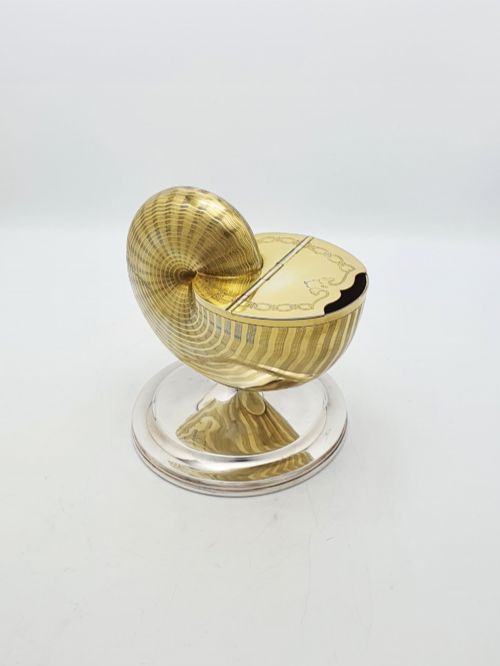
Surface treatments include selective gilding to create silver-gilt finishes, alongside decorative techniques such as niello work, cloisonne enamel, and delicate piercing for sifter bowls. Makers marked their output with standard assay office punches, duty marks, and maker's stamps directly into the metal.
Large Silver Serving Spoon Retail Price Guide 2026
Typical asking prices for large silver serving spoon among the pieces listed under this phrase on Sellingantiques today, from the lower quarter to the upper quarter. They describe what is for sale here now, not the wider market.
Some spoons double as strainers or warming vessels, proving our ancestors took their gravy temperature remarkably seriously.
Assessing quality in service silver
Quality rests heavily on the crispness of the original hallmarks, the thickness of the silver gauge in the bowl and stem, and the preservation of any engraved crests or decorative chasing. Substantial weight relative to length indicates a better class of utensil that resisted bending during heavy kitchen and dining service.
The reputation of the maker, whether provincial silversmith or renowned workshop like Georg Jensen or Whiting Co., influences the desirability of the piece. Fine balance, ergonomic handle comfort, and undamaged joinery where the bowl meets the stem further separate utilitarian survival pieces from masterworks.
Andrew Archer·John Yates·John Craig·William Scarlett·John Wilks·Georg Jensen·Jamieson and Naughton·Mary Chawner·Robert Gordon·Oliver Barker·Whiting Co.·Ellis Canada·Evald Nielsen·David Andersen·P Orr
The Large Silver Serving Spoon Glossary
- Basting spoon
- A long-handled utensil traditionally used to spoon pan juices over roasting meat. These are among the largest spoons found in flatware collections.
- Hash spoon
- A deep-bowled, heavy serving spoon designed for dishing up thick stews and hashes. They often measure over thirty centimetres in length.
- Britannia standard
- A higher grade of silver alloy introduced in England in 1696 containing ninety-five point eight percent pure silver. It was marked with the figure of Britannia and a lion's head erase.
- Niello
- A black metallic alloy of sulphur, silver, lead, and copper used to fill engraved designs on silver. It creates a striking contrast against the polished metal surface.
- Sifter spoon
- A ladle or spoon with a pierced or slotted bowl used for sprinkling sugar over food. The perforations allow fine particles to pass through while retaining larger lumps.
Large Silver Serving Spoon: Frequently Asked Questions
What is the difference between a basting spoon and a serving spoon?
Basting spoons generally feature longer stems and narrower, deeper bowls intended for collecting and pouring juices during food preparation. Serving spoons are proportioned for dishing out vegetables, starches, or fish at the table.
While both fall under the broad category of large flatware, basting spoons prioritised reach and leverage over wide bowl capacity.
How do I identify a Georgian silver spoon?
Georgian spoons are identified through hallmarks stamped into the metal, indicating the assay office, date letter, and maker's mark between 1714 and 1830. Stylistically they often feature plain rattails, Hanoverian or Old English patterns, and occasionally engraved family crests.
The metal gauge is typically heavy, and the manufacturing relied on traditional hand-wrought techniques before mass machinery took over.
Can I use antique silver spoons for daily dining?
Solid silver serving spoons are robust utensils engineered for practical domestic use over centuries. Regular washing by hand with mild soap preserves the finish without wearing away crisp hallmarks or delicate engraving.
Avoid automated dishwashers, as harsh detergents and high heat will damage the antique patina and surface details.
What does silver gilt mean?
Silver gilt, or vermeil, refers to solid silver that has been coated with a thin layer of gold. This technique added richness to the appearance and protected the underlying silver from tarnishing in specific areas.
You often find this finish on baptismal spoons, dessert servers, and high-status ceremonial pieces.