

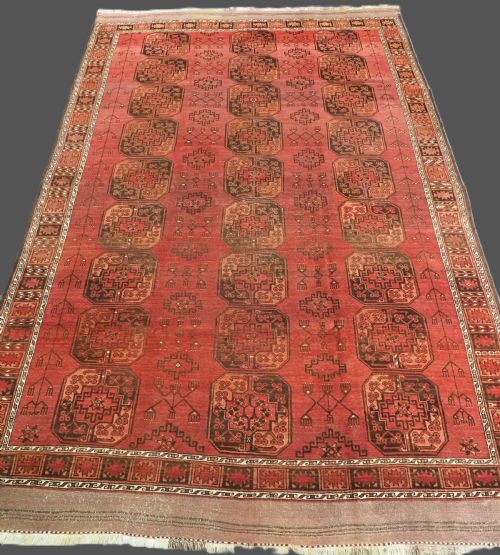
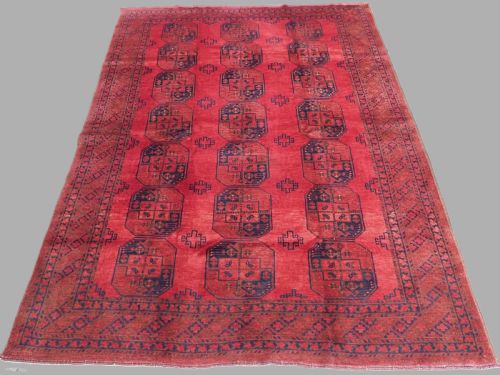
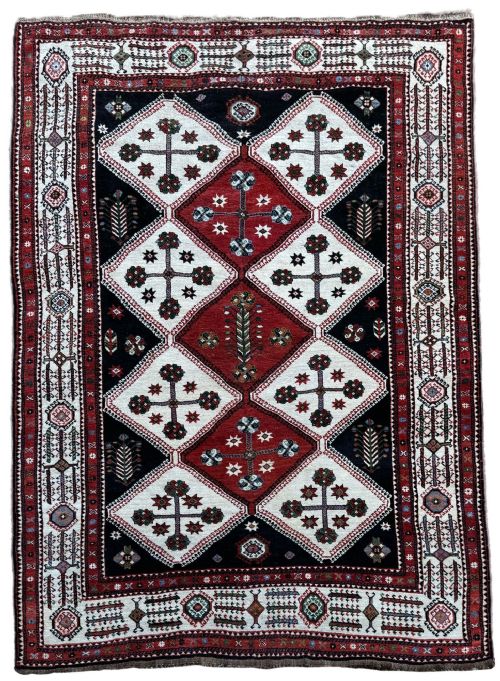
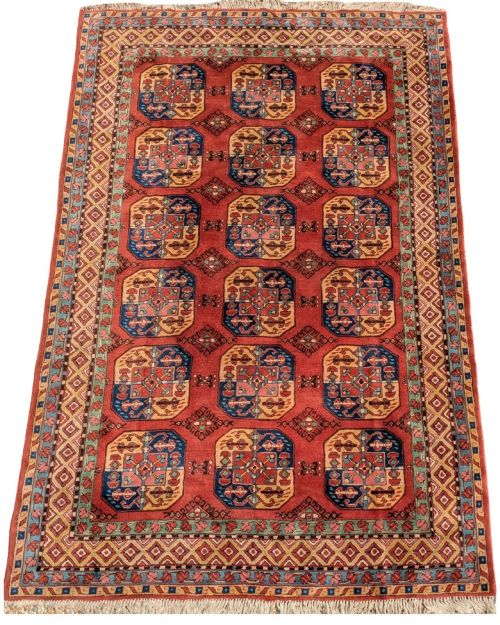
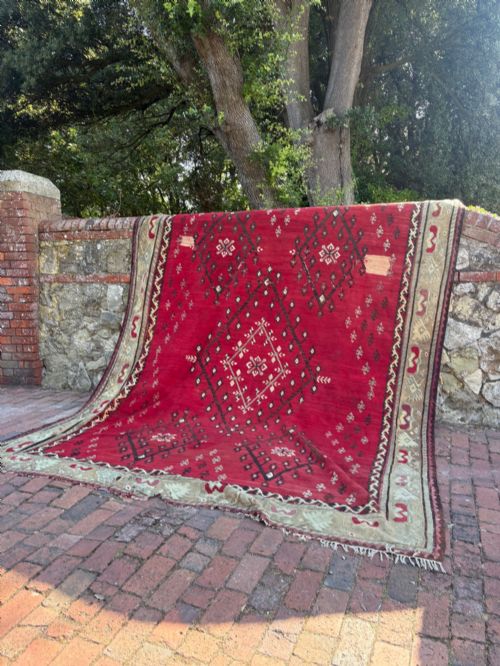
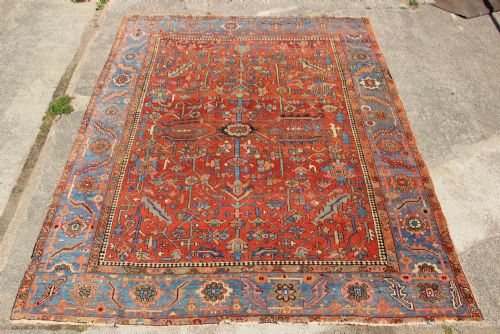
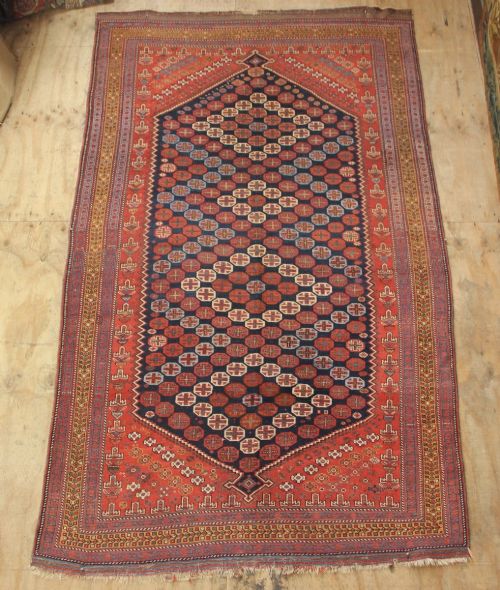

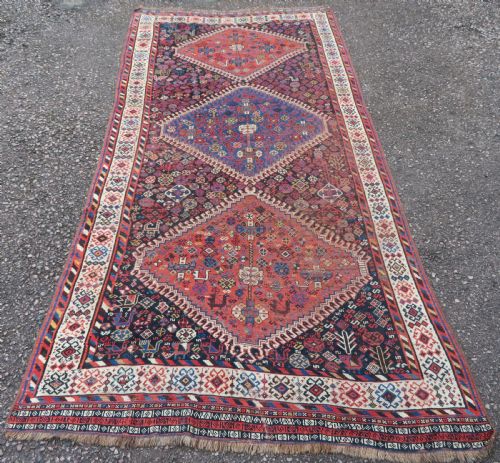


Large Red Tribal Carpet
A large red tribal carpet brings warmth and deep geometric pattern into a room through centuries of nomadic weaving traditions.
Large Red Tribal Carpet
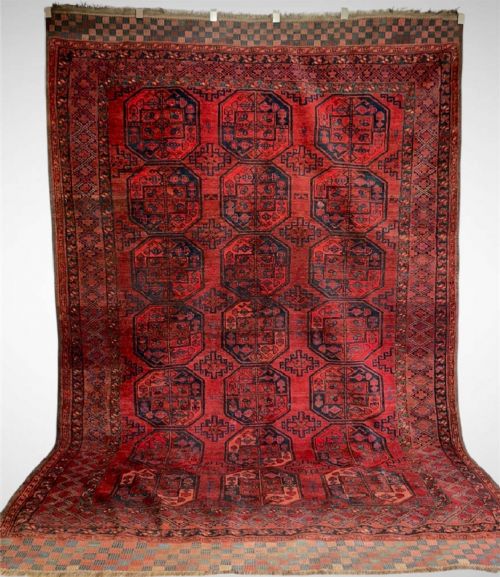
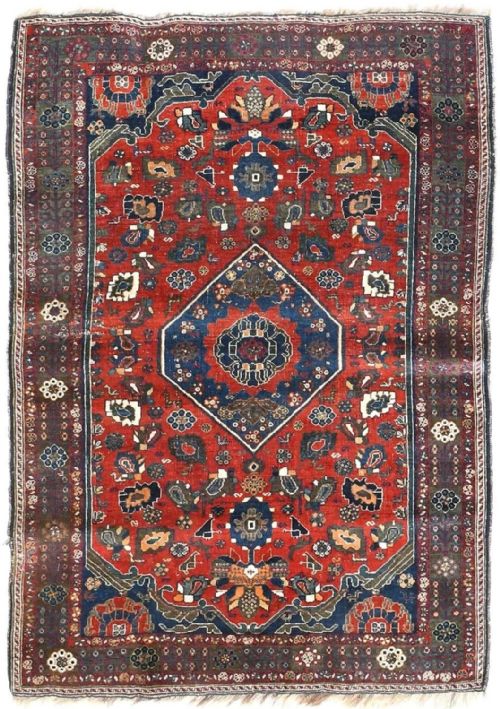
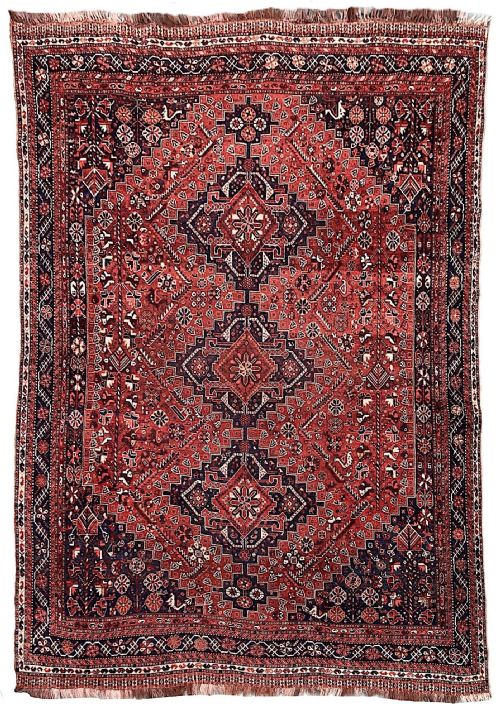
A large red tribal carpet is a substantial floor covering produced by nomadic or village weavers across Persia, Anatolia, and Central Asia. When searching for a large red tribal carpet, a buyer encounters room-sized pieces and long runners woven in wool during the nineteenth and early twentieth centuries.
The selections span Persian styles like Heriz and Bakshiash alongside Turkmen, Afghan, and Kurdish workshops and village groups. These floor coverings range from broad room dimensions down to long hallway formats, carrying deep madder-dyed crimson and terracotta tones.
Nomadic and village weavers constructed these carpets for domestic utility, tribal identity, and floor sitting, utilising traditional patterns passed down through generations. The resulting textiles provide heavy floor insulation and rich visual texture in contemporary interiors.
Materials and construction methods
Makers constructed these floor coverings using hand-spun wool for the pile, foundation warp, andweft threads, occasionally incorporating cotton for structural stability. Natural dyes, prominent among them madder for the characteristic red colour palette, provide the deep tonal variations across the wool surface.
Weavers knotted the wool pile by hand onto vertical or horizontal looms, applying tribal motifs such as guls, medallions, and geometric repeat patterns. Flatweave kilim ends and sturdy wool selvages frequently finish the edges of these heavy village and nomadic carpets.
Listings feature carpets spanning from the mid-nineteenth century through the 1940s, utilising hand-spun wool and natural dyes.
Distinctions in quality and execution
The quality of a carpet rests on the fineness of the wool, the saturation and complexity of the natural dye palette, and the precision of the knotting. Superior examples display dense pile construction that maintains structural integrity under heavy foot traffic.
Older pieces achieve distinction through the depth of their hand-spun wool and the harmonious ageing of natural red tones. Variations in weaver skill influence the crispness of geometric outlines and the balance of traditional tribal motifs.
The Large Red Tribal Carpet Glossary
- Gul
- An octagonal or medallion motif frequently repeated across Turkmen and Central Asian carpets. It often denotes specific tribal lineages and clan origins.
- Madder
- A natural dye derived from the root of the Rubia plant, producing the characteristic red and terracotta shades seen in these carpets. It yields varied hues depending on the mordants used.
- Kilim
- A flatweave textile produced without a raised pile, often used for the ends of larger carpets or as a standalone rug. These flat-woven sections display sharp geometric patterns created by interlocking weft threads.
- Warp
- The stationary vertical threads stretched on the loom that form the foundational skeleton of the carpet. Weft threads cross these perpendicularly to secure the knots.
- Selvage
- The reinforced outer edge of a carpet formed by wrapping the outermost warp threads with weft. It prevents the sides from fraying and defines the rectangular boundary.
Large Red Tribal Carpet: Frequently Asked Questions
Where should I place a large red tribal carpet?
These substantial floor coverings anchor living rooms, dining spaces, and wide hallways where their deep red tones can dominate the floor plan. They provide durable floor insulation and visual warmth against wooden or stone surfaces.
Position furniture to frame the central field and medallions rather than covering the entire design. Allow sufficient clearance around the borders to let the tribal motifs remain visible.
How do I clean an antique wool carpet?
Regular gentle vacuuming without a rotating brush prevents dust accumulation within the wool pile. Professional specialist cleaning remains essential for addressing deep soil and preserving natural dyed fibres.
Avoid excessive moisture and harsh chemical detergents which can damage hand-spun wool and alter traditional dye colours. Blot liquid spills immediately with a clean, dry white cloth without rubbing.
How can I tell different tribal designs apart?
Distinctions emerge through specific repeating motifs, such as the octagonal guls on Turkmen and Afghan pieces or the large geometric medallions found in Heriz carpets. Colour palettes also vary, with certain regions favouring deep madder reds contrasted against indigo and ivory.
Structural characteristics like knot density and foundation materials further indicate whether a carpet originated in a Persian village or a Central Asian nomadic camp.
Are these carpets suitable for heavy foot traffic?
Thick hand-spun wool pile and sturdy cotton or wool foundations provide natural durability for everyday use in busy rooms. Dense knotting helps the pile resist crushing and wear over decades.
Using a quality underlay beneath the carpet prevents slipping, reduces friction against the floorboards, and extends the active lifespan of the textile.